Beginner’s guide · Cook & bake
Hold warm milk steadily.
Let the culture set the pace.
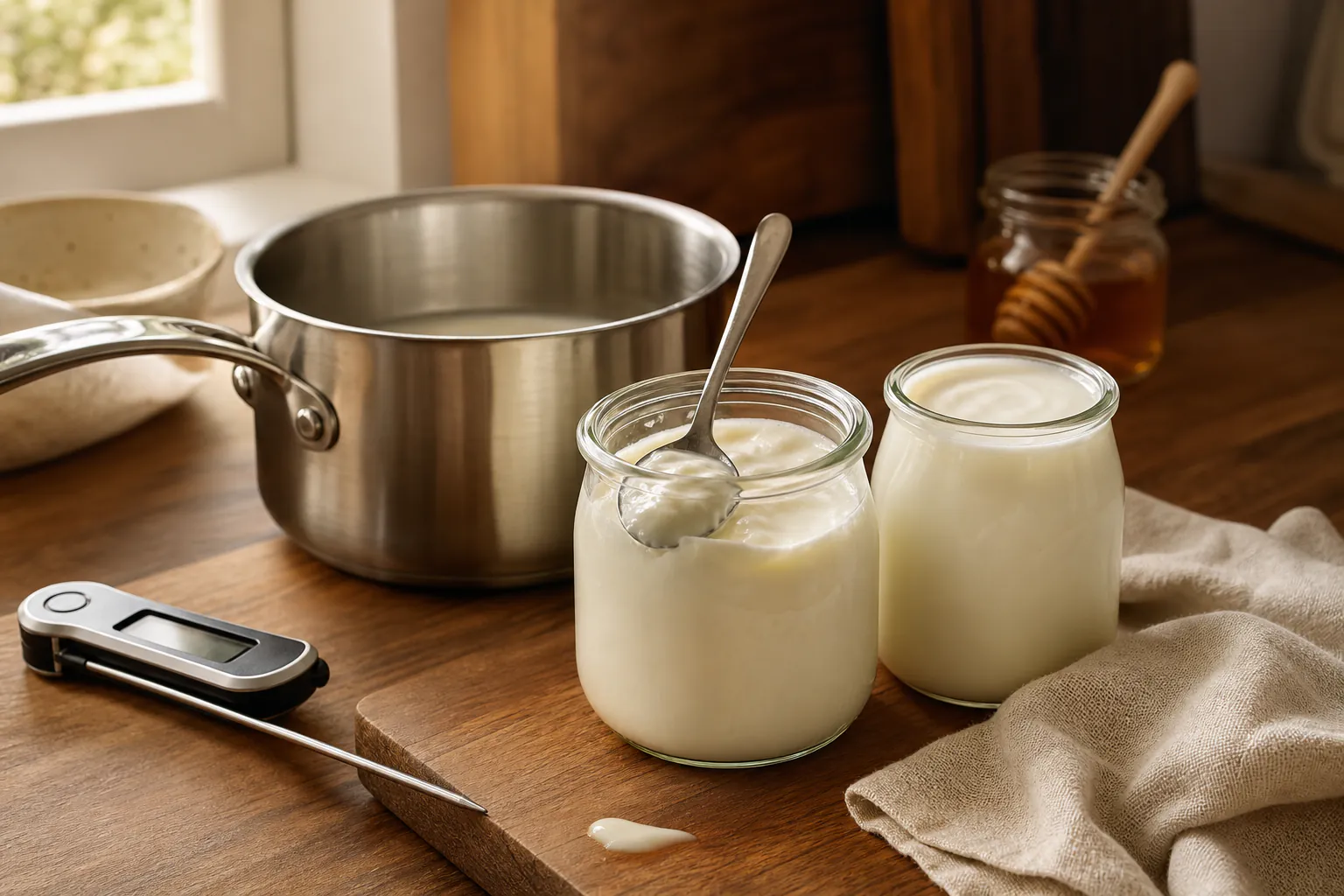
Make a small plain batch with milk, live yoghurt and an accurate thermometer. The work is temperature control, clean handling and patient incubation; a yoghurt maker supplies a stable warm environment, not a secret ingredient.
Quick answer
Control four stages: heat, cool, culture and chill
Heat pasteurised milk using a tested recipe, cool it to the stated inoculation range, whisk a small amount of fresh plain yoghurt containing live cultures into a little milk and combine gently. Hold the mixture at the recipe’s incubation temperature without disturbance until set, then refrigerate promptly. Start with a new commercial starter rather than saving one batch indefinitely.
- 01
Temperature matters twice: heating changes the milk proteins, while adding culture to milk that is too hot can damage the bacteria needed for setting.
- 02
Incubation needs steady warmth, not increasing heat. A pre-warmed insulated container or maker should be checked rather than guessed.
- 03
Longer incubation generally increases acidity. It cannot rescue contaminated ingredients or a starter without viable cultures.
- 04
The yoghurt firms further when chilled. Moving or tasting it repeatedly during incubation disrupts the developing gel.
What to expect
A loose first batch is useful evidence
Milk composition, starter freshness, temperature and time all affect set and flavour. Change one factor per batch so the result can teach you something.
Starter
The label must state live cultures, and an old opened pot may have fewer viable bacteria than a fresh one.
Milk
Fat changes richness, while milk solids affect body. Different milks and plant drinks are not direct substitutions.
Heat
Scorched milk adds flavour and skin. Use a clean heavy pan, moderate heat and regular stirring.
Set
Home yoghurt may be softer than stabilised commercial yoghurt. Chill before deciding that it failed.
Whey
Some clear whey is normal and can be stirred back in or strained. Unusual odour, colour or gas is not a texture problem.
Repeat batches
Reusing yoghurt as starter can work for a time, but culture balance and contamination risk change. Refresh from a reliable starter regularly.
Method basics
Make the temperature history visible
Start with pasteurised milk and a clean setup
Wash hands and clean the pan, whisk, spoon, thermometer, jars and incubation container. Use pasteurised milk and a fresh plain yoghurt whose label identifies live cultures. A first batch of 500 ml to one litre is large enough to judge and small enough to cool safely. Do not begin with flavoured yoghurt, fruit or improvised probiotic capsules.
Heat and cool deliberately
Follow a tested yoghurt recipe for its milk-heating target and hold time. Stir to prevent scorching and measure in the milk, away from the pan base. Cool to the recipe’s culture-adding range; a clean water bath can speed this. Guessing by touch is unreliable and can either weaken the culture or leave the process outside its intended range.
Dilute the starter before combining
Stir the measured starter with a small portion of cooled milk until smooth, then mix it through the batch without vigorous aeration. Transfer into clean containers and hold at the prescribed warm temperature. Leave them still. Record starting time and temperature rather than repeatedly opening the incubator.
Chill first, then assess
When the yoghurt has set and tastes appropriately tangy, move it promptly to the refrigerator. Chill thoroughly before stirring, straining or adding fruit. Label the date, use a clean spoon each time and discard a batch with mould, unusual colour, fizzing, unpleasant odour or uncertain temperature history.
Useful products
Measure first, then choose one incubation style
The ThermoPro thermometer is the broadly useful first purchase because it checks both heating and culture-addition temperatures. The Lakeland maker produces one larger batch and can also strain soft cheese; the Severin uses seven portion jars. They are alternatives for different habits, not equipment to buy together.
ThermoPro TP19 Instant-Read Food Thermometer
The probe checks both the hot treatment and the safe range for adding live culture.
Lakeland Multi Yoghurt and Soft Cheese Maker
A single warm vessel suits households that portion yoghurt after chilling or want to strain it.
Severin JG 3518 Yoghurt Maker with 7 Glass Jars
Separate lidded portions reduce later decanting and make flavour additions after chilling easier.
First batch
Make a small plain batch with one live starter
Use a tested dairy-yoghurt recipe and write its exact temperatures into the steps before heating the milk.
- 01
Clean the equipment
Wash hands and prepare clean pan, thermometer, whisk, spoon, containers and warm holding setup.
- 02
Check the ingredients
Use pasteurised milk and a fresh plain yoghurt clearly labelled with live cultures.
- 03
Heat the milk
Stir over moderate heat and measure the recipe’s target away from the base of the pan.
- 04
Cool to inoculation range
Let the milk fall to the stated culture temperature, using a clean water bath if needed.
- 05
Temper the starter
Whisk starter with a little cooled milk until smooth, then combine gently with the batch.
- 06
Incubate undisturbed
Hold at the recipe temperature, record time and avoid moving or opening the container.
- 07
Check once near the target
Look for a set gel and clean tang rather than extending time automatically.
- 08
Refrigerate and label
Chill promptly, date the container and assess final thickness only when cold.
What can wait
What can wait until one plain batch sets reliably
Flavours and alternate milks add variables that hide whether the basic culture and temperature process works.
- 01
A yoghurt maker
Use one when maintaining warmth is the repeated problem. A thermometer remains necessary for heating and cooling the milk.
- 02
Plant-based yoghurt
Different proteins, sugars, cultures and thickeners are involved. Use a recipe designed for that specific drink.
- 03
Fruit during incubation
Add clean prepared fruit after chilling. Introducing it earlier changes acidity, sugar, water and contamination risk.
- 04
Straining equipment
A clean lined sieve can test Greek-style thickness before buying dedicated strainers or soft-cheese accessories.
- 05
Endless back-slopping
Saved starter changes between batches. Refresh from a reliable live culture when set or flavour becomes inconsistent.
Upgrade path
Upgrade the repeated weak point
Choose between batch size, portion convenience and more accurate control rather than collecting overlapping makers.
Insulated small batch
About £5–£25Pan, thermometer, clean jar and warm container
Learn the full heat–cool–culture–chill process.Single-vessel maker
About £25Lakeland Multi maker
Hold one larger batch warm with less improvisation.Portion-jar maker
About £45–£65Severin maker + seven lidded jars
Incubate separate servings and refrigerate without decanting.Specialist cultures
About £5–£20 per cultureNamed starter + controlled incubation
Explore repeatable strains and styles after sanitation and temperature are dependable.Food safety
Culturing is controlled food handling
Warm milk is deliberately held in a growth-friendly range. Clean equipment, the correct culture and the intended temperature history are therefore essential.
- Use pasteurised milk unless following expert validated guidance for another process; do not use milk of uncertain safety.
- Sanitise hands and food-contact equipment and prevent raw-food splashes or used spoons from entering the batch.
- Measure temperatures with a clean accurate thermometer and discard a batch whose warm or cold history is uncertain.
- Refrigerate promptly after incubation and keep the finished yoghurt properly chilled in clean covered containers.
- Discard mould, coloured growth, gas, offensive odour or other spoilage signs; tasting is not a safe test for suspect food.
Outside help
When specialist help is useful
A class is unnecessary for plain yoghurt. It may help with heirloom cultures, cheese-style straining or non-dairy formulation.
Use a validated temperature method and the exact operating instructions for the chosen incubator.
Check hygiene, culture handling and cold-storage teaching rather than only recipes.
Free technical resources and representative UK workshop pricing checked 2 August 2026; cultures, equipment and take-home food vary.
Sources
Where the guidance came from
Food-safety guidance establishes cold handling; university extension and manufacturer instructions supply controlled home-yoghurt method and troubleshooting.
-
01
University of Illinois Extension · Making Yogurt at Home
Validated home method, temperatures, starter, incubation and troubleshooting.
Open source -
02
Food Standards Agency · Chilling
Prompt cooling, refrigeration and safe handling of chilled foods.
Open source -
03
Lakeland · Multi Yoghurt and Soft Cheese Maker
Manufacturer capacity, operation and included straining route for the checked batch maker.
Open source -
04
Severin · Yoghurt makers
Manufacturer context for portion-jar incubation and machine use.
Open source -
05
Amazon UK · ThermoPro TP19 instant-read thermometer
Exact product page, model or ISBN, observed price and availability checked for this guide.
Open source -
06
Amazon UK · Lakeland Multi Yoghurt and Soft Cheese Maker
Exact product page, model or ISBN, observed price and availability checked for this guide.
Open source -
07
Amazon UK · Severin JG 3518 yoghurt maker
Exact product page, model or ISBN, observed price and availability checked for this guide.
Open source
Guide information and links checked 2 August 2026.