Beginner’s guide · Make & create
Follow the grain,
keep the cut controlled.
Begin with soft known basswood, one sharp carving knife and a small rounded project. Safe grips, short cuts and frequent stropping matter more than a large tool roll.
Quick answer
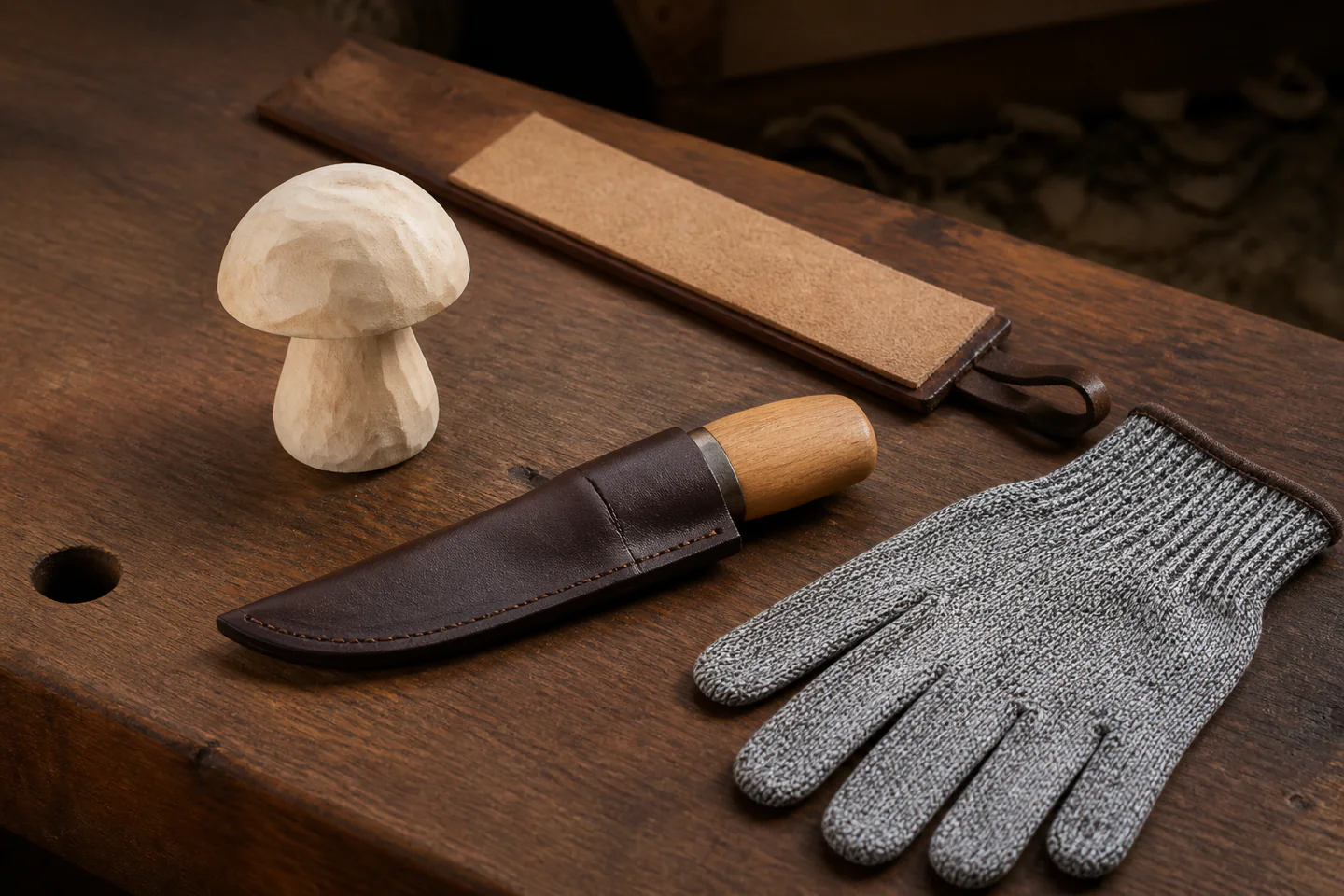
Carve one small basswood mushroom with short stop cuts
Choose a small dry block of known untreated basswood and draw a centreline plus the main silhouette. Sit at a stable bench, wear suitable eye protection and a correctly fitted cut-resistant glove on the non-knife hand if the method supports it. Keep the knife sharp, make short controlled cuts away from fingers and body, and rotate the blank instead of twisting into an unsafe direction. Establish the largest planes first, then round transitions and stop before sanding or fine detail hides the lessons in the grain.
- 01
Use known dry untreated carving wood. Reclaimed, painted, pressure-treated or glued timber can hide metal, contamination or hazardous dust.
- 02
Sharp does not mean safe by itself, but a dull knife encourages force and slipping. Learn stropping and inspect the edge before each session.
- 03
The safe direction is defined by the entire blade path if it slips, not just where the edge appears to stop.
- 04
Grain changes around knots and ends. Take thin slices, listen and turn the work when fibres lift rather than forcing the cut.
- 05
Cut-resistant gloves reduce some slash risk but are not cut-proof, puncture-proof or a substitute for keeping hands out of the path.
What to expect
Most progress is removing less wood
A beginner sees the final outline and tries to reach it in one cut. Controlled carving leaves a margin, checks symmetry and approaches the line through several small planes.
Wood
Even basswood varies. Grain direction can reverse within a small block and end grain needs lighter, sharper cuts.
Knife
A simple sloyd-style knife handles broad shaping; detail knives and gouges solve narrower later problems.
Grip
Thumb-assisted cuts can be controlled only when taught correctly and when every digit remains behind the edge.
Shape
Flat facets are useful evidence. Premature smoothing makes proportions harder to compare.
Surface
A clean knife finish can be more expressive than sanded wood and creates less dust.
Fatigue
Grip strength and judgement decline before enthusiasm does. Short sessions and a defined stopping point prevent risky final cuts.
Core method
Plan every cut and its failure path
Prepare material and edge
Confirm solid untreated basswood, inspect for cracks and embedded material and mark the grain. Read the knife and glove instructions. Strop using a supported method without rolling the bevel, then make a few test cuts on waste to feel the edge and fibre direction.
Establish a safe workstation
Sit with feet stable, bright light and no one within reach. Keep the blank low over the bench or a carving board so a dropped knife cannot reach the legs. Sheath unused tools, clear shavings from the floor and define where sharp tools are placed during every pause.
Block the large form
Draw front and side silhouettes plus a centreline. Remove corners in thin cuts, staying outside the line. Use stop cuts to terminate fibres at necks or cap edges, never prying sideways with the blade. Rotate the work whenever the grain lifts or the slip path approaches the holding hand.
Refine and stop safely
Compare both sides after each small sequence and preserve deliberate facets. Add only a few details that the tool can reach without levering. Brush away chips with the knife sheathed, sign or date the base and store the clean dry tool protected from moisture and contact.
Useful products
Products with a clear job in the setup
The BeaverCraft S50X set includes several carving profiles and stropping equipment, so it can support growth but is more tool than the first mushroom requires. Walnut Hollow basswood gives a known practice surface. NoCry gloves add limited cut resistance to the holding hand; they do not protect from stabs, powered tools or unsafe blade direction.
BeaverCraft S50X Deluxe Wood Carving Tool Set
BeaverCraft publishes project and tool guidance, and the set can grow from simple shaping to detail and relief work.
Walnut Hollow Unfinished Basswood Carving and Craft Blocks
Fine, relatively even grain makes changes in cutting direction easier to feel than strongly figured timber.
NoCry Cut-Resistant Gloves
Experienced carvers frequently combine a fitted glove with safe cut direction while learning small handheld work.
First project
Carve one thumbnail-sized mushroom
A cap, stem and flat base teach stop cuts, convex shaping and symmetry without fragile limbs or deep recesses.
- 01
Mark grain and centre
Draw the cap, stem and centreline on all useful faces.
- 02
Test the edge
Make light cuts on waste and strop if fibres crush rather than slice.
- 03
Remove corners
Create broad facets outside the silhouette with short cuts.
- 04
Cut the cap stop line
Define where fibres end before shaping the stem.
- 05
Round by rotation
Turn the block repeatedly so the blade always follows a safe grain direction.
- 06
Leave the facets
Stop before fatigue and inspect the form rather than sanding away evidence.
What can wait
What can wait until the first result
More profiles increase maintenance and decision-making. One dependable knife and one simple form teach more than a crowded roll.
- 01
A powered rotary tool
It adds entanglement, eye, noise and dust hazards before hand control and grain reading are established.
- 02
Hard or figured wood
Dense grain, knots and reversals require sharper technique and more force.
- 03
Large spoons
Deep concaves and food-use finishes introduce gouges, hook knives and material questions.
- 04
Tiny facial detail
Proportion and safe access matter before eyes, fingers or fur texture.
- 05
Varnish and stain
A raw finished carving first reveals torn grain and tool marks that colour can disguise.
Upgrade path
Upgrade the repeated limitation
Add a tool only when a repeated shape cannot be reached safely or cleanly by the current edge.
Small figure
About £35–£100Knife, basswood, strop and protection
Learn grain, safe cuts and edge care.Detail carving
About £70–£160Detail knife and selected gouge
Reach tighter transitions and texture.Relief or spoons
About £120–£300Gouges, clamp and carving board
Control larger stock and concave forms.Dedicated bench
About £250–£900+Vice, task lighting and dust control
Support longer work and varied woods.Safety & care
The glove is the final layer, not the plan
Every cut should remain safe if the glove offers no protection at all. Sharp storage, body position, grain direction and an unobstructed slip path do the primary work.
- Keep all fingers and body parts out of the complete possible blade path and never carve towards the lap, torso or a person nearby.
- Use a sharp undamaged knife intended for carving, sheath it during every pause and learn stropping from reliable instructions.
- Wear suitable eye protection and correctly selected hand protection; understand that knit gloves do not stop punctures or make powered tools safe.
- Use only known untreated wood, control sanding dust separately and never burn, carve or sand painted, treated or contaminated timber.
- Stop when grip, light or attention declines, account for every tool and offcut and store knives locked away from children.
Outside help
When outside help earns its place
A small project kit and careful video can teach basic cuts. In-person instruction is especially valuable here because a tutor can correct the invisible slip path, grip and grain direction before repetition makes them habits.
Choose a project using the exact knife profile and known wood.
Ask about knife skills, gloves, stropping, wood and individual supervision.
Representative UK learning options checked 18 August 2026; local prices, access, materials and tutor support vary.
Sources
Where the guidance came from
Tool makers define edge use and maintenance; established carving educators and experienced communities add the repeated evidence about wood choice, body position, protective limits and sensible first forms.
-
01
BeaverCraft · Wood carving tutorials
Manufacturer projects, tool use and sharpening guidance.
Open source -
02
NoCry · Cut-resistant gloves
Manufacturer limitations, sizing and care information.
Open source -
03
Woodworkers Institute · Carving
Specialist UK carving techniques and projects.
Open source -
04
Mary May’s School of Traditional Woodcarving
Structured specialist lessons on tools, grain and cuts.
Open source -
05
Reddit · r/Woodcarving
Community evidence on knives, basswood, gloves and first projects.
Open source -
06
Amazon UK · S50X Deluxe Wood Carving Tool Set
Exact product catalogue page or ISBN used for the recommendation; current price, seller, specification and availability should be confirmed.
Open source -
07
Amazon UK · Unfinished Basswood Carving and Craft Blocks
Exact product catalogue page or ISBN used for the recommendation; current price, seller, specification and availability should be confirmed.
Open source -
08
Amazon UK · Cut-Resistant Gloves
Exact product catalogue page or ISBN used for the recommendation; current price, seller, specification and availability should be confirmed.
Open source
Guide information and links checked 18 August 2026.