Beginner’s guide · Grow & care
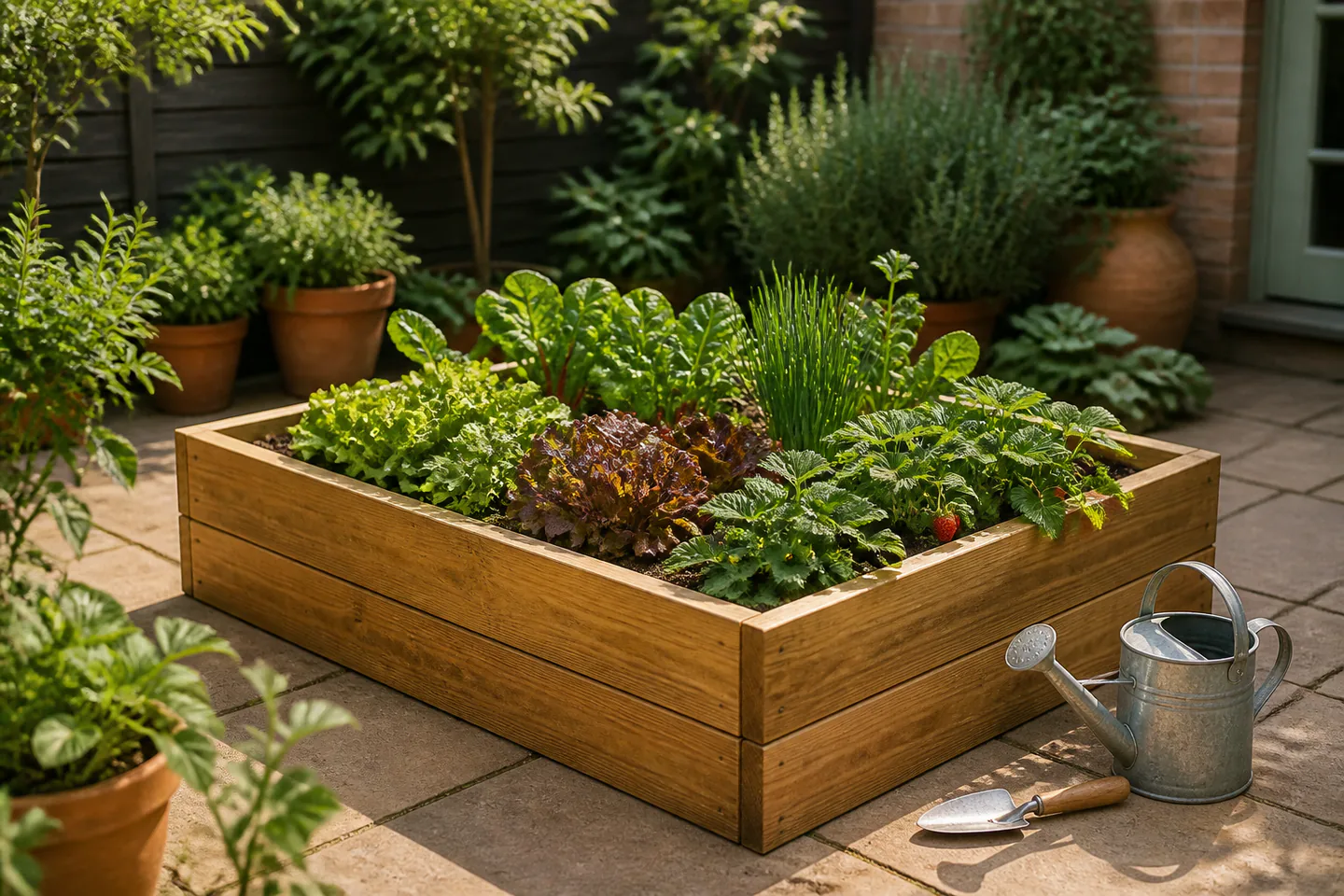
One filled, planted and reachable raised bed
Design for reach, drainage and soil volume.
A raised bed can improve access and define a growing area, but it does not remove watering, soil or structural decisions. Start with a modest bed placed on a sound surface and calculate every litre before filling it.
Quick answer
Measure reach and calculate the full soil volume first
Choose a level permitted site with the light required by the intended plants and practical water access. Decide whether the goal is simply defined soil or reduced bending, because a shallow ground frame and a waist-high planter are different systems. Keep every point within comfortable reach, provide drainage, protect surfaces appropriately and calculate internal length × width × depth before choosing fill.
- 01
Raised does not automatically mean accessible. Height, width, path surface and wheelchair or knee clearance all matter.
- 02
A tall planter needs a strong base and large fill volume; false bottoms must still drain and support wet weight.
- 03
Beds dry faster and warm differently from open ground. Mulch and water access matter more as height and exposure increase.
- 04
Timber treatment, metal heat, liners and contact with food crops should be checked against manufacturer guidance.
What to expect
The structure is only the container for a soil-and-water system
Poor fill, unreachable centres and under-estimated wet weight create more trouble than assembly itself.
Reach
Most people can comfortably reach only about 45–60 cm from one side; provide access from both sides for wider beds.
Volume
A 1.2 × 0.6 × 0.3 m bed holds 216 litres before settling; bag counts rise quickly.
Drainage
Water must leave without eroding paths, rotting a base or damaging a balcony. Do not block required holes with an impermeable liner.
Fill
Use a plant-appropriate mix with stable organic matter and mineral structure rather than filling deep beds entirely with expensive potting compost.
Water
Check below the surface, mulch suitable crops and avoid tiny daily splashes that keep roots shallow.
Structure
Wet soil is heavy. Level the base, tighten fixings and inspect bulging, corrosion, rot and castors.
Core method
Plan the bed from the gardener inward
Define the access need
Decide whether the bed is for soil improvement, neat boundaries, wheelchair approach or reduced bending. Measure comfortable reach and working height, then draw paths and turning space before selecting a product. Check tenancy, lease, balcony loading and underground services where relevant.
Choose site and structure
Observe light and wind, locate a water route and ensure overflow has somewhere safe to go. Compare internal—not headline—dimensions, material, liner, drainage, warranty and assembled wet load. Level the base and anchor or brace exactly as instructed.
Calculate and source fill
Multiply internal dimensions in metres to get cubic metres, then multiply by 1,000 for litres. Use the crop and supplier guidance to select a stable mix; avoid unknown waste, fresh manure and thick uncomposted layers that collapse. Allow for settling without burying crowns.
Plant a modest first layout
Use compact crops or flowers matched to depth, light and season. Keep tall plants from shading everything, provide supports at planting, water the full root zone and mulch when the soil is moist. Inspect structure and drainage after heavy rain.
Useful products
Two different bed formats and a crop-planning reference
The VOUNOT planter is a small elevated patio route; the Outsunny bed is a larger ground-level route. They are alternatives, not a combined setup. The RHS veg guide helps turn either into a realistic crop plan.
VOUNOT Raised Garden Bed with Mini Greenhouse and Wheels
It limits the first soil volume and can suit herbs or compact crops where bending is the main barrier.
Outsunny Galvanised Steel Raised Garden Bed
The open base supports drainage and root connection where a full accessible height is not required.
Lucy Chamberlain RHS Step-by-Step Veg Patch
It supports crop choice and spacing after the physical bed is selected.
First project
Assemble, fill and plant one measured bed
The target is a stable accessible system with known soil and watering needs.
- 01
Measure access and light
Record reach, path width, sun, wind and water route.
- 02
Select one bed type
Choose ground-level definition or genuinely elevated access.
- 03
Calculate litres and load
Use internal dimensions and include the weight of wet fill.
- 04
Assemble and drain
Level, secure and protect the surface without blocking drainage.
- 05
Fill and plant lightly
Use suitable material and a few season-matched compact crops.
- 06
Inspect after rain
Check settlement, bulging, drainage, path erosion and moisture.
What can wait
What can wait until the first result
Covers, irrigation and several beds can wait until one structure survives weather and supports a manageable crop.
- 01
Buying both bed formats
Choose according to access and site; they solve different problems.
- 02
A permanent irrigation grid
Hand watering shows zones and demand before emitters are fixed.
- 03
Deep woody fill by default
Large buried material can settle and change water and nitrogen behaviour; use a researched system, not a social-media shortcut.
- 04
Too many crops
Different spacing, supports and harvest times can make a small bed crowded and inaccessible.
- 05
Sitting on the edge
Many kits are not designed as seats and can deform under point loads.
Upgrade path
Upgrade the repeated limitation
Add only the feature that solves an observed problem: watering, pests, season extension or physical access.
Small elevated planter
About £90–£180 filledWaist-high planter + modest crops
Reduce bending on patio or balcony if load allows.Ground-level bed
About £120–£350 filledFrame + paths + larger soil volume
Create a defined productive bed.Protection
About £30–£150Netting or cold frame matched to crop
Reduce specific pests or extend season.Water system
About £50–£250Butt/tap + timer + dripline
Automate only after demand is mapped.Safety & care
Wet soil turns a simple kit into a heavy structure
Ground load, sharp edges, treated materials, blocked drainage and unstable assembly require attention.
- Confirm balcony, roof or deck load with a competent person before placing a filled raised bed; wet growing media are very heavy.
- Follow assembly and anchoring instructions, wear gloves and eye protection and recheck fasteners after filling and weather.
- Keep drainage open and direct overflow away from buildings, electrics, slippery paths and neighbouring property.
- Check liners, treatments and reclaimed materials for suitability around soil and edible crops.
- Use accessible path surfaces, avoid overreaching and do not sit or climb on edges unless the structure is rated for it.
Outside help
When outside help earns its place
A single kit can be assembled independently with the manual. An accessible-gardening or local growing session is useful when the bed must accommodate specific reach, mobility or crop needs.
Use dimensions, soil and crop guidance before buying a structure.
Check that the advice covers approach, reach, height, load and maintenance.
Representative UK product, club, lesson and venue costs checked 9 August 2026; local prices, access, weather, materials and tutor support vary.
Sources
Where the guidance came from
RHS and accessible-gardening guidance establish bed design; product manuals and growing communities add realistic fill and maintenance evidence.
-
01
RHS · Raised beds
UK siting, construction, soil and planting guidance.
Open source -
02
Thrive · Accessible gardening
Gardening design and methods for different physical needs.
Open source -
03
RHS · Vegetable growing
Crop depth, spacing and seasonal care context.
Open source -
04
VOUNOT · Raised-bed instructions
Assembly, dimensions, drainage and product-specific cautions.
Open source -
05
Reddit · r/vegetablegardening
Community reports on bed fill, watering, crops and structural issues.
Open source -
06
Amazon UK · VOUNOT elevated raised bed
Exact product page, model or ISBN, observed price and availability checked for this guide.
Open source -
07
Amazon UK · Outsunny metal raised bed
Exact product page, model or ISBN, observed price and availability checked for this guide.
Open source -
08
Amazon UK · RHS Step-by-Step Veg Patch
Exact product page, model or ISBN, observed price and availability checked for this guide.
Open source
Guide information and links checked 9 August 2026.