Beginner’s guide · Cook & bake
Bake the pastry for the filling,
not beside it.
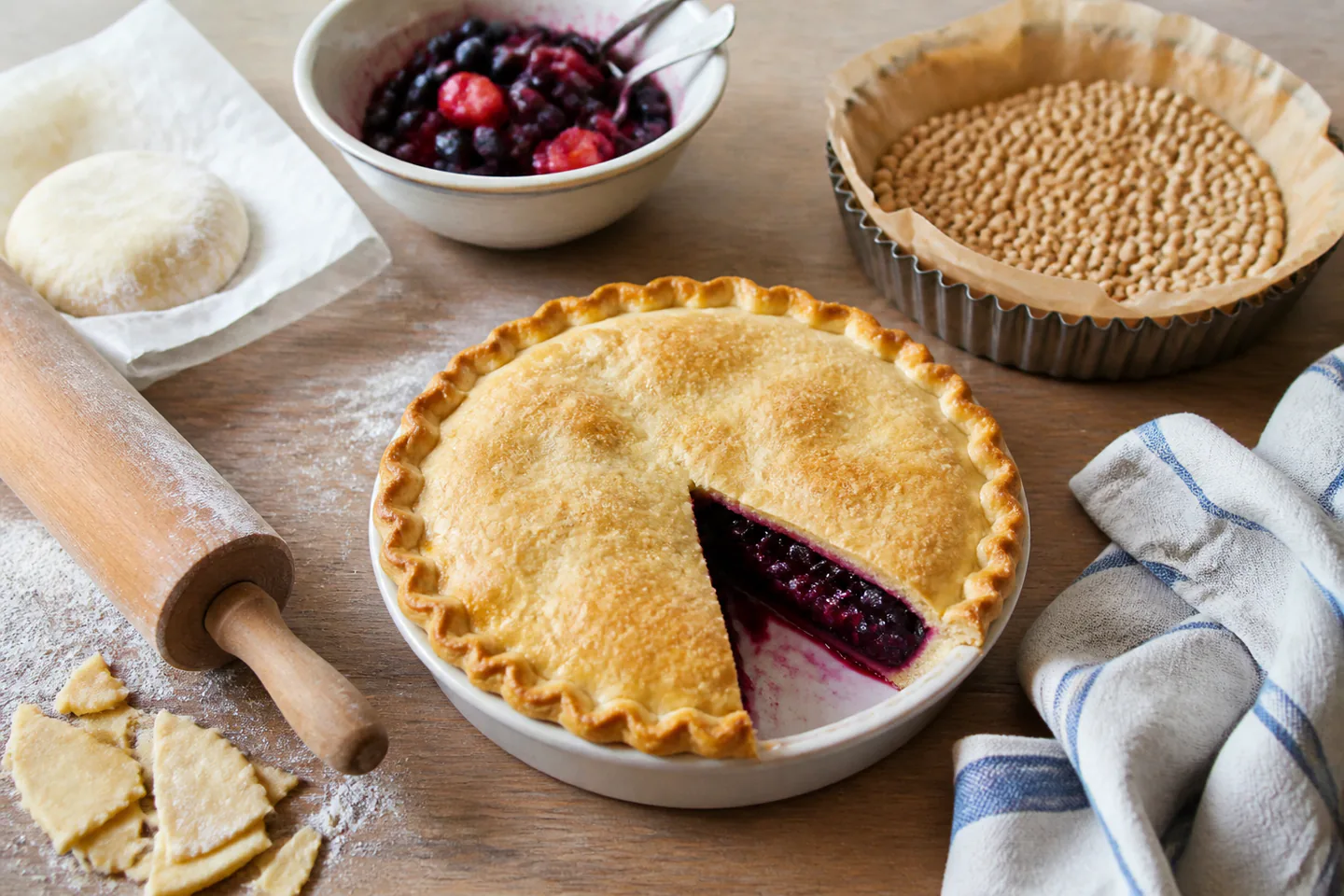
A small fruit pie teaches cold shortcrust, blind baking, thickened filling and venting. The first success is a crisp base that supports a set filling.
Quick answer
Complete one pie before expanding the setup
Make or use a tested shortcrust, chill it before and after rolling, line a modest metal or ceramic dish without stretching, then blind bake when the recipe requires it. Cool or thicken the filling as directed, avoid overfilling, vent the top and bake until the pastry is well coloured and the fruit bubbles at the centre.
- 01
Cold firm fat and limited water help pastry stay short rather than tough. Record what happened during pie baking so the next attempt changes one known variable instead of several guesses.
- 02
Stretching dough into a dish invites shrinkage as it relaxes in the oven. Record what happened during pie baking so the next attempt changes one known variable instead of several guesses.
- 03
Blind baking sets a shell before a wet or short-baked filling is added. Record what happened during pie baking so the next attempt changes one known variable instead of several guesses.
- 04
A fruit pie needs enough heat and time for both starch thickening and pastry browning. Record what happened during pie baking so the next attempt changes one known variable instead of several guesses.
What to expect
What pie baking is really like at the start
The useful beginner controls are preparation, one bounded task and a record of the result; specialist equipment matters only when it solves a repeated limitation.
Pastry
Cracks can be patched, but repeated re-rolling warms the dough and builds toughness. Record what happened during pie baking so the next attempt changes one known variable instead of several guesses.
Dish
Material, depth and colour change how quickly the base receives heat. Record what happened during pie baking so the next attempt changes one known variable instead of several guesses.
Filling
Fruit variety, cut size, sugar and resting liquid alter final set. Record what happened during pie baking so the next attempt changes one known variable instead of several guesses.
Cooling
Many fillings continue thickening as they cool, so an immediate slice is misleading. Record what happened during pie baking so the next attempt changes one known variable instead of several guesses.
Core method
The core pie baking method
Keep pastry cool
Measure accurately, handle briefly, flatten before chilling and roll on a lightly floured cool surface. Record what happened during pie baking so the next attempt changes one known variable instead of several guesses.
Line without tension
Ease the dough into corners, leave a small overhang and chill the lined dish. Record what happened during pie baking so the next attempt changes one known variable instead of several guesses.
Manage the base
Dock or blind bake only as the recipe directs and protect edges that colour too quickly. Record what happened during pie baking so the next attempt changes one known variable instead of several guesses.
Control filling and finish
Use the tested thickener, leave expansion space, vent steam and bake until the centre shows the required bubbling. Record what happened during pie baking so the next attempt changes one known variable instead of several guesses.
Useful products
Products with a clear job in the route
The scale keeps pastry and thickener ratios consistent, the mat supports controlled rolling and the thermometer is useful when checking hot filling or custard later.
Salter 1036 Digital Kitchen Scale
It makes a first batch easier to repeat and diagnose.
Generic Thick Silicone Pastry Mat with Measurements, 40 × 50 cm
The size supports a first pie or folded pastry without occupying the whole kitchen.
Tala Jam and Confectionery Thermometer
It supplements wrinkle and flake tests with a repeatable temperature reading.
First project
Bake a small double-crust apple pie
Use a tested apple and starch combination so the lesson stays on pastry temperature, fill level and final set.
- 01
Prepare the pastry
Mix briefly, flatten into discs and chill before rolling. Record what happened during pie baking so the next attempt changes one known variable instead of several guesses.
- 02
Prepare the filling
Cut fruit evenly and follow the recipe’s method for sugar, starch and excess juice. Record what happened during pie baking so the next attempt changes one known variable instead of several guesses.
- 03
Line and chill
Ease pastry into the dish without stretching and chill the assembled base. Record what happened during pie baking so the next attempt changes one known variable instead of several guesses.
- 04
Fill, seal and vent
Keep the rim clean, avoid overfilling and make clear steam vents. Record what happened during pie baking so the next attempt changes one known variable instead of several guesses.
- 05
Bake and cool
Bake to the recipe’s centre cue, then wait for the filling to set before slicing. Record what happened during pie baking so the next attempt changes one known variable instead of several guesses.
What can wait
What can wait until the first result
Delay anything that adds cost, risk or another variable before the basic workflow has produced something you can review.
- 01
A deep elaborate lattice
It extends handling time and warms the top before the base is understood. Record what happened during pie baking so the next attempt changes one known variable instead of several guesses.
- 02
Several filling experiments
Changing fruit and thickener together makes leaks hard to diagnose. Record what happened during pie baking so the next attempt changes one known variable instead of several guesses.
- 03
Ceramic baking weights
Dry rice or beans can teach blind baking before a dedicated purchase. Record what happened during pie baking so the next attempt changes one known variable instead of several guesses.
- 04
Decorative egg-wash layers
One thin even wash is enough to observe browning. Record what happened during pie baking so the next attempt changes one known variable instead of several guesses.
Upgrade path
Add the capability you can now name
Each stage should remove a demonstrated constraint rather than make the setup look more advanced.
Use what you own
£0–£20Existing equipment and one written plan
Use a modest dish and a tested filling.Repeat the first route
About £15–£50 plus ingredientsA complete repeatable starter setup
Repeat one crust until rolling, lining and bake colour are consistent.Add one capability
Often £50–£250One selected tool, service or learning resource
Add a metal pie dish, baking steel or thermometer only to solve a base or filling problem.Build specialist depth
Club, course or specialist dependentA documented specialist workflow
Develop custard, raised, lattice and savoury pies with their different setting and safety requirements.Safety & care
Coordinate hot filling, steam and allergen control
A pie can look finished while the centre, base or filling is still dangerously hot or undercooked.
- Keep raw flour, egg and dairy under normal food-hygiene controls.
- Vent enclosed pies and open the oven from the side to avoid a burst of steam.
- Use a stable dish without chips or thermal damage and a clear heatproof landing space.
- Declare gluten, dairy, egg and nut ingredients when sharing.
- Cool according to the filling type; refrigerate perishable custard, cream, meat or fish pies promptly.
Outside help
When outside help earns its place
A pastry class is useful when rolling pressure, dough temperature and blind-bake cues remain difficult to infer from photographs.
Choose a course that bakes and cuts the pies so the base and filling set are reviewed, not just assembled.
Use outside help after the first pie baking attempt can reveal the exact technique, access or safety problem that needs live correction.
Representative UK learning and access routes checked 1 September 2026; local prices, permissions, equipment and tutor support vary.
Sources
Where the guidance came from
Authoritative and specialist guidance supports the method and safety boundaries; community discussion contributes recurring beginner problems rather than unsupported claims.
-
01
Food Standards Agency · Food hygiene at home
Clean handling, cooking, chilling and cross-contamination guidance for domestic kitchens.
Open source -
02
King Arthur Baking · Pie baking guide
Pastry, blind baking, fruit filling and doneness fundamentals.
Open source -
03
King Arthur Baking · Pie crust
Shortcrust mixing, rolling, chilling and handling guidance.
Open source -
04
BBC Good Food · How to blind bake pastry
UK practical blind-baking sequence and common uses.
Open source -
05
BBC Good Food · Pie recipes
UK pie-dish, filling and oven context.
Open source -
06
Reddit · r/AskBaking
Recurring beginner problems involving weighing, chilling, spreading, hydration and pastry temperature.
Open source -
07
Amazon UK · 1036 Digital Kitchen Scale
Exact Amazon UK product page or ISBN used for this recommendation; current price, seller, specification and availability should be confirmed.
Open source -
08
Amazon UK · Thick Silicone Pastry Mat with Measurements, 40 × 50 cm
Exact Amazon UK product page or ISBN used for this recommendation; current price, seller, specification and availability should be confirmed.
Open source -
09
Amazon UK · Jam and Confectionery Thermometer
Exact Amazon UK product page or ISBN used for this recommendation; current price, seller, specification and availability should be confirmed.
Open source
Guide information and links checked 1 September 2026.