Beginner’s guide · Reflect & explore
Brew the same leaf twice,
change one variable.
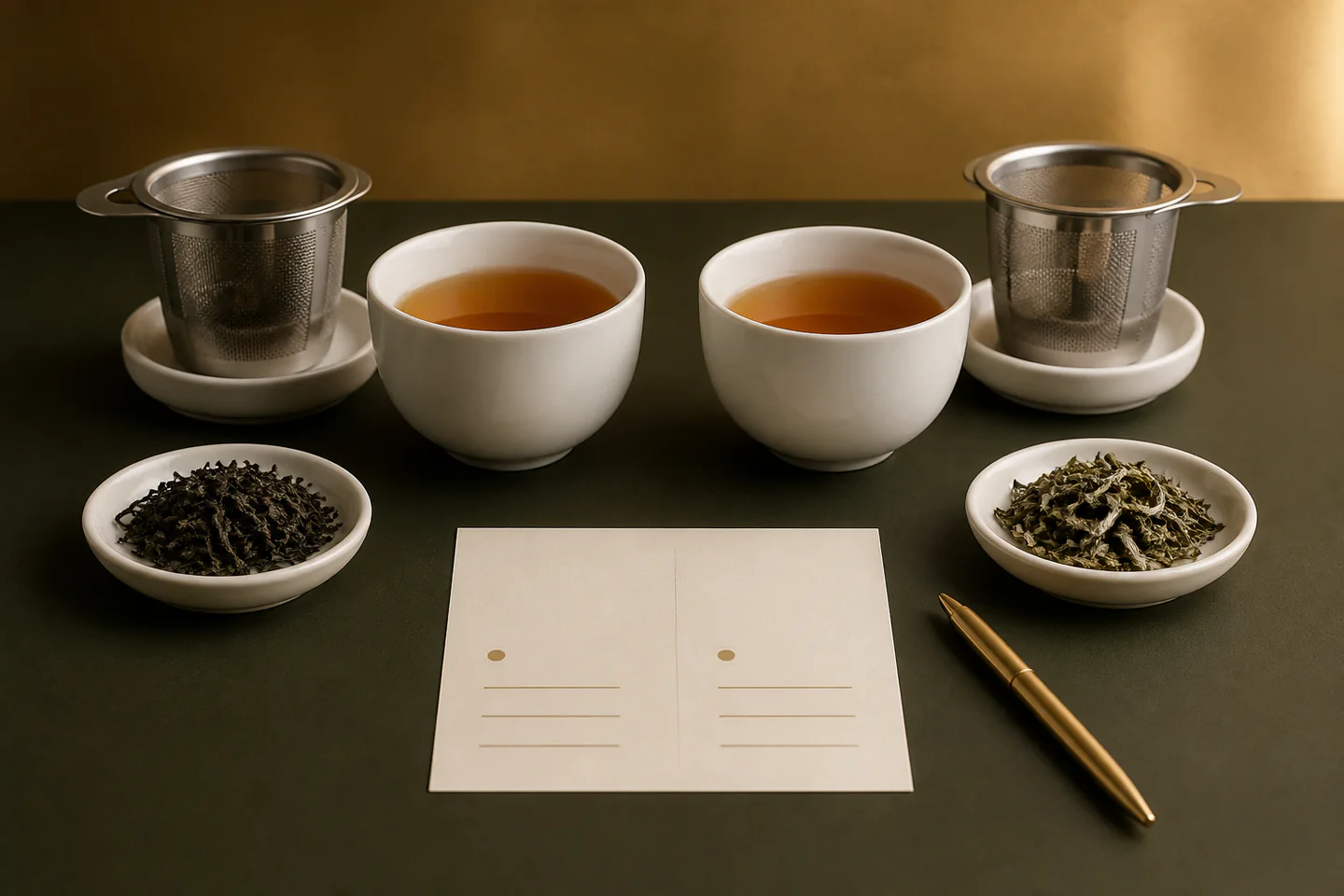
Tea tasting becomes useful when leaf, water, dose, time and temperature are recorded. Begin with a small sampler and two identical cups.
Quick answer
Compare two cups with the same water and measured method
Choose two teas from a reputable varied sampler, use two identical heat-safe cups and one basket infuser rinsed between brews. Follow the supplier’s starting dose, water temperature and time, record every variable and taste once warm enough to do so safely. Note aroma, body, bitterness, sweetness and finish in ordinary language, then repeat one tea while changing only time or temperature.
- 01
Choose a small varied loose-leaf sampler and roomy basket infuser for the first result and resist substituting several unfamiliar materials at once. Record what you used on the first attempt so the result can be repeated or changed for a reason.
- 02
Make consistent dose, water temperature and time visible with a small test before committing the full project. Record what you used on the first attempt so the result can be repeated or changed for a reason.
- 03
Change one variable between attempts and keep the preparation otherwise consistent. Record what you used on the first attempt so the result can be repeated or changed for a reason.
- 04
Inspect the work at each reversible stage instead of waiting until short comparable tasting notes. Record what you used on the first attempt so the result can be repeated or changed for a reason.
- 05
Finish one modest result and note the actual time, material use and recurring difficulty. Record what you used on the first attempt so the result can be repeated or changed for a reason.
What to expect
Brewing variables can disguise the tea
A very hot, long or cramped infusion can make a good leaf harsh; a weak dose can make every sample seem similar.
Leaf space
Whole leaves need room for water to circulate. Tiny closed balls can constrain them. In tea tasting, this is worth checking deliberately rather than trying to correct it after the next stage.
Water
Mineral content and chlorine affect flavour. Use the same water for a fair comparison. In tea tasting, this is worth checking deliberately rather than trying to correct it after the next stage.
Temperature
Boiling water suits some teas but can overwhelm others; begin with supplier guidance. In tea tasting, this is worth checking deliberately rather than trying to correct it after the next stage.
Time
Use a timer and separate leaves promptly so one cup does not continue extracting. In tea tasting, this is worth checking deliberately rather than trying to correct it after the next stage.
Language
Personal descriptions are useful when tied to preparation; there is no need to imitate a professional flavour wheel. In tea tasting, this is worth checking deliberately rather than trying to correct it after the next stage.
Core method
Make the tasting repeatable before making it formal
Choose a fair pair
Compare related teas or one tea at two settings rather than six unrelated cups. In tea tasting, this is worth checking deliberately rather than trying to correct it after the next stage.
Measure and record
Write leaf amount, water volume, temperature, time and water source. In tea tasting, this is worth checking deliberately rather than trying to correct it after the next stage.
Infuse with room
Use a basket that fills most of the cup and remove it at the planned time. In tea tasting, this is worth checking deliberately rather than trying to correct it after the next stage.
Taste in stages
Smell dry and wet leaf, sip as the liquor cools and record plain observations before reading marketing notes. In tea tasting, this is worth checking deliberately rather than trying to correct it after the next stage.
Useful products
Products with a clear job in the setup
The VAHDAM sampler supplies a broad comparison set. The HAUSPROFI basket gives leaves room; the Tala strainer is a simpler alternative for pouring brewed tea. Choose one infuser method.
VAHDAM World Top 20 Tea Sampler
Small portions allow range without buying many full tins.
HAUSPROFI Stainless Steel Basket Tea Infuser Two-Pack
Two matching baskets reduce equipment differences between samples.
Tala Stainless Steel Tea Strainer
It is useful when leaves brew freely in a pot rather than inside a basket.
First project
Compare one black tea at two brew times
Two otherwise identical cups make the effect of extraction easy to taste without specialist vocabulary.
- 01
Prepare two equal cups
Warm them if desired and measure the same water volume. In tea tasting, this is worth checking deliberately rather than trying to correct it after the next stage.
- 02
Dose equal leaf
Use the supplier’s starting ratio and record it. In tea tasting, this is worth checking deliberately rather than trying to correct it after the next stage.
- 03
Control temperature
Use water at the same measured or consistently prepared temperature. In tea tasting, this is worth checking deliberately rather than trying to correct it after the next stage.
- 04
Time two infusions
Remove one basket at the recommended time and the other thirty to sixty seconds later. In tea tasting, this is worth checking deliberately rather than trying to correct it after the next stage.
- 05
Taste as they cool
Compare aroma, body, bitterness, sweetness and finish at safe temperatures. In tea tasting, this is worth checking deliberately rather than trying to correct it after the next stage.
- 06
Write the preference
Record which cup was preferred and why, then store remaining tea airtight. In tea tasting, this is worth checking deliberately rather than trying to correct it after the next stage.
What can wait
What can wait until the first result
Expensive teaware and rare aged tea do not improve an uncontrolled first comparison.
- 01
Large tea collection
Freshness and storage become problems before preferences are known. In tea tasting, this is worth checking deliberately rather than trying to correct it after the next stage.
- 02
Tiny gongfu teapot set
A different brewing style can follow basic variable control. In tea tasting, this is worth checking deliberately rather than trying to correct it after the next stage.
- 03
Rare vintage pu-erh
Authenticity, storage history and price require specialist buying knowledge. In tea tasting, this is worth checking deliberately rather than trying to correct it after the next stage.
- 04
Flavour-wheel performance
Plain repeatable language is more useful than borrowed descriptors. In tea tasting, this is worth checking deliberately rather than trying to correct it after the next stage.
- 05
Health claims
Tasting notes should describe the drink, not promise treatment effects. In tea tasting, this is worth checking deliberately rather than trying to correct it after the next stage.
Upgrade path
Upgrade the repeated limitation
Add equipment when a recurring measurement or brewing style genuinely needs it.
Two-cup comparison
About £15–£35Sampler, cups and basket
Learn repeatable tasting.Focused tea family
About £25–£70Fresh full packs and thermometer
Compare origin and processing.Gongfu practice
About £40–£150Small vessel, tray and precise scale
Explore repeated short infusions.Specialist collection
About £100–£500+Storage tins and trusted vendors
Maintain freshness and provenance.Safety & care
Manage heat, caffeine, allergens and honest claims
Tea is familiar, but boiling water and concentrated caffeine still deserve ordinary care.
- Use stable heat-safe vessels, keep kettle cords away from edges and taste only after cooling. Follow the current instructions supplied with the exact material, tool or living specimen.
- Check caffeine and personal medical guidance, especially during pregnancy, with medicines or when sensitive to stimulants. Follow the current instructions supplied with the exact material, tool or living specimen.
- Read ingredients for flavourings, nuts, milk products or other allergens in blends. Follow the current instructions supplied with the exact material, tool or living specimen.
- Store dry tea sealed away from moisture, odours and pests and discard anything mouldy. Follow the current instructions supplied with the exact material, tool or living specimen.
- Do not present tea as a treatment or replacement for qualified medical care. Follow the current instructions supplied with the exact material, tool or living specimen.
Outside help
When outside help earns its place
A complete beginner tutorial is enough for the first controlled attempt. A class becomes useful when formal sensory calibration, gongfu brewing or tea provenance becomes the goal.
Follow one method using a small varied loose-leaf sampler and roomy basket infuser, including preparation and finishing rather than only the photogenic middle stage.
Check whether materials, troubleshooting, short comparable tasting notes and a finished take-home result are included.
Representative UK learning options checked 28 August 2026; local prices, access, materials and tutor support vary.
Sources
Where the guidance came from
The method is grounded in specialist and public guidance, then checked against recurring beginner questions and the exact products linked here.
-
01
UK Tea & Infusions Association
UK tea information, terminology and brewing context.
Open source -
02
Tea and Herbal Association of Canada · brewing
Tea preparation and type guidance.
Open source -
03
Specialty Tea Institute
Professional tea education and sensory context.
Open source -
04
European Food Safety Authority · caffeine
Evidence-based caffeine safety context.
Open source -
05
Reddit · r/tea wiki
Community guides on brewing, vendors and beginner tasting.
Open source -
06
Amazon UK · World Top 20 Tea Sampler
Exact product catalogue page or ISBN used for the recommendation; current price, seller, specification and availability should be confirmed.
Open source -
07
Amazon UK · Stainless Steel Basket Tea Infuser Two-Pack
Exact product catalogue page or ISBN used for the recommendation; current price, seller, specification and availability should be confirmed.
Open source -
08
Amazon UK · Stainless Steel Tea Strainer
Exact product catalogue page or ISBN used for the recommendation; current price, seller, specification and availability should be confirmed.
Open source
Guide information and links checked 28 August 2026.