Beginner’s guide · Make & create
Count every round
and crochet one small toy.
Amigurumi uses tight crochet fabric, deliberate increases and decreases, careful stuffing and securely sewn features to build small three-dimensional forms.
Quick answer
Build one small, controlled result first
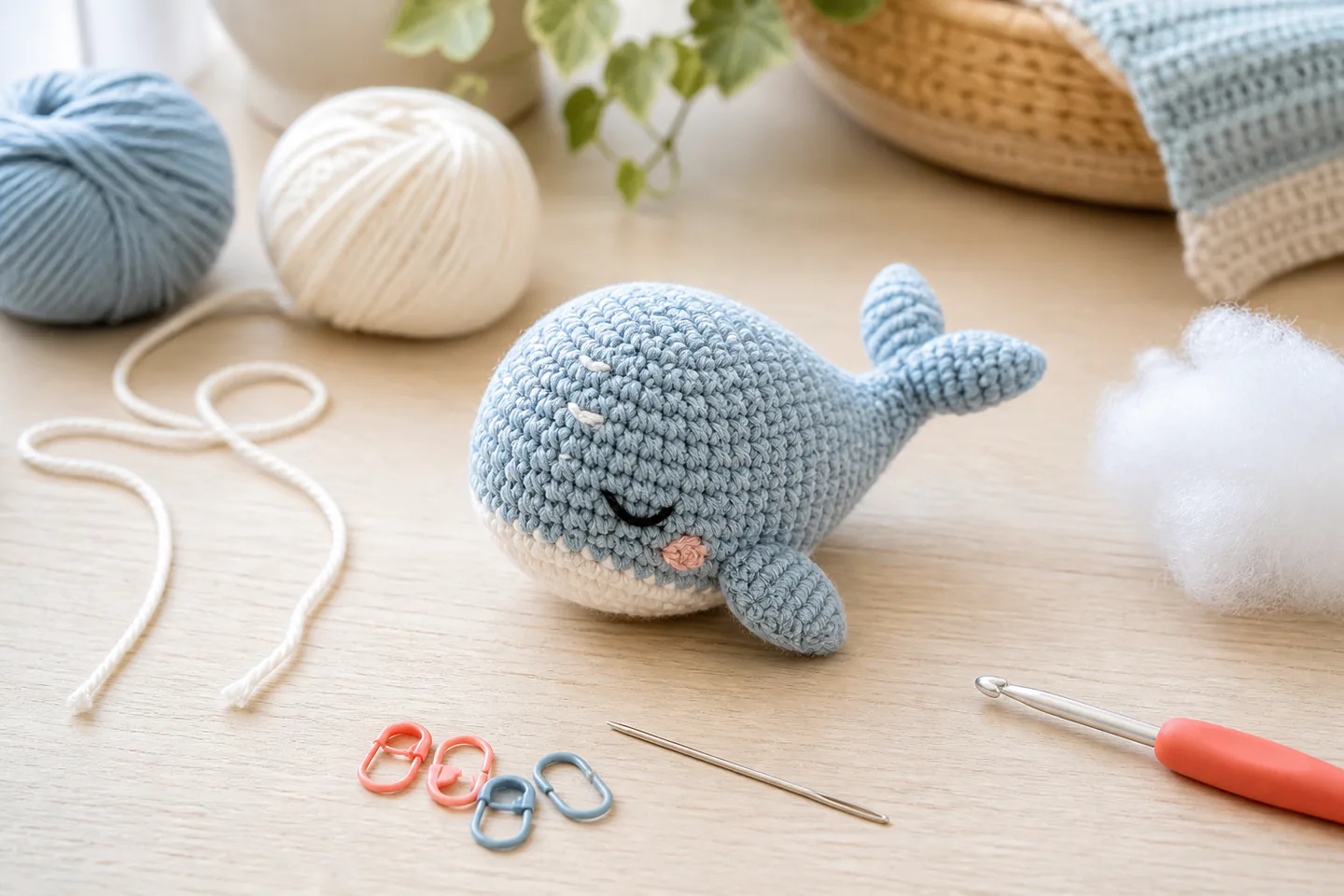
Choose a small beginner pattern with one main body, smooth light yarn and embroidered features. Mark the first stitch of every spiral round, count at intervals and stuff gradually before closing and weaving ends securely.
- 01
Read the whole pattern, confirm whether it uses UK or US terms and place yarn, hook, marker, blunt needle, stuffing and row counter in one project bag. Keep the first attempt narrow enough that preparation, the main action and the result can all be reviewed together.
- 02
Keep the marker at the first stitch, count each round and use a firm even fabric that contains stuffing without making the hands fight the hook. Keep the first attempt narrow enough that preparation, the main action and the result can all be reviewed together.
- 03
Check stitch count, gaps, shape symmetry, stuffing lumps and seam strength before the opening becomes too small to correct them. Keep the first attempt narrow enough that preparation, the main action and the result can all be reviewed together.
- 04
Secure the live loop, record the round and stitch count and store needles, markers and loose fibres in a closed container. Keep the first attempt narrow enough that preparation, the main action and the result can all be reviewed together.
What to expect
Accuracy comes from the sequence, not the size of the toolkit
Preparation, one controlled variable and an honest inspection matter more than collecting specialist equipment.
The first attempt
A sphere, whale or simple octopus teaches spiral rounds and shaping with fewer seams than a multi-limbed character. For amigurumi crochet, note what actually happened rather than relying on memory; that turns the next attempt into a controlled change instead of another guess.
The control point
Keep the marker at the first stitch, count each round and use a firm even fabric that contains stuffing without making the hands fight the hook. For amigurumi crochet, note what actually happened rather than relying on memory; that turns the next attempt into a controlled change instead of another guess.
The useful signal
Check stitch count, gaps, shape symmetry, stuffing lumps and seam strength before the opening becomes too small to correct them. For amigurumi crochet, note what actually happened rather than relying on memory; that turns the next attempt into a controlled change instead of another guess.
The common trap
Dark fuzzy yarn, many colour changes and unmarked spiral rounds hide stitches and compound counting mistakes. For amigurumi crochet, note what actually happened rather than relying on memory; that turns the next attempt into a controlled change instead of another guess.
Core method
Prepare, make, inspect and reset
Prepare deliberately
Read the whole pattern, confirm whether it uses UK or US terms and place yarn, hook, marker, blunt needle, stuffing and row counter in one project bag. For amigurumi crochet, note what actually happened rather than relying on memory; that turns the next attempt into a controlled change instead of another guess.
Control the central variable
Keep the marker at the first stitch, count each round and use a firm even fabric that contains stuffing without making the hands fight the hook. For amigurumi crochet, note what actually happened rather than relying on memory; that turns the next attempt into a controlled change instead of another guess.
Read the result
Check stitch count, gaps, shape symmetry, stuffing lumps and seam strength before the opening becomes too small to correct them. For amigurumi crochet, note what actually happened rather than relying on memory; that turns the next attempt into a controlled change instead of another guess.
Reset before repeating
Secure the live loop, record the round and stitch count and store needles, markers and loose fibres in a closed container. For amigurumi crochet, note what actually happened rather than relying on memory; that turns the next attempt into a controlled change instead of another guess.
Useful products
Products with a clear job in the setup
One comfortable hook, smooth pale DK yarn and opening stitch markers form a clearer learning setup than a large mixed hook-and-yarn kit.
Clover Amour Crochet Hook, 4.0 mm
One correct hook is better than a large set when learning tight spiral rounds.
Stylecraft Special DK Cream 1005, 100 g
A pale smooth yarn exposes increases, decreases and gaps.
Clover Quick Locking Stitch Markers, Medium
A movable marker prevents a spiral from silently gaining or losing its starting point.
First project
Crochet a small embroidered-face toy
Keep the shape simple and make stitch count, stuffing and secure finishing the visible achievements.
- 01
Set up
Read the whole pattern, confirm whether it uses UK or US terms and place yarn, hook, marker, blunt needle, stuffing and row counter in one project bag. For amigurumi crochet, note what actually happened rather than relying on memory; that turns the next attempt into a controlled change instead of another guess.
- 02
Begin the first attempt
A sphere, whale or simple octopus teaches spiral rounds and shaping with fewer seams than a multi-limbed character. For amigurumi crochet, note what actually happened rather than relying on memory; that turns the next attempt into a controlled change instead of another guess.
- 03
Hold one variable steady
Keep the marker at the first stitch, count each round and use a firm even fabric that contains stuffing without making the hands fight the hook. For amigurumi crochet, note what actually happened rather than relying on memory; that turns the next attempt into a controlled change instead of another guess.
- 04
Inspect the result
Check stitch count, gaps, shape symmetry, stuffing lumps and seam strength before the opening becomes too small to correct them. For amigurumi crochet, note what actually happened rather than relying on memory; that turns the next attempt into a controlled change instead of another guess.
- 05
Reset and record
Secure the live loop, record the round and stitch count and store needles, markers and loose fibres in a closed container. For amigurumi crochet, note what actually happened rather than relying on memory; that turns the next attempt into a controlled change instead of another guess.
What can wait
What can wait until the first result
Delay equipment that solves no repeated problem in the first small project.
- 01
A large first setup
Scale multiplies Dark fuzzy yarn, many colour changes and unmarked spiral rounds hide stitches and compound counting mistakes. before the basic routine is known. For amigurumi crochet, note what actually happened rather than relying on memory; that turns the next attempt into a controlled change instead of another guess.
- 02
Premium specialist equipment
It should solve a limitation you can describe after several amigurumi crochet sessions. For amigurumi crochet, note what actually happened rather than relying on memory; that turns the next attempt into a controlled change instead of another guess.
- 03
Several methods at once
Changing materials and technique together makes the cause of a result hard to see. For amigurumi crochet, note what actually happened rather than relying on memory; that turns the next attempt into a controlled change instead of another guess.
- 04
Buying for a future version
Finish and review the small route before equipping an imagined advanced practice. For amigurumi crochet, note what actually happened rather than relying on memory; that turns the next attempt into a controlled change instead of another guess.
Upgrade path
Upgrade the repeated limitation
Add capacity only after the basic process is repeatable.
Try it
About £15–£45One pattern, hook and smooth yarn
Complete one meaningful result and learn the whole sequence.Repeat it
About £15–£45Markers, row counter and project bag
Reduce setup friction and compare several attempts.Improve the bottleneck
£100–£400Several shapes, colour changes and better needles
Address Dark fuzzy yarn, many colour changes and unmarked spiral rounds hide stitches and compound counting mistakes. with a targeted change.Go deeper
VariableOriginal shaping, pattern writing and tested gift items
Add scale, precision or public participation with evidence from practice.Safety & care
A handmade toy needs recipient-specific safety decisions
Plastic eyes, loose parts and fibre choices need more thought when a piece is gifted to a child.
- Use embroidered features rather than detachable plastic eyes for babies and very young children. Follow current manufacturer, food-safety, access, wildlife or local guidance wherever it applies.
- Sew appendages and ends through multiple secure paths and inspect for gaps that release stuffing. Follow current manufacturer, food-safety, access, wildlife or local guidance wherever it applies.
- Choose washable materials and stuffing suitable for the intended recipient and retain care information. Follow current manufacturer, food-safety, access, wildlife or local guidance wherever it applies.
- Store needles, markers and cut yarn away from children and pets. Follow current manufacturer, food-safety, access, wildlife or local guidance wherever it applies.
- Commercially sold toys require applicable UK product-safety assessment, records and labelling; a pattern alone is not compliance. Follow current manufacturer, food-safety, access, wildlife or local guidance wherever it applies.
Outside help
When outside help earns its place
The existing crochet guide covers the foundation stitches; a local crochet group helps with magic-ring tension and reading spiral-round instructions.
Use one complete lesson that covers preparation, the central technique, common mistakes and finishing. For a first amigurumi crochet attempt, one coherent method is easier to diagnose than fragments collected from several creators.
Outside help earns its place when safe setup, access, identification or live correction removes a real obstacle. Ask what equipment, materials, access and follow-up support are included before booking.
Representative UK learning options checked 31 August 2026; local prices, access, materials and tutor support vary.
Sources
Where the guidance came from
The method is grounded in specialist, manufacturer and public guidance, then checked against recurring beginner problems and the exact products linked here.
-
01
Craft Yarn Council · Crochet standards
Standard crochet abbreviations and pattern language.
Open source -
02
UK Government · Toy safety
UK responsibilities for toys placed on the market.
Open source -
03
The Crochet Guild of America
Crochet learning and standards context.
Open source -
04
LoveCrafts · Amigurumi guides
Beginner amigurumi materials and method.
Open source -
05
Reddit · r/Amigurumi
Community evidence on hooks, yarn, counting, stuffing and assembly.
Open source -
06
Amazon UK · Amour Crochet Hook, 4.0 mm
Exact Amazon UK product page or ISBN used for the recommendation; current price, seller, specification and availability should be confirmed.
Open source -
07
Amazon UK · Special DK Cream 1005, 100 g
Exact Amazon UK product page or ISBN used for the recommendation; current price, seller, specification and availability should be confirmed.
Open source -
08
Amazon UK · Quick Locking Stitch Markers, Medium
Exact Amazon UK product page or ISBN used for the recommendation; current price, seller, specification and availability should be confirmed.
Open source
Guide information and links checked 31 August 2026.