Beginner’s guide · Photograph & film
Shape one window light
before adding another flash.
Portrait photography begins with consent, a simple background, predictable window light and clear direction that helps the subject rather than overpowering them.
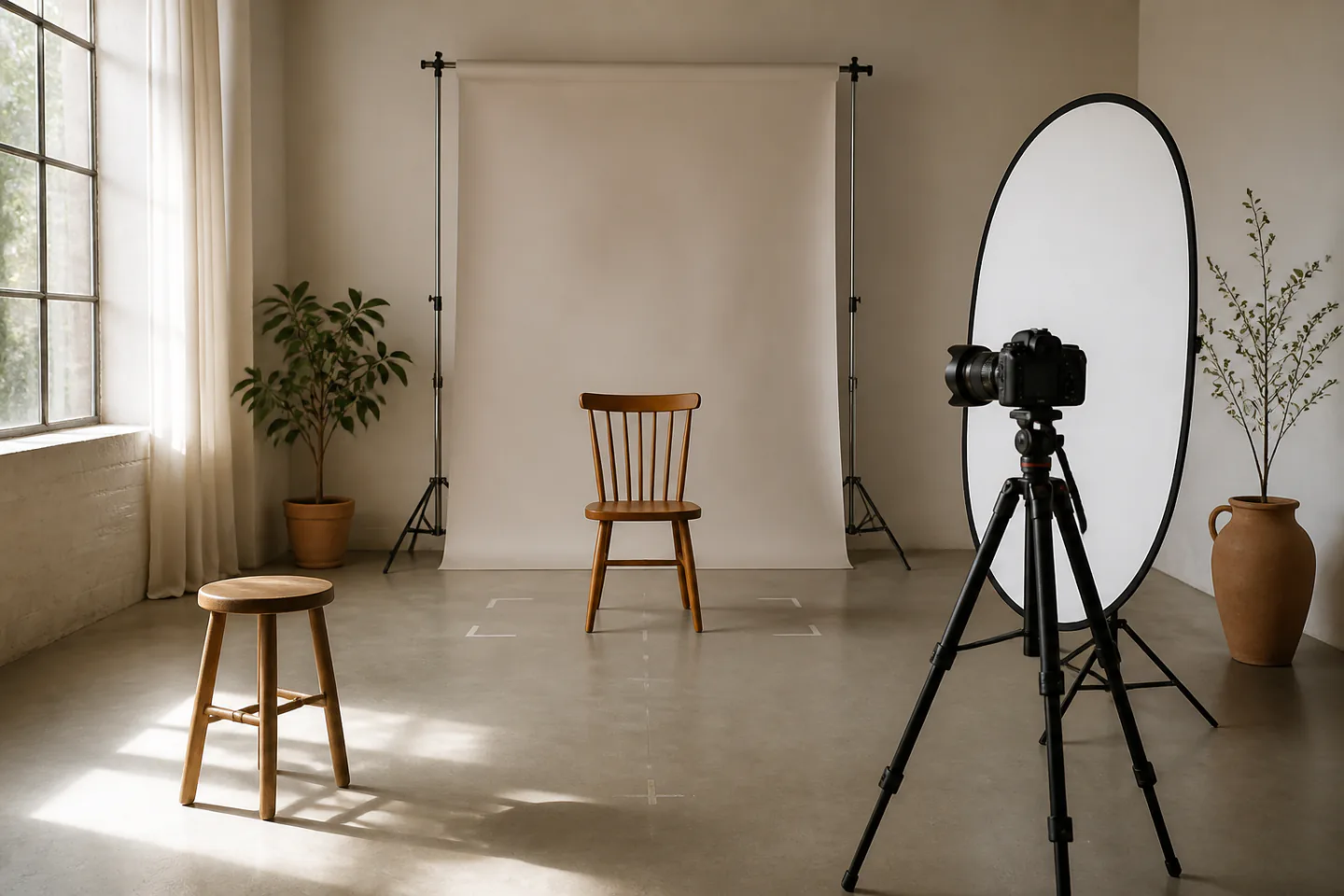
Quick answer
Control light and position before buying another lens
Ask a willing adult for a short planned session, use a phone or camera you already own, place them near a large side window against a plain background and make a five-frame sequence while checking eyes, highlights and comfort.
- 01
Agree purpose, duration, clothing, use and sharing before the session, then simplify the background and identify a stable soft-light position. Keep the first attempt narrow enough that preparation, the main action and the result can all be reviewed together.
- 02
Keep camera height, light direction and background steady while changing only body angle, gaze or expression through clear respectful prompts. Keep the first attempt narrow enough that preparation, the main action and the result can all be reviewed together.
- 03
Review eye focus, skin highlights, edge distractions, posture and whether the subject recognises the intended expression without overprocessing. Keep the first attempt narrow enough that preparation, the main action and the result can all be reviewed together.
- 04
Back up selected frames, delete obvious failures according to the agreement and record consent, delivery and any limits on publication. Keep the first attempt narrow enough that preparation, the main action and the result can all be reviewed together.
What to expect
A repeatable setup teaches more than a lucky frame
The useful result comes from controlled light, stable framing and reviewing failures at full size.
The first attempt
One chair by a window is enough to learn face angle, catchlights and background control with either a modern phone or camera. For portrait photography, note what actually happened rather than relying on memory; that turns the next attempt into a controlled change instead of another guess.
The control point
Keep camera height, light direction and background steady while changing only body angle, gaze or expression through clear respectful prompts. For portrait photography, note what actually happened rather than relying on memory; that turns the next attempt into a controlled change instead of another guess.
The useful signal
Review eye focus, skin highlights, edge distractions, posture and whether the subject recognises the intended expression without overprocessing. For portrait photography, note what actually happened rather than relying on memory; that turns the next attempt into a controlled change instead of another guess.
The common trap
A fast lens and complex lighting cannot repair unclear consent, an uncomfortable subject or a distracting frame edge. For portrait photography, note what actually happened rather than relying on memory; that turns the next attempt into a controlled change instead of another guess.
Core method
Plan the light, stabilise the camera and compare frames
Prepare deliberately
Agree purpose, duration, clothing, use and sharing before the session, then simplify the background and identify a stable soft-light position. For portrait photography, note what actually happened rather than relying on memory; that turns the next attempt into a controlled change instead of another guess.
Control the central variable
Keep camera height, light direction and background steady while changing only body angle, gaze or expression through clear respectful prompts. For portrait photography, note what actually happened rather than relying on memory; that turns the next attempt into a controlled change instead of another guess.
Read the result
Review eye focus, skin highlights, edge distractions, posture and whether the subject recognises the intended expression without overprocessing. For portrait photography, note what actually happened rather than relying on memory; that turns the next attempt into a controlled change instead of another guess.
Reset before repeating
Back up selected frames, delete obvious failures according to the agreement and record consent, delivery and any limits on publication. For portrait photography, note what actually happened rather than relying on memory; that turns the next attempt into a controlled change instead of another guess.
Useful products
Products with a clear job in the setup
A phone tripod supports repeatable framing, the collapsible reflector modifies one window and a dedicated camera is a later route when its controls solve a proven limitation.
ULANZI MT-44 Phone Tripod with Bluetooth Remote
It lets the photographer direct and adjust light without changing the frame.
NEEWER 5-in-1 Light Reflector, 60 cm
White and black surfaces make direction and contrast visible in real time.
Canon EOS R50 with RF-S 18–45 mm Lens
The kit supports controlled focus and exposure without requiring a specialist portrait lens.
First project
Make a five-frame window-light portrait
Deliver a small coherent set chosen with the subject, not a hundred nearly identical frames.
- 01
Set up
Agree purpose, duration, clothing, use and sharing before the session, then simplify the background and identify a stable soft-light position. For portrait photography, note what actually happened rather than relying on memory; that turns the next attempt into a controlled change instead of another guess.
- 02
Begin the first attempt
One chair by a window is enough to learn face angle, catchlights and background control with either a modern phone or camera. For portrait photography, note what actually happened rather than relying on memory; that turns the next attempt into a controlled change instead of another guess.
- 03
Hold one variable steady
Keep camera height, light direction and background steady while changing only body angle, gaze or expression through clear respectful prompts. For portrait photography, note what actually happened rather than relying on memory; that turns the next attempt into a controlled change instead of another guess.
- 04
Inspect the result
Review eye focus, skin highlights, edge distractions, posture and whether the subject recognises the intended expression without overprocessing. For portrait photography, note what actually happened rather than relying on memory; that turns the next attempt into a controlled change instead of another guess.
- 05
Reset and record
Back up selected frames, delete obvious failures according to the agreement and record consent, delivery and any limits on publication. For portrait photography, note what actually happened rather than relying on memory; that turns the next attempt into a controlled change instead of another guess.
What can wait
What can wait until the first result
Delay specialist optics until framing, light or working distance is the proven limitation.
- 01
A large first setup
Scale multiplies A fast lens and complex lighting cannot repair unclear consent, an uncomfortable subject or a distracting frame edge. before the basic routine is known. For portrait photography, note what actually happened rather than relying on memory; that turns the next attempt into a controlled change instead of another guess.
- 02
Premium specialist equipment
It should solve a limitation you can describe after several portrait photography sessions. For portrait photography, note what actually happened rather than relying on memory; that turns the next attempt into a controlled change instead of another guess.
- 03
Several methods at once
Changing materials and technique together makes the cause of a result hard to see. For portrait photography, note what actually happened rather than relying on memory; that turns the next attempt into a controlled change instead of another guess.
- 04
Buying for a future version
Finish and review the small route before equipping an imagined advanced practice. For portrait photography, note what actually happened rather than relying on memory; that turns the next attempt into a controlled change instead of another guess.
Upgrade path
Upgrade the repeated limitation
Upgrade the constraint visible in repeated photographs.
Try it
Free with a phone; about £25–£120 for supportPhone or camera and one window
Complete one meaningful result and learn the whole sequence.Repeat it
Free with a phone; about £25–£120 for supportTripod, reflector and simple background
Reduce setup friction and compare several attempts.Improve the bottleneck
£100–£400Dedicated camera or one compatible prime lens
Address A fast lens and complex lighting cannot repair unclear consent, an uncomfortable subject or a distracting frame edge. with a targeted change.Go deeper
VariableOff-camera flash, location planning and client workflow
Add scale, precision or public participation with evidence from practice.Safety & care
Consent and truthful representation come first
A technically strong portrait can still be harmful if its capture, editing or publication ignores the subject.
- Agree consent and intended use before photographing and obtain appropriate guardian permission for children. Follow current manufacturer, food-safety, access, wildlife or local guidance wherever it applies.
- Protect private locations and personal metadata when sharing files. Follow current manufacturer, food-safety, access, wildlife or local guidance wherever it applies.
- Do not place stands, cables or subjects in unsafe traffic, water, height or crowd positions. Follow current manufacturer, food-safety, access, wildlife or local guidance wherever it applies.
- Use reflectors and flash without dazzling, overheating or causing distress. Follow current manufacturer, food-safety, access, wildlife or local guidance wherever it applies.
- Edit skin and body respectfully and do not imply endorsements or identities the subject did not approve. Follow current manufacturer, food-safety, access, wildlife or local guidance wherever it applies.
Outside help
When outside help earns its place
A small portrait workshop helps most when it includes real-time communication, light placement and image review rather than a gear demonstration.
Use one complete lesson that covers preparation, the central technique, common mistakes and finishing. For a first portrait photography attempt, one coherent method is easier to diagnose than fragments collected from several creators.
Outside help earns its place when safe setup, access, identification or live correction removes a real obstacle. Ask what equipment, materials, access and follow-up support are included before booking.
Representative UK learning options checked 31 August 2026; local prices, access, materials and tutor support vary.
Sources
Where the guidance came from
The method is grounded in specialist, manufacturer and public guidance, then checked against recurring beginner problems and the exact products linked here.
-
01
Royal Photographic Society · Portraiture
UK portrait practice and learning context.
Open source -
02
Canon · Portrait photography tips
Manufacturer light, focus and lens guidance.
Open source -
03
Nikon · Portrait photography
Manufacturer beginner portrait technique.
Open source -
04
Information Commissioner’s Office · Photographs
UK privacy and image-use context.
Open source -
05
Reddit · r/portraits
Community evidence on posing, light, lenses and respectful direction.
Open source -
06
Amazon UK · MT-44 Phone Tripod with Bluetooth Remote
Exact Amazon UK product page or ISBN used for the recommendation; current price, seller, specification and availability should be confirmed.
Open source -
07
Amazon UK · 5-in-1 Light Reflector, 60 cm
Exact Amazon UK product page or ISBN used for the recommendation; current price, seller, specification and availability should be confirmed.
Open source -
08
Amazon UK · EOS R50 with RF-S 18–45 mm Lens
Exact Amazon UK product page or ISBN used for the recommendation; current price, seller, specification and availability should be confirmed.
Open source
Guide information and links checked 31 August 2026.