Beginner’s guide · Cook & bake
Barbecue sauce making
Start with one useful result.
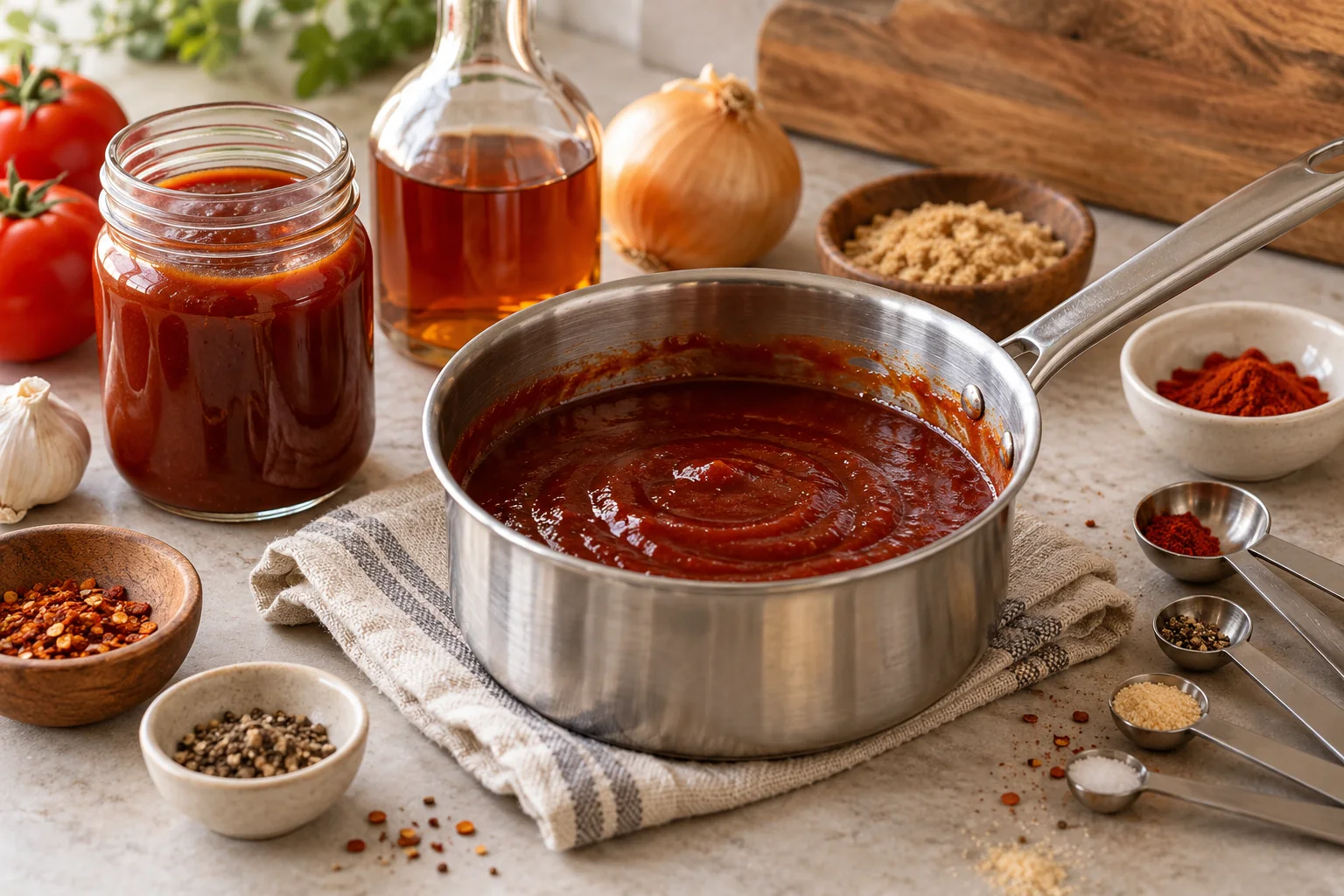
A small barbecue sauce batch is a good way to learn balance. Simmer one tomato-and-vinegar recipe, taste only with clean utensils and keep the result refrigerated. This is a fresh condiment project, not a shelf-stable canning recipe.
Quick answer
Start with one small refrigerated tomato-vinegar sauce
A small barbecue sauce batch is a good way to learn balance. Simmer one tomato-and-vinegar recipe, taste only with clean utensils and keep the result refrigerated. This is a fresh condiment project, not a shelf-stable canning recipe.
- 01
Small saucepan, clean spoon and lidded food-safe jar
- 02
Tomato base, vinegar, sweetener and spices from a tested recipe
- 03
Fridge space and a label with preparation date
What to expect
What the first attempt is really like
The useful skill here is balancing sweet, sour, savoury and heat without mistaking flavour for preservation. These details matter more than a polished first result.
Balance
Acidity, sweetness and salt interact; change one ingredient at a time after tasting.
Texture
Reduce gently and stir; sauce thickens further as it cools.
Storage
A pleasant sour taste does not prove a safe pH or shelf life.
The method
The method worth learning
Make a cooking sauce for the fridge
Start with an authored tomato-based sauce recipe, such as the Good Food recipe linked below. Read it before shopping and check its yield against the containers you have. It is a recipe to cook and eat, not a validated procedure for storing sealed bottles at room temperature. Use a normal saucepan, spoon, scales and a clean food container; a preserving kit is unnecessary.
Record a baseline before changing flavours
Weigh the bulk ingredients and measure the recipe’s liquid and small seasoning amounts with the stated utensils. A tare function lets you weigh several additions into one bowl. Write down the brand of tomato product, vinegar strength and final yield because changing those can shift flavour and thickness. Do not casually reduce vinegar in a recipe that is presented as a preservation formula; this beginner route makes no shelf-stable claim.
Simmer rather than scorch
Soften any onion or garlic as the recipe directs, add the remaining ingredients and simmer gently, stirring along the bottom and corners. The sauce thickens as water leaves, and sugar can catch if the heat is too fierce. Taste a cooled spoonful on a separate spoon. Adjust only a small sample first: more sweetness can soften acidity, while salt, chilli or smoke flavour can be hard to remove once overdone. Record a change before applying it to the whole pan.
Store and use without cross-contamination
Transfer into clean appropriate containers, cool promptly and refrigerate at 5°C or below within two hours. For an unvalidated first batch, follow conservative leftover advice and use within 48 hours or freeze suitable portions; a recipe may give specific handling instructions, but a lid sealing is not proof of safety. Keep serving sauce separate from a bowl used to brush raw meat. Brush a sweet glaze late enough in cooking that it does not burn, and fully cook the food it touches.
Useful products
Equipment with a clear job
Start with suitable equipment you already own. These exact UK listings are useful examples when a missing tool limits the first project; prices and availability were checked on 2 October 2026 and delivery may add to the cost.
Salter Disc Digital Kitchen Scales, White
Make the baseline tomato and sugar amounts repeatable and record small batch changes.
Kilner Round Clip Top Jar, 125 ml
Keep a small labelled fridge portion separate from sauce used for raw-meat basting.
What can wait
What can wait
Keep the first project small and learn what the equipment is doing before adding more.
- 01
Bottles for cupboard storage
A recipe, clean jar and vacuum-like seal do not validate preservation. Refrigerated cooking sauce is the first route.
- 02
Large batches of an untested flavour
A small baseline batch is cheaper to compare and easier to cool. Scale only after you know you like it.
- 03
Specialist processors immediately
A textured sauce teaches the same balance. Use an owned blender only if smoothing is wanted and its hot-liquid instructions permit it.
First project
First project: One small refrigerated tomato-vinegar sauce
Start with one small refrigerated tomato-vinegar sauce. Use the listed equipment, take notes on the result and repeat the small project before expanding it.
- 01
Pick one recipe
Choose a tested refrigerated sauce recipe and measure its ingredients before heating.
- 02
Simmer and stir
Cook as directed, watching for splashes and scorching as the sauce thickens.
- 03
Taste cleanly
Use a fresh spoon for each taste; note whether acid, sweetness or spice needs adjustment within the recipe's limits.
- 04
Jar and chill
Cool promptly, transfer into a clean container, refrigerate and follow the recipe's conservative storage instruction.
Troubleshooting
When the first attempt goes wrong
The sauce is too thick
Check whether it reduced for too long. Stir in a small measured amount of the recipe’s suitable liquid and retaste after heating through. Note the quantity so the next batch begins correctly.
It is too thin
Simmer gently a little longer while watching the base, rather than increasing heat sharply. Compare after a sample cools because hot sauce can appear thinner.
It is too sweet, sour or smoky
Split off a test spoonful and adjust one flavour at a time. A heavy dose of liquid smoke or chilli is difficult to undo; use the recipe quantity and add cautiously. You do not need smoked ingredients to make a useful first barbecue sauce.
The bottom burns
Stop stirring burnt residue through the sauce. Move any unaffected portion to a clean pan if appropriate, and use gentler heat next time. A burnt flavour is a cooking problem, not a reason to add more sugar.
Upgrade path
Where to go after the first result
Repeat the simple route first, then choose the next step that solves a problem you have actually met.
Flavour
Ingredients already in the recipeCompare small labelled samples
Change one ingredient or amount per sample, then taste alongside the baseline on the same food.Texture
Use an owned blender firstA smoother sauce
Adds a texture option rather than better flavour. Cool and blend safely according to the appliance instructions.Storage
Professional process advice is separately pricedValidated preservation
Shelf-stable bottling is a different project needing an approved formulation and process, not simply more jars.Safety & care
Safety and practical limits
Use the current instructions for the exact food, material or equipment in front of you.
- Treat homemade sauce as perishable unless it follows a validated preservation process.
- Keep raw-meat brushes and marinade separate from sauce that will be served ready to eat.
- Cool and refrigerate promptly; discard sauce with uncertain handling or signs of spoilage.
Learning & help
Learning at home and optional help
A class is optional for this first route. Use the free guidance before paying for help.
Use the complete Good Food recipe for the baseline and FSA chilling guidance for handling. Minnesota’s hot-fill guidance explains why commercial preservation needs controls; it is not a home canning recipe.
A sauce lesson is optional for flavour feedback. If you want to sell or store sauce at room temperature, seek competent advice on that exact product and process. Ask for a current quote and what validation it includes.
Learning sources checked 2 October 2026. No unverified class fee or booking availability is quoted.
Sources
Where the guidance came from
Food and wildlife authorities, exact maker instructions, specialist guidance, practitioner observations and UK product listings support the route above. Community accounts inform practical expectations; they do not establish food safety, wildlife rules or current prices.
-
01
University of Minnesota Extension · Hot-fill hold
Why shelf-stable sauce needs validated controls
Open source -
02
Food Standards Agency · Chilling
Chilled food and leftover storage
Open source -
03
Food Standards Agency · Cooking your food
UK cooking and thermometer advice
Open source -
04
Good Food · Barbecue sauce
Authored tomato, onion and vinegar sauce recipe; a cooking recipe, not a validated canning process.
Open source -
05
r/Cooking · Barbecue sauce from scratch
Makers compare tomato bases and vinegar/sugar balance. These are flavour observations, not preservation processes.
Open source -
06
Kilner · Jar hygiene and heat handling
Maker guidance on glass heat shock and handling; cleaning a jar does not validate a condiment recipe.
Open source -
07
Salter · Disc Digital Kitchen Scales, White
Exact selected model, price and availability used for the recommendation; recheck delivery and checkout.
Open source -
08
Kilner · Round Clip Top Jar, 125 ml
Exact selected model, price and availability used for the recommendation; recheck delivery and checkout.
Open source
Guide information and links checked 2 October 2026.