Beginner’s guide · Explore outdoors
Start mudlarking with one result,
then improve the control that made it work.
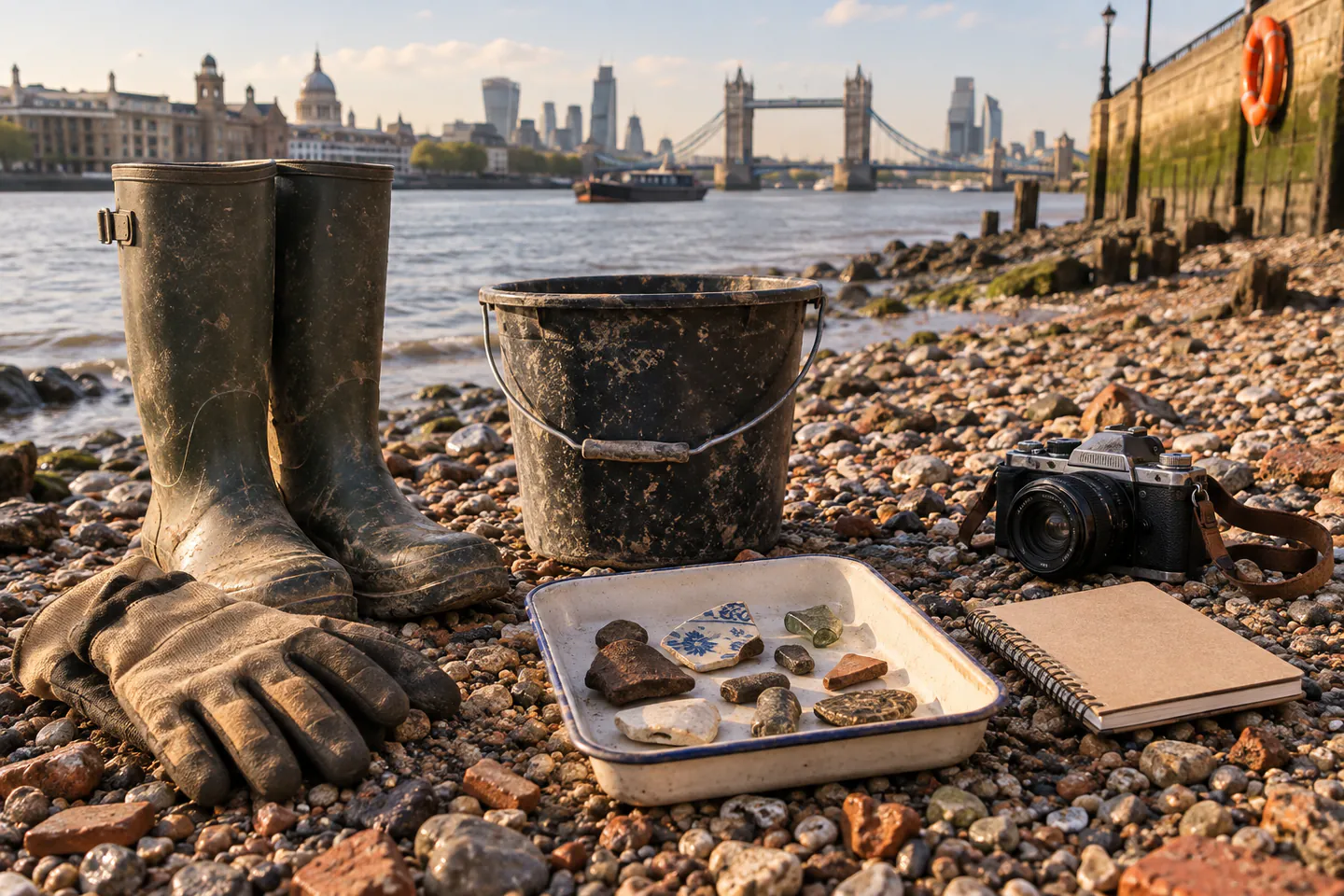
For the tidal Thames, begin with a licensed guide or permitted event and follow the Port of London Authority rules. Plan entry and exit around the published tide, observe surface finds only within permission and report significant archaeology rather than pocketing it.
Quick answer
Make one guided permitted foreshore survey before expanding the setup
For the tidal Thames, begin with a licensed guide or permitted event and follow the Port of London Authority rules. Plan entry and exit around the published tide, observe surface finds only within permission and report significant archaeology rather than pocketing it.
- 01
Foreshore access and searching permission are location-specific. For the first mudlarking session, keep the core material fixed and note the material, measurement and sequence before changing anything. Photograph or measure the result, because a visible record separates a technique problem from a tool or setup problem and makes the next attempt genuinely comparable.
- 02
Tide tables are planning data, not a guarantee of safe conditions. For the first mudlarking session, keep the working position fixed and note the material, measurement and sequence before changing anything. Photograph or measure the result, because a visible record separates a technique problem from a tool or setup problem and makes the next attempt genuinely comparable.
- 03
Context can be more historically valuable than an isolated object. For the first mudlarking session, keep one repeatable measurement fixed and note the material, measurement and sequence before changing anything. Photograph or measure the result, because a visible record separates a technique problem from a tool or setup problem and makes the next attempt genuinely comparable.
- 04
Ordinary gloves do not neutralise sharps, contamination or unstable ground. For the first mudlarking session, keep the finishing sequence fixed and note the material, measurement and sequence before changing anything. Photograph or measure the result, because a visible record separates a technique problem from a tool or setup problem and makes the next attempt genuinely comparable.
What to expect
What mudlarking is really like at the start
The useful beginner controls are preparation, a repeatable movement and a finished sample. Permission, tide timing and recognising material without disturbing hazards is the main skill to observe before adding scale, speed or decoration.
Materials and setup
The river can cut off the return route faster than expected. For the first mudlarking session, keep one material batch fixed and note the material, measurement and sequence before changing anything. Photograph or measure the result, because a visible record separates a technique problem from a tool or setup problem and makes the next attempt genuinely comparable.
Control that matters
Mud, algae, wash and submerged debris make footing unreliable. For the first mudlarking session, keep one tool setting fixed and note the material, measurement and sequence before changing anything. Photograph or measure the result, because a visible record separates a technique problem from a tool or setup problem and makes the next attempt genuinely comparable.
Common early failure
Finds may be archaeological, hazardous or legally reportable. For the first mudlarking session, keep one small test fixed and note the material, measurement and sequence before changing anything. Photograph or measure the result, because a visible record separates a technique problem from a tool or setup problem and makes the next attempt genuinely comparable.
A useful finish
Cleaning can destroy residues and surface evidence. For the first mudlarking session, keep the same inspection method fixed and note the material, measurement and sequence before changing anything. Photograph or measure the result, because a visible record separates a technique problem from a tool or setup problem and makes the next attempt genuinely comparable.
Core method
The core mudlarking method
Prepare
Choose a guided permitted visit and read its code of conduct. For the first mudlarking session, keep the preparation checklist fixed and note the material, measurement and sequence before changing anything. Photograph or measure the result, because a visible record separates a technique problem from a tool or setup problem and makes the next attempt genuinely comparable.
Establish the first reference
Check official tide and weather information plus two exit routes. For the first mudlarking session, keep the first reference point fixed and note the material, measurement and sequence before changing anything. Photograph or measure the result, because a visible record separates a technique problem from a tool or setup problem and makes the next attempt genuinely comparable.
Build the result
Wear suitable boots and observe only the permitted surface zone. For the first mudlarking session, keep the working rhythm fixed and note the material, measurement and sequence before changing anything. Photograph or measure the result, because a visible record separates a technique problem from a tool or setup problem and makes the next attempt genuinely comparable.
Inspect before finishing
Photograph a possible find in context without scraping or probing. For the first mudlarking session, keep the inspection light fixed and note the material, measurement and sequence before changing anything. Photograph or measure the result, because a visible record separates a technique problem from a tool or setup problem and makes the next attempt genuinely comparable.
Useful products
Products with a clear job in the route
Each recommendation covers a distinct practical job. Existing equipment is preferable when it meets the same specification; live price, stock, seller and compatibility still need checking before purchase.
NoCry Cut-Resistant Gloves
Cut-Resistant Gloves has a defined job in the mudlarking route and can be compared with owned equipment against the same specification.
Silvine A5 Executive Dotted Hardback Notebook
A5 Executive Dotted Hardback Notebook has a defined job in the mudlarking route and can be compared with owned equipment against the same specification.
Carson LL-10 10× LumiLoupe Stand Magnifier
LL-10 10× LumiLoupe Stand Magnifier has a defined job in the mudlarking route and can be compared with owned equipment against the same specification.
First project
Make a guided permitted foreshore survey
Keep this mudlarking project small enough to finish, inspect and repeat. The first result is evidence about material compatibility, sequence and control rather than a performance test.
- 01
Set the boundary
Choose a guided permitted visit and read its code of conduct. For the first mudlarking session, keep the project size fixed and note the material, measurement and sequence before changing anything. Photograph or measure the result, because a visible record separates a technique problem from a tool or setup problem and makes the next attempt genuinely comparable.
- 02
Prepare the setup
Check official tide and weather information plus two exit routes. For the first mudlarking session, keep the setup order fixed and note the material, measurement and sequence before changing anything. Photograph or measure the result, because a visible record separates a technique problem from a tool or setup problem and makes the next attempt genuinely comparable.
- 03
Make the controlled pass
Wear suitable boots and observe only the permitted surface zone. For the first mudlarking session, keep the central movement fixed and note the material, measurement and sequence before changing anything. Photograph or measure the result, because a visible record separates a technique problem from a tool or setup problem and makes the next attempt genuinely comparable.
- 04
Inspect and correct
Photograph a possible find in context without scraping or probing. For the first mudlarking session, keep one correction rule fixed and note the material, measurement and sequence before changing anything. Photograph or measure the result, because a visible record separates a technique problem from a tool or setup problem and makes the next attempt genuinely comparable.
- 05
Finish and record
Follow the guide’s recording, reporting and retention instructions. For the first mudlarking session, keep the final measurement fixed and note the material, measurement and sequence before changing anything. Photograph or measure the result, because a visible record separates a technique problem from a tool or setup problem and makes the next attempt genuinely comparable.
What can wait
What can wait until the first result
Delay anything that adds cost, risk or another variable before the basic workflow has produced something you can review.
- 01
Solo visits
This adds material complexity before the central technique is stable. For the first mudlarking session, keep the original material fixed and note the material, measurement and sequence before changing anything. Photograph or measure the result, because a visible record separates a technique problem from a tool or setup problem and makes the next attempt genuinely comparable.
- 02
Digging or scraping
This adds extra equipment before the central technique is stable. For the first mudlarking session, keep the starter tools fixed and note the material, measurement and sequence before changing anything. Photograph or measure the result, because a visible record separates a technique problem from a tool or setup problem and makes the next attempt genuinely comparable.
- 03
Metal detecting
This adds a harder judgement before the central technique is stable. For the first mudlarking session, keep the first quality standard fixed and note the material, measurement and sequence before changing anything. Photograph or measure the result, because a visible record separates a technique problem from a tool or setup problem and makes the next attempt genuinely comparable.
- 04
Cleaning and conserving finds
This adds more scale or consequence before the central technique is stable. For the first mudlarking session, keep the same project size fixed and note the material, measurement and sequence before changing anything. Photograph or measure the result, because a visible record separates a technique problem from a tool or setup problem and makes the next attempt genuinely comparable.
Upgrade path
Add only the capability you can now name
Each stage should remove a demonstrated limitation rather than simply make the setup look more advanced.
First controlled sample
Use owned tools where suitableComplete and annotate the guided permitted foreshore survey.
Learn the central movement and material behaviour.Repeatable starter setup
About £20–£80 beyond the startRepeat the complete route with the same materials.
Confirm that the result can be repeated with fewer corrections.One selected capability
About £50–£250 where justifiedChoose one tool, class or material that answers a recorded limitation.
Expand one deliberate dimension: size, finish, speed or design.Independent specialist work
Cost depends on workspace and ambitionDevelop original work with testing, provenance and appropriate safety.
Plan, document and maintain a reliable personal workflow.Safety & care
Safety, care and respectful practice in mudlarking
The practical risks remain manageable when access, tools, materials and legal boundaries are specific and proportionate.
- On the Thames, obtain the required Port of London Authority permit or attend an authorised guided activity. For the first mudlarking session, keep the stated safety control fixed and note the material, measurement and sequence before changing anything. Photograph or measure the result, because a visible record separates a technique problem from a tool or setup problem and makes the next attempt genuinely comparable.
- Never enter alone; know tide times, exit points and weather conditions. For the first mudlarking session, keep the smallest practical setup fixed and note the material, measurement and sequence before changing anything. Photograph or measure the result, because a visible record separates a technique problem from a tool or setup problem and makes the next attempt genuinely comparable.
- Do not touch needles, weapons, ordnance, human remains or unknown containers. For the first mudlarking session, keep the manufacturer or organiser instructions fixed and note the material, measurement and sequence before changing anything. Photograph or measure the result, because a visible record separates a technique problem from a tool or setup problem and makes the next attempt genuinely comparable.
- Avoid unstable mud, structures, wash zones and slippery algae. For the first mudlarking session, keep a stop condition fixed and note the material, measurement and sequence before changing anything. Photograph or measure the result, because a visible record separates a technique problem from a tool or setup problem and makes the next attempt genuinely comparable.
- Record significant finds in context and follow the relevant reporting process. For the first mudlarking session, keep safe storage and cleanup fixed and note the material, measurement and sequence before changing anything. Photograph or measure the result, because a visible record separates a technique problem from a tool or setup problem and makes the next attempt genuinely comparable.
Outside help
When outside help earns its place
A guided session is useful when equipment setup, heat, sharp tools, field access or live correction blocks safe progress. A coherent authoritative source is enough for the smallest mudlarking sample.
Choose one lesson that covers preparation, the central mudlarking method, finishing and common mistakes in a single sequence.
Ask what materials and access are included, whether the project can be finished in the session and what safety instruction is provided.
Representative UK learning and access routes checked 2026-09-22; local prices, equipment and tutor support vary.
Sources
Where the guidance came from
Authoritative and specialist guidance supports the method, terminology and safety boundaries. Community discussion contributes recurring beginner problems rather than unsupported factual claims.
-
01
Port of London Authority · Thames foreshore permits
Current permit, access and restricted-area rules.
Open source -
02
PLA · Searching the Thames Foreshore Code
Permit-holder safety, tide and conduct guidance.
Open source -
03
Thames Discovery Programme
Archaeological recording and guided public participation.
Open source -
04
Thames Discovery Programme · FROG archive
Foreshore health, safety and volunteer participation context.
Open source -
05
Portable Antiquities Scheme
Recording and reporting archaeological finds.
Open source -
06
Met Office · Weather warnings
Current UK weather-warning source.
Open source -
07
GOV.UK · Treasure reporting
Legal route for potential treasure finds.
Open source -
08
Amazon UK · Cut-Resistant Gloves
Exact product page used to identify B01HPU3GDM; confirm price, stock, seller and specification before ordering.
Open source -
09
Amazon UK · A5 Executive Dotted Hardback Notebook
Exact product page used to identify B07VL2TH9F; confirm price, stock, seller and specification before ordering.
Open source -
10
Amazon UK · LL-10 10× LumiLoupe Stand Magnifier
Exact product page used to identify B000CAHCQS; confirm price, stock, seller and specification before ordering.
Open source
Guide information and links checked 22 September 2026.