Beginner’s guide · Grow & care
Keep the roots even
and the air moving.
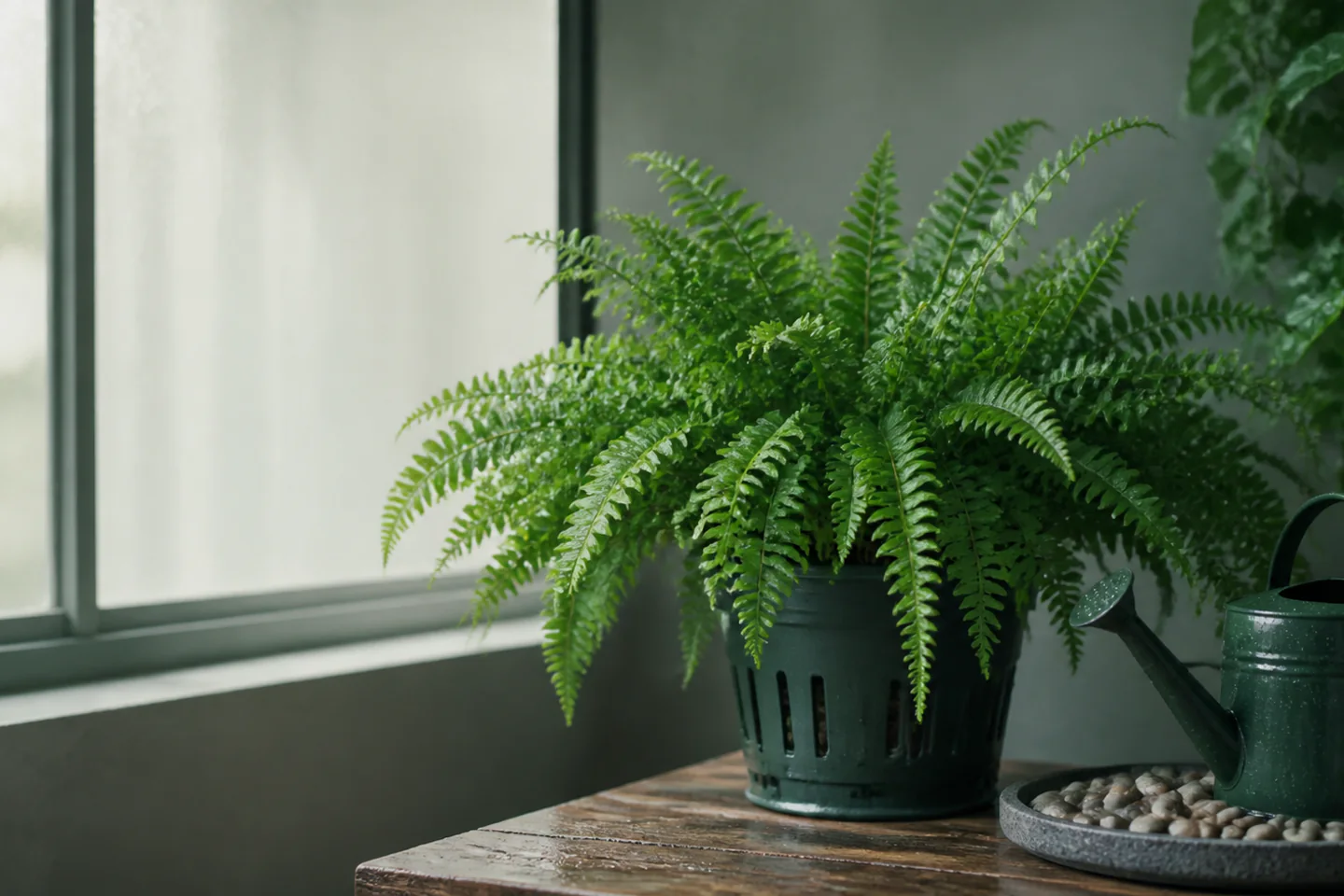
Indoor ferns vary, so start with a named Boston, bird’s-nest or button fern and follow that species. Most want filtered light and steadier root moisture than succulents, without standing in stagnant water.
Quick answer
Buy a named fern and learn its drying speed
Choose a labelled indoor fern suited to your room, keep it in bright filtered light and check the mix frequently enough that it does not become bone dry. Water thoroughly, drain and maintain airflow rather than sealing it in constant wetness.
- 01
Use bright filtered light and check the needs of the exact species because “fern” covers many habitats. Record the setting, measurement or observation that mattered so the next attempt can be changed for a reason rather than by guesswork.
- 02
Aim for even moisture for moisture-loving indoor species while preserving drainage and oxygen. Record the setting, measurement or observation that mattered so the next attempt can be changed for a reason rather than by guesswork.
- 03
Keep the root ball draining and repot only slightly larger into a suitable moisture-retentive but open mix. Record the setting, measurement or observation that mattered so the next attempt can be changed for a reason rather than by guesswork.
- 04
Protect delicate new croziers and judge care from fresh fronds rather than old shop damage. Record the setting, measurement or observation that mattered so the next attempt can be changed for a reason rather than by guesswork.
- 05
Inspect frond undersides and the crown for scale, mites and other pests before joining a collection. Record the setting, measurement or observation that mattered so the next attempt can be changed for a reason rather than by guesswork.
What to expect
Fern care begins with the name on the label
Maidenhair, Boston, bird’s-nest and blue-star ferns do not share one exact routine, so identity and room conditions matter more than generic misting advice.
Light
Most common indoor ferns dislike harsh prolonged sun yet become sparse in a dark corner. Bright diffuse exposure is a useful starting point. In fern growing, this is worth checking before the next stage because a small adjustment now is easier than undoing a finished result.
Water
Some ferns collapse quickly when dry, but continuously saturated compost excludes air. Check often and water from evidence. In fern growing, this is worth checking before the next stage because a small adjustment now is easier than undoing a finished result.
Roots and pot
A cover pot hides standing water and a huge repot dries slowly. Keep the original root volume understandable during the first month. In fern growing, this is worth checking before the next stage because a small adjustment now is easier than undoing a finished result.
Growth and pests
Fine fronds make pest treatment awkward. Quarantine and early inspection are much easier than cleaning a large infested fern. In fern growing, this is worth checking before the next stage because a small adjustment now is easier than undoing a finished result.
Core method
Read the plant before changing the routine
Choose the position
Place the named fern in bright diffuse light away from hot radiators, cold draughts and repeated brushing of new fronds. In fern growing, this is worth checking before the next stage because a small adjustment now is easier than undoing a finished result.
Check before watering
Feel the upper mix and learn pot weight before the plant wilts. Water earlier than a succulent but never assume every damp surface needs more. In fern growing, this is worth checking before the next stage because a small adjustment now is easier than undoing a finished result.
Keep drainage real
Saturate evenly, allow free drainage and empty the saucer. Use room humidity and airflow, not a permanently flooded outer pot. In fern growing, this is worth checking before the next stage because a small adjustment now is easier than undoing a finished result.
Review new growth
Watch the newest emerging fronds for size, colour and tip quality while accepting that damaged old fronds do not repair. In fern growing, this is worth checking before the next stage because a small adjustment now is easier than undoing a finished result.
Useful products
Products with a clear job in the setup
Controlled watering and adequate light are the useful levers. A meter can help explore a deep pot but should not puncture the same roots repeatedly.
Ward Large Plastic Garden Watering Can
The small volume and narrow delivery make it easier to wet the mix evenly and empty the saucer afterwards.
SANSI 10 W Clip-On LED Grow Light
A timer makes supplemental light consistent without changing the room into a large grow setup.
XLUX XLUX Soil Moisture Meter
It can reveal a wet root zone beneath a dry-looking surface while a beginner learns pot weight.
First project
Keep one named fern stable for a month
The first month is an observation project: stabilise the plant, learn how quickly the mix dries and avoid reacting to every old mark.
- 01
Inspect on arrival
Read the botanical label, note the current moisture and inspect frond undersides and crown before choosing a care plan. In fern growing, this is worth checking before the next stage because a small adjustment now is easier than undoing a finished result.
- 02
Choose one position
Use one filtered bright position with adequate space and avoid cycling between a steamy bathroom and dry window. In fern growing, this is worth checking before the next stage because a small adjustment now is easier than undoing a finished result.
- 03
Set a water check
Check at short regular intervals until the room’s drying rate is known, then water fully just before damaging dryness. In fern growing, this is worth checking before the next stage because a small adjustment now is easier than undoing a finished result.
- 04
Clean and observe
Remove only completely dead fronds, keep dust and standing water down and photograph each new crozier. In fern growing, this is worth checking before the next stage because a small adjustment now is easier than undoing a finished result.
- 05
Review after four weeks
Compare new fronds with the old canopy and change only light, checking frequency or room humidity one at a time. In fern growing, this is worth checking before the next stage because a small adjustment now is easier than undoing a finished result.
What can wait
What can wait until the first result
A healthy first month depends on suitable conditions and calm observation, not constant repotting or a shelf of treatments.
- 01
Immediate repotting
Fine fern roots are easily disturbed. Repot only for a failing medium, damaged container or a genuinely root-filled pot. In fern growing, this is worth checking before the next stage because a small adjustment now is easier than undoing a finished result.
- 02
Routine misting
Occasional mist evaporates quickly and can mark foliage; a naturally suitable room or grouped plants gives steadier humidity. In fern growing, this is worth checking before the next stage because a small adjustment now is easier than undoing a finished result.
- 03
Unnecessary fertiliser
Use a weak species-appropriate feed only during active growth once the watering routine is dependable. In fern growing, this is worth checking before the next stage because a small adjustment now is easier than undoing a finished result.
Upgrade path
Upgrade the repeated limitation
Change the condition that repeated observations show is limiting growth.
Settle it
£18–£55One healthy plant, draining pot and stable position
You learn its normal drying rhythm and leaf posture.Improve light
£20–£70 extraBrighter position or timed white grow light
New growth can become stronger when daylight was genuinely inadequate.Support growth
£15–£60Humidity tray used without submerging the pot, or a room humidifier with cleaning routine
Room humidity can become steadier without keeping the root zone permanently flooded.Build a collection
VariableQuarantine space, labels and a written care log
Several plants remain identifiable and problems are contained.Safety & care
Keep water, pets and treatments under control
The main concerns are mould, stagnant water, electrical equipment near moisture and species-specific toxicity.
- Identify the exact fern before placing it near pets or children; not every plant sold with “fern” in the name is botanically or toxicologically equivalent. Follow current manufacturer, food-safety, electrical or local guidance wherever it applies.
- Keep humidifiers clean and away from electrical hazards, walls and surfaces vulnerable to damp. Follow current manufacturer, food-safety, electrical or local guidance wherever it applies.
- Remove standing water and decaying fronds that encourage fungus gnats or mould. Follow current manufacturer, food-safety, electrical or local guidance wherever it applies.
- Use treatments only after identifying the pest and confirming the product is suitable for delicate fern foliage. Follow current manufacturer, food-safety, electrical or local guidance wherever it applies.
Outside help
When outside help earns its place
A specialist nursery demonstration or complete care video is most useful when plant identity, pests or repotting remain uncertain. Routine weekly classes are not required.
Use one complete lesson that covers preparation, the main technique, troubleshooting and finishing. For a first fern growing project, following one coherent method is more useful than combining partial instructions from several creators.
Outside help earns its place when safe setup, equipment access or live correction would remove a real obstacle. Ask what materials, supervision and take-home result are included before booking.
Representative UK learning options checked 30 August 2026; local prices, access, materials and tutor support vary.
Sources
Where the guidance came from
The method is grounded in specialist, manufacturer and public guidance, then checked against recurring beginner problems and the exact products linked here.
-
01
Royal Horticultural Society · Houseplants
RHS guidance for indoor plant conditions and care.
Open source -
02
Kew · Plants of the World Online
Botanical identity and native-habitat reference.
Open source -
03
Houseplant Expert · Plant care
Specialist indoor-plant care and troubleshooting context.
Open source -
04
University of Minnesota Extension · Houseplants
Evidence-led guidance on indoor light, water and pests.
Open source -
05
British Cactus and Succulent Society
Specialist reference for succulent plants where applicable.
Open source -
06
Amazon UK · Bartley Burbler 2-Pint Watering Can
Exact Amazon UK product page or ISBN used for the recommendation; current price, seller, specification and availability should be confirmed.
Open source -
07
Amazon UK · 10 W Clip-On LED Grow Light
Exact Amazon UK product page or ISBN used for the recommendation; current price, seller, specification and availability should be confirmed.
Open source -
08
Amazon UK · XLUX Soil Moisture Meter
Exact Amazon UK product page or ISBN used for the recommendation; current price, seller, specification and availability should be confirmed.
Open source
Guide information and links checked 30 August 2026.