Beginner’s guide · Grow & care
Give each leaf
room to open.
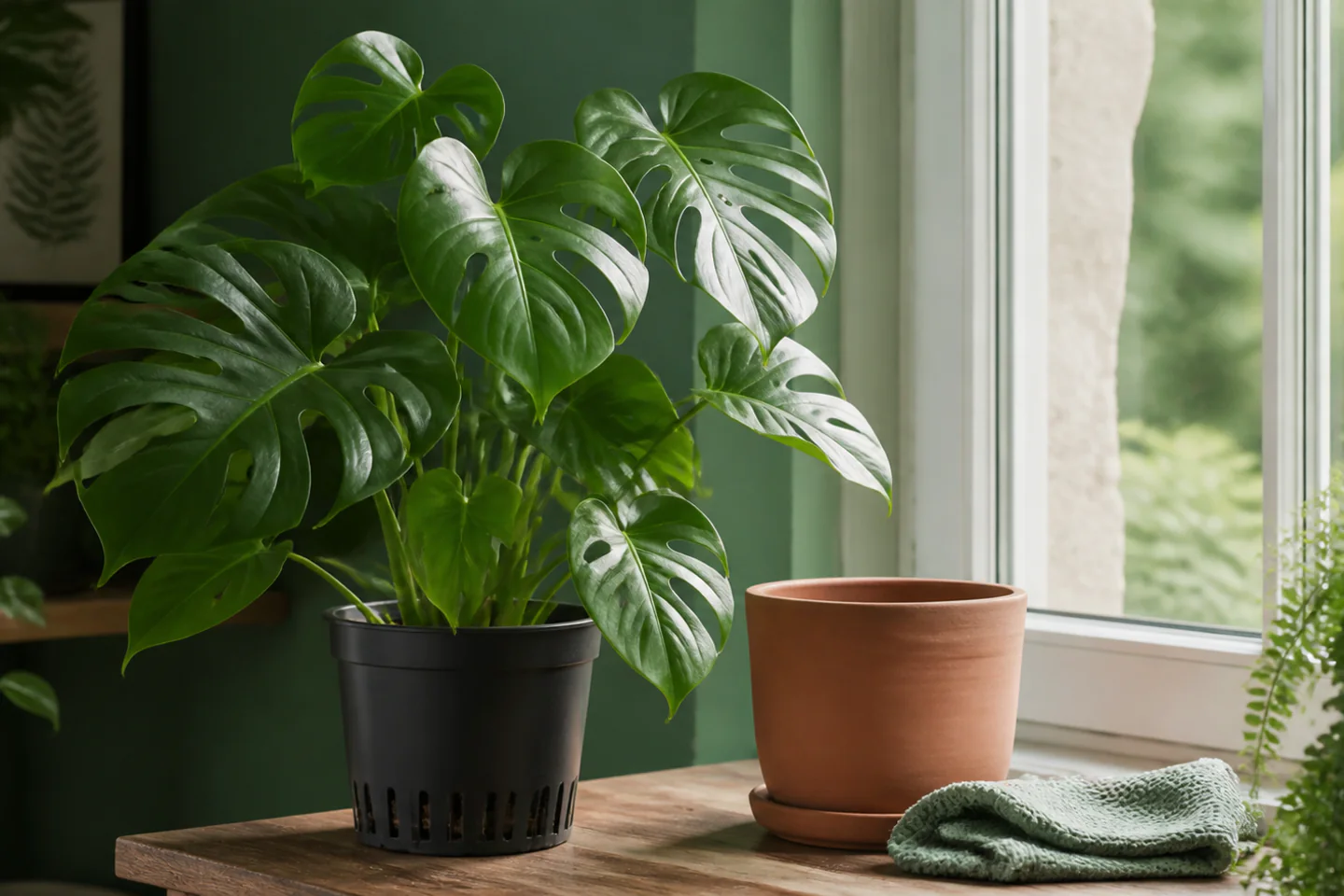
Monstera deliciosa grows best with bright filtered light, an airy root zone and a support as it matures. Begin with one healthy plant and learn its pot weight before changing soil or adding a pole.
Quick answer
Start bright, warm and well drained
Place a correctly identified Monstera deliciosa in bright indirect light, let the upper potting mix begin to dry, then water thoroughly and empty the cachepot or saucer. Add support only when stems begin to climb.
- 01
Give bright filtered daylight and move it gradually if leaves have been adapted to a darker shop position. Record the setting, measurement or observation that mattered so the next attempt can be changed for a reason rather than by guesswork.
- 02
Water from evidence—mix feel, pot weight and season—not a fixed weekday. Record the setting, measurement or observation that mattered so the next attempt can be changed for a reason rather than by guesswork.
- 03
Keep the nursery pot drainage open and never let the root ball stand in collected water. Record the setting, measurement or observation that mattered so the next attempt can be changed for a reason rather than by guesswork.
- 04
Rotate modestly and provide a firm support for mature climbing growth rather than forcing individual leaf stalks upright. Record the setting, measurement or observation that mattered so the next attempt can be changed for a reason rather than by guesswork.
- 05
Inspect leaf undersides and stems for thrips, scale and mites before placing it among other plants. Record the setting, measurement or observation that mattered so the next attempt can be changed for a reason rather than by guesswork.
What to expect
Large leaves amplify small care mistakes
Monstera is resilient, but its size means poor light, excess water and weak support become progressively harder to correct.
Light
A dark corner may preserve existing leaves for a time while producing smaller, stretched growth. Fenestrations depend on maturity, genetics and conditions, not a cutting trick. In monstera care, this is worth checking before the next stage because a small adjustment now is easier than undoing a finished result.
Water
The whole root ball should be moistened when watering, then allowed to drain. Repeated small sips leave uneven wet and dry zones. In monstera care, this is worth checking before the next stage because a small adjustment now is easier than undoing a finished result.
Roots and pot
A pot only slightly larger than the roots is easier to manage than a decorative oversized container full of slow-drying compost. In monstera care, this is worth checking before the next stage because a small adjustment now is easier than undoing a finished result.
Growth and pests
Dust conceals early pests and reduces easy inspection. Wiping leaves is useful; leaf-shine products are unnecessary. In monstera care, this is worth checking before the next stage because a small adjustment now is easier than undoing a finished result.
Core method
Read the plant before changing the routine
Choose the position
Use the brightest position that avoids prolonged harsh scorching sun, then watch new growth for several weeks before moving again. In monstera care, this is worth checking before the next stage because a small adjustment now is easier than undoing a finished result.
Check before watering
Push a finger or wooden skewer into the upper mix and learn the difference in pot weight between freshly drained and ready-to-check. In monstera care, this is worth checking before the next stage because a small adjustment now is easier than undoing a finished result.
Keep drainage real
Lift the nursery pot from any cover pot to water, allow free drainage and remove every pool from the outer container. In monstera care, this is worth checking before the next stage because a small adjustment now is easier than undoing a finished result.
Review new growth
Compare new leaf size, spacing and colour with the previous leaf; one old cosmetic mark is less informative than the growth trend. In monstera care, this is worth checking before the next stage because a small adjustment now is easier than undoing a finished result.
Useful products
Products with a clear job in the setup
The plant itself needs no gadget bundle. These tools earn a place only when they solve a real visibility, pruning or low-light problem.
XLUX XLUX Soil Moisture Meter
It can reveal a wet root zone beneath a dry-looking surface while a beginner learns pot weight.
SANSI 10 W Clip-On LED Grow Light
A timer makes supplemental light consistent without changing the room into a large grow setup.
Fiskars SP13 Micro-Tip Snips
The fine blades are easier to position than household scissors around crowded stems.
First project
Settle one Monstera for four weeks
The first month is an observation project: stabilise the plant, learn how quickly the mix dries and avoid reacting to every old mark.
- 01
Inspect on arrival
Confirm identity, check roots through drainage holes and isolate it while inspecting leaves, petioles and the newest rolled growth. In monstera care, this is worth checking before the next stage because a small adjustment now is easier than undoing a finished result.
- 02
Choose one position
Select bright indirect light with clearance for leaf expansion and avoid moving it every few days. In monstera care, this is worth checking before the next stage because a small adjustment now is easier than undoing a finished result.
- 03
Set a water check
Check twice weekly but water only when the upper mix and pot weight agree that moisture has fallen. In monstera care, this is worth checking before the next stage because a small adjustment now is easier than undoing a finished result.
- 04
Clean and observe
Wipe leaves with water, photograph the position and note any existing marks so they are not mistaken for new damage. In monstera care, this is worth checking before the next stage because a small adjustment now is easier than undoing a finished result.
- 05
Review after four weeks
Judge the routine from new growth, drying time and root condition; repot or add support only when evidence calls for it. In monstera care, this is worth checking before the next stage because a small adjustment now is easier than undoing a finished result.
What can wait
What can wait until the first result
A healthy first month depends on suitable conditions and calm observation, not constant repotting or a shelf of treatments.
- 01
Immediate repotting
A healthy newly purchased plant can normally acclimatise in its nursery pot unless roots, failing mix or a damaged container create a clear reason. In monstera care, this is worth checking before the next stage because a small adjustment now is easier than undoing a finished result.
- 02
Routine misting
Brief leaf wetting does not create sustained tropical humidity and can encourage spotting when airflow is poor. In monstera care, this is worth checking before the next stage because a small adjustment now is easier than undoing a finished result.
- 03
Unnecessary fertiliser
Do not fertilise a stressed, very dry or waterlogged plant. Feed lightly during active growth only after the basic routine is stable. In monstera care, this is worth checking before the next stage because a small adjustment now is easier than undoing a finished result.
Upgrade path
Upgrade the repeated limitation
Change the condition that repeated observations show is limiting growth.
Settle it
£18–£55One healthy plant, draining pot and stable position
You learn its normal drying rhythm and leaf posture.Improve light
£20–£70 extraBrighter position or timed white grow light
New growth can become stronger when daylight was genuinely inadequate.Support growth
£15–£60Coir pole, plank or trellis attached without damaging the root ball
Climbing stems can be guided while leaf stalks remain free to orient toward light.Build a collection
VariableQuarantine space, labels and a written care log
Several plants remain identifiable and problems are contained.Safety & care
Keep water, pets and treatments under control
Monstera tissue contains calcium oxalate and the plant can become heavy and top-heavy.
- Keep leaves and stems away from pets and children who may chew them; seek veterinary or medical advice after concerning exposure. Follow current manufacturer, food-safety, electrical or local guidance wherever it applies.
- Secure tall plants and supports so a pot cannot topple into a walkway. Follow current manufacturer, food-safety, electrical or local guidance wherever it applies.
- Wear gloves if sap irritates the skin and wash hands after pruning. Follow current manufacturer, food-safety, electrical or local guidance wherever it applies.
- Use pesticides only for an identified pest and exactly as the UK label directs. Follow current manufacturer, food-safety, electrical or local guidance wherever it applies.
Outside help
When outside help earns its place
A specialist nursery demonstration or complete care video is most useful when plant identity, pests or repotting remain uncertain. Routine weekly classes are not required.
Use one complete lesson that covers preparation, the main technique, troubleshooting and finishing. For a first monstera care project, following one coherent method is more useful than combining partial instructions from several creators.
Outside help earns its place when safe setup, equipment access or live correction would remove a real obstacle. Ask what materials, supervision and take-home result are included before booking.
Representative UK learning options checked 30 August 2026; local prices, access, materials and tutor support vary.
Sources
Where the guidance came from
The method is grounded in specialist, manufacturer and public guidance, then checked against recurring beginner problems and the exact products linked here.
-
01
Royal Horticultural Society · Houseplants
RHS guidance for indoor plant conditions and care.
Open source -
02
Kew · Plants of the World Online
Botanical identity and native-habitat reference.
Open source -
03
Houseplant Expert · Plant care
Specialist indoor-plant care and troubleshooting context.
Open source -
04
University of Minnesota Extension · Houseplants
Evidence-led guidance on indoor light, water and pests.
Open source -
05
British Cactus and Succulent Society
Specialist reference for succulent plants where applicable.
Open source -
06
Amazon UK · XLUX Soil Moisture Meter
Exact Amazon UK product page or ISBN used for the recommendation; current price, seller, specification and availability should be confirmed.
Open source -
07
Amazon UK · 10 W Clip-On LED Grow Light
Exact Amazon UK product page or ISBN used for the recommendation; current price, seller, specification and availability should be confirmed.
Open source -
08
Amazon UK · SP13 Micro-Tip Snips
Exact Amazon UK product page or ISBN used for the recommendation; current price, seller, specification and availability should be confirmed.
Open source
Guide information and links checked 30 August 2026.