Beginner’s guide · Observe & photograph
Work at their pace,
not for the pose.
Start with a phone, window light and a familiar quiet room. Short sessions, eye-level framing and animal-led breaks create better pet photographs than props or repeated commands.
Quick answer
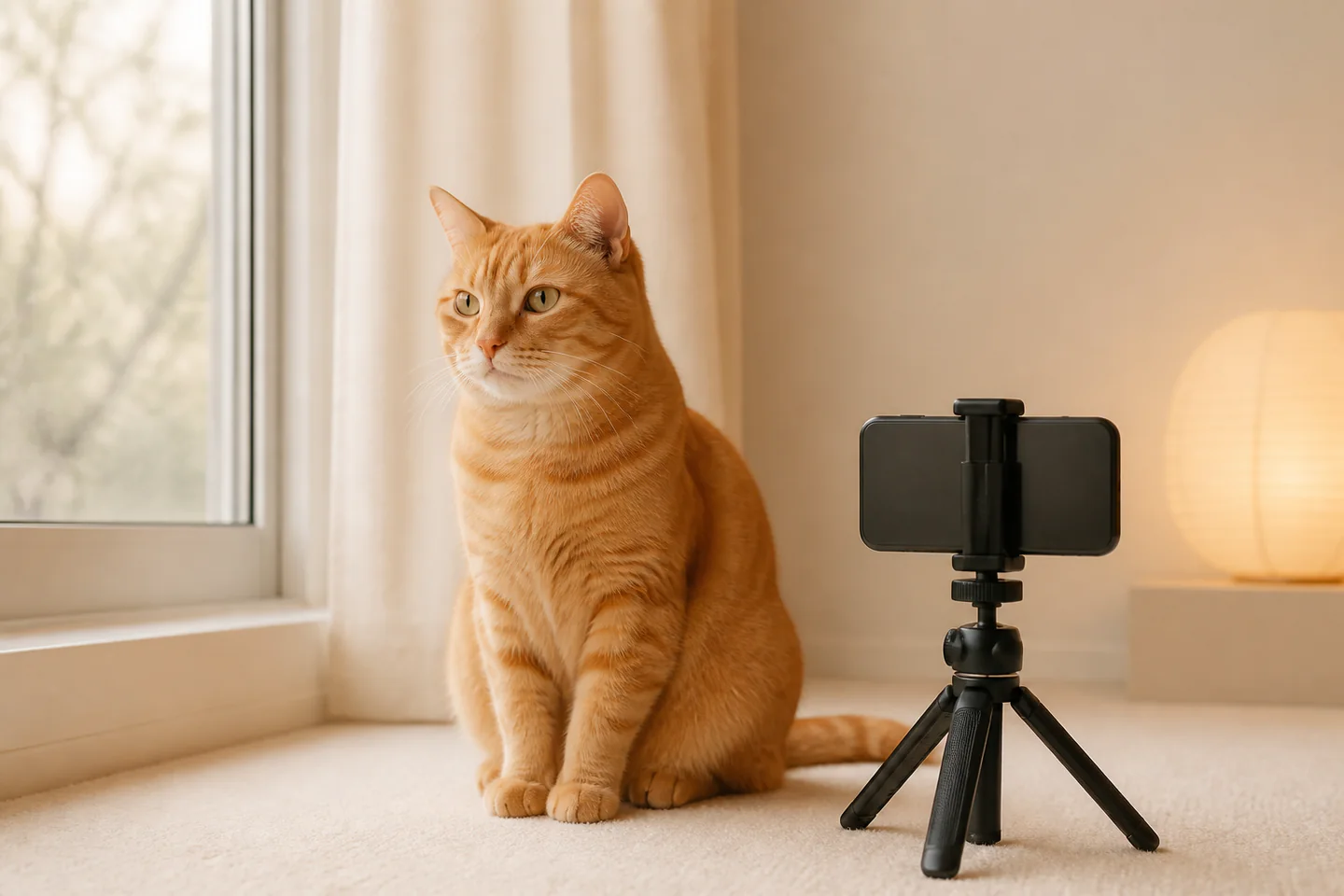
Photograph a pet beside a bright window for five minutes
Choose a time when the animal is settled and a room it already knows. Clear cables, fragile objects and visual clutter, switch off flash and place the pet side-on to a large window without restraining it. Sit or lie at eye level, focus on the nearer eye and use burst or live-photo mode during natural turns. End after a few minutes or at the first stress signal, reward according to the owner or vet’s dietary guidance and select only calm expressions.
- 01
Welfare outranks the image. Never frighten, corner, overheat, dress, balance or restrain an animal for a photograph.
- 02
Continuous autofocus, subject detection and burst capture help, but a predictable quiet environment does more.
- 03
Window light is large and soft. Direct flash can startle animals and create harsh reflections, especially in eyes.
- 04
Use only owner-approved rewards in tiny amounts and account for allergies, medication, weight and species-specific toxicity.
- 05
Get the owner’s consent before sharing names, tags, addresses or images that reveal private information.
What to expect
A good session is short enough that the pet still trusts it
Animals repeat natural behaviours on their own schedule. The photographer prepares light and background in advance, then reacts rather than demanding a performance.
Attention
A sound or toy may earn one glance and then lose novelty. Save it for when the frame is ready.
Focus
The nose can be sharp while the eyes are not. Place focus on the nearer eye and review at useful magnification.
Motion
Fast shutter speed matters for play; quiet moments allow lower ISO and more detail.
Perspective
Eye-level frames feel involved and simplify the room. Photographing down from standing often creates visual distance.
Coat
Dark fur needs highlight protection and careful shadow lift; pale fur can clip in bright windows.
Expression
Relaxed ears, posture and breathing matter. A technically perfect image of a stressed animal is not a success.
Core method
Prepare the frame before inviting the animal in
Read the individual, not a generic species
Ask the owner about handling, triggers, safe rooms, food restrictions, mobility, hearing and vision. Learn normal signs of relaxation and stress for that animal. For reactive, fearful or medically fragile pets, observation from a distance or no session at all may be the correct choice.
Build a quiet light zone
Use a broad window or shaded doorway, remove trailing cables and close unsafe exits. Place a washable neutral blanket only if familiar. Test exposure and background with an object before the pet enters so there is no repeated repositioning while settings are adjusted.
Choose settings for behaviour
On a phone, use the main camera, tap the nearer eye and try burst or live-photo capture. On a camera, use continuous autofocus, a suitable animal-eye mode if reliable and a shutter speed high enough for the expected movement. Keep aperture deep enough that both eyes stay sharp when the head turns.
Work in tiny sequences
Wait for a natural sit, stretch, gaze or play movement. Make two or three short bursts, lower the camera and give space. Watch body language continuously. Finish while the pet is comfortable, then select images that preserve normal proportions and remove private tag or location details before sharing.
Useful products
Products with a clear job in the setup
The JOBY stand is a small phone-first support for static portraits and self-timed owner-and-pet frames. The Bluetooth shutter reduces the need to touch the phone, while Canon’s 50 mm lens is a later option for compatible RF cameras when more background separation and low-light ability are genuinely needed.
JOBY GripTight ONE Micro Stand
It can be positioned near floor level and folds small enough to keep available for spontaneous calm moments.
CamKix Bluetooth Camera Shutter Remote
It lets the photographer direct attention away from the device and can reduce camera shake.
Canon RF 50 mm F1.8 STM Lens
Its bright aperture can isolate eyes and keep shutter speeds practical indoors.
First project
Make a five-picture ordinary-afternoon set
A look, rest, detail, interaction and movement frame show more personality than five identical headshots.
- 01
Ask about boundaries
Confirm handling, treats, triggers, exits and signs that mean stop.
- 02
Prepare window light
Clear the floor and test background and exposure before the pet arrives.
- 03
Make the quiet portrait
Work at eye level and focus on the nearer eye without flash.
- 04
Wait for behaviour
Capture a stretch, wash, toy interest or familiar interaction without forcing it.
- 05
Try one motion burst
Use safe play and a faster shutter only while the animal remains relaxed.
- 06
Finish and edit privately
Stop early, choose normal expressions and remove tag or location information.
What can wait
What can wait until the first result
Props, costumes and a studio full of lights create demands that the first animal never agreed to.
- 01
Direct on-camera flash
It can startle the pet, flatten texture and produce harsh eye reflections.
- 02
Costumes and posed containers
They can restrict movement, hide stress and introduce choking or overheating risks.
- 03
A very long session
Attention and tolerance decline; several five-minute sessions are kinder and more productive.
- 04
A super-fast exotic lens
Autofocus technique, shutter speed and preparation limit results first.
- 05
Novel locations
A familiar quiet environment usually reveals more natural behaviour and fewer safety variables.
Upgrade path
Upgrade the repeated limitation
Upgrade the repeated photographic limitation without increasing pressure on the animal.
Phone and window
FreeMain camera + familiar room
Learn timing, eye focus and welfare.Fixed phone frame
About £20–£55Small stand + remote
Stay unobtrusive and include owner interaction.Interchangeable-lens portrait
About £550–£1,200Camera + standard/short telephoto lens
Gain motion focus and low-light control.Mobile professional kit
About £1,500–£5,000+Dual bodies, quiet lighting and secure backgrounds
Work reliably across clients and locations.Safety & care
No photograph justifies fear, restraint or risk
Watch body language, keep escape routes safe and let the animal leave. The owner’s wishes matter, but the animal’s immediate welfare sets the final boundary.
- Never place an animal on unstable furniture, near roads, open exits, hot lights, water, other animals or unfamiliar heights for a photograph.
- Stop at signs of stress, pain, overheating, aggression or avoidance; do not use punishment, loud noises or repeated startling to obtain attention.
- Use only species-appropriate owner-approved rewards and account for allergies, medication and daily food allowance; secure every small prop and battery.
- Keep light stands, cables and devices stable and supervised, use washable materials and clean shared equipment between animals.
- Obtain permission before photographing or publishing someone else’s pet and remove personal information visible on tags, documents and locations.
Outside help
When outside help earns its place
No class is needed for a quiet phone session. A workshop becomes useful when it covers animal body language, continuous autofocus and safe handling rather than treating pets as ordinary studio objects.
Practise on ordinary movement before involving an animal.
Ask about welfare policy, handling, group size and secure locations.
Representative UK learning options checked 17 August 2026; local prices, access, materials and tutor support vary.
Sources
Where the guidance came from
Animal-welfare guidance determines handling and session boundaries; photographic educators and experienced pet photographers add focus, lighting and client-practice evidence.
-
01
Royal Photographic Society · Learn photography
Established UK photographic learning, practice and ethics resources.
Open source -
02
Adobe · Photography basics
Clear technical introductions to exposure, composition and editing.
Open source -
03
Cambridge in Colour · Photography tutorials
Detailed independent explanations of exposure, lenses, focus and workflow.
Open source -
04
Reddit · r/photography
Large community discussion of equipment, practice, permissions and recurring beginner problems.
Open source -
05
RSPCA · Understanding animal behaviour
UK pet welfare, body-language and care guidance across common species.
Open source -
06
Amazon UK · GripTight ONE Micro Stand
Exact product catalogue page or ISBN used for the recommendation; current price, seller and availability should be confirmed.
Open source -
07
Amazon UK · Bluetooth Camera Shutter Remote
Exact product catalogue page or ISBN used for the recommendation; current price, seller and availability should be confirmed.
Open source -
08
Amazon UK · RF 50 mm F1.8 STM Lens
Exact product catalogue page or ISBN used for the recommendation; current price, seller and availability should be confirmed.
Open source
Guide information and links checked 17 August 2026.