Beginner’s guide · Cook & bake
Churn past whipped cream
then wash the butter clean.
Cream becomes butter when agitation breaks its emulsion. Start with one small carton, stop when butter grains separate, wash out buttermilk and salt only after tasting.
Quick answer
Shake or beat cold cream until it separates
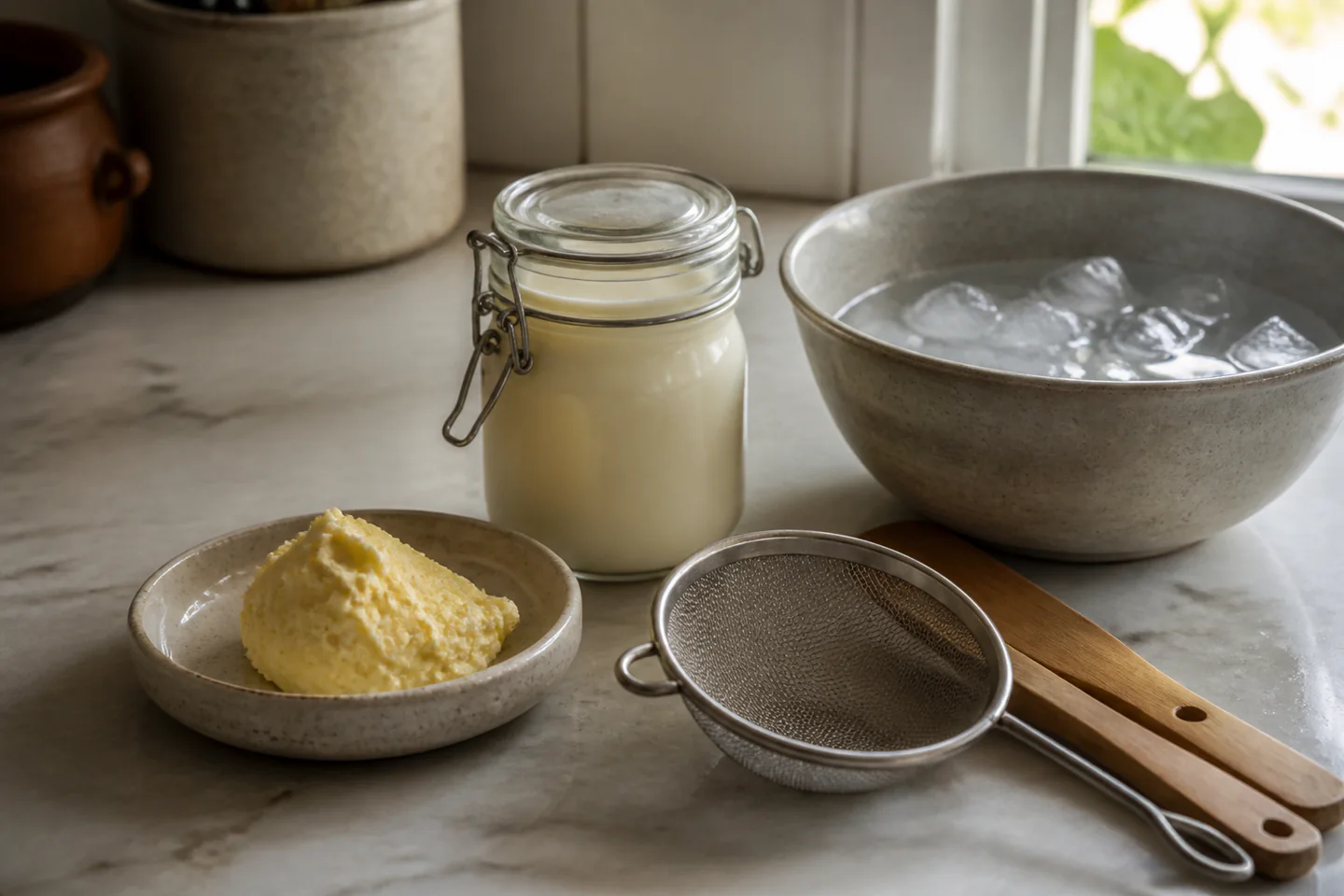
Use fresh double cream in a jar no more than half full, or a mixer with splash protection. Agitate through whipped cream until yellow butter grains and liquid separate, drain, wash with very cold water and press out remaining moisture.
- 01
Leave enough empty jar volume for cream to move. Keep the first attempt narrow enough that preparation, the main action and the result can all be reviewed together.
- 02
Expect whipped cream before separation and keep going. Keep the first attempt narrow enough that preparation, the main action and the result can all be reviewed together.
- 03
Wash until the water is nearly clear to improve keeping quality. Keep the first attempt narrow enough that preparation, the main action and the result can all be reviewed together.
- 04
Weigh salt against finished butter rather than adding it blindly. Keep the first attempt narrow enough that preparation, the main action and the result can all be reviewed together.
What to expect
The dramatic split happens after apparent over-whipping
Cream first thickens and holds air. Continued agitation damages the fat-globule membranes until fat gathers and buttermilk is released.
Temperature
Cool cream churns cleanly, while very cold fat may take longer and warm butter becomes greasy. For butter making, note what actually happened rather than relying on memory; that turns the next attempt into a controlled change instead of another guess.
Mess
A mixer can splash suddenly at separation; a jar contains the process but takes more effort. For butter making, note what actually happened rather than relying on memory; that turns the next attempt into a controlled change instead of another guess.
Yield
Butter is only the fat fraction, so the finished pat is much smaller than the cream volume. For butter making, note what actually happened rather than relying on memory; that turns the next attempt into a controlled change instead of another guess.
Storage
Residual buttermilk shortens keeping quality, which is why washing and pressing matter. For butter making, note what actually happened rather than relying on memory; that turns the next attempt into a controlled change instead of another guess.
Core method
Separate, wash and work the fat
Choose cream
Use fresh double or whipping cream without trying to rescue borderline dairy. For butter making, note what actually happened rather than relying on memory; that turns the next attempt into a controlled change instead of another guess.
Agitate
Shake or beat through the whipped stage until distinct yellow grains and liquid appear. For butter making, note what actually happened rather than relying on memory; that turns the next attempt into a controlled change instead of another guess.
Wash
Drain the buttermilk and rinse the grains in very cold clean water while pressing gently. For butter making, note what actually happened rather than relying on memory; that turns the next attempt into a controlled change instead of another guess.
Season and store
Work out moisture, mix in measured salt if wanted, shape, wrap and refrigerate promptly. For butter making, note what actually happened rather than relying on memory; that turns the next attempt into a controlled change instead of another guess.
Useful products
Tools that make the process measurable
These products earn a place by controlling a specific variable. Ordinary kitchen equipment can cover the rest; check capacities, materials and current availability before ordering.
Kilner One-Litre Clip-Top Glass Jar
A jar proves the process before a mixer or churn is justified.
ThermoPro TP19 Instant-Read Food Thermometer
It turns vague warm-versus-cold advice into a repeatable observation.
Salter 1036 Digital Kitchen Scale
Consistent salt makes batches comparable and avoids harsh pockets.
First project
Shake one small cream batch
The first pat should teach the visual stages, clean washing and restrained moisture—not cultured flavour or ornate moulds.
- 01
Chill and prepare
Use fresh cream, a clean dry jar and a bowl of ice-cold water. For butter making, note what actually happened rather than relying on memory; that turns the next attempt into a controlled change instead of another guess.
- 02
Shake
Agitate steadily through sloshing, whipped cream and the sudden split into grains and liquid. For butter making, note what actually happened rather than relying on memory; that turns the next attempt into a controlled change instead of another guess.
- 03
Drain
Pour off buttermilk through a clean sieve and save it refrigerated for prompt cooking if wanted. For butter making, note what actually happened rather than relying on memory; that turns the next attempt into a controlled change instead of another guess.
- 04
Wash
Add cold water, press or shake gently, drain and repeat until the water is almost clear. For butter making, note what actually happened rather than relying on memory; that turns the next attempt into a controlled change instead of another guess.
- 05
Finish
Work out liquid, add measured salt if desired, shape, wrap, date and refrigerate. For butter making, note what actually happened rather than relying on memory; that turns the next attempt into a controlled change instead of another guess.
What can wait
What can wait until the first result
A mechanical churn saves effort only after the small-batch method is worth repeating.
- 01
Dedicated churn
A jar or existing mixer proves whether you enjoy the process. For butter making, note what actually happened rather than relying on memory; that turns the next attempt into a controlled change instead of another guess.
- 02
Butter moulds
Shape affects appearance, not separation or storage. For butter making, note what actually happened rather than relying on memory; that turns the next attempt into a controlled change instead of another guess.
- 03
Cultured butter
Fermenting cream adds time and microbial handling. For butter making, note what actually happened rather than relying on memory; that turns the next attempt into a controlled change instead of another guess.
- 04
Large batches
Washing and working become harder as butter warms. For butter making, note what actually happened rather than relying on memory; that turns the next attempt into a controlled change instead of another guess.
Upgrade path
Upgrade the repeated limitation
Upgrade effort or temperature control, not the underlying chemistry.
Try it
£5–£15Cream and sturdy jar
You see every stage with minimal equipment.Reduce effort
Existing kitMixer with splash guard
Separation is faster but requires close attention.Improve texture
£10–£35Paddles and chilled working bowl
Moisture is pressed out without melting the butter.Develop flavour
VariableDocumented cultured-cream method
Tang and aroma deepen after plain butter is reliable.Safety & care
Keep dairy cold and equipment clean
Butter making does not make old cream fresh or remove the need for refrigeration.
- Start with in-date pasteurised cream and clean utensils. Follow current manufacturer, food-safety, access, wildlife or local guidance wherever it applies.
- Use a sound jar with a secure lid and dry grip. Follow current manufacturer, food-safety, access, wildlife or local guidance wherever it applies.
- Protect against mixer splash and keep loose clothing away from beaters. Follow current manufacturer, food-safety, access, wildlife or local guidance wherever it applies.
- Refrigerate butter and buttermilk promptly. Follow current manufacturer, food-safety, access, wildlife or local guidance wherever it applies.
- Discard rancid, mouldy or doubtful dairy rather than tasting to investigate. Follow current manufacturer, food-safety, access, wildlife or local guidance wherever it applies.
Outside help
When outside help earns its place
A class is optional, but useful when tasting a known-good example or seeing sanitation and consistency demonstrated would shorten the learning curve.
Use one complete lesson that covers preparation, the central technique, common mistakes and finishing. For a first butter making attempt, one coherent method is easier to diagnose than fragments collected from several creators.
Outside help earns its place when safe setup, access, identification or live correction removes a real obstacle. Ask what equipment, materials, access and follow-up support are included before booking.
Representative UK learning options checked 31 August 2026; local prices, access, materials and tutor support vary.
Sources
Where the guidance came from
The method is grounded in specialist, manufacturer and public guidance, then checked against recurring beginner problems and the exact products linked here.
-
01
Food Standards Agency · Chilling food correctly
UK dairy refrigeration guidance.
Open source -
02
BBC Food · How to make butter
Accessible jar and mixer method.
Open source -
03
American Dairy Association North East · Butter making
Explanation of cream-to-butter agitation.
Open source -
04
King Arthur Baking · Homemade butter
Detailed washing and finishing guidance.
Open source -
05
r/Cooking
Recurring home-butter questions about temperature, washing and uses for buttermilk.
Open source -
06
Amazon UK · One-Litre Clip-Top Glass Jar
Exact Amazon UK product page or ISBN used for the recommendation; current price, seller, specification and availability should be confirmed.
Open source -
07
Amazon UK · TP19 Instant-Read Food Thermometer
Exact Amazon UK product page or ISBN used for the recommendation; current price, seller, specification and availability should be confirmed.
Open source -
08
Amazon UK · 1036 Digital Kitchen Scale
Exact Amazon UK product page or ISBN used for the recommendation; current price, seller, specification and availability should be confirmed.
Open source
Guide information and links checked 31 August 2026.