Beginner’s guide · Cook & bake
Cold smoking cheese
Start with one useful result.
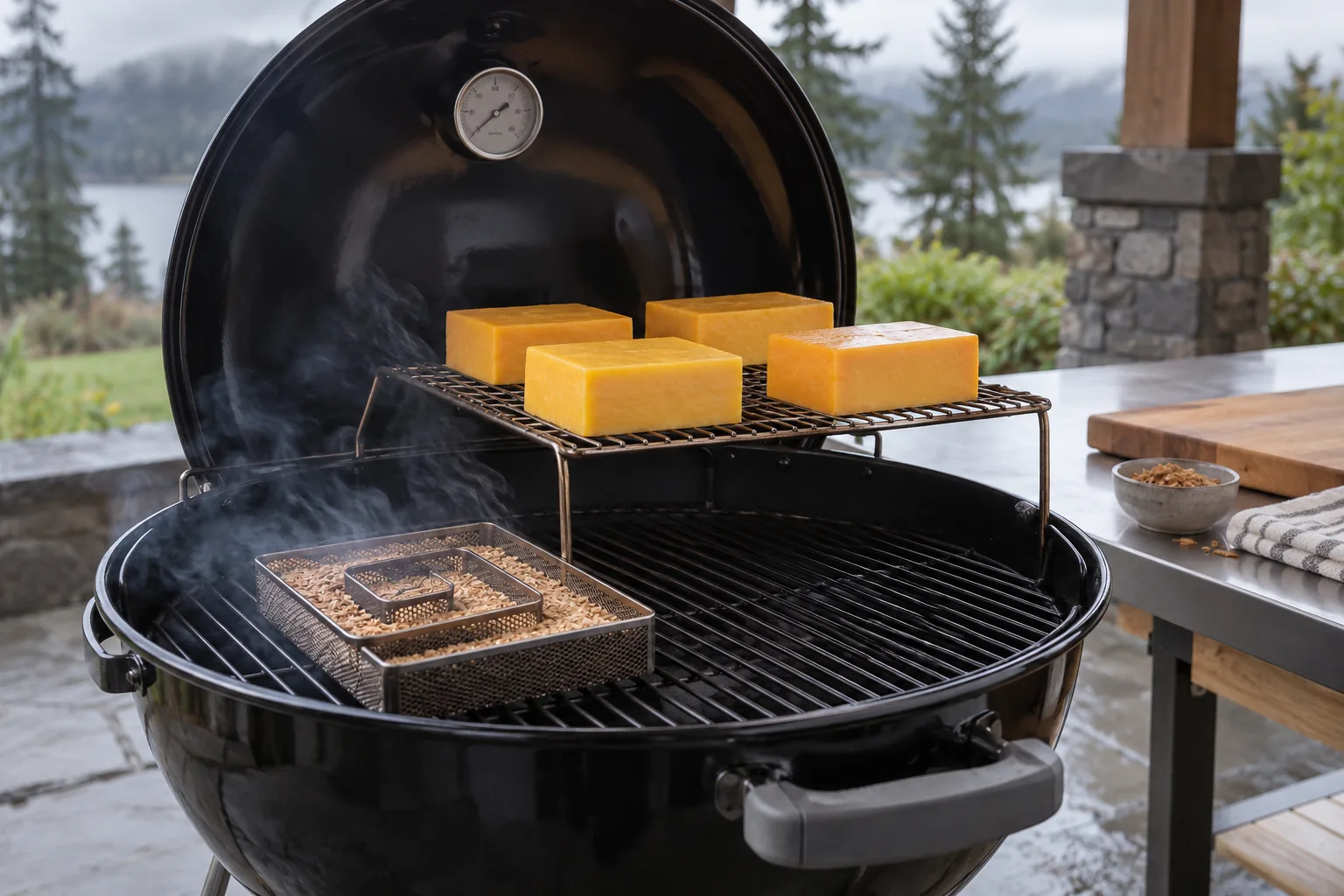
Cold smoking cheese adds aroma without cooking it. Start with a small block of commercially made pasteurised hard cheese in a dedicated cold-smoke setup on a cool day. Keep the session short, monitor the chamber, then return the cheese to the refrigerator.
Quick answer
Start with a small block of commercially made hard cheddar
Cold smoking cheese adds aroma without cooking it. Start with a small block of commercially made pasteurised hard cheese in a dedicated cold-smoke setup on a cool day. Keep the session short, monitor the chamber, then return the cheese to the refrigerator.
- 01
Commercial pasteurised hard cheese kept refrigerated until use
- 02
A clean covered outdoor chamber with a suitable cold-smoke generator and thermometer
- 03
Food-safe rack, clean wrap and fridge space
What to expect
What the first attempt is really like
The useful skill here is adding smoke flavour without warming cheese or treating it as preserved. These details matter more than a polished first result.
Temperature
A smoke generator still gives off heat. Outdoor weather and chamber position matter more than the word 'cold' on the equipment.
Flavour
Smoke tastes sharp immediately; a modest first trial makes comparison easier.
Storage
Smoking is a flavour step, not a validated way to extend a cheese's use-by date.
The method
The method worth learning
Pick cheese and weather conservatively
Use commercially made pasteurised hard cheddar with known refrigeration history. Keep an unsmoked portion in the fridge for comparison. Soft, fresh or raw-milk cheese introduces different risks and is a poor starting point. Choose a cool, dry day and a shaded outdoor position. The chamber must be a suitable food-smoking enclosure, not a cupboard made from treated wood or plastic.
Smoke without lighting the barbecue
Clean the rack and chamber, remove old grease and keep the main charcoal, gas or electric heat source off. Fit a wood-dust generator following its manual. For the ProQ maze, use the specified smoking dust, start it with the supplied-style tealight method and remove the candle once the dust smoulders, before placing the unit in the chamber. Leave space between the generator and cheese, plus airflow around the rack.
Measure rather than guessing from touch
A cold-smoke generator still makes heat. Check the chamber beside the cheese throughout the session with a suitable sensor; do not treat an instant-read food probe suspended in air as a purpose-built chamber probe. Ontario’s commercial cheese guidance discusses preventing heat and melt damage, but a cheese-melting threshold is not a safe storage temperature. Monitor both exposure time and warmth.
Make a short flavour trial
Start with a 30–60 minute exposure on a cool day, within conservative handling limits, rather than filling the maze and waiting for its full burn. Penn State advises a two-hour maximum out of refrigeration for perishable meat and cheese; include preparation and wrapping in that total and shorten the session in warm conditions. Return the cheese promptly to a fridge at 5°C or below, wrap cleanly, date it and retain its original use-by limit. Smoking does not restart the shelf-life clock. Do not copy forum advice to age it for weeks when the label expires earlier.
Useful products
Equipment with a clear job
Start with suitable equipment you already own. These exact UK listings are useful examples when a missing tool limits the first project; prices and availability were checked on 2 October 2026 and delivery may add to the cost.
ProQ Original Cold Smoke Generator (Small)
Adds modest wood-dust smoke to an owned suitable chamber with the main heat switched off.
What can wait
What can wait
Keep the first project small and learn what the equipment is doing before adding more.
- 01
Cold smoking raw fish or meat
These need different risk controls. A cheese flavour experiment does not qualify as a curing process.
- 02
Vacuum packing to extend the date
A tight seal does not reverse contamination or authorise longer storage. Use clean ordinary wrapping and the original date.
- 03
Long warm-weather sessions
Generator burn time is not a recommended cheese exposure. Short cool-weather trials are the sensible first route.
First project
First project: A small block of commercially made hard cheddar
Start with a small block of commercially made hard cheddar. Use the listed equipment, take notes on the result and repeat the small project before expanding it.
- 01
Choose one cheese
Use a small block of hard pasteurised cheddar with a clear use-by date. Avoid soft cheese and any product of uncertain storage.
- 02
Prepare a cold chamber
Clean the grill and rack; keep the main heat source off. Put the smoke generator away from the cheese and monitor chamber temperature.
- 03
Run a modest trial
Smoke only while the setup stays within the chosen safe food-handling plan. Stop if the cheese warms unexpectedly, sweats or contamination occurs.
- 04
Chill and compare
Wrap cleanly, refrigerate promptly, keep the original use-by limit and compare a small sample with unsmoked cheese.
Troubleshooting
When the first attempt goes wrong
It tastes like ash
Use less wood exposure next time, ensure the generator is smouldering cleanly and keep the outlet clear. Compare only after a refrigerated rest within the original label limit; harsh smoke is not a reason to leave cheese on the counter.
The cheese sweats or softens
Stop and review temperature, time outside refrigeration and direct heat. A tray of ice is not a validated safety control and can add condensation. Postpone a new batch until cooler weather; discard cheese with uncertain warm holding or contamination.
The maze goes out
Check that the fuel is dry, of the specified particle size and not tightly compacted. Relight only by the maker’s procedure, with cheese returned to the fridge meanwhile. Poor airflow and damp fuel are common equipment problems.
Condensation lands on the cheese
Check cleanliness and the chamber’s airflow. Keep food clear of dirty roof drips. A smaller test batch makes it easier to identify whether weather or smoke density is causing the problem.
Upgrade path
Where to go after the first result
Repeat the simple route first, then choose the next step that solves a problem you have actually met.
Repeat
Cheese and dust onlyCompare one wood and two short exposures
Keep cheese type and handling unchanged so differences reflect smoke rather than a new recipe.Measurement
Check sensor compatibility and current priceA proper chamber sensor
Shows heat beside the food and helps detect sun warming. It does not measure microbiological safety.Equipment
Get an exact chamber quoteSeparate smoke generation
More separation can reduce heat transfer when regular batches justify a purpose-built system.Safety & care
Safety and practical limits
Use the current instructions for the exact food, material or equipment in front of you.
- Cold smoking does not cook cheese or make it shelf-stable. Follow the original label and maintain cold-chain handling.
- Use only food-safe smoke fuel in equipment designed for cooking; do not improvise a chamber from unsuitable materials.
- Avoid raw-milk or soft cheese in the first attempt and discard cheese that has been held warm or contaminated.
Learning & help
Learning at home and optional help
A class is optional for this first route. Use the free guidance before paying for help.
Use the free ProQ generator instructions and the food-handling sources together. The equipment manual explains the burn; refrigeration guidance governs the food.
If you want to develop long storage, vacuum packaging or raw-food smoking, seek competent food-safety advice on that exact process. A paid class is optional for short hard-cheese flavour trials, and its fee should be checked directly.
Learning sources checked 2 October 2026. No unverified class fee or booking availability is quoted.
Sources
Where the guidance came from
Food and wildlife authorities, exact maker instructions, specialist guidance, practitioner observations and UK product listings support the route above. Community accounts inform practical expectations; they do not establish food safety, wildlife rules or current prices.
-
01
Ontario Ministry of Agriculture · Cheese smoking guidelines
Cold smoke and temperature control for cheese
Open source -
02
Penn State Extension · Do meat and cheese need refrigeration?
Refrigeration and time out of the fridge
Open source -
03
Weber · Cold Smoke Generator
Manufacturer description of cold smoke equipment
Open source -
04
Food Standards Agency · Chilling
Chilled food and leftover storage
Open source -
05
ProQ · Original cold smoke generator
Maker guidance on chamber size, smouldering wood dust and outdoor use.
Open source -
06
SmokinItForums · First cold smoke questions
Practitioner reports of heat control and smoke intensity; long ageing suggestions are not used as storage authority.
Open source -
07
SmokinItForums · Cold smoking cheese observations
Reports of harsh smoke and ambient-temperature problems; this guide does not adopt room-temperature holding advice.
Open source -
08
ProQ · Original Cold Smoke Generator (Small)
Exact selected model, price and availability used for the recommendation; recheck delivery and checkout.
Open source
Guide information and links checked 2 October 2026.