Beginner’s guide · Reflect & explore
Sit somewhere ordinary.
Notice one breath at a time.
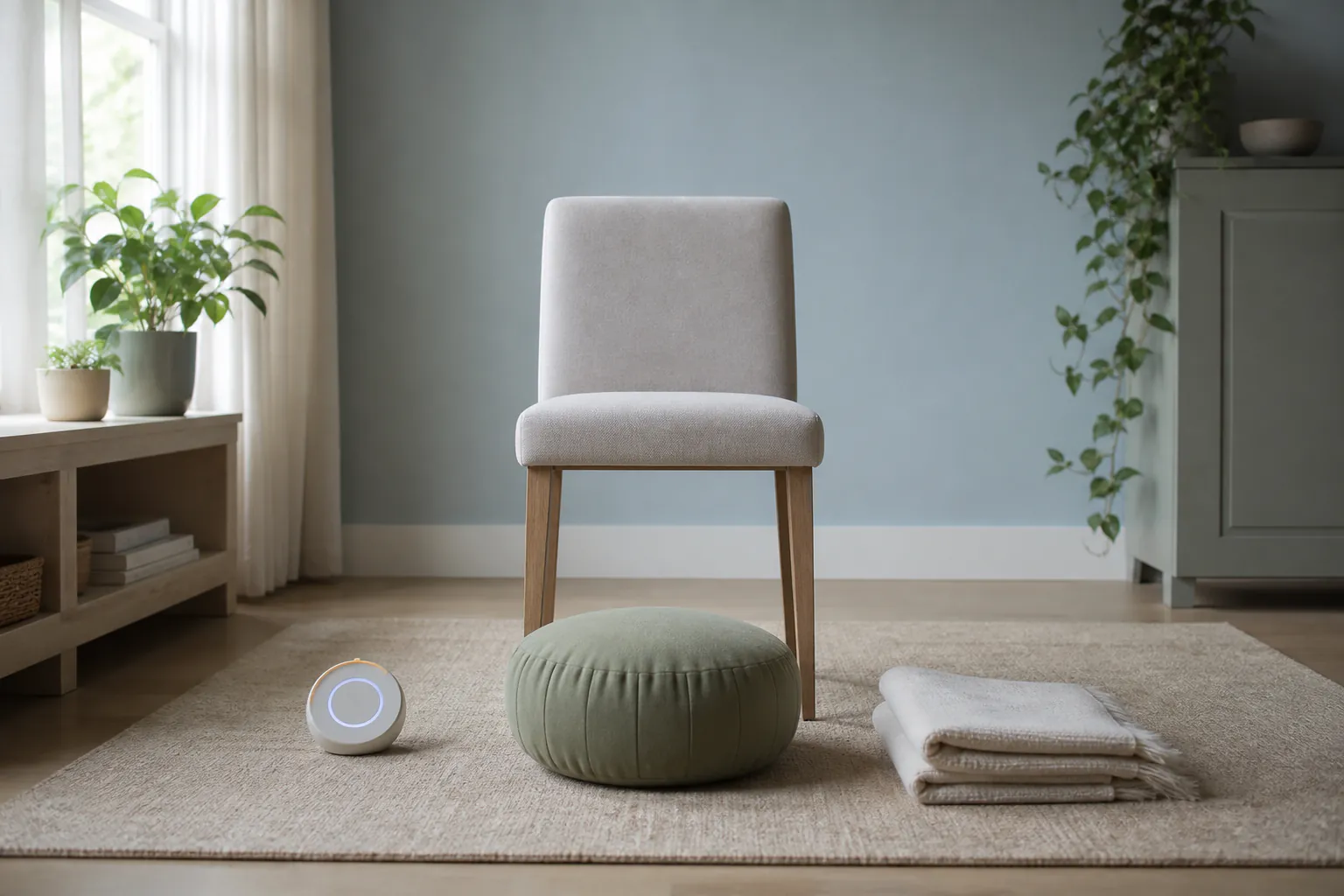
Begin with five minutes in a supportive chair, use breath or body sensation as an anchor and gently notice each return from distraction. A cushion, bench, app or longer session is optional—not evidence that meditation is working.
Quick answer
Practise returning, not emptying the mind
Sit on a stable chair with feet supported and hands resting naturally. Set a gentle five-minute timer, notice the physical sensation of breathing and silently acknowledge when attention moves to a thought, sound or feeling. Return to the next breath without scoring the session.
- 01
Meditation does not require stopping thoughts. Noticing distraction is the moment the practice becomes visible.
- 02
Eyes may be softly open or closed. Choose the option that feels steady and safe rather than copying a picture.
- 03
A chair is a complete meditation seat. Floor posture is not more authentic if it produces pain or numbness.
- 04
Guided recordings can provide structure, but a subscription, streak or performance score is not required.
What to expect
The session can feel busy and still be a session
Some days contain many returns; others contain sleepiness, restlessness or calm. The practice is noticing experience with less automatic reaction, not manufacturing one preferred state.
Thoughts
Planning, memory and commentary continue. Briefly label them and return without arguing with their content.
Body
Ordinary sensations become more noticeable. Adjust sharp pain, unsafe posture or circulation problems rather than enduring them.
Emotion
Attention can make difficult feeling more vivid. Shorten, open the eyes or stop if the practice becomes destabilising.
Sleepiness
An upright posture, open eyes or a different time can help. Falling asleep may also mean the body needs rest.
Progress
A dramatic calm feeling is unreliable as a measure. Repeated willingness to notice and return is more practical.
Routine
Five regular minutes are easier to learn from than an occasional forced hour. Duration can remain short indefinitely.
How to practise
Use a small, clearly bounded practice
Choose a stable posture
Sit far enough forward or back that the chair supports you without strain. Let feet rest on the floor or a support and allow the spine to be upright rather than rigid. Hands can rest on thighs. Loosen anything that restricts breathing and choose a safe quiet place where you will not need to monitor traffic, cooking or another hazard.
Pick one neutral anchor
Notice breath at the nostrils, chest or abdomen, or choose the contact of feet and chair if breath focus feels uncomfortable. There is no need to change the breathing pattern. Let the anchor occupy the foreground while sounds and thoughts remain present.
Name and return lightly
When attention is elsewhere, use a simple label such as “thinking,” “hearing” or “feeling,” then return to the next clear sensation. Avoid turning the label into an analysis. The session may contain dozens of returns.
Close deliberately
When the timer sounds, notice the whole body and room, move slowly and decide on the next ordinary action. Write one factual sentence if useful: duration, posture and what made returning easier or harder.
Useful products
One evidence-based practice guide and two optional floor supports
The Williams and Penman book provides a structured programme with guided practices. The Basaho zafu supports a higher cross-legged seat for people who already find floor sitting comfortable. A folding bench supports kneeling, but fit depends on body proportions; neither seat is necessary for meditation.
Mark Williams and Danny Penman Mindfulness: A Practical Guide to Finding Peace in a Frantic World
The book offers a deliberate progression and guided audio rather than treating every session as a disconnected relaxation track.
Basaho Classic Organic Cotton Zafu
Adjustable buckwheat support can improve pelvic position for some cross-legged sitters.
Folding Bamboo Meditation Bench with Cushion
A bench can reduce the ankle fold and keep weight off the heels for some bodies.
First session
Complete a five-minute chair meditation
Use an ordinary timer with a gentle sound and silence notifications. Do not practise during an activity that requires attention to safety.
- 01
Prepare the next five minutes
Pause alerts, tell other people if needed and choose a chair where you will not be interrupted by a hazard.
- 02
Find support
Place feet and hands comfortably and allow an upright posture without forcing the back.
- 03
Set a gentle timer
Use five minutes so checking the clock does not become the practice.
- 04
Feel one breath
Choose the clearest neutral breathing sensation or the contact of the chair.
- 05
Notice movement of attention
Acknowledge thinking, hearing or feeling in one word when it becomes obvious.
- 06
Return without correction
Come back to the next sensation without trying to recreate the previous breath.
- 07
Stop if needed
Open the eyes, feel feet and room and end early if distress, dizziness or pain increases.
- 08
Close and record
Move gradually and note only what was observed, not whether the session passed or failed.
What can wait
What can wait until posture or structure creates a real need
Meditation equipment changes comfort and guidance, not the basic act of noticing and returning.
- 01
The checked zafu
Use a cushion if cross-legged floor sitting is already comfortable and a higher pelvis improves the posture. A chair is equally valid.
- 02
The checked bench
A bench supports kneeling for some bodies and creates pressure or instability for others. Try the posture before buying.
- 03
Long silent sessions
Duration can intensify discomfort and difficult experience. Build gradually only when short practice remains steady.
- 04
A paid app subscription
Free NHS and Oxford resources can establish the practice. Pay only for a teaching style or programme that is actually used.
- 05
Retreats
Extended silence and intensive practice are materially different from five minutes at home and need careful provider and health consideration.
Upgrade path
Add duration, guidance or posture support separately
A useful upgrade removes one repeated barrier without turning meditation into a performance project.
Five-minute chair practice
FreeStable chair and simple timer
Learn the anchor, distraction and return cycle.Guided programme
Free to about £12 for a bookStructured audio and reading
Introduce body scan, movement and everyday mindfulness progressively.Floor support
About £30–£60Zafu, bench or blanket chosen for the body
Make an already suitable floor posture more sustainable.Teacher-led course
About £100–£400+Qualified teacher, screening and group practice
Receive structured support, while recognising that suitability and quality vary.Safety
Meditation is not a substitute for medical care
Most short practices are low risk, but research and clinical guidance do not support presenting meditation as harmless or universally suitable.
- Stop, open the eyes and orient to the room if practice causes escalating panic, dissociation, traumatic intrusions or loss of stability.
- Seek advice from an appropriate health professional if significant mental or physical health symptoms affect the choice of practice.
- Do not use meditation to delay urgent care, discontinue treatment or endure sharp pain.
- Practise only in a safe stationary setting, never while driving, bathing, cooking or supervising a hazard.
- Choose teachers and courses that state qualifications, safeguarding, accessibility and how they respond when practice is not suitable.
Outside help
When a teacher adds value
A class is optional. It becomes useful when a structured progression, adaptation or discussion of difficult experiences would be safer than following recordings alone.
Use a short practice with clear instructions before committing to a course or subscription.
Check teacher training, screening, accessibility, group size and the process for adverse experiences.
Free public resources and representative UK course pricing checked 31 July 2026; concessions, format and teacher credentials vary.
Sources
Where the guidance came from
NHS and Oxford resources provide the beginner practice; the US NCCIH safety review prevents unsupported treatment claims and acknowledges adverse experiences.
-
01
NHS Every Mind Matters · How to meditate for beginners
Accessible posture, breathing, distraction and short-practice guidance.
Open source -
02
NHS · Mindfulness
Mindfulness overview, limits and routes to further support.
Open source -
03
Oxford Mindfulness · Free meditations
Free guided practices from an established university mindfulness organisation.
Open source -
04
NCCIH · Meditation and mindfulness: effectiveness and safety
Evidence limits, adverse effects and the instruction not to replace conventional care.
Open source -
05
Amazon UK · Mindfulness by Mark Williams and Danny Penman
Exact product page, model or ISBN, observed price and availability checked for this guide.
Open source -
06
Amazon UK · Basaho Classic zafu meditation cushion
Exact product page, model or ISBN, observed price and availability checked for this guide.
Open source -
07
Amazon UK · Folding bamboo meditation bench with cushion
Exact product page, model or ISBN, observed price and availability checked for this guide.
Open source
Guide information and links checked 31 July 2026.