Beginner’s guide · Cook & bake
Freeze a small base well.
Control water before chasing flavours.
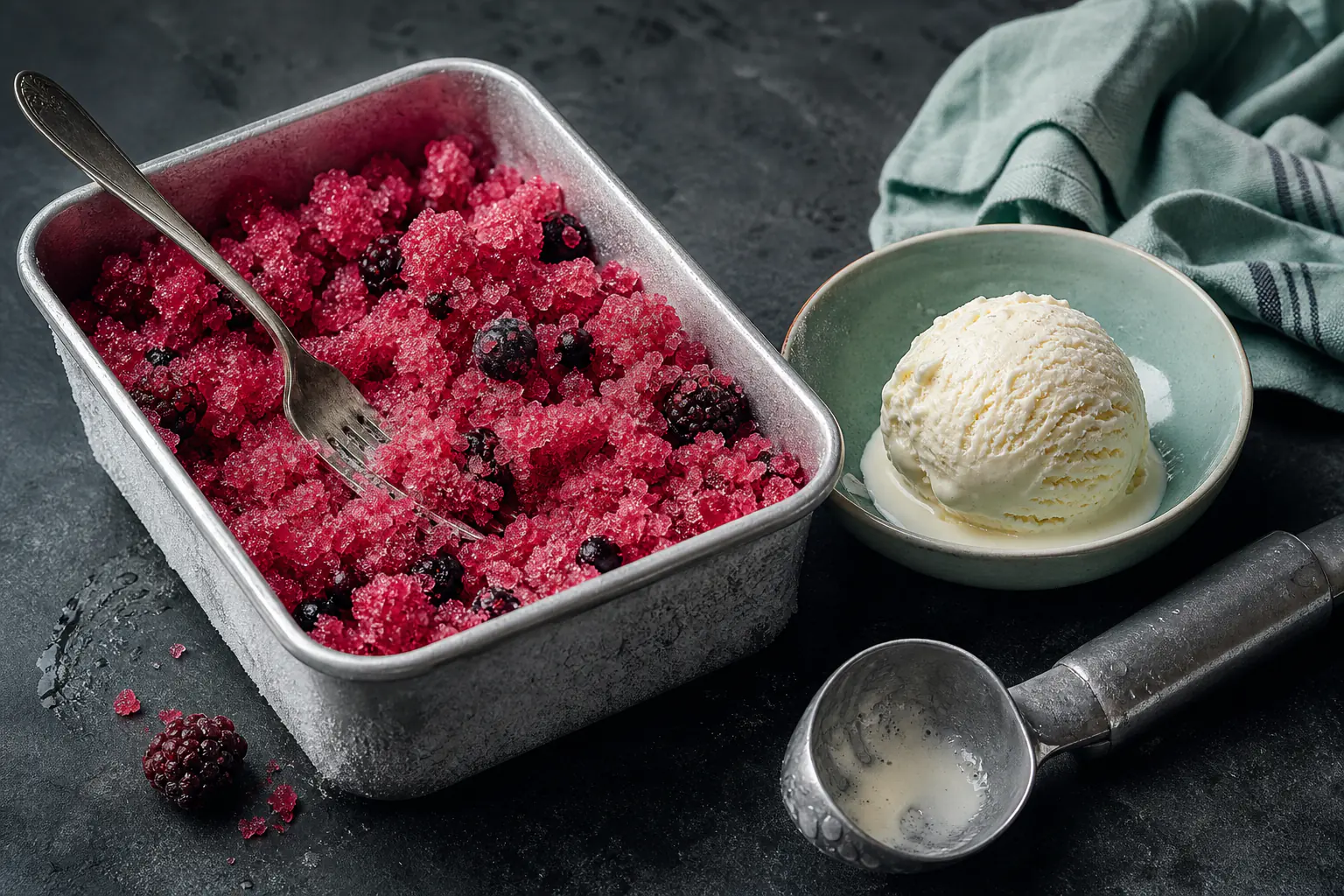
Start with a no-churn ice cream or fork-scraped granita to learn sweetness, cold storage and texture. A freezer-bowl machine adds smaller crystals through agitation; a compressor machine mainly removes the need to pre-freeze the bowl.
Quick answer
Choose one base and freeze it quickly
For a no-machine start, make either a reliable condensed-milk no-churn ice cream or a fruit granita whose syrup is cooled before freezing. Use a shallow covered container in the coldest part of the freezer. Scrape granita at intervals or fold a whipped no-churn base without knocking out all the air. Label the batch and serve within the recipe’s storage guidance.
- 01
Sugar, dissolved solids, fat and air affect softness. Reducing sugar casually can turn a balanced recipe into a hard block.
- 02
A machine freezes while stirring, limiting crystal growth and incorporating air. It does not make a warm base freeze well.
- 03
Freezer-bowl machines require the bowl to be frozen completely—often overnight—before the batch begins.
- 04
Home freezers are colder than serving cabinets. Brief tempering improves scooping without allowing repeated thaw-and-refreeze cycles.
What to expect
Texture is a recipe and temperature problem
Flavour can taste strong while the mix is warm and muted when frozen. The same base changes dramatically with freezing speed, solids and storage.
Crystals
Slow freezing and temperature fluctuation allow larger crystals. Chill the base and transfer the churned dessert promptly.
Sweetness
Cold suppresses flavour perception, while sugars also soften the frozen texture. Use tested proportions before reformulating.
Fruit
Water content and acidity vary. Sorbet often needs a measured syrup balance rather than simply puréed fruit in a freezer.
Air
Whipping and churning incorporate air. Too little produces density; too much or a weak base can feel foamy.
Mix-ins
Warm sauces melt the base and large frozen pieces become hard. Chill additions and cut them small.
Storage
Home-made products lack industrial stabilisers and tolerate fewer temperature cycles. Small batches are a feature, not a failure.
Texture basics
Balance the base, then manage its temperature
Begin with a tested style
Choose one route: no-churn dairy ice cream, fruit granita, uncooked sorbet or cooked custard ice cream. Each uses a different structure. Follow a reputable recipe exactly for the first batch, particularly sugar and dairy ratios. Weigh ingredients where the recipe supplies weights and record the fruit variety or chocolate used so the result can be repeated.
Chill before the final freeze
Cooked bases must cool safely and rapidly before refrigeration. Once properly chilled, they freeze faster and place less load on a freezer bowl. A freezer-bowl machine should have the bowl frozen solid according to its manual; hearing liquid move inside is a sign that it is not ready. Start the dasher before pouring in the cold mix to prevent a frozen wall.
Stop at soft-serve texture
A domestic machine usually produces soft-serve consistency, not a firm scoop. Add cold, small mix-ins near the end. Transfer quickly into a shallow freezer-safe container, press suitable covering against the surface if the recipe recommends it and harden in the freezer. Over-churning after the mixture stops moving cannot keep making it colder.
Serve without repeated warming
Move the container to the refrigerator briefly until the surface yields to a scoop. Portion what is needed and return the remainder to the freezer promptly. If the batch is icy, diagnose the recipe balance, base temperature, bowl condition and storage before buying stabilisers.
Useful products
A reliable recipe reference and two genuinely different machines
The Perfect Scoop supplies tested formulas across ice cream, sorbet and granita. The Cuisinart ICE30BCU is a 2-litre freezer-bowl machine for people with freezer space and advance planning. The ICE100BCU has its own compressor, so batches can start without freezing a bowl; the price buys convenience and repeat batches, not automatically better recipes.
David Lebovitz The Perfect Scoop, Revised and Updated
It provides balanced starting points for churned and no-machine desserts so one variable can be changed at a time.
Cuisinart Deluxe Ice Cream Maker ICE30BCU
The two-litre bowl offers a straightforward domestic route to smaller crystals and incorporated air.
Cuisinart Professional Ice Cream and Gelato Maker ICE100BCU
The built-in compressor suits frequent or consecutive batches where advance bowl planning is the real barrier.
First freeze
Make one fruit granita and record the texture
Granita makes ice-crystal management visible without asking you to buy equipment. Use a tested citrus, coffee or fruit recipe.
- 01
Choose a tested recipe
Use weights and keep its sugar and liquid proportions unchanged for the first batch.
- 02
Prepare the flavour base
Dissolve sugar fully and strain seeds or fibres only where the recipe directs.
- 03
Cool safely
Cool any heated mixture promptly, cover and chill before it enters the freezer.
- 04
Use a shallow container
Spread the base in a freezer-safe metal or rigid container for faster, more even freezing.
- 05
Scrape the edges
As ice forms, rake frozen areas into the liquid with a fork and return the tray quickly.
- 06
Repeat to loose crystals
Scrape at intervals until the batch consists of separate flavoured crystals rather than a solid slab.
- 07
Taste at serving temperature
Notice sweetness, acidity and crystal size only once the dessert is properly cold.
- 08
Label the record
Write recipe, fruit, date, freezer position and one change to test in a later batch.
What can wait
What can wait until the basic freeze is understood
Machines improve agitation and convenience. They do not remove recipe balance, chilling or safe storage.
- 01
The freezer-bowl machine
Buy it when you want churned texture repeatedly and can dedicate enough freezer space to a fully frozen bowl.
- 02
The compressor machine
It removes overnight bowl planning and supports consecutive batches, but is large, heavy and much more expensive.
- 03
Stabilisers and specialist sugars
They can fine-tune texture, yet they complicate measurement and diagnosis. Learn what a tested home recipe does first.
- 04
Raw-egg recipes
Custard styles can be cooked safely. There is no need to begin with uncooked egg mixtures.
- 05
Large batches
Overfilling slows freezing and can overflow a machine. Use the manual’s maximum and leave expansion room in storage containers.
Upgrade path
Pay for colder, more repeatable processing
Choose the machine around freezer space, planning tolerance and how often batches will be made.
No-machine desserts
About £5–£12 a batchWhisk or fork + shallow container
Learn base balance, flavour at low temperature and storage.Freezer-bowl churning
About £65–£100Frozen bowl + pre-chilled base
Create smaller crystals and churned air with advance planning.Compressor machine
About £220–£500Self-refrigerating countertop machine
Start on demand and make consecutive flavours more easily.Recipe formulation
About £15–£80Reliable scales, thermometer and specialist reference
Balance sugars, solids and serving temperature deliberately.Food safety
Keep cold food cold and egg mixtures controlled
Dairy, egg and cut fruit can support harmful microorganisms. Freezing does not repair unsafe preparation or repeated warming.
- Use pasteurised egg products or a properly cooked custard method where raw or lightly cooked egg would present a risk.
- Cool cooked bases rapidly, refrigerate promptly and follow current time-and-temperature guidance rather than leaving a pan at room temperature.
- Wash hands, fruit, utensils and machine parts as directed; keep raw ingredients away from ready-to-eat additions.
- Do not repeatedly thaw and refreeze the main container, and discard food that has been held unsafely or whose history is uncertain.
- Follow the machine manual for bowl freezing, fill limits, moving parts and cleaning; never immerse a motor or compressor housing.
Outside help
When a course is useful
A class is optional. It adds most value when moving from fixed recipes to formulation, vegan bases or professional-style gelato texture.
Use capacity, bowl-freezing and operating guidance specific to the actual machine.
Check whether it teaches balancing and temperature, not only tasting pre-made bases.
Free manufacturer resources and representative UK workshop pricing checked 2 August 2026; equipment access and formulation depth vary.
Sources
Where the guidance came from
Manufacturer manuals establish machine limits; UK food-safety and established recipe sources support cold handling, bases and texture decisions.
-
01
Cuisinart · ICE30BCU instruction booklet
Official freezer-bowl preparation, capacity, churning, cleaning and recipe guidance.
Open source -
02
Food Standards Agency · Chilling
Safe cooling, refrigeration and limits for chilled perishable food.
Open source -
03
Food Standards Agency · Cooking your food
Time, temperature and cross-contamination principles relevant to cooked custard bases.
Open source -
04
BBC Good Food · Ice cream recipes and guidance
Tested home methods across no-churn, churned ice cream and frozen desserts.
Open source -
05
Amazon UK · David Lebovitz The Perfect Scoop revised
Exact product page, model or ISBN, observed price and availability checked for this guide.
Open source -
06
Amazon UK · Cuisinart ICE30BCU Deluxe ice cream maker
Exact product page, model or ISBN, observed price and availability checked for this guide.
Open source -
07
Amazon UK · Cuisinart ICE100BCU compressor ice cream and gelato maker
Exact product page, model or ISBN, observed price and availability checked for this guide.
Open source
Guide information and links checked 2 August 2026.