Beginner’s guide · Cook & bake
A clean first batch of bottled extract beer
Clean first; measure before bottling.
Start with a complete extract kit, a food-safe fermenter, hydrometer and sound sanitation. Fermentation takes patience, and stable gravity—not bubbles—decides when beer is ready to package.
Quick answer
Use a complete extract route and write down every gravity reading
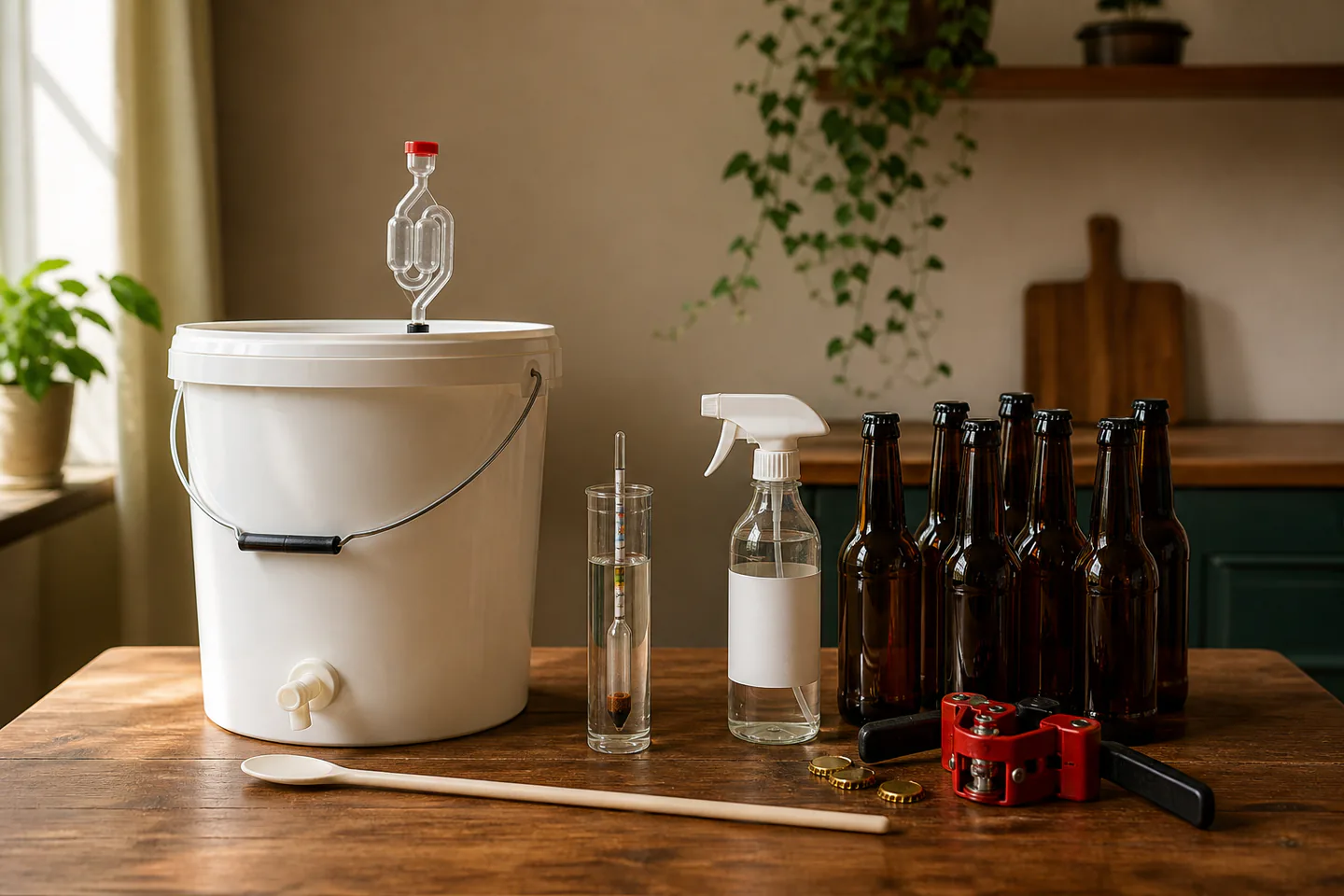
Choose a reputable complete 20–23 litre starter system or a smaller matched kit. Clean visible residue, sanitise everything that will touch cooled wort, mix the extract exactly to volume and pitch the supplied yeast within its stated temperature range. Record original gravity. Ferment without repeatedly opening the vessel, then take hydrometer readings on separate days; package only when the recipe time has passed and gravity is stable.
- 01
Cleaning removes dirt; sanitising reduces microorganisms. Both are required and the sanitiser contact instructions matter.
- 02
An airlock can stop bubbling while fermentation continues or bubble because temperature changes. Stable hydrometer readings are stronger evidence.
- 03
Bottle-conditioning sugar must be measured to the recipe and bottle strength; too much sugar or unfinished fermentation can cause dangerous pressure.
- 04
A beer kit shortens wort production but not fermentation, conditioning, cleaning or safe packaging. Expect several weeks before judging it.
What to expect
Most first-batch failures are process failures, not recipe failures
Infection, incorrect volume, hot yeast pitching, poor temperature control and premature bottling can overwhelm any ingredient choice.
Cleaning
Dried foam and yeast protect contamination. Remove deposits before sanitising and pay attention to taps, threads and bottling wands.
Temperature
Yeast creates flavour as well as alcohol. Keep within the strain or kit range rather than placing the fermenter wherever space appears.
Gravity
Measure a cooled sample without returning it to the fermenter. Original and final gravity estimate attenuation and approximate alcohol.
Patience
Foam, haze and sediment are normal. Unnecessary opening adds oxygen and contamination risk.
Packaging
Use pressure-rated beer bottles, inspect them, dose carbonation accurately and keep early conditioning contained.
Taste
Chill and pour off the sediment. Record fermentation temperature and time before changing the next recipe.
Core method
Treat the first brew as a controlled food process
Read the whole recipe and inventory the kit
Confirm batch volume, vessel capacity, yeast, fermentables, sanitiser, hydrometer, packaging and enough pressure-rated bottles before opening ingredients. Check best-before dates and identify a location that can hold the required temperature without direct sun.
Clean, sanitise and mix accurately
Wash all equipment with brewery-suitable cleaner and rinse as instructed. Prepare sanitiser at the labelled concentration and contact time. Mix the hopped malt extract and water to the exact final volume, avoid scorching and cool or adjust to the yeast-pitching range before adding yeast.
Ferment and measure
Close the vessel as designed, record date, temperature and original gravity and leave headspace. Avoid opening for curiosity. After the minimum schedule, sanitise the tap or sampling tool and take gravity readings on at least two separated days; follow the recipe and yeast guidance if they continue changing.
Package conservatively
Use sound pressure-rated bottles and the kit’s exact priming method. Do not guess spoonfuls or package unfinished beer. Cap, label the batch and condition in a contained location at the stated temperature, then chill a test bottle and open it carefully before moving the rest.
Useful products
A reusable brewing system, a recipe and a measurement reference
Coopers’ complete system is the cleanest equipment route where the listing is available. The Brew A IPA can is a later ingredient refill, and Greg Hughes’ book broadens recipes and explains process; do not buy a refill without the equipment it requires.
Coopers DIY Beer 23 Litre Brew Kit
The supported system reduces omissions and teaches a full ferment-and-bottle cycle.
Coopers Brew A IPA Homebrewing Extract, 1.7 kg
A named extract reduces recipe variables and lets fermentation improvements be compared with the first batch.
Greg Hughes Home Brew Beer
It is widely recommended in UK brewing communities and covers extract through more advanced brewing.
First project
Ferment, bottle and assess one documented batch
Following one complete recipe exactly creates a baseline for every later change.
- 01
Inventory and clean
Confirm all components, remove residue and inspect fermenter, tap and bottles.
- 02
Sanitise contact surfaces
Mix a brewing sanitiser precisely and observe its stated contact and rinse instructions.
- 03
Make wort to volume
Dissolve the extract, add water accurately and verify pitching temperature.
- 04
Pitch and record
Add yeast, seal as designed and record original gravity and temperature.
- 05
Prove completion
Take sanitary gravity samples on separate days after the recipe minimum.
- 06
Prime and condition safely
Use exact sugar dosing and pressure-rated bottles, then test one cautiously after conditioning.
What can wait
What can wait until the first result
All-grain hardware and recipe invention add variables before clean fermentation is repeatable.
- 01
A large stainless kettle
Extract kits avoid a full-volume boil; confirm future brew method before buying one.
- 02
Pressure fermentation
Pressure-capable vessels require ratings, regulators and procedures beyond a first ambient brew.
- 03
Kegging
A keg, gas cylinder, regulator and cold storage solve packaging convenience, not basic fermentation.
- 04
Water-salt adjustment
Safe drinkable water and a complete extract recipe come before detailed mineral profiles.
- 05
Recipe improvisation
Changing sugar, volume, hops and yeast at once makes a disappointing batch impossible to diagnose.
Upgrade path
Upgrade the repeated limitation
Upgrade temperature control first if recorded batches show large swings; move to partial-mash or all-grain only when the extra process sounds enjoyable.
Complete extract start
About £90–£140Fermenter system + kit + bottles
Learn sanitation, gravity and packaging.Temperature control
About £60–£250 extraFridge or chamber + controller
Keep yeast in a repeatable range.Kegging route
About £250–£650Keg + CO₂ + regulator + cold storage
Reduce bottling and control serving.All-grain system
About £350–£1,200+Mash/boil system + chiller
Control wort recipe with more time and cleaning.Safety & care
Pressure, heat, glass and alcohol make shortcuts unsafe
Fermentation creates carbon dioxide and packaging creates pressure; hygiene and UK alcohol rules also apply.
- Never seal active fermentation in a vessel not designed for pressure and never bypass a blocked vent by guessing.
- Bottle only after stable gravity and use sound pressure-rated bottles with measured priming sugar; isolate suspect over-carbonated bottles and seek experienced advice.
- Vent carbon dioxide, lift full vessels safely and keep hot liquids and electrical equipment away from children, pets and unstable surfaces.
- Use food-safe chemicals exactly to label, never mix cleaning products and store them away from ingredients.
- Home-brewed alcohol is for adults; check current UK rules before selling, distilling or serving outside private use, and label batches clearly.
Outside help
When outside help earns its place
A full extract kit can be completed at home. A homebrew club or supplier workshop is useful when diagnosing flavour, planning temperature control or moving to all-grain.
Use the exact kit instructions, FAQs and helpline before substituting ingredients.
Check whether sanitation, gravity, packaging and tasting are included.
Representative UK product, club, lesson and venue costs checked 9 August 2026; local prices, access, weather, materials and tutor support vary.
Sources
Where the guidance came from
Manufacturer instructions and UK brewing organisations set the process; experienced homebrew communities reveal recurring sanitation, temperature and packaging problems.
-
01
Coopers DIY Beer · UK instructions
Exact kit process, cleaning and fermentation guidance.
Open source -
02
UK Government · Alcohol licensing
Current legal context for selling and supplying alcohol.
Open source -
03
Campaign for Real Ale · Home brewing
UK homebrewing education and community context.
Open source -
04
The Homebrew Forum
UK community troubleshooting for kits, fermentation and packaging.
Open source -
05
HomebrewTalk · Beginner beer brewing
Large community archive of repeated beginner problems and solutions.
Open source -
06
Amazon UK · Coopers DIY Beer Brew Kit
Exact product page, model or ISBN, observed price and availability checked for this guide.
Open source -
07
Amazon UK · Coopers Brew A IPA extract
Exact product page, model or ISBN, observed price and availability checked for this guide.
Open source -
08
Amazon UK · Greg Hughes Home Brew Beer
Exact product page, model or ISBN, observed price and availability checked for this guide.
Open source
Guide information and links checked 9 August 2026.