Beginner’s guide · Cook & bake
Shape a tight ring,
then boil before baking.
Bagels are lean, firm dough rings set briefly in simmering water before a hot bake. A scale, strong flour and one small batch reveal the distinctive chew without specialist machinery.
Quick answer
Make six plain bagels with a weighed overnight dough
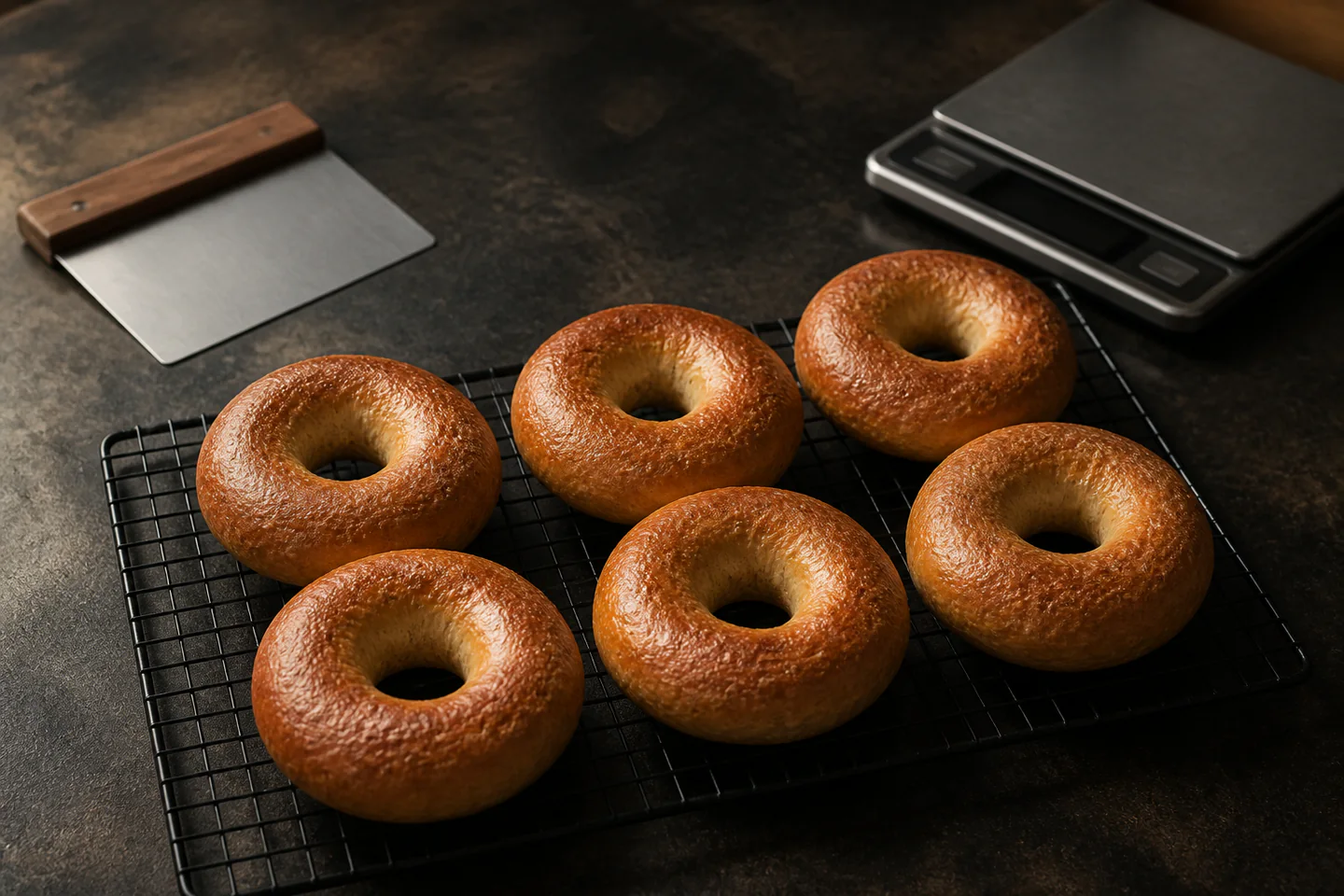
Use a reputable recipe written in grams and make a small firm dough with strong bread flour, water, yeast, salt and the specified sweetener. Knead until smooth, divide by weight and shape six tight rings using one method. Proof only to the recipe’s visual cues, chill if directed, then lower bagels carefully into gently simmering water using a wide utensil. Drain, top if wanted and bake on a preheated lined tray until deeply coloured. Cool before slicing.
- 01
Bagel dough is firmer than ordinary sandwich-bread dough. Adding unmeasured water to make kneading easier changes the result.
- 02
Divide by weight so pieces proof, boil and bake at similar rates.
- 03
A brief water bath sets the surface and contributes chew and shine; it must be handled as a hot-water task, not a dramatic rolling boil.
- 04
Proofing depends on dough temperature and yeast activity, not the clock alone. Follow the recipe’s tests.
- 05
Raw flour and dough are not safe to eat. Clean surfaces, wash hands and bake fully.
What to expect
The shape exposes every earlier dough decision
Weak development makes flat rings, poor seams open in the water and over-proofed dough wrinkles. The first batch is a useful map rather than a bakery exam.
Hydration
Firm dough may strain small mixers and often suits hand kneading in a modest batch.
Kneading
A smooth elastic surface helps retain gas without turning the finished crumb cake-like.
Shaping
Rope-and-join and poke-and-stretch both work; repeat one method across the batch for comparison.
Proof
Bagels should feel aerated but still resilient. Over-proofing makes handling and boiling fragile.
Boil
Longer boiling usually builds a thicker chewier crust, but use the chosen recipe’s tested timing first.
Bake
Deep colour develops flavour. Pale bagels may be under-baked even when the crumb has set.
Core method
Keep the dough firm and the process measured
Choose one gram-based formula
Use a recognised bread source that specifies flour type, dough temperature or proof cues, boiling liquid and baking temperature. Read the entire schedule and make fridge space before mixing. Avoid combining one recipe’s dough with another’s proof and boil times.
Mix, rest and knead
Weigh every ingredient, keeping yeast and salt distributed as directed. Mix until no dry flour remains and use any stated rest before kneading. Develop a smooth strong dough by hand or within the mixer’s rated capacity, stopping if the machine labours or overheats.
Divide and shape consistently
Weigh the total dough and calculate six equal pieces. Pre-shape if directed, then roll ropes of equal length and overlap or lock the ends firmly around the hand. Make the centre hole larger than the desired finished size because proofing and boiling close it.
Proof, boil and bake safely
Use the recipe’s proof test and chill schedule. Preheat the oven and prepare the tray before heating water. Keep the pan at a gentle controlled simmer, lower each piece away from the body, avoid crowding and drain thoroughly. Bake to the visual and internal cues, then cool on a rack before cutting.
Useful products
Products with a clear job in the setup
The Etekcity scale makes the firm dough and six divisions repeatable. Zulay’s scraper moves sticky or firm dough without forcing a knife across the bench, while a MasterClass loaf tin is not required here; instead the silicone mat provides a measured, non-slip shaping surface that also serves other dough hobbies.
Etekcity Digital Kitchen Scale, 0.1 g to 5 kg
Weighed flour and water remove cup-packing variation, and equal pieces cook consistently.
Zulay Kitchen Three-Piece Stainless Dough Scraper Set
A straight scraper preserves the worktop and makes six equal portions easier to move.
Generic Thick Silicone Pastry Mat with Measurements, 40 × 50 cm
The size guide makes six rings easier to compare and cleanup simpler.
First project
Make six plain overnight bagels
Plain dough keeps attention on strength, proof, seam and boil rather than fillings.
- 01
Read the full schedule
Reserve fridge space and note proof, boil and bake stages.
- 02
Weigh the firm dough
Do not soften it with casual splashes of water.
- 03
Develop the gluten
Knead to the recipe’s smooth elastic cue and rest as directed.
- 04
Divide six by weight
Use one shaping method and leave deliberately generous holes.
- 05
Boil at a controlled simmer
Lower away from the body and follow the tested time.
- 06
Bake dark and cool
Use a rack and wait before slicing to protect the crumb and hands.
What can wait
What can wait until the first result
Malt products, toppings and filled rings are interesting only after the plain dough holds its shape.
- 01
A bagel board or stone
A lined metal tray can produce a convincing first batch.
- 02
Many toppings
Seeds burn or fall off and hide whether the crust itself worked.
- 03
Lye water
Food-grade lye requires specialist controls and is unnecessary for beginner bagels.
- 04
A stand mixer upgrade
Six firm pieces can be kneaded by hand while technique and recipe preference are tested.
- 05
Batch freezing equipment
First learn whether the household likes the recipe and how it reheats.
Upgrade path
Upgrade the repeated limitation
Upgrade fermentation control, baking surface or volume only when the plain batch is repeatable.
Six plain bagels
About £15–£45Scale + pan + tray + scraper
Learn firm dough and boil.Flavour control
About £20–£70Malt syrup/flour and selected toppings
Tune crust colour and aroma.Bake consistency
About £40–£160Baking steel/stone and oven thermometer
Improve heat recovery and colour.Larger production
About £300–£1,500+Rated mixer, fridge space and safe boiling station
Scale without damaging equipment.Safety & care
Manage raw flour, hot water and a hot tray
The defining water bath adds splash and lifting risk. Keep the batch small, the pan uncrowded and the route from water to tray clear.
- Treat flour and raw dough as uncooked food, wash hands and surfaces and keep raw ingredients away from ready-to-eat food.
- Use a wide stable pan on a suitable hob, keep handles turned safely and lower bagels away from the body with a heatproof utensil.
- Do not overcrowd or allow a violent boil; water and wet dough can splash and steam burns quickly.
- Use oven gloves for hot trays, keep children and pets outside the transfer route and cool bagels before slicing.
- Follow allergy and ingredient labelling for toppings, shared equipment and gifts and store finished bagels promptly.
Outside help
When outside help earns its place
A reputable recipe and six-piece batch are enough. A bread workshop becomes useful for live dough assessment and efficient hand shaping rather than for access to special machinery.
Use one source for dough, proof, boil and bake.
Ask whether ingredients, lunch, take-home dough and allergy handling are included.
Representative UK learning options checked 17 August 2026; local prices, access, materials and tutor support vary.
Sources
Where the guidance came from
Established baking organisations define tested formulas and food safety; experienced bread communities add shaping, proof and oven troubleshooting.
-
01
King Arthur Baking · Bagels
Tested formula, shaping, boiling and baking guidance.
Open source -
02
BBC Good Food · Bagels
UK-accessible recipes and ingredient context.
Open source -
03
Food Standards Agency · Food hygiene
UK home food-safety and allergen guidance.
Open source -
04
The Perfect Loaf
Detailed independent dough development and fermentation education.
Open source -
05
Reddit · r/Breadit
Community evidence on bagel seams, proofing, boiling and crumb.
Open source -
06
Amazon UK · Digital Kitchen Scale, 0.1 g to 5 kg
Exact product catalogue page or ISBN used for the recommendation; current price, seller and availability should be confirmed.
Open source -
07
Amazon UK · Three-Piece Stainless Dough Scraper Set
Exact product catalogue page or ISBN used for the recommendation; current price, seller and availability should be confirmed.
Open source -
08
Amazon UK · Thick Silicone Pastry Mat with Measurements, 40 × 50 cm
Exact product catalogue page or ISBN used for the recommendation; current price, seller and availability should be confirmed.
Open source
Guide information and links checked 17 August 2026.