Beginner’s guide · Grow & care
Give a cactus more light than attention.
Water the roots, then let them dry.
Start with one healthy named cactus, a draining pot and a genuinely bright position. Learn the weight and dryness of its compost instead of watering by calendar.
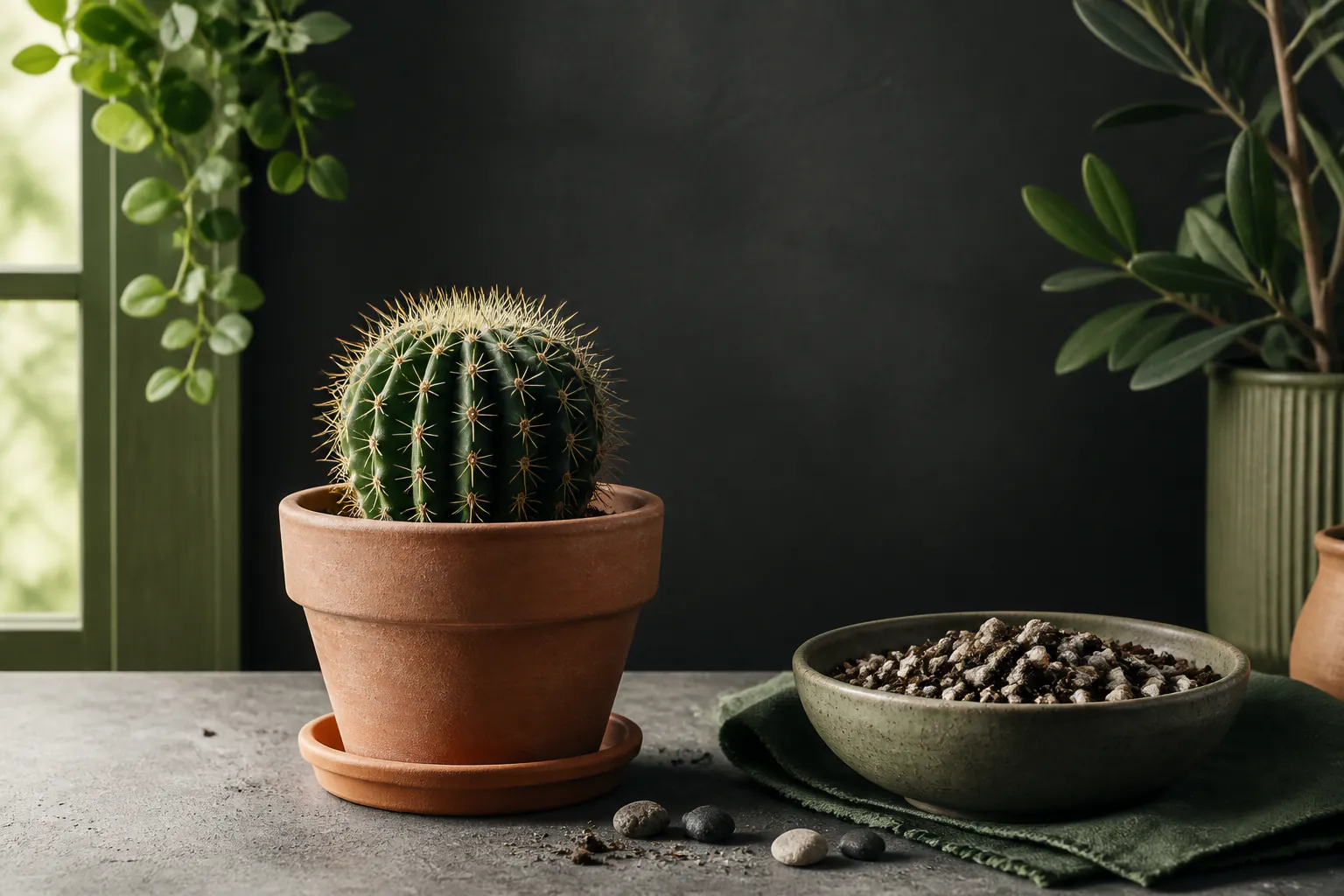
Quick answer
Start bright, drain freely and stop watering on schedule
Choose a firm pest-free cactus with a label, place it in the brightest suitable window and keep it in a pot with a drainage hole. When the compost is dry through the root zone during active growth, soak it fully and let every excess drop escape. Wait for the pot to become light and the mix to dry again; cool low-light winter conditions usually require far less water.
- 01
Cacti are succulents, but rainforest epiphytic cacti and desert cacti do not share identical care.
- 02
A decorative outer pot must not hold runoff around the roots.
- 03
Window direction, glazing, latitude and season change the amount of usable light; “bright room” is not a measurement.
- 04
A grow light helps only when distance, duration and heat suit the plant.
What to expect
Slow change makes both success and damage easy to miss
A cactus can survive poor conditions for months. New compact growth, firm tissue and healthy roots are better evidence than mere continued existence.
Light
Low light produces stretched pale growth that cannot be made compact later. Increase light gradually to avoid scorch.
Water
Tiny sips leave dry root zones and repeated dampness encourages rot. Water thoroughly, then wait.
Compost
A mix must drain in the actual pot and room; adding stones at the bottom does not replace a drainage hole.
Temperature
Many desert cacti prefer a cooler dry winter rest, while frost and cold wet roots can be fatal.
Pests
Mealybugs and scale hide in crevices and roots. Isolate new plants and inspect them closely.
Flowers
Maturity, seasonal light and dormancy affect blooming. A flower is not an immediate test of beginner care.
Core method
Read the plant, pot and season together
Identify the type and inspect it
Buy from a source that labels the genus or species where possible. Check the body and base for softness, discolouration, scars and cottony pests. Look at the current compost and drainage hole. Quarantine it from an established collection for several weeks while learning what normal growth looks like.
Choose the brightest sustainable position
Use a bright windowsill that does not create dangerous summer heat behind glass. Rotate only modestly so growth direction remains understandable. If moving from a shop into stronger sun, increase exposure over days or weeks. A grow light should be timed consistently and positioned to manufacturer guidance.
Water completely and infrequently
Test below the surface with pot weight, a wooden skewer or careful inspection. During active growth, take the inner pot to a sink, soak the compost evenly and let it drain. Empty the saucer. Do not water again because a week has passed; wait until the root zone is dry and conditions still support growth.
Repot only for a clear reason
Use a slightly larger terracotta or plastic pot with a hole and a cactus mix whose mineral and organic balance stays open. Wear suitable gloves or use folded card and tongs without squeezing the plant. Inspect roots, remove only dead material, keep the crown at its previous height and delay watering briefly if roots were damaged.
Useful products
Drainage, a breathable pot and light for a genuinely dark home
The peat-free cactus mix and terracotta pots solve common root-zone problems. The SANSI clip light is for a position that cannot provide enough natural light; it is not automatically needed on a suitable sunny sill.
Growth Technology Cactus Focus Repotting Mix 8 L
It offers a consistent small bag for one or several beginner pots without requiring bulk ingredients.
Vensovo 12.7 cm Terracotta Pots with Saucers, Six Pack
Terracotta can help a beginner sense drying and reduces hidden standing water.
SANSI 10 W Clip-On LED Grow Light
It targets the genuine limiting input rather than adding more water or feed.
First project
Observe one complete dry-to-water cycle
Photograph the plant and weigh or learn the feel of the pot when fully dry, immediately after watering and as it dries again.
- 01
Identify and quarantine
Record the plant name, inspect crevices and keep it apart from other plants.
- 02
Assess light
Place it at the brightest safe window and note hours of direct sun rather than a room label.
- 03
Check drainage
Confirm a real hole and no standing water in the cover pot.
- 04
Wait for dryness
Use pot weight and a skewer to test below the surface.
- 05
Water fully
Soak evenly during active growth and allow complete drainage.
- 06
Record the interval
Note weather, season and drying time and use the evidence for the next decision.
What can wait
What can wait until the first result
Cacti reward better conditions more than frequent intervention.
- 01
A large collection
Different dormancy, pests and labels become harder to learn at once.
- 02
Misting
It does not water desert-cactus roots effectively and can leave moisture in vulnerable crowns.
- 03
A huge pot
Unused wet compost dries slowly and makes root health harder to judge.
- 04
Routine fertiliser
Feed lightly only during healthy active growth and according to a cactus-suitable label.
- 05
Decorative top dressing
It can hide moisture and pests until watering habits are established.
Upgrade path
Upgrade the repeated limitation
Improve measured light and winter conditions before adding rare plants.
One windowsill cactus
Plant + existing potBright position + drainage
Learn the water-and-dry cycle.Better root zone
About £9–£35Cactus mix + suitable terracotta pots
Increase aeration and visible drainage.Supplemental light
About £21+Timed grow light at checked distance
Prevent weak seasonal growth in a dark position.Small labelled collection
VariableSeparate care notes and quarantine space
Compare dormancy and growth without losing provenance.Safety & care
Protect hands, plants and pets
Spines, irritant sap, pesticide use and overheated windows are the practical hazards.
- Handle spiny plants with folded card, tools and eye protection where appropriate; never rely on thin fabric gloves alone.
- Identify potentially toxic or irritant plants and keep them away from children and pets.
- Quarantine new plants and follow pesticide labels exactly; avoid unnecessary treatment and protect pollinators outdoors.
- Do not place pots where they can fall or where intense glass-amplified heat can cook the plant.
- Use clean tools and discard rotten or infested material responsibly rather than spreading it through compost or a collection.
Outside help
When outside help earns its place
A specialist nursery visit can help with identification, but the RHS growing guidance and careful observation cover the beginner route.
Use current seasonal care and problem-solving information.
Ask about the exact species, winter minimum and current compost rather than generic cactus care.
Representative UK prices and free learning routes checked 3 August 2026; local availability, materials and tutor support vary.
Sources
Where the guidance came from
RHS cultivation guidance establishes light, watering, compost and dormancy; specialist society material supports identification and pest awareness.
-
01
RHS · Cacti and succulents as houseplants
UK light, watering, feeding, potting and seasonal care.
Open source -
02
RHS · Cacti and succulent growing guide
Detailed cultivation and troubleshooting guidance.
Open source -
03
British Cactus and Succulent Society
Specialist UK society resources, cultivation knowledge and local branches.
Open source -
04
RHS · Houseplant pests and diseases
Identification and management context for common indoor plant problems.
Open source -
05
Amazon UK · Cactus Focus repotting mix
Exact product page, model or ISBN, observed price and availability checked for this guide.
Open source -
06
Amazon UK · Vensovo terracotta pot set
Exact product page, model or ISBN, observed price and availability checked for this guide.
Open source -
07
Amazon UK · SANSI 10 W clip grow light
Exact product page, model or ISBN, observed price and availability checked for this guide.
Open source
Guide information and links checked 3 August 2026.