Beginner’s guide · Make & create
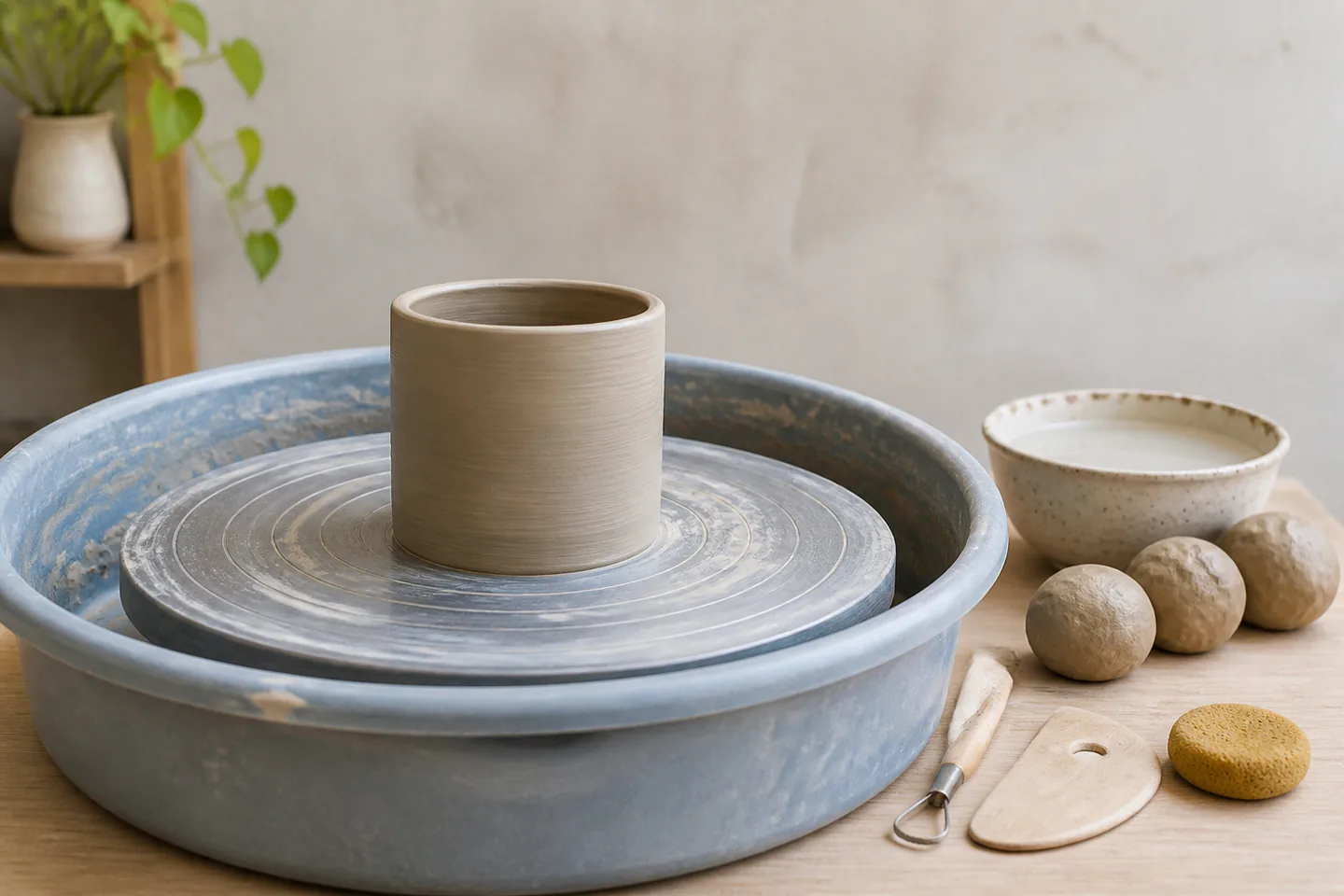
Centre one small ball,
then pull a cylinder.
A shared studio is the sensible first route because the wheel, clay body, reclaim, drying and kiln must work together. Repetition matters more than keeping every pot.
Quick answer
Book studio access before buying a wheel
Use roughly 450 g of the studio’s approved clay, brace elbows and body, centre by coning and compressing, open with an even floor, then pull a simple cylinder. Cut one practice piece in half to inspect the base and wall instead of firing everything.
- 01
A wheel is only one part of the system; wedging, reclaim, drying, glazing and firing remain. Keep the first attempt narrow enough that preparation, the main action and the result can all be reviewed together.
- 02
Too much water weakens the wall and turns useful friction into slip. Keep the first attempt narrow enough that preparation, the main action and the result can all be reviewed together.
- 03
Centring depends on stable leverage and clay consistency more than hand strength. Keep the first attempt narrow enough that preparation, the main action and the result can all be reviewed together.
- 04
The cylinder is the foundation for many later forms and gives honest cross-sectional feedback. Keep the first attempt narrow enough that preparation, the main action and the result can all be reviewed together.
What to expect
The first useful result may be a cut-open pot
A cylinder that looks passable outside can hide a heavy base, trapped water or uneven walls.
Clay
Fresh evenly prepared clay is easier than a stiff reclaimed lump. For wheel throwing pottery, note what actually happened rather than relying on memory; that turns the next attempt into a controlled change instead of another guess.
Body position
Braced elbows and an appropriate wheel height reduce fighting the clay. For wheel throwing pottery, note what actually happened rather than relying on memory; that turns the next attempt into a controlled change instead of another guess.
Water
Use enough to prevent grabbing, then remove slip rather than flooding each pull. For wheel throwing pottery, note what actually happened rather than relying on memory; that turns the next attempt into a controlled change instead of another guess.
Firing
A studio controls compatible clay, glaze schedules and kiln loading; unfired work remains fragile. For wheel throwing pottery, note what actually happened rather than relying on memory; that turns the next attempt into a controlled change instead of another guess.
Core method
Centre, open and pull as one repeatable sequence
Prepare matched balls
Weigh and wedge several small portions of the same clay. For wheel throwing pottery, note what actually happened rather than relying on memory; that turns the next attempt into a controlled change instead of another guess.
Anchor and centre
Fix the clay firmly, cone up and compress down until both hands feel no oscillation. For wheel throwing pottery, note what actually happened rather than relying on memory; that turns the next attempt into a controlled change instead of another guess.
Open and compress the floor
Leave enough base thickness for trimming and compress the floor to reduce cracking. For wheel throwing pottery, note what actually happened rather than relying on memory; that turns the next attempt into a controlled change instead of another guess.
Pull a plain cylinder
Use matched inside and outside pressure, slow the wheel and inspect thickness by cutting one piece. For wheel throwing pottery, note what actually happened rather than relying on memory; that turns the next attempt into a controlled change instead of another guess.
Useful products
Products with a clear job in the setup
Use only clay approved by the firing studio. The Kemper kit and soft rib are portable hand tools; none makes buying a home wheel sensible before studio practice.
Industrial Plasters Ltd School Clay Buff Stoneware Clay, 12.5 kg
A known body makes water use and wall thickness easier to compare.
Kemper Pottery Tool Kit, 8-piece
It supplies the small hand tools a shared studio may not lend.
Mudtools Shape 1 Polymer Rib, Yellow Soft
A flexible rib can remove slip and show uneven pressure on a cylinder.
First project
Throw three cylinders and cut one open
Repetition exposes whether the same wobble or heavy base keeps returning.
- 01
Prepare three equal balls
Keep size and clay consistency comparable. For wheel throwing pottery, note what actually happened rather than relying on memory; that turns the next attempt into a controlled change instead of another guess.
- 02
Centre without rushing
Stop and reset posture when the clay begins to throw the body around. For wheel throwing pottery, note what actually happened rather than relying on memory; that turns the next attempt into a controlled change instead of another guess.
- 03
Open to a measured floor
Use a needle check only as the instructor permits. For wheel throwing pottery, note what actually happened rather than relying on memory; that turns the next attempt into a controlled change instead of another guess.
- 04
Pull two or three walls
Move steadily and stop before the rim collapses. For wheel throwing pottery, note what actually happened rather than relying on memory; that turns the next attempt into a controlled change instead of another guess.
- 05
Wire off and dissect
Compare the cut profile with what the outside suggested. For wheel throwing pottery, note what actually happened rather than relying on memory; that turns the next attempt into a controlled change instead of another guess.
What can wait
What can wait until the first result
Extra equipment becomes useful only when the basic method has exposed a specific, repeated limitation.
- 01
A home wheel
It does not solve clay storage, reclaim, drying or kiln access. For wheel throwing pottery, note what actually happened rather than relying on memory; that turns the next attempt into a controlled change instead of another guess.
- 02
Large bowls
Wide floors and unsupported rims magnify centring and drying problems. For wheel throwing pottery, note what actually happened rather than relying on memory; that turns the next attempt into a controlled change instead of another guess.
- 03
Keeping every first pot
Firing weak practice consumes studio and kiln resources. For wheel throwing pottery, note what actually happened rather than relying on memory; that turns the next attempt into a controlled change instead of another guess.
- 04
Many glazes
Clay control and firing compatibility matter before colour choice. For wheel throwing pottery, note what actually happened rather than relying on memory; that turns the next attempt into a controlled change instead of another guess.
Upgrade path
Upgrade the repeated limitation
Buy practice access before machinery.
Taster session
£35–£80Wheel, clay and tutor
Feel centring and make a first form.Short course
£120–£350Repeated lessons and firing
Connect throwing, trimming and glaze.Open studio
£60–£180 monthlyApproved clay and shared facilities
Build repetition without owning a kiln.Home wheel
£400–£1,500+Dedicated wet workspace plus external firing
Gain scheduling control but keep service dependence.Safety & care
Control dust, posture and studio compatibility
Wet clay is manageable; dry silica-bearing dust and poorly planned lifting or posture are not.
- Keep clay and cleanup wet; never dry-sweep or sand clay without the studio’s dust controls. Follow current manufacturer, food-safety, access, wildlife or local guidance wherever it applies.
- Use only clay and glaze approved for the studio’s firing schedule. Follow current manufacturer, food-safety, access, wildlife or local guidance wherever it applies.
- Adjust seat, wheel and foot position and take breaks from sustained braced posture. Follow current manufacturer, food-safety, access, wildlife or local guidance wherever it applies.
- Keep water away from plugs, foot-pedal connections and damaged cables. Follow current manufacturer, food-safety, access, wildlife or local guidance wherever it applies.
- Treat kilns as specialist electrical and high-temperature equipment and follow studio access rules. Follow current manufacturer, food-safety, access, wildlife or local guidance wherever it applies.
Outside help
When outside help earns its place
Supervised studio instruction is the preferred start because live correction and the whole firing system are available together.
Check clay, tuition, trimming, glazing and firing inclusions.
Look for repeated centring practice, reclaim and cross-section feedback.
Representative UK learning options checked 31 August 2026; local prices, access, materials and tutor support vary.
Sources
Where the guidance came from
Ceramics educators support repetitive cylinder practice and cross-section feedback; UK health guidance supports strict control of dry dust.
-
01
Ceramic Arts Network · Tips for beginners learning wheel throwing
Beginner centring, repetition and body-care advice.
Open source -
02
AMACO Brent · Pottery wheel basics
Manufacturer demonstration of centring and cylinders.
Open source -
03
Ceramic Arts Network · Wheel throwing in cross section
Cross-sectional feedback on wall and base thickness.
Open source -
04
HSE · Silica
Respirable crystalline silica health context.
Open source -
05
Reddit · r/Pottery
Recurring beginner experience of centring, water and studio practice.
Open source -
06
Amazon UK · School Clay Buff Stoneware Clay, 12.5 kg
Exact Amazon UK product page or ISBN used for the recommendation; current price, seller, specification and availability should be confirmed.
Open source -
07
Amazon UK · Pottery Tool Kit, 8-piece
Exact Amazon UK product page or ISBN used for the recommendation; current price, seller, specification and availability should be confirmed.
Open source -
08
Amazon UK · Shape 1 Polymer Rib, Yellow Soft
Exact Amazon UK product page or ISBN used for the recommendation; current price, seller, specification and availability should be confirmed.
Open source
Guide information and links checked 31 August 2026.