Beginner’s guide · Grow & care
Build a living heap
from balanced inputs.
Garden composting turns mixed green and brown material into a soil improver. Start with one ventilated bin on soil, add varied small pieces and use moisture and structure—not a rigid recipe—to guide adjustments.
Quick answer
Mix greens and browns in small pieces
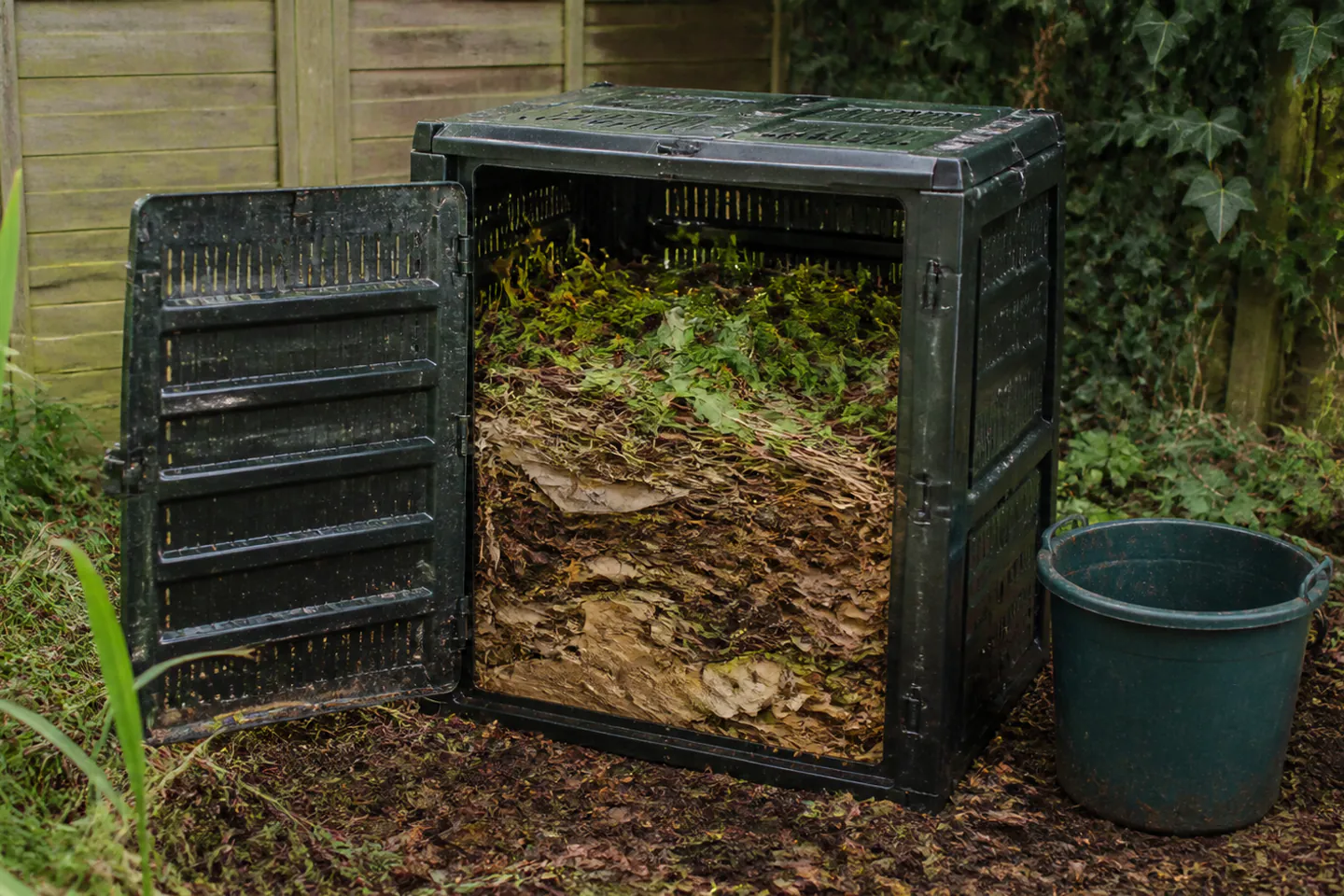
Place a ventilated bin on level free-draining soil, then add varied soft green material with torn dry cardboard, autumn leaves or woody browns. Keep it as damp as a wrung sponge and turn only when structure or air needs restoring.
- 01
Use a varied mixture rather than adding a deep layer of one wet grass or kitchen material. Record the setting, measurement or observation that mattered so the next attempt can be changed for a reason rather than by guesswork.
- 02
Exclude cooked food, meat, dairy and problem materials unless the chosen managed system explicitly accepts them. Record the setting, measurement or observation that mattered so the next attempt can be changed for a reason rather than by guesswork.
- 03
Break bulky inputs into smaller pieces so air and microbes can reach more surface. Record the setting, measurement or observation that mattered so the next attempt can be changed for a reason rather than by guesswork.
- 04
Check moisture in the centre and add water or dry browns according to evidence. Record the setting, measurement or observation that mattered so the next attempt can be changed for a reason rather than by guesswork.
- 05
Allow enough time for maturation before using compost around sensitive seedlings. Record the setting, measurement or observation that mattered so the next attempt can be changed for a reason rather than by guesswork.
What to expect
A cold heap still works, only more slowly
Home compost need not become visibly hot. Volume, season, particle size and turning determine speed, while the finished result matters more than chasing a temperature number.
Balance
Green materials supply moisture and nitrogen; browns add carbon and structure. The useful ratio changes with how wet and dense each ingredient is. In composting, this is worth checking before the next stage because a small adjustment now is easier than undoing a finished result.
Air
Compacted wet grass smells because air cannot move. Dry twiggy material and a turn restore structure better than perfume or additives. In composting, this is worth checking before the next stage because a small adjustment now is easier than undoing a finished result.
Moisture
A roofed bin can become dry while an open heap becomes saturated. Feel the centre, not only the exposed surface. In composting, this is worth checking before the next stage because a small adjustment now is easier than undoing a finished result.
Pests
Secure lids, clean additions and excluding unsuitable food reduce attraction; they do not make an outdoor system sterile. In composting, this is worth checking before the next stage because a small adjustment now is easier than undoing a finished result.
Core method
Manage the conditions microbes need
Choose the site
Use level accessible ground with drainage, room to open the lid and a route for carrying material in and compost out. In composting, this is worth checking before the next stage because a small adjustment now is easier than undoing a finished result.
Start with structure
Place coarse woody prunings at the base, then alternate handfuls of mixed greens and torn browns rather than making perfect layers. In composting, this is worth checking before the next stage because a small adjustment now is easier than undoing a finished result.
Check the centre
Every few additions, squeeze material from inside with a gloved hand and assess smell, heat, moisture and compaction. In composting, this is worth checking before the next stage because a small adjustment now is easier than undoing a finished result.
Mature and screen
Stop adding to a full batch, allow it to finish, remove obvious uncomposted pieces and return them to the next cycle. In composting, this is worth checking before the next stage because a small adjustment now is easier than undoing a finished result.
Useful products
Products with a clear job in the setup
The bin is the main purchase. Two sizes are shown because a larger volume can work more steadily, while a smaller footprint is easier to site; the book provides a broader soil context.
Prosperplast Compogreen 220 L Garden Composter
The enclosed shape retains material while still offering airflow and a base open to soil.
4smile 300 Litre Garden Composter Bin
A larger active mass can buffer temperature and moisture better than a tiny underfilled bin.
Charles Dowding No Dig
It helps the beginner value mature compost as a soil surface amendment rather than a mysterious waste product.
First project
Fill one bin with a documented mix
A simple log turns smell, moisture and speed into evidence rather than folklore.
- 01
Site the bin
Level the ground, secure the empty bin and confirm access to the lid and harvest flap. In composting, this is worth checking before the next stage because a small adjustment now is easier than undoing a finished result.
- 02
Collect two streams
Keep a covered supply of torn dry cardboard or leaves beside the bin and add it with each wet kitchen or garden load. In composting, this is worth checking before the next stage because a small adjustment now is easier than undoing a finished result.
- 03
Build mixed additions
Chop long stems, break up grass clumps and combine materials as they enter instead of making deep sealed layers. In composting, this is worth checking before the next stage because a small adjustment now is easier than undoing a finished result.
- 04
Check and correct
If wet and smelly, add dry structure and turn; if dry and inactive, mix and add modest water. In composting, this is worth checking before the next stage because a small adjustment now is easier than undoing a finished result.
- 05
Mature the batch
When full, stop adding, allow several months as conditions require and test for an earthy smell and unrecognisable texture. In composting, this is worth checking before the next stage because a small adjustment now is easier than undoing a finished result.
What can wait
What can wait until the first result
Composting responds to material and conditions; powders and gadgets are secondary.
- 01
Accelerator products
A diverse active heap normally contains its own microbes. Fix air, moisture and material variety first. In composting, this is worth checking before the next stage because a small adjustment now is easier than undoing a finished result.
- 02
Powered tumbler system
Tumblers can be useful but limit volume and still require balanced inputs; learn the process before changing container. In composting, this is worth checking before the next stage because a small adjustment now is easier than undoing a finished result.
- 03
Composting every household waste
Local collections may handle items that a cool garden heap cannot safely or attractively process. In composting, this is worth checking before the next stage because a small adjustment now is easier than undoing a finished result.
Upgrade path
Upgrade the repeated limitation
Change the workflow that repeatedly stops material reaching a mature batch.
Try it
£35–£100One 220–300 litre bin and a dry-brown store
Input balance and seasonal speed become visible.Run two batches
£40–£120 extraSecond bay or bin for maturing compost
Fresh additions no longer reset the finishing batch.Improve handling
£20–£100Fork, aerator and covered shred station
Bulky material is easier to mix without unnecessary machinery.Process more
VariableThree-bay system or council-approved food-waste route
Volume increases only when feedstock and garden use justify it.Safety & care
Exclude hazardous and persistent material
A home heap is not a guaranteed treatment for every weed, pathogen, chemical or food waste.
- Exclude pet faeces, nappies, treated wood, ash from unsuitable fuels, chemicals, plastics and anything prohibited locally. Follow current manufacturer, food-safety, electrical or local guidance wherever it applies.
- Avoid composting persistent weed roots, seeded invasive plants or diseased material unless the process is known to reach the required treatment conditions. Follow current manufacturer, food-safety, electrical or local guidance wherever it applies.
- Wear gloves, wash hands and avoid breathing dry mould or dust when turning. Follow current manufacturer, food-safety, electrical or local guidance wherever it applies.
- Use stable tools and safe lifting technique; obtain medical advice if mould exposure is a concern. Follow current manufacturer, food-safety, electrical or local guidance wherever it applies.
Outside help
When outside help earns its place
A local authority or community-garden session can explain local material rules and show mature compost. A class is optional once the bin, inputs and corrections are understood.
Use one complete lesson that covers preparation, the main technique, troubleshooting and finishing. For a first composting project, following one coherent method is more useful than combining partial instructions from several creators.
Outside help earns its place when safe setup, equipment access or live correction would remove a real obstacle. Ask what materials, supervision and take-home result are included before booking.
Representative UK learning options checked 30 August 2026; local prices, access, materials and tutor support vary.
Sources
Where the guidance came from
The method is grounded in specialist, manufacturer and public guidance, then checked against recurring beginner problems and the exact products linked here.
-
01
Royal Horticultural Society · Composting
Compost ingredients, troubleshooting and use.
Open source -
02
Garden Organic · Home composting
UK organic-composting guidance.
Open source -
03
Recycle Now · Home composting
UK household composting and exclusion advice.
Open source -
04
Cornell Waste Management Institute · Composting
Evidence-led compost-process reference.
Open source -
05
Health and Safety Executive · Gardening
Relevant safe-handling context.
Open source -
06
Amazon UK · Compogreen 220 L Garden Composter
Exact Amazon UK product page or ISBN used for the recommendation; current price, seller, specification and availability should be confirmed.
Open source -
07
Amazon UK · 300 Litre Garden Composter Bin
Exact Amazon UK product page or ISBN used for the recommendation; current price, seller, specification and availability should be confirmed.
Open source -
08
Amazon UK · No Dig
Exact Amazon UK product page or ISBN used for the recommendation; current price, seller, specification and availability should be confirmed.
Open source
Guide information and links checked 30 August 2026.