Beginner’s guide · Make & create
Build the circle,
then balance the foliage.
Begin with one reusable ring, a single foliage family and secure overlapping bundles. A restrained wreath is easier to finish, hang and compost than a crowded seasonal display.
Quick answer
Cover one ring with small overlapping foliage bundles
Use a reusable metal or willow ring sized for the intended door and obtain clean, legally sourced foliage that is safe for the household. Cut several small bundles to similar length, lay the first along the ring and bind its stems firmly with florists wire or strong twine. Overlap each new bundle over the previous stems, checking the front and outer silhouette every few additions. Hide the final join beneath the first foliage, make a separate strong hanging loop and test the completed weight close to the floor before displaying it.
- 01
The base and hanging point carry every later decoration. Test them before valuable or brittle material is attached.
- 02
Small repeated bundles are easier to secure and balance than one heavy branch tied at a single point.
- 03
Use foliage from your own garden, a florist or another permitted source. Do not cut from parks, reserves, hedges or private land without permission.
- 04
Identify plants before bringing them indoors. Berries, yew, holly, ivy and ornamental material can be toxic or hazardous to people and pets.
- 05
Fresh, dried and artificial materials have different moisture, fire and disposal needs. Design around where the wreath will actually hang.
What to expect
The wreath changes after it leaves the table
Fresh stems lose moisture, wire settles and wind loads the hanging point. A wreath that looks balanced while flat can tilt, shed or scratch a door when vertical.
Base
Metal rings are light and reusable; willow and straw add volume but may absorb moisture or shed.
Foliage
Conifers hold structure, eucalyptus changes as it dries and broad leaves can curl. Mix only after learning one material.
Bundles
Consistent stem length produces a controlled outer edge. Uneven heavy bunches create flat spots and twist the frame.
Fixing
Wire is discreet and strong but leaves sharp ends; twine is softer and compostable but may loosen outdoors.
Display
Sun, central heating, rain and wind change colour and life. A sheltered cool position lasts longer.
End of life
Separate wire, ribbon, foam and ornaments before composting plant matter. A reusable ring should return to labelled storage.
Core method
Treat the ring as structure, not decoration
Choose the display and base
Measure door width, clearance, hanger and expected weather. Pick a ring that leaves visible space around it and check whether the door surface needs protection. Make and load-test the hanging loop before adding foliage, using fixings approved for the door or wall.
Source and prepare material
Identify plants and obtain them with permission. Wear suitable gloves for prickly or sap-producing stems and use clean sharp secateurs. Condition florist-bought foliage as recommended, remove damaged leaves and sort pieces by length so each bundle begins with comparable material.
Bind repeated bundles
Place two or three small stems together, position them along the ring and wrap wire several firm turns without crushing them. Add the next bundle so foliage covers the previous stems and fixing. Rotate the ring, keep wire under tension and pause regularly to view the silhouette vertically.
Close, finish and inspect
Lift the first bundle, tuck the final stems underneath and secure them independently. Bend and cover every wire end, shake the wreath gently over the work area and hang it low for an hour. Remove loose berries or pieces and reassess weight before final display.
Useful products
Products with a clear job in the setup
The 12-inch metal rings provide a reusable structure, although the multi-pack is sensible only for repeated or group projects. Felco 2 secateurs are a durable upgrade for anyone already pruning plants; they are not necessary if a safe sharp pair is owned. The NoCry gloves add limited protection against rough foliage and blades, but they are not thorn-proof and never make unsafe cutting acceptable.
MUKLEI 12-Inch Metal Wreath Rings, 16 Pack
A wire ring keeps the first project light and lets bundles be attached at many points.
Felco Felco 2 Classic Secateurs
Felco 2 has long-term parts support and suits repeated garden and floral preparation.
NoCry Cut-Resistant Gloves
Dexterity is useful when holding small bundles and binding wire close to stems.
First project
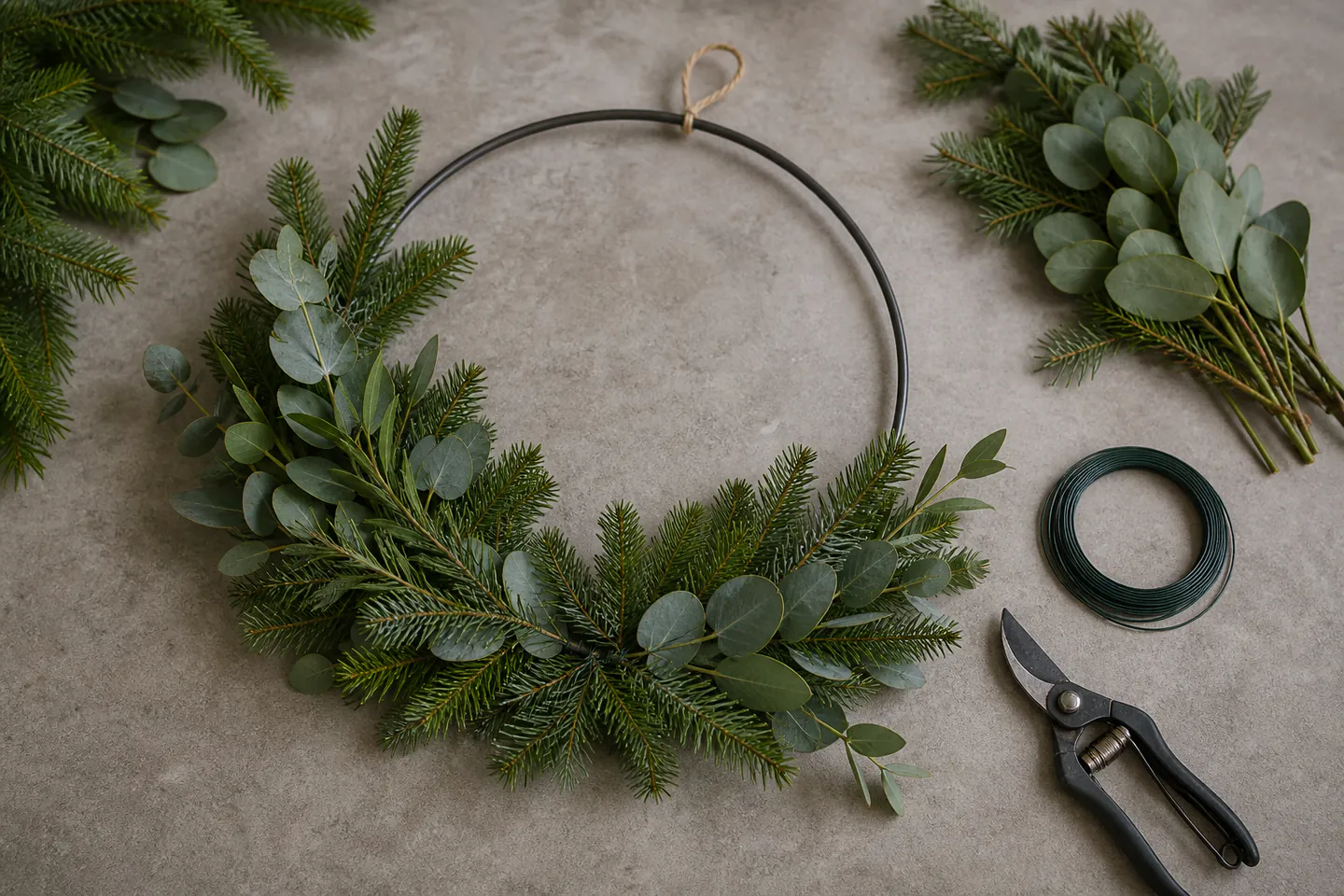
Make a half-covered evergreen ring
Leaving part of the ring visible reduces material, keeps the shape readable and makes a heavy first wreath easier to hang.
- 01
Measure the display
Confirm ring size, door clearance and a non-damaging hanger.
- 02
Load-test the loop
Pull on the empty ring close to the floor before decoration begins.
- 03
Prepare equal bundles
Sort legal, identified foliage into small groups of similar length.
- 04
Bind in one direction
Overlap stems and maintain wire tension without crushing foliage.
- 05
Close under the first bundle
Secure the final stems and hide the join rather than relying on one wrap.
- 06
Hang and inspect low
Check tilt, shedding, sharp wire and door contact before final display.
What can wait
What can wait until the first result
A clean silhouette and secure hanger are more valuable than ornaments that make the first wreath heavy, flammable or difficult to compost.
- 01
Fresh fruit
Weight, juice and decay can damage the wreath or door.
- 02
Florist foam
Many foliage wreaths do not require it, and disposal or microplastic concerns need consideration.
- 03
Battery lights
They add weight, wiring, weather rating and battery disposal questions.
- 04
Foraged berries
Identification, permission, wildlife value and household toxicity all matter.
- 05
Hot glue outdoors
Temperature and moisture can weaken bonds; structural material should be mechanically secured.
Upgrade path
Upgrade the repeated limitation
Add material types only when the base, bundle spacing and hanging system are already repeatable.
Simple foliage ring
About £20–£65Ring, wire or twine and one foliage family
Learn balance, overlap and hanging.Mixed seasonal wreath
About £35–£90Several textures and reusable ornaments
Control drying and focal points.Dried indoor wreath
About £45–£130Prepared dried material and dust-safe display
Create longer-lived delicate work.Workshop production
About £120–£450+Bench, storage and efficient cutting tools
Make several consistent wreaths safely.Safety & care
Know what was cut, where it came from and who can reach it
A seasonal plant can be sharp, toxic, protected or valuable to wildlife. Responsible sourcing and household placement are part of the craft.
- Do not take plants without landowner permission and follow current restrictions for protected sites, species and commercial collection.
- Identify every plant and assess toxicity, thorns, sap, berries and allergy risk for children, pets and visitors.
- Use clean sharp tools within their rated capacity, cut away from hands, wear suitable eye and hand protection and lock tools closed.
- Keep fresh or dried wreaths away from candles, open fires, heaters and cooking sources; dried plant material can ignite readily.
- Load-test the hanger, protect doors from scratches and remove the wreath if wind, decay, loose wire or shedding creates a hazard.
Outside help
When outside help earns its place
An RHS method and a small ring are enough for a first wreath. A florist workshop is useful for conditioning unfamiliar material, creating balanced focal areas and learning efficient binding under supervision.
Look for plant identification, sourcing and secure hanging as well as styling.
Ask whether foliage, ring, tools, refreshments and take-home storage are included.
Representative UK learning options checked 18 August 2026; local prices, access, materials and tutor support vary.
Sources
Where the guidance came from
The RHS provides horticultural preparation and wreath methods. Wildlife and plant authorities define sourcing boundaries, while florists and makers add evidence about conditioning, binding and display life.
-
01
RHS · How to make a wreath
Structured wreath method and tool list.
Open source -
02
RHS · Christmas wreaths
Foliage selection, preparation and seasonal care.
Open source -
03
Wildlife and Countryside Act guidance
Current UK context for protected wildlife and collection permissions.
Open source -
04
British Florist Association
Professional floristry education and practice context.
Open source -
05
Reddit · r/florists
Community evidence on materials, binding, longevity and display problems.
Open source -
06
Amazon UK · 12-Inch Metal Wreath Rings, 16 Pack
Exact product catalogue page or ISBN used for the recommendation; current price, seller, specification and availability should be confirmed.
Open source -
07
Amazon UK · Felco 2 Classic Secateurs
Exact product catalogue page or ISBN used for the recommendation; current price, seller, specification and availability should be confirmed.
Open source -
08
Amazon UK · Cut-Resistant Gloves
Exact product catalogue page or ISBN used for the recommendation; current price, seller, specification and availability should be confirmed.
Open source
Guide information and links checked 18 August 2026.