Beginner's guide · Make & create
Paint one flat pane.
Keep the light visible.
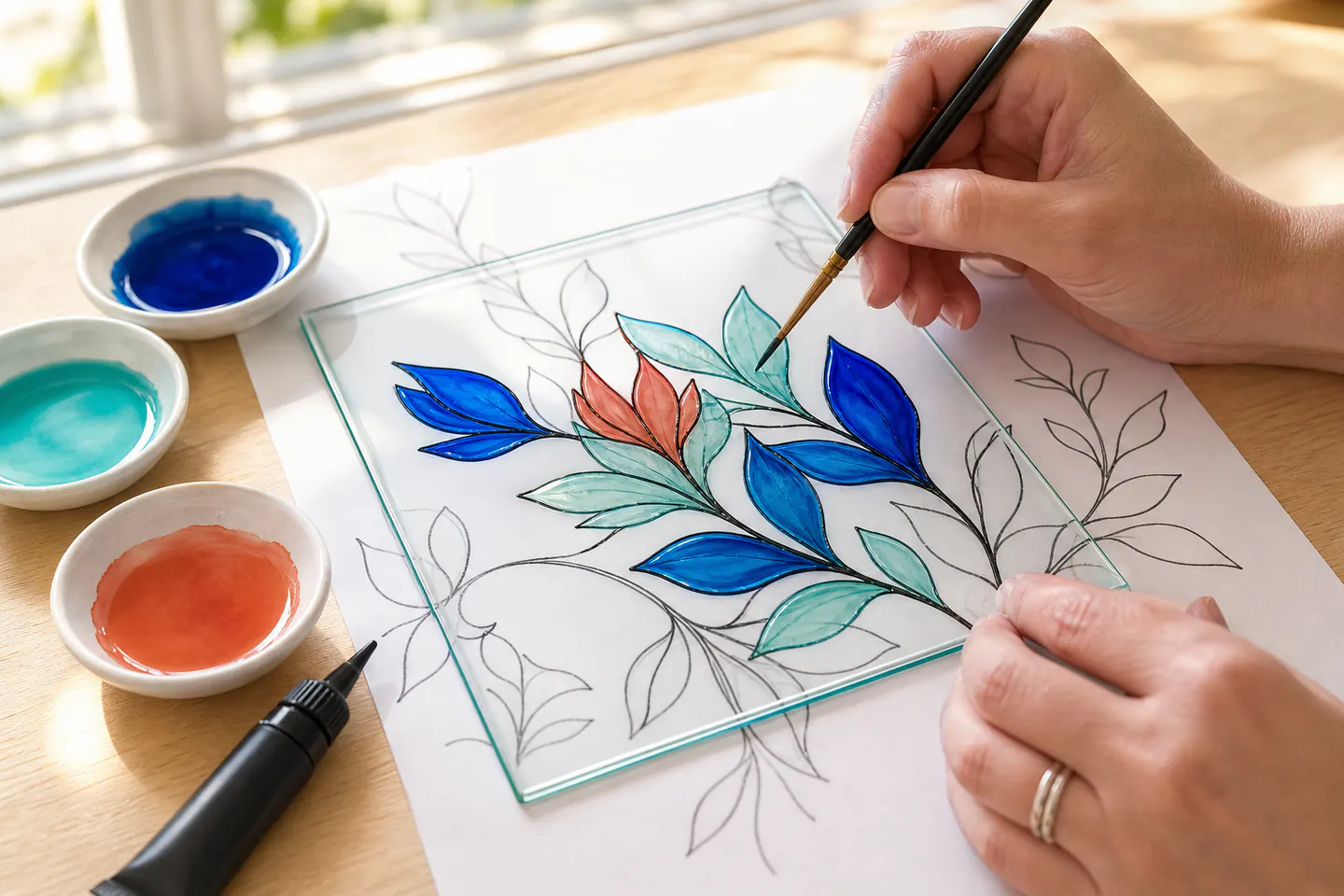
Start with a removable flat glass pane and purpose-made glass paint. A simple traced botanical design teaches cleaning, line control, transparent colour and curing without putting decoration on a drinking rim.
Quick answer
Paint one flat pane.
Remove a small unchipped pane from a simple frame, wash and degrease it as the paint maker directs, tape a bold drawing underneath, then use purpose-made glass colour in thin controlled areas. Cure only by the exact air-dry or oven method printed for that product.
- 01
A flat decorative pane is easier to trace, level and test than a curved glass. It also keeps paint away from lips, food and washing wear.
- 02
Pebeo Vitrea 160 is repeatedly recommended for durable oven-cured decorative glass; its own instructions specify a cold oven, 160°C and 40 minutes.
- 03
Transparent glass colour pools and shows brush marks differently from ordinary acrylic. Work in small areas and let the transmitted light do part of the design.
- 04
Never combine temperature or cure advice from another brand. Air-dry markers, oven-cure paint and traditional kiln-fired glass paint are different systems.
What to expect
What the first attempts really involve
The first project is useful because it exposes the decisions that shopping pages tend to hide.
Surface preparation
Finger oil and cleaner residue interrupt adhesion. Handle the prepared pane by its edges and keep the painting side free of dust.
Transparency
A colour that looks dark in the bottle may glow when backlit. Make a test swatch on spare glass before planning every value on paper.
Flow
Glass paint can pull away from a greasy patch, pool against an outliner or show overlaps. Thin deliberate shapes are easier than broad flat fields.
Curing
The finish depends on time and temperature as much as painting. Oven-safe glass, gradual heating and cooling, and the product's stated wait are essential.
Wear
Even cured decoration benefits from gentle handling. Decorative panels avoid the repeated detergent, impact and lip-contact demands of drinkware.
Plan the pane
Design for transmitted light, not an opaque canvas
Choose a safe first surface
Use an inexpensive unchipped flat pane that the frame maker allows to be removed. Smooth or tape sharp edges during handling and keep track of which side will be painted. Do not use toughened oven doors, laminated glass, double-walled drinkware or an unknown object for an oven-cure experiment.
Draw large closed shapes
Bold leaves, petals or geometric areas are easier to fill evenly than hair-thin detail. Tape the drawing beneath the glass and decide whether an outliner will separate colours. Leave deliberate clear gaps so the finished piece still reads as glass.
Make a cure swatch
Paint spare compatible glass with every colour, liner and overlap planned for the project. Cure it by the current manufacturer instructions, then inspect colour shift, adhesion and surface feel. The swatch also confirms that the household oven and actual glass can complete the full heating-and-cooling cycle without a ruined main piece.
Starter products
One compatible paint system, not mixed instructions
The Pebeo discovery set supplies transparent oven-cure colour and its matching black outliner can divide shapes. The Marabu pens are an alternative drawing route for a later project, not something to layer into the Pebeo design without a successful compatibility test.
Pebeo Vitrea 160 Discovery Set, 6 × 20 ml
Six compatible colours are enough to learn pooling, mixing and transmitted light without combining brands.
Pebeo Vitrea 160 Relief Outliner, Ink Black, 20 ml
A compatible raised line can separate adjacent transparent fills and make a bold traced design easier to control.
First project
Paint a simple botanical window
Work from a spare-glass swatch and keep the finished pane decorative. The current product label controls every cleaning, drying and curing time.
- 01
Inspect and protect the glass
Reject chipped or cracked material, protect edges and prepare a padded level surface with enough room to lift the pane safely.
- 02
Clean and degrease
Wash and degrease exactly as the paint instructions state. Dry with a lint-free cloth and touch only the edges afterward.
- 03
Tape the drawing beneath
Use a simple high-contrast motif with broad closed shapes. Keep tape and paper on the opposite side from the paint.
- 04
Test line and colour
Make a separate swatch to learn how the outliner flows and how each colour changes across one and two passes.
- 05
Outline in sections
Keep the tube tip just above the glass and pull a steady line. Correct mistakes using the product's uncured clean-up method, then let the line dry as stated.
- 06
Fill without overworking
Move colour to the edges with a suitable brush and stop before partially drying paint is dragged into ridges. Pop only accessible surface bubbles.
- 07
Dry and cure exactly
Observe the stated pre-dry. For the selected Pebeo system, place compatible glass in a cold oven, heat to 160°C, cure 40 minutes and cool inside.
- 08
Reframe without abrasion
Once fully cooled and cured, clean only the unpainted side as needed and refit the pane so clips and backing do not scrape the design.
Troubleshooting
Adhesion problems usually start before the first brushstroke
Paint that beads may be meeting contamination
Stop and clean a fresh test area rather than repeatedly brushing the retreating paint. Hand oil, detergent film and some glass treatments can interfere with wetting. A successful swatch is the safest evidence for the exact surface.
Outliner gaps can leak colour
Inspect every closed shape against light before filling it. Patch a break with the same liner and let it reach the required dry stage. Flooding more colour into a leaking cell spreads the problem under adjacent lines.
Heat can shift colour and stress glass
Some colours darken or desaturate after cure. A cold-oven start and slow in-oven cool reduce thermal shock but cannot make unsuitable or damaged glass oven-safe. If the maker does not approve the object or paint for oven curing, use the documented air-cure route or select another surface.
Skip for now
What can wait
The first pane needs compatible colour and patient curing. Traditional stained-glass equipment belongs to a different, more hazardous craft.
- 01
The Marabu marker set
Pens make direct lettering and line work convenient after the surface and cure system are understood. They are an alternative, not a required overlay.
- 02
Drinking-glass decoration
Curves, washing, lip contact and food-contact zones add avoidable questions. Keep the first work on a removable decorative panel.
- 03
Lead came and solder
Traditional stained glass adds cutting, lead exposure, flux, solder fumes and kiln-fired paint. Take a properly equipped class before crossing into that process.
- 04
A craft oven
A separate oven is unnecessary for a documented household-oven product and compatible glass, but the shared oven must be used exactly as the maker allows.
- 05
A large colour collection
Six colours mix a broad palette and reveal which hues remain useful after cure. Add bottles around finished work, not catalogue completeness.
Upgrade path
What a better setup changes
A better setup expands surface control and permanence, but traditional kiln work is a change of process rather than a simple paint upgrade.
Decorative flat pane
About £25–£45Purpose-made colour + spare glass + simple frame
Learn degreasing, transparency, outlines and documented curing.Repeatable home decoration
About £40–£100Broader colour range + fine brushes + stable drying rack
Layer tested colours and repeat designs on compatible decorative objects.Kiln-fired glass paint
Class or studio dependentVitreous paint + kiln access + specialist instruction
Fuse durable detail to glass using controlled firing schedules.Leaded painted panel
About £150–£500+Cut glass + lead system + soldering and extraction
Design the glass, painting and structure together with materially higher safety demands.Safety
Work safely from the first attempt
Glass cuts and thermal shock are immediate risks. Paint chemistry, food-contact claims and oven schedules must come from the exact manufacturer.
- Reject cracked or chipped glass, protect exposed edges and carry a pane upright with suitable hand protection.
- Use only glass and paint documented for the chosen cure; start and cool in the oven exactly as the product instructions state.
- Keep painted areas away from rims, food-contact surfaces and cutlery wear unless the exact product documentation expressly permits that use.
- Ventilate paint and cleaner work as directed and keep products out of reach of children and pets.
- Do not improvise traditional lead, flux, solder or kiln processes in an ordinary craft area.
- Clean broken glass with tools rather than bare hands and place shards in a rigid labelled container for local disposal.
Classes
When outside help is useful
A home session is enough for oven-cure craft colour. A class becomes worthwhile when the aim shifts to vitreous paint, kiln schedules, glass cutting or leaded construction.
Current beginner workshops supply a pane and colour while keeping the project focused on line, layering and composition.
Adds kiln-fired vitreous paint and, in some classes, cutting or leading under controlled studio conditions.
Best reserved for sustained practice with firing performance, tonal painting and specialist equipment.
Representative UK decorative and traditional glass-painting courses and 2026 prices checked 27 July 2026.
Sources
Sources and checking notes
Pebeo and Marabu instructions establish cleaning, cure and food-contact boundaries. Practitioner discussions support dedicated glass paint and cautious hand washing, while current UK classes clarify the difference between home craft colour and kiln-fired work.
-
01
Pebeo · Vitrea 160 black outliner
Official degreasing, cold-oven, 160°C, 40-minute cure and food-contact guidance.
Open source -
02
Pebeo · Vitrea 160 starter set
Official product family and drinking-rim spacing guidance.
Open source -
03
Marabu · Porcelain and Glass paint
Official surface preparation, air-dry and optional 160°C cure information for a different system.
Open source -
04
r/crafts · Paint that stays on glass
Practitioner advice to use purpose-made glass colour, trace from inside and follow the exact cure route.
Open source -
05
r/crafts · POSCA versus purpose-made glass paint
Recent discussion recommending Vitrea for permanence and keeping work on the outside.
Open source -
06
r/StainedGlass · Pebeo paint question
Current practitioner confirmation that Vitrea 160 is the relevant Pebeo line for home oven-cure glass colour.
Open source -
07
Mary Ward Centre · Glass-painting masterclass
Current 2026 one-day traditional glass-painting course at £60.
Open source -
08
Visit Derby · Glass-painting workshop
Current two-hour decorative beginner workshop at £35.
Open source -
09
Amazon UK · Pebeo Vitrea 160 Discovery Set
Exact six-colour glossy glass-paint set selected for the first pane.
Open source -
10
Amazon UK · Pebeo Vitrea 160 black outliner
Exact matching black relief liner selected for closed transparent shapes.
Open source -
11
Amazon UK · Marabu Porcelain and Glass Painter set
Exact five-pen set shown as an alternative later line-work route.
Open source
Guide information and links checked 27 July 2026.