Beginner’s guide · Grow & care
One healthy container or one-square-metre bed
Learn one patch by looking at it often.
Start with one container or a small bed, plants suited to its light and soil, a trowel and a realistic watering routine. Gardening becomes manageable when the first area is small enough to notice.
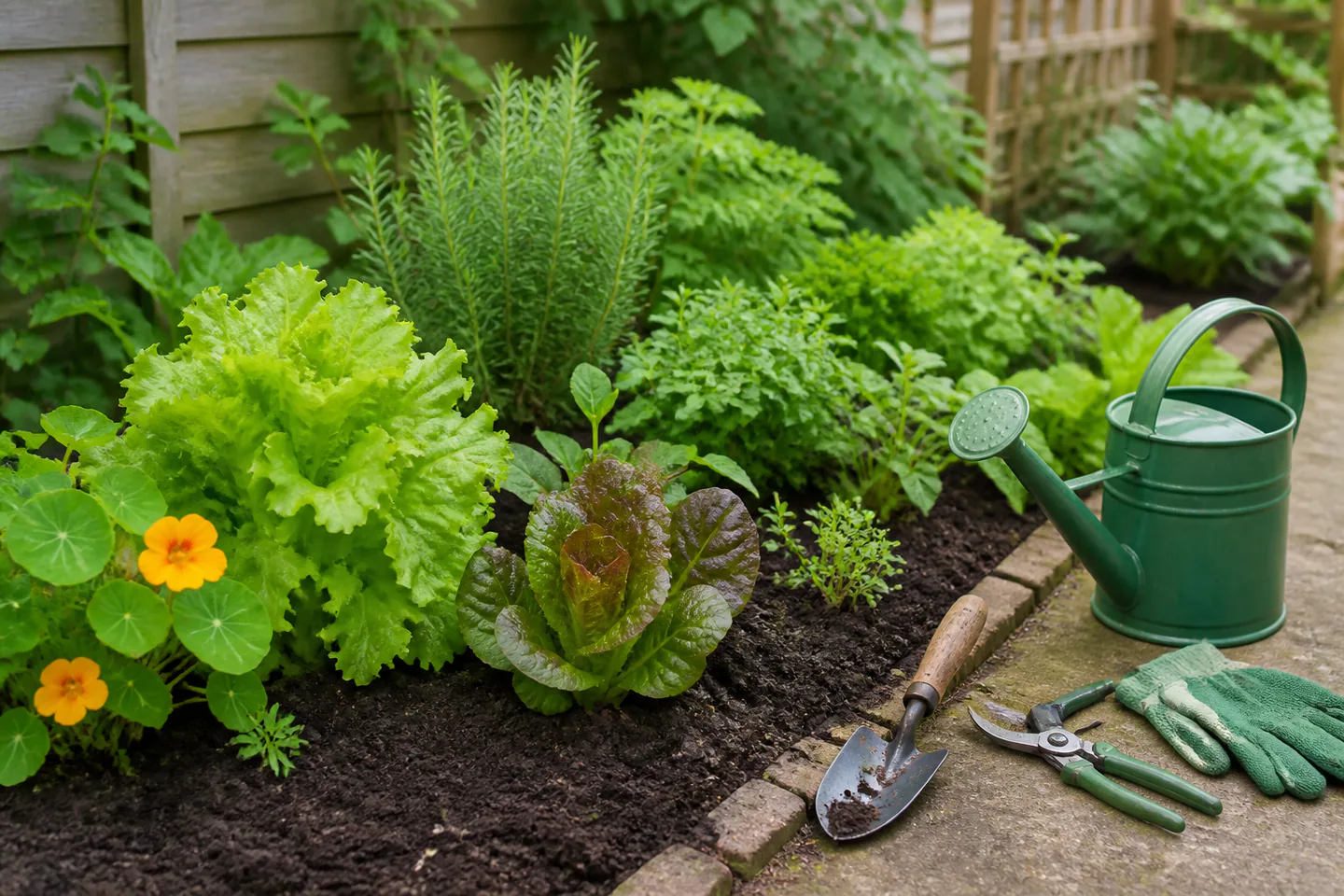
Quick answer
Choose the place before choosing the plants
Watch one manageable spot through a normal day and note direct sun, shade, wind, drainage and access to water. Choose two or three plants that suit those conditions and the current season, prepare a container with drainage or a small weed-free bed, plant at the labelled spacing and water thoroughly. Check the soil with a finger or trowel rather than watering by calendar alone.
- 01
“Full sun” usually means a genuinely sunny position, not a bright view through shade; observe the site before shopping.
- 02
A container dries faster than open ground and needs a drainage hole, but permanently wet compost can be as harmful as drought.
- 03
Buy fewer healthy plants and learn their mature size. Crowding creates more watering, pruning and disease work.
- 04
Some plants are toxic or irritating to people and pets. Check each exact species before planting where access is possible.
What to expect
The garden responds to weather, not a perfect timetable
Growth, pests and watering needs change with season and site. Short regular observation beats a large rescue session after plants have declined.
Light
Record hours of direct sun and seasonal shade; labels such as sun or shade are starting ranges, not guarantees.
Soil
Texture, drainage, pH and organic matter influence roots. Improve the planting area rather than replacing an entire garden by guesswork.
Water
Water the root zone deeply when needed, preferably earlier in the day, and adjust for rain, wind, container size and plant stage.
Planting
Place the root ball at the correct depth, firm gently and leave enough mature spacing for air and access.
Weeds
Remove small weeds before seeding and identify unknown seedlings before pulling every green shoot.
Losses
A failed plant is information about site, weather or care. Replace it with something better matched instead of buying the same plant automatically.
Core method
Create one area you can maintain in ten minutes
Survey the site
Choose the nearest practical growing area, photograph it morning, midday and evening and note wind pockets, reflected heat, standing water and hose or can access. Identify whether it is a pot, raised area or open soil and measure it before buying plants.
Choose a simple planting
Use an RHS or nursery plant finder and select a small combination with matching light, soil moisture and hardiness needs. Include mature height and spread in the plan. Avoid invasive plants and check toxicity, local restrictions and pet access.
Prepare and plant properly
Use a clean container with unobstructed drainage and fresh peat-free compost suitable for the plants, or clear a small bed and add surface organic matter where appropriate. Water root balls, plant to the nursery depth, label them and water the whole root zone.
Keep a short observation loop
Twice weekly at first, check moisture below the surface, new growth, wilt, holes, discolouration and weeds. Water only where needed, remove clearly diseased fallen material and photograph changes. Review after a month before expanding.
Useful products
A reference, a durable cutting tool and a simple watering route
The RHS beginner book helps match tasks to plants, Felco 2 secateurs handle appropriate live stems for years when maintained, and the large plastic can makes slow root-zone watering possible where a hose is inconvenient.
DK / RHS RHS How to Garden When You’re New to Gardening
It covers the ordinary decisions a new gardener repeatedly faces and remains useful across beds and containers.
FELCO FELCO 2 Classic Secateurs
They are widely serviceable and durable rather than a disposable set with redundant tools.
Ward Large Plastic Garden Watering Can, Green
A removable rose supports seedlings while the open spout reaches established root zones.
First project
Plant and maintain one small growing area for four weeks
The first success is not planting day; it is returning often enough to respond without overwhelm.
- 01
Observe for one day
Record sun, shade, wind, drainage and water access.
- 02
Measure and choose
Select two or three suitable plants at mature spacing.
- 03
Prepare drainage or soil
Clear weeds, open container holes and use an appropriate growing medium.
- 04
Plant and water in
Set correct depth, firm gently, label and soak the root zone.
- 05
Check twice weekly
Feel below the surface and note growth, pests, damage and weather.
- 06
Review before expanding
Replace only poorly matched choices and add area in small increments.
What can wait
What can wait until the first result
A working care loop matters more than owning every garden tool or filling every empty space.
- 01
A complete tool collection
Buy for repeated tasks after hand size, soil and garden scale are known.
- 02
Automatic irrigation
A can or hose reveals actual water needs before timers and emitters are designed.
- 03
A greenhouse
It adds ventilation, watering and pest management as well as growing capacity.
- 04
Large bare-root orders
Many new plants create an immediate planting deadline and a much larger care burden.
- 05
Routine pesticide spraying
Identify the problem and use the least harmful effective response; many insects are beneficial or harmless.
Upgrade path
Upgrade the repeated limitation
Expand only when the existing area remains healthy through ordinary weather and your routine has spare capacity.
One pot or small bed
About £35–£90Plants + compost + trowel/can
Learn light, soil and watering.Seasonal planting
About £20–£100 per seasonMore plants + mulch + labels
Add continuity without redesigning everything.Water-saving system
About £40–£200Water butt or drip line
Reduce carrying after real demand is known.Larger garden plan
VariableBeds + paths + storage + selected tools
Make access and maintenance deliberate.Safety & care
Protect bodies, wildlife and the soil
Cuts, lifting, sun, irritant plants, chemicals and hidden services are the main practical risks.
- Wear gloves and eye protection for thorny, irritant or splintering work and wash hands after soil and compost handling.
- Use sharp tools only for their designed capacity, lock them for storage and keep the free hand out of the cutting path.
- Check for cables, pipes, nests and local restrictions before digging, cutting or removing established vegetation.
- Lift compost and containers in smaller loads, use sun protection and stop for heat, dizziness or persistent pain.
- Identify plants and pests before treatment, follow every product label and avoid harm to pollinators, waterways, pets and children.
Outside help
When outside help earns its place
The first container needs no class. Local RHS, nursery or community-garden support becomes useful for plant identification, pruning or a site-specific soil problem.
Use current plant, seasonal and problem-solving guidance for the exact site.
Bring photographs and check whether the session addresses your plants and conditions.
Representative UK product, club, lesson and venue costs checked 9 August 2026; local prices, access, weather, materials and tutor support vary.
Sources
Where the guidance came from
RHS and government guidance anchors UK plant and safety decisions; experienced gardener communities add local timing and practical failure patterns.
-
01
RHS · Get gardening
UK beginner tasks and seasonal guidance.
Open source -
02
RHS · Find a plant
Plant selection by site, habit and conditions.
Open source -
03
UK Government · Pesticide use
Legal and safe-use context for garden pesticides.
Open source -
04
Garden Organic · Advice
Soil, composting and lower-impact gardening methods.
Open source -
05
Reddit · r/GardeningUK
UK community discussion of seasons, sites and recurring problems.
Open source -
06
Amazon UK · RHS How to Garden When You’re New to Gardening
Exact product page, model or ISBN, observed price and availability checked for this guide.
Open source -
07
Amazon UK · FELCO 2 secateurs
Exact product page, model or ISBN, observed price and availability checked for this guide.
Open source -
08
Amazon UK · Ward large watering can
Exact product page, model or ISBN, observed price and availability checked for this guide.
Open source
Guide information and links checked 9 August 2026.