Beginner’s guide · Write & create
Capture the chorus now.
Produce it later.
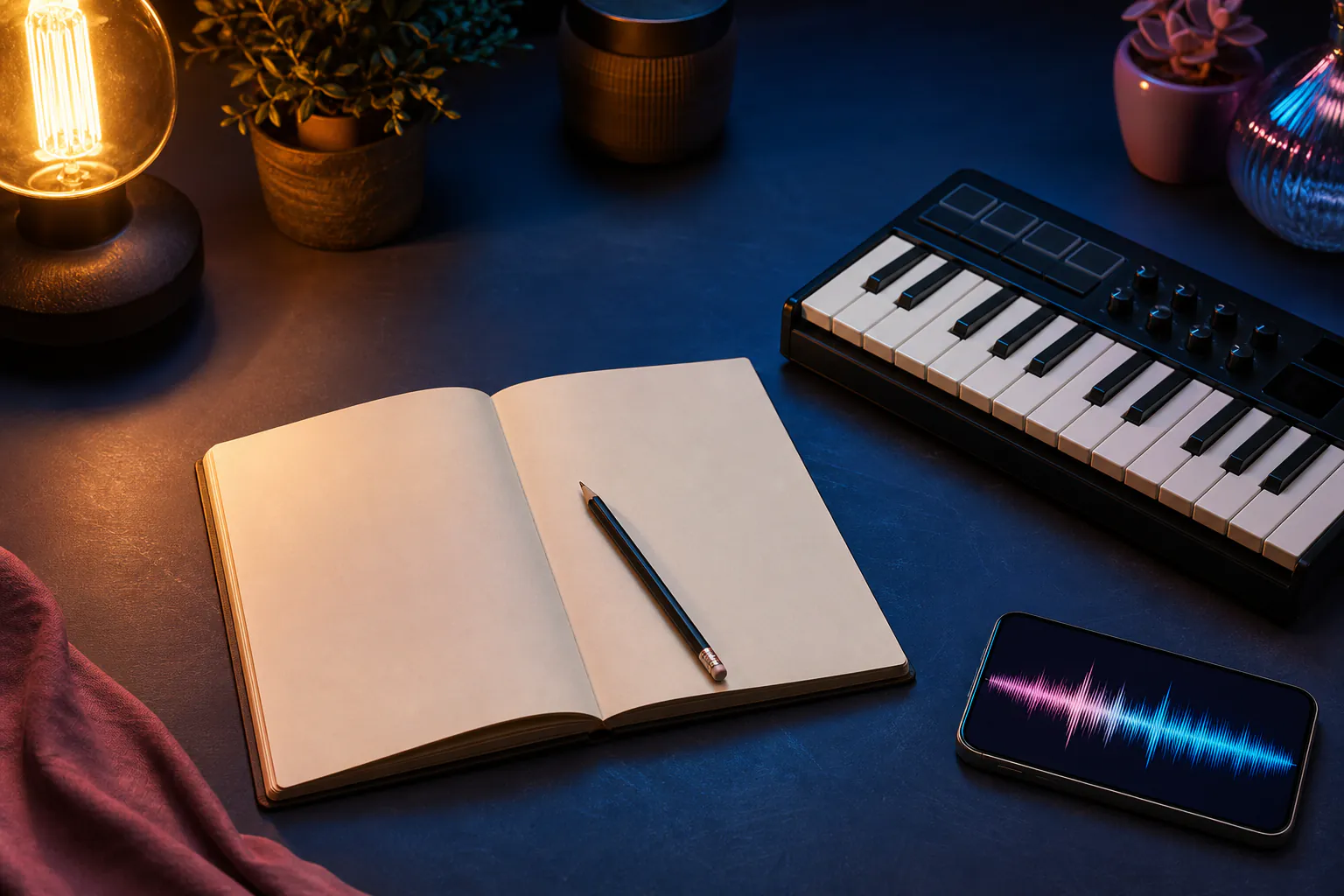
Use a phone recorder and notes app to turn one title, rhythm or melodic phrase into a short verse and chorus. Finish a rough song before buying recording gear or trying to make the demo sound like a released track.
Quick answer
Finish the rough song before arranging the record
Start with a phrase you would naturally say or sing. Record several melodic versions immediately, choose one short chorus idea and write a verse that changes what the chorus means. Use a familiar simple structure, complete a voice-note demo and judge the song separately from the quality of the recording.
- 01
A phone preserves melody, rhythm and delivery that written lyrics cannot capture on their own.
- 02
The chorus normally carries the central repeated idea; the verse earns or complicates its return.
- 03
An instrument is helpful for harmony but not required to find a vocal rhythm, title or melodic contour.
- 04
Production, mixing and mastering are separate skills. A rough voice memo can still prove that the song has shape.
What to expect
Songs are revised in sound as well as on the page
A lyric that reads well may sing badly, while an ordinary phrase can become memorable through stress, repetition and melody.
Capture
Melodic fragments disappear quickly. Record them before deciding whether they are good.
Prosody
Natural word stress should usually agree with musical stress unless the conflict is an intentional effect.
Structure
Verse, pre-chorus, chorus and bridge each need a job. A section should not exist only because a template includes it.
Repetition
Listeners need repetition to recognise a hook, but the surrounding harmony, lyric or delivery can make each return progress.
Range
A melody written at the edge of the singer’s range may be impossible to repeat comfortably. Change key or contour early.
Demo quality
A clear count-in, steady pulse and audible vocal are enough for evaluation. Effects can hide rather than solve a weak section.
Song structure
Build one complete emotional and musical turn
Capture fragments immediately
Keep a single notes location for titles, images and overheard rhythms and a recording folder for sung ideas. Say the date and working title at the start of each voice memo. Record three versions rather than trying to recreate the first after it is forgotten.
Decide what changes between verse and chorus
Write the chorus idea in one plain sentence. The verse can show the event, setting or question that makes that sentence necessary. Keep one point of view and one moment for the first song rather than summarising an entire relationship or life.
Use a borrowed map, not borrowed content
Choose a favourite song with a clear structure and mark only its section lengths and energy changes. Draft original words and melody over your own pulse. The map can prevent an endless first verse without copying lyrics, melody or distinctive arrangement.
Demo and revise at speaking volume
Record verse and chorus in one uninterrupted take. Listen without singing along. Mark the point where attention drops, a word becomes unclear or the chorus arrives too late. Revise the song, then record again under a new version number.
Useful products
Two writing references and one later production controller
Jeff Tweedy’s book is the most approachable first companion for finishing one song. Pat Pattison’s exercise book is useful when lyric generation repeatedly stalls. The Akai controller belongs to the later computer-production route and does nothing without compatible software and a device.
Jeff Tweedy How to Write One Song
The book’s narrow aim matches the guide’s complete verse-and-chorus milestone rather than expanding the equipment list.
Pat Pattison Songwriting Without Boundaries
Timed exercises create raw images, verbs and phrases that can be shaped around an existing melodic idea.
Akai Professional MPK Mini MK3 USB MIDI Keyboard Controller
Keys, pads and knobs make harmony and beat sketches more tactile once the song and software route are established.
First song
Write a one-verse, one-chorus song
Use the phone already owned. The aim is one complete rough performance, not a release-ready file.
- 01
Choose one title phrase
Write a short phrase with an unresolved question, promise or contradiction.
- 02
Record three melodic contours
Sing the phrase high, low and rhythmically different without adding production.
- 03
Select the chorus promise
Choose the version that makes the title easiest to remember and add two supporting lines.
- 04
Write the verse scene
Show a person, place and action that changes how the chorus is heard.
- 05
Set a steady pulse
Tap, strum or use a simple metronome and fit the words without forcing unnatural stress.
- 06
Sing the whole form
Record verse, chorus and chorus repeat in one take even when lines remain rough.
- 07
Listen away from the instrument
Mark unclear words, melody strain, dead time and the strongest repeated moment.
- 08
Make one structural revision
Shorten, move or repeat a section, then save a second complete demo rather than polishing only four bars.
What can wait
What can wait until the song exists
Recording equipment can create more tracks without creating a clearer verse, chorus or melodic idea.
- 01
A MIDI keyboard
The checked Akai controller becomes useful for virtual instruments and beat programming. It makes no sound by itself and is unnecessary for voice-note writing.
- 02
A studio microphone
Room acoustics, interface, stand and recording technique arrive with it. Use the phone until the demo quality is the actual limitation.
- 03
A paid DAW
Free or bundled software can arrange early demos. Learn one workflow before buying plug-ins.
- 04
A bridge in every song
Add a bridge only when the song needs a new lyrical or harmonic perspective after repeated verse and chorus material.
- 05
Publishing and distribution
Copyright, splits, metadata and releases matter later. Finish several songs and keep dated work records first.
Upgrade path
Separate song craft from record production
The upgrade path can branch: an instrument for harmony, a controller for software or collaborators for arrangement.
Voice-note songs
FreePhone recorder, notes and a quiet room
Capture melody and finish structures without technical delay.Craft practice
About £9–£30One songwriting book and regular exercises
Generate more material and revise lyric, form and prosody deliberately.Instrument or MIDI sketching
About £80–£300Keyboard or guitar, computer/device and suitable software
Test harmony, bass movement, rhythm and arrangement around the song.Home demo recording
£250–£1,000+Interface, microphone, monitoring, treated position and DAW
Create clearer multi-track demos while taking on engineering and mixing work.Rights & care
Keep records and respect other people’s work
A chord pattern may be common, but lyrics, melodies, recordings and distinctive parts carry rights and attribution questions.
- Save dated lyric and audio versions and agree writing splits with collaborators while everyone remembers the contribution.
- Do not copy another song’s lyrics, melody or distinctive recorded sample because a demo is currently private.
- Clear samples and understand licence terms before public release; software ownership does not grant rights to every sound found online.
- Back up the only voice memo before editing or moving it between apps.
- Protect hearing during amplified rehearsal and headphone work; louder monitoring does not make a mix more accurate.
Outside help
When feedback or lessons help
A class is unnecessary for a first song. Feedback helps when it describes where a listener lost the story, melody or section boundary without taking over authorship.
Use one framework to complete a draft rather than collecting contradictory formulae.
Check whether the session covers song craft, production or performance and how participant songs are shared.
Free specialist guidance and representative UK workshop pricing checked 31 July 2026; tutor, length and format vary.
Sources
Where the guidance came from
Beginner songwriting and structure guides support the first-draft method; professional-musician guidance establishes the copyright and publishing boundaries.
-
01
Song Academy · How to write your first song
Beginner route from subject and hook through structure, melody and revision.
Open source -
02
Song Academy · Song structure
Practical roles of common song sections without requiring every section.
Open source -
03
Independent Society of Musicians · Introduction to copyright
UK-oriented copyright guidance for composers and performers.
Open source -
04
Independent Society of Musicians · Publishing rights
Publishing rights and the distinction between composition and recording interests.
Open source -
05
Amazon UK · How to Write One Song by Jeff Tweedy
Exact product page, model or ISBN, observed price and availability checked for this guide.
Open source -
06
Amazon UK · Songwriting Without Boundaries by Pat Pattison
Exact product page, model or ISBN, observed price and availability checked for this guide.
Open source -
07
Amazon UK · Akai Professional MPK Mini MK3
Exact product page, model or ISBN, observed price and availability checked for this guide.
Open source
Guide information and links checked 31 July 2026.