Beginner’s guide · Observe & photograph
Observe the pool
then leave it as you found it
Rock pooling becomes reliable through repeated observation, a simple field record and respect for weather, wildlife, access and the limits of a single clue.
Quick answer
Begin with one local observation
Choose a safe familiar location, use one field guide or recording method and document date, place, conditions and the evidence behind each rock pooling conclusion.
- 01
Check access, weather, tide or equipment before leaving, and carry only what can be used without disturbing the site. Keep the first attempt narrow enough that preparation, the main action and the result can all be reviewed together.
- 02
Use the same observation fields each time so seasonal and location differences can be compared. Keep the first attempt narrow enough that preparation, the main action and the result can all be reviewed together.
- 03
Separate what was directly seen or heard from what was inferred later through references. Keep the first attempt narrow enough that preparation, the main action and the result can all be reviewed together.
- 04
Do not force a confident identification from one photograph, one feature or an app suggestion. Keep the first attempt narrow enough that preparation, the main action and the result can all be reviewed together.
What to expect
Good records include uncertainty
Field conditions are incomplete; responsible observers keep alternatives open and return when evidence changes.
The first attempt
A nearby repeatable site teaches more than a rushed trip to a famous location. For rock pooling, note what actually happened rather than relying on memory; that turns the next attempt into a controlled change instead of another guess.
What changes
Light, season, tide, wind and behaviour alter what can be detected. For rock pooling, note what actually happened rather than relying on memory; that turns the next attempt into a controlled change instead of another guess.
The useful signal
Several independent features agreeing is stronger than one striking resemblance. For rock pooling, note what actually happened rather than relying on memory; that turns the next attempt into a controlled change instead of another guess.
The common trap
Collecting or approaching for a better view can damage the subject and the observation. For rock pooling, note what actually happened rather than relying on memory; that turns the next attempt into a controlled change instead of another guess.
Core method
Observe, record, compare and verify
Prepare deliberately
Check access, weather, tide or equipment before leaving, and carry only what can be used without disturbing the site. For rock pooling, note what actually happened rather than relying on memory; that turns the next attempt into a controlled change instead of another guess.
Control the central variable
Use the same observation fields each time so seasonal and location differences can be compared. For rock pooling, note what actually happened rather than relying on memory; that turns the next attempt into a controlled change instead of another guess.
Read the result
Separate what was directly seen or heard from what was inferred later through references. For rock pooling, note what actually happened rather than relying on memory; that turns the next attempt into a controlled change instead of another guess.
Reset before repeating
Back up files, label uncertainty and choose one feature to seek next time. For rock pooling, note what actually happened rather than relying on memory; that turns the next attempt into a controlled change instead of another guess.
Useful products
Products with a clear role
The shortlist covers the first workable route and one realistic improvement. Each exact Amazon UK page or ISBN was checked; confirm the current seller, specification, edition and availability.
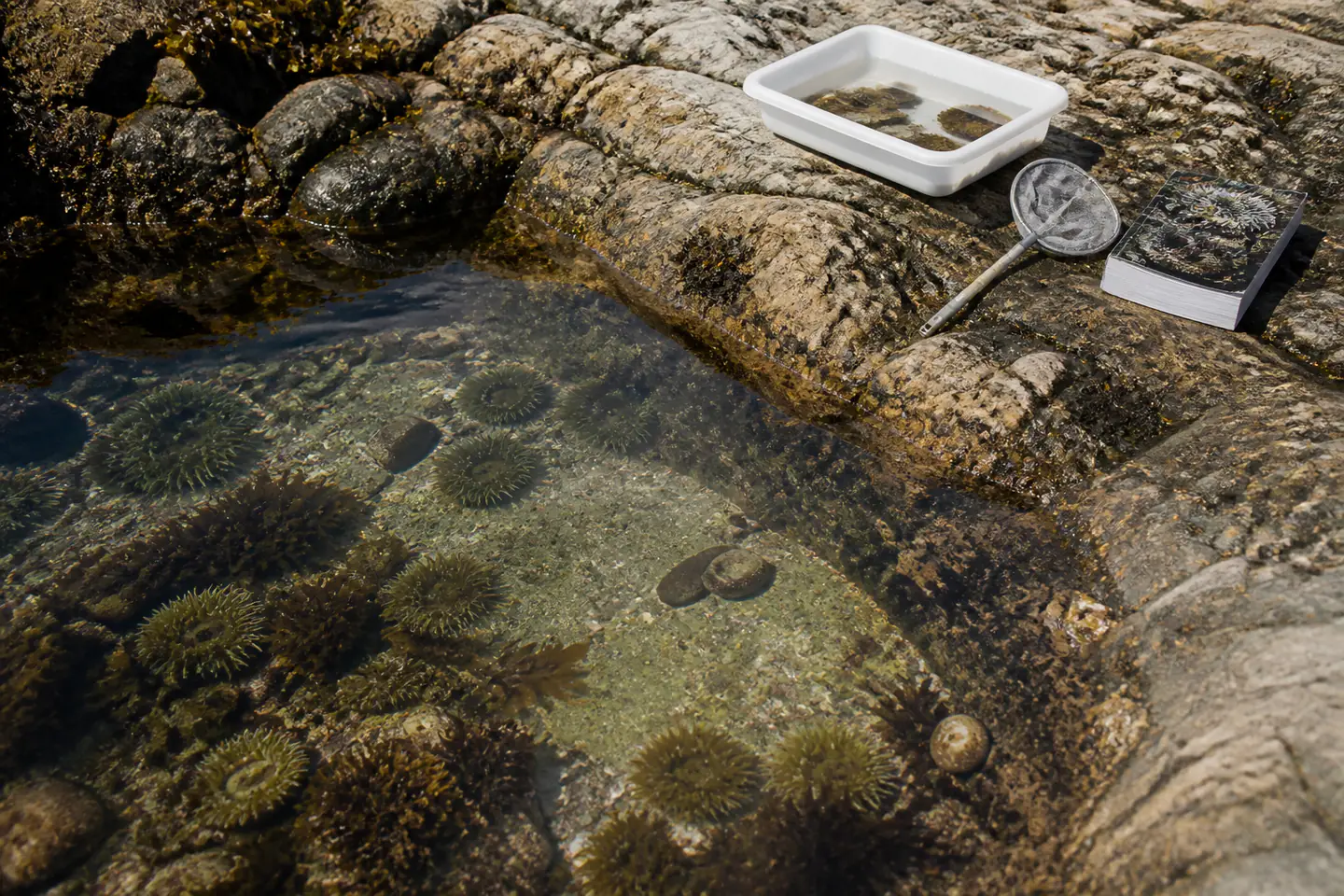
Pisces Medium Pond Net with 91 cm Handle
It can move small organisms into a tray without hands.
Amazon Basics White Rectangular Accessory Tray
Small organisms are easier to see without carrying them away.
Bloomsbury Concise Pond Wildlife Guide
It builds observation vocabulary.
First project
Complete one documented field session
Return with a small number of well-labelled observations rather than hundreds of context-free files.
- 01
Set up
Check access, weather, tide or equipment before leaving, and carry only what can be used without disturbing the site. For rock pooling, note what actually happened rather than relying on memory; that turns the next attempt into a controlled change instead of another guess.
- 02
Begin
Choose a safe familiar location, use one field guide or recording method and document date, place, conditions and the evidence behind each rock pooling conclusion. For rock pooling, note what actually happened rather than relying on memory; that turns the next attempt into a controlled change instead of another guess.
- 03
Stay with one method
Use the same observation fields each time so seasonal and location differences can be compared. For rock pooling, note what actually happened rather than relying on memory; that turns the next attempt into a controlled change instead of another guess.
- 04
Finish and assess
Separate what was directly seen or heard from what was inferred later through references. For rock pooling, note what actually happened rather than relying on memory; that turns the next attempt into a controlled change instead of another guess.
- 05
Record the next change
Back up files, label uncertainty and choose one feature to seek next time. For rock pooling, note what actually happened rather than relying on memory; that turns the next attempt into a controlled change instead of another guess.
What can wait
What can wait until the method works
Buying around an unclear problem adds clutter. These upgrades make more sense after the first result exposes a repeatable limitation.
- 01
More capacity
Larger or multiple batches multiply seeing diagnostic evidence before the small version is stable. For rock pooling, note what actually happened rather than relying on memory; that turns the next attempt into a controlled change instead of another guess.
- 02
Premium equipment
High-end optics and sensors only help when their added capability answers a defined field problem. For rock pooling, note what actually happened rather than relying on memory; that turns the next attempt into a controlled change instead of another guess.
- 03
Extra varieties
Expand habitats or taxonomic groups after the local recording routine works. For rock pooling, note what actually happened rather than relying on memory; that turns the next attempt into a controlled change instead of another guess.
- 04
Public or commercial claims
Identification apps and consumer instruments are aids, not guarantees or official forecasts. For rock pooling, note what actually happened rather than relying on memory; that turns the next attempt into a controlled change instead of another guess.
Upgrade path
Upgrade the repeated limitation
Upgrade reach, recording quality or reference depth based on a repeated limitation.
Try it
£10–£80Notebook or phone and one field guide
Observations gain context.Repeat it
£25–£100Better guide, tray, microphone or basic optics
More diagnostic evidence can be captured.Improve the bottleneck
£100–£500Specialist recorder, camera or optics
Distant or brief subjects become accessible.Go deeper
VariableStructured survey methods and expert verification
Records can contribute to wider knowledge.Safety & care
Protect yourself, access and wildlife
No identification or recording is worth unsafe tides, storms, trespass or disturbance.
- Check forecast, daylight, tide and route before fieldwork. Follow current manufacturer, food-safety, access, wildlife or local guidance wherever it applies.
- Tell someone where you are going when conditions or remoteness justify it. Follow current manufacturer, food-safety, access, wildlife or local guidance wherever it applies.
- Do not trespass, damage habitat or handle wildlife unnecessarily. Follow current manufacturer, food-safety, access, wildlife or local guidance wherever it applies.
- Use official warnings and expert verification for high-stakes decisions. Follow current manufacturer, food-safety, access, wildlife or local guidance wherever it applies.
- Clean equipment between sensitive habitats where biosecurity applies. Follow current manufacturer, food-safety, access, wildlife or local guidance wherever it applies.
Outside help
When outside help earns its place
A guided walk is useful for learning field marks, safe access and local seasonal context.
Use one complete lesson that covers preparation, the central technique, common mistakes and finishing. For a first rock pooling attempt, one coherent method is easier to diagnose than fragments collected from several creators.
Outside help earns its place when safe setup, access, identification or live correction removes a real obstacle. Ask what equipment, materials, access and follow-up support are included before booking.
Representative UK learning options checked 31 August 2026; local prices, access, materials and tutor support vary.
Sources
Where the guidance came from
The method is grounded in specialist, manufacturer and public guidance, then checked against recurring beginner problems and the exact products linked here.
-
01
Natural History Museum · Identify nature
UK identification resources.
Open source -
02
iNaturalist UK
Observation recording and identification support.
Open source -
03
Wildlife Trusts · Wildlife
UK species and habitat guidance.
Open source -
04
Met Office · Learn about weather
UK weather and cloud reference.
Open source -
05
OpenLearn · Nature and environment
Free structured learning resources.
Open source -
06
Amazon UK · Medium Pond Net with 91 cm Handle
Exact Amazon UK product page or ISBN used for the recommendation; current price, seller, specification and availability should be confirmed.
Open source -
07
Amazon UK · White Rectangular Accessory Tray
Exact Amazon UK product page or ISBN used for the recommendation; current price, seller, specification and availability should be confirmed.
Open source -
08
Amazon UK · Concise Pond Wildlife Guide
Exact Amazon UK product page or ISBN used for the recommendation; current price, seller, specification and availability should be confirmed.
Open source
Guide information and links checked 31 August 2026.