Beginner’s guide · Cook & bake
Ferment one measured batch
and control the bottle pressure.
Homemade ginger beer is a short fermentation project where sanitation, a defined culture, temperature, gravity and pressure-safe packaging matter more than fizz.
Quick answer
Use weight, temperature and time as the first recipe
Follow one tested recipe using a clearly defined yeast or ginger-bug culture, sanitise all equipment, weigh sugar and ginger, ferment in a vented vessel and package only with a pressure-aware method that can be monitored and refrigerated.
- 01
Choose the recipe and culture, calculate volume and sugar, sanitise equipment and plan the fermentation vessel, pressure control, refrigeration and disposal before mixing. Keep the first attempt narrow enough that preparation, the main action and the result can all be reviewed together.
- 02
Hold recipe, culture amount and temperature within the documented range and use time, taste and gravity where appropriate instead of judging by bubbles alone. Keep the first attempt narrow enough that preparation, the main action and the result can all be reviewed together.
- 03
Check aroma, surface growth, acidity, gravity, container pressure and any signs of contamination; discard doubtful batches without tasting. Keep the first attempt narrow enough that preparation, the main action and the result can all be reviewed together.
- 04
Refrigerate or otherwise stabilise as the recipe requires, label ingredients and date, release or manage pressure safely and clean every valve and seal. Keep the first attempt narrow enough that preparation, the main action and the result can all be reviewed together.
What to expect
Consistency begins before the mixture reaches the bowl or bottle
Clean handling, measured ingredients and recorded timings make a result repeatable and safer.
The first attempt
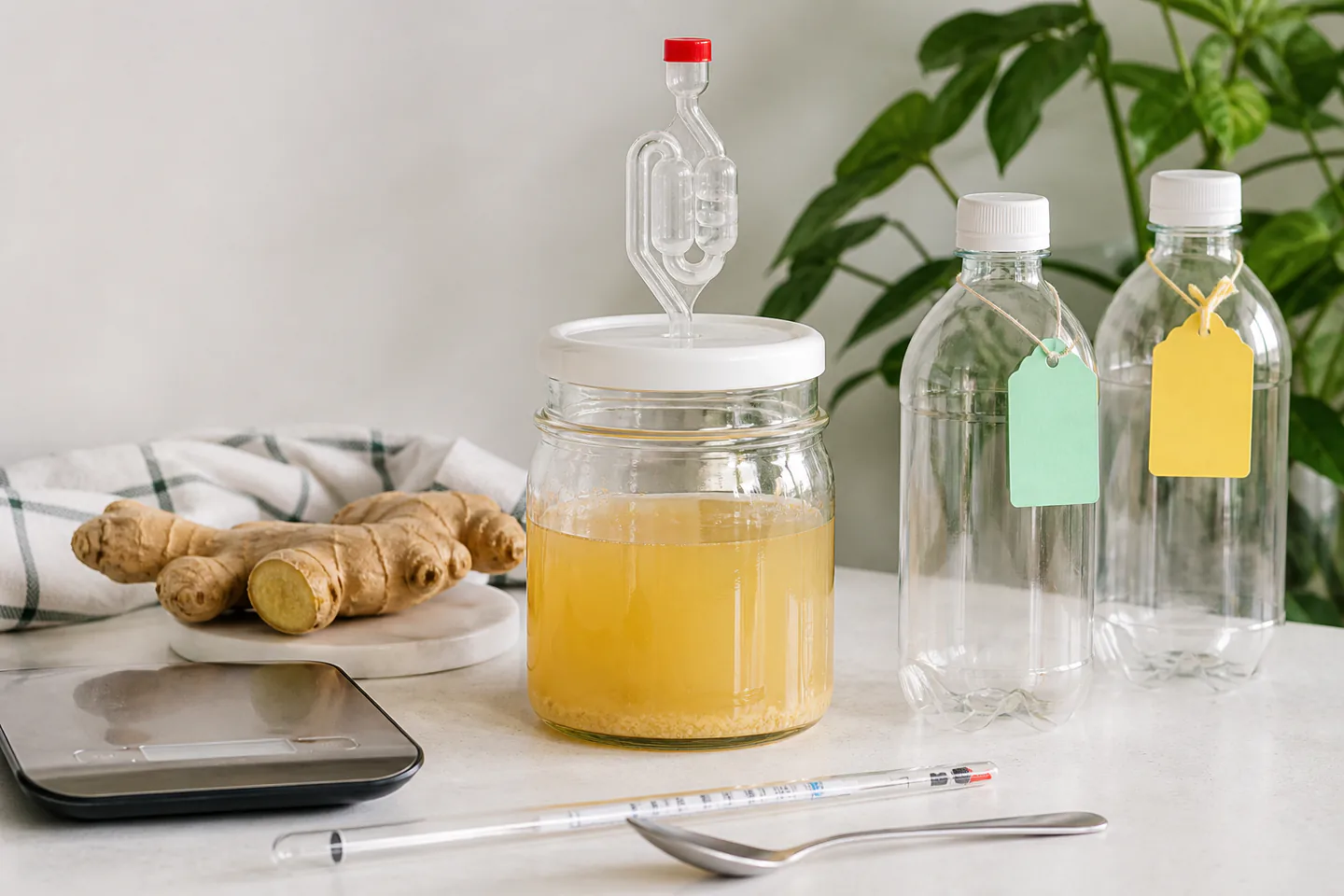
A one-litre vented ferment is easier to observe and discard safely than a large sweet batch sealed into many glass bottles. For ginger beer brewing, note what actually happened rather than relying on memory; that turns the next attempt into a controlled change instead of another guess.
The control point
Hold recipe, culture amount and temperature within the documented range and use time, taste and gravity where appropriate instead of judging by bubbles alone. For ginger beer brewing, note what actually happened rather than relying on memory; that turns the next attempt into a controlled change instead of another guess.
The useful signal
Check aroma, surface growth, acidity, gravity, container pressure and any signs of contamination; discard doubtful batches without tasting. For ginger beer brewing, note what actually happened rather than relying on memory; that turns the next attempt into a controlled change instead of another guess.
The common trap
Residual sugar can continue fermenting after packaging, creating more alcohol and dangerous pressure even when the drink tastes finished. For ginger beer brewing, note what actually happened rather than relying on memory; that turns the next attempt into a controlled change instead of another guess.
Core method
Prepare cleanly, measure, control and assess
Prepare deliberately
Choose the recipe and culture, calculate volume and sugar, sanitise equipment and plan the fermentation vessel, pressure control, refrigeration and disposal before mixing. For ginger beer brewing, note what actually happened rather than relying on memory; that turns the next attempt into a controlled change instead of another guess.
Control the central variable
Hold recipe, culture amount and temperature within the documented range and use time, taste and gravity where appropriate instead of judging by bubbles alone. For ginger beer brewing, note what actually happened rather than relying on memory; that turns the next attempt into a controlled change instead of another guess.
Read the result
Check aroma, surface growth, acidity, gravity, container pressure and any signs of contamination; discard doubtful batches without tasting. For ginger beer brewing, note what actually happened rather than relying on memory; that turns the next attempt into a controlled change instead of another guess.
Reset before repeating
Refrigerate or otherwise stabilise as the recipe requires, label ingredients and date, release or manage pressure safely and clean every valve and seal. For ginger beer brewing, note what actually happened rather than relying on memory; that turns the next attempt into a controlled change instead of another guess.
Useful products
Products with a clear job in the setup
A one-litre fermentation jar provides a vented primary vessel, the scale controls sugar and the demijohn set illustrates a larger airlocked route that should wait until process and packaging are reliable.
Kilner One-Litre Fermentation Jar Set
The small volume is easier to monitor, cool and discard if unsafe.
Salter 1036 Digital Kitchen Scale
Weighed sugar makes sweetness, alcohol potential and pressure risk easier to reason about.
MYPURECORE Two One-Gallon Glass Demijohns with Airlocks and Siphon
It adds volume without changing to a sealed primary ferment.
First project
Ferment one litre and record the pressure plan
Success means clean tart flavour and controlled packaging, not the most forceful fizz.
- 01
Set up
Choose the recipe and culture, calculate volume and sugar, sanitise equipment and plan the fermentation vessel, pressure control, refrigeration and disposal before mixing. For ginger beer brewing, note what actually happened rather than relying on memory; that turns the next attempt into a controlled change instead of another guess.
- 02
Begin the first attempt
A one-litre vented ferment is easier to observe and discard safely than a large sweet batch sealed into many glass bottles. For ginger beer brewing, note what actually happened rather than relying on memory; that turns the next attempt into a controlled change instead of another guess.
- 03
Hold one variable steady
Hold recipe, culture amount and temperature within the documented range and use time, taste and gravity where appropriate instead of judging by bubbles alone. For ginger beer brewing, note what actually happened rather than relying on memory; that turns the next attempt into a controlled change instead of another guess.
- 04
Inspect the result
Check aroma, surface growth, acidity, gravity, container pressure and any signs of contamination; discard doubtful batches without tasting. For ginger beer brewing, note what actually happened rather than relying on memory; that turns the next attempt into a controlled change instead of another guess.
- 05
Reset and record
Refrigerate or otherwise stabilise as the recipe requires, label ingredients and date, release or manage pressure safely and clean every valve and seal. For ginger beer brewing, note what actually happened rather than relying on memory; that turns the next attempt into a controlled change instead of another guess.
What can wait
What can wait until the first result
Delay decorative or high-capacity equipment until the base process works.
- 01
A large first setup
Scale multiplies Residual sugar can continue fermenting after packaging, creating more alcohol and dangerous pressure even when the drink tastes finished. before the basic routine is known. For ginger beer brewing, note what actually happened rather than relying on memory; that turns the next attempt into a controlled change instead of another guess.
- 02
Premium specialist equipment
It should solve a limitation you can describe after several ginger beer brewing sessions. For ginger beer brewing, note what actually happened rather than relying on memory; that turns the next attempt into a controlled change instead of another guess.
- 03
Several methods at once
Changing materials and technique together makes the cause of a result hard to see. For ginger beer brewing, note what actually happened rather than relying on memory; that turns the next attempt into a controlled change instead of another guess.
- 04
Buying for a future version
Finish and review the small route before equipping an imagined advanced practice. For ginger beer brewing, note what actually happened rather than relying on memory; that turns the next attempt into a controlled change instead of another guess.
Upgrade path
Upgrade the repeated limitation
Upgrade the repeated production bottleneck.
Try it
About £25–£70One-litre vented ferment
Complete one meaningful result and learn the whole sequence.Repeat it
About £25–£70Sanitiser, scale and hydrometer if appropriate
Reduce setup friction and compare several attempts.Improve the bottleneck
£100–£400Several pressure-safe bottles and cold storage
Address Residual sugar can continue fermenting after packaging, creating more alcohol and dangerous pressure even when the drink tastes finished. with a targeted change.Go deeper
VariableRecipe development with alcohol and stability records
Add scale, precision or public participation with evidence from practice.Safety & care
Sweet ferment plus sealed bottle can become hazardous
Alcohol continues to develop and carbon dioxide pressure can rise after packaging.
- Use a tested beverage-fermentation recipe and sanitise every food-contact surface. Follow current manufacturer, food-safety, access, wildlife or local guidance wherever it applies.
- Do not seal an actively fermenting sweet drink in ordinary glass or an unknown container. Follow current manufacturer, food-safety, access, wildlife or local guidance wherever it applies.
- Use pressure-rated packaging and a documented carbonation method, with cold storage and monitoring. Follow current manufacturer, food-safety, access, wildlife or local guidance wherever it applies.
- Treat unexpected mould, ropey texture, putrid odour, damaged glass or uncontrolled pressure as discard conditions. Follow current manufacturer, food-safety, access, wildlife or local guidance wherever it applies.
- State that the drink may contain alcohol and keep it away from children, pregnancy and anyone avoiding alcohol. Follow current manufacturer, food-safety, access, wildlife or local guidance wherever it applies.
Outside help
When outside help earns its place
A homebrew club can help with sanitation, gravity and packaging; one conservative documented recipe is enough for the first small batch.
Use one complete lesson that covers preparation, the central technique, common mistakes and finishing. For a first ginger beer brewing attempt, one coherent method is easier to diagnose than fragments collected from several creators.
Outside help earns its place when safe setup, access, identification or live correction removes a real obstacle. Ask what equipment, materials, access and follow-up support are included before booking.
Representative UK learning options checked 31 August 2026; local prices, access, materials and tutor support vary.
Sources
Where the guidance came from
The method is grounded in specialist, manufacturer and public guidance, then checked against recurring beginner problems and the exact products linked here.
-
01
Food Standards Agency · Food hygiene
UK hygiene, allergens and safe handling.
Open source -
02
National Center for Home Food Preservation · Fermentation
Evidence-led fermentation safety principles.
Open source -
03
Brewers Association · Draught and packaging safety
Fermentation, packaging and pressure context.
Open source -
04
Kilner · Fermentation guides
Manufacturer small-vessel fermentation guidance.
Open source -
05
Reddit · r/fermentation
Community evidence on ginger bugs, contamination and bottle pressure.
Open source -
06
Amazon UK · One-Litre Fermentation Jar Set
Exact Amazon UK product page or ISBN used for the recommendation; current price, seller, specification and availability should be confirmed.
Open source -
07
Amazon UK · 1036 Digital Kitchen Scale
Exact Amazon UK product page or ISBN used for the recommendation; current price, seller, specification and availability should be confirmed.
Open source -
08
Amazon UK · Two One-Gallon Glass Demijohns with Airlocks and Siphon
Exact Amazon UK product page or ISBN used for the recommendation; current price, seller, specification and availability should be confirmed.
Open source
Guide information and links checked 31 August 2026.