Beginner’s guide · Cook & bake
Learn the rice before the raw fish.
Roll one safe filling cleanly.
Start with seasoned Japanese short-grain rice, nori and cooked or vegetable fillings. Practise one maki roll before considering raw fish sourcing and freezing rules.
Quick answer
Practise maki with fillings that remove raw-fish risk
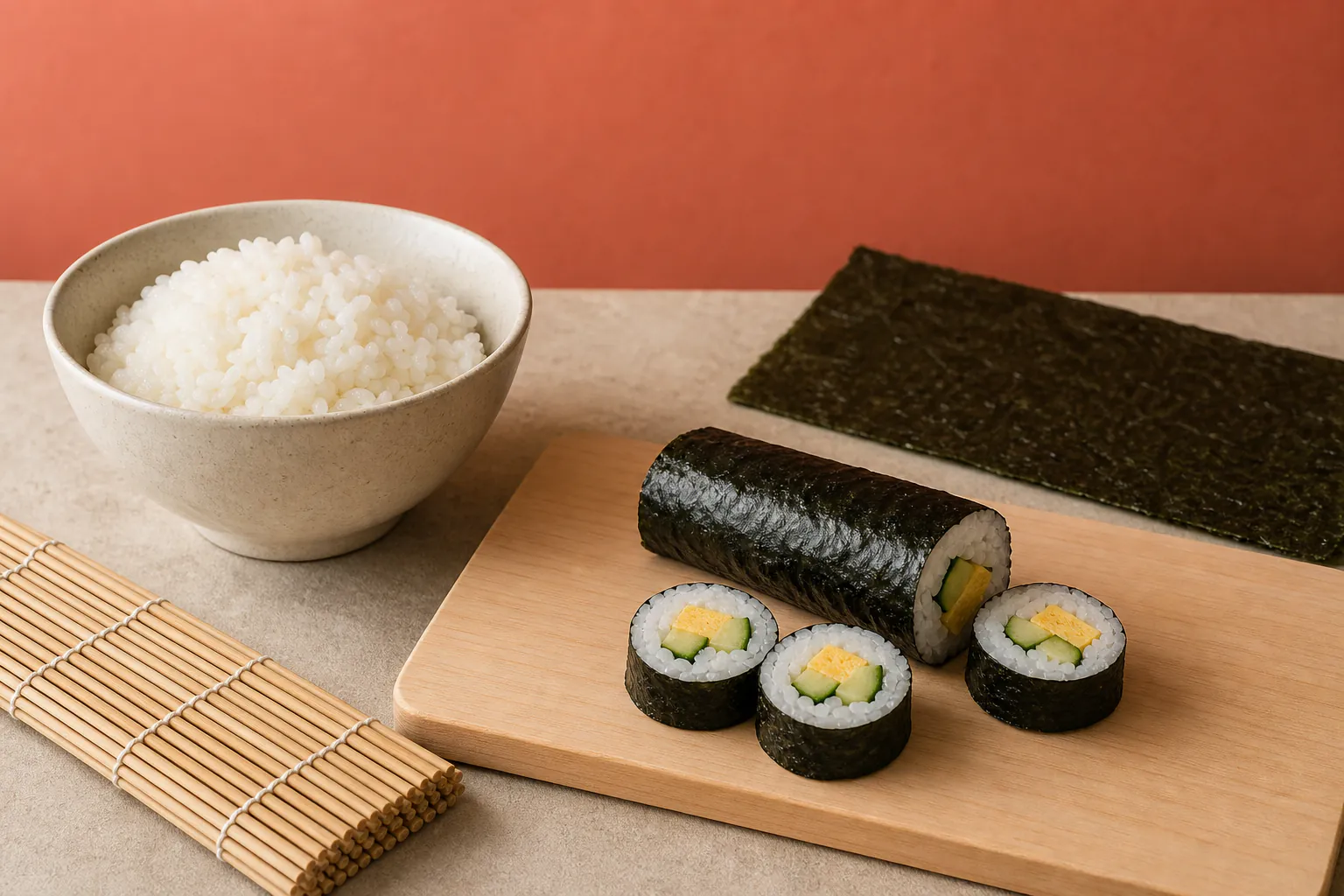
Cook Japanese short-grain rice by a tested sushi-rice method, season it with rice vinegar, sugar and salt, and cool it promptly while keeping it covered. Place nori on a bamboo mat, spread a thin layer of rice with damp hands, add a narrow line of cucumber, avocado, omelette, cooked prawn or smoked salmon, then roll firmly without crushing and slice with a clean damp sharp knife.
- 01
“Sushi” centres on seasoned rice; raw fish is optional.
- 02
Ordinary chilled fish is not automatically suitable for raw service. Parasite controls, provenance, cold chain and vulnerable diners matter.
- 03
Cooked rice can support harmful bacteria if held warm too long. Cool promptly and eat within safe guidance.
- 04
Overfilling is the main rolling problem. A thin even line teaches pressure and closure.
What to expect
Simple ingredients expose timing and knife work
The rice must be cooked, seasoned and cool enough to handle while nori stays crisp and fillings remain safe.
Rice
Long-grain or easy-cook rice lacks the same texture. Rinsing, water ratio and resting affect stickiness.
Seasoning
Vinegar mixture should be folded through without mashing grains. Taste and recipe quantity guide balance.
Nori
It absorbs moisture quickly. Assemble shortly before eating and keep sheets dry.
Filling
Too much creates gaps and bursts. Cut even narrow batons and leave a sealing edge.
Knife
A sharp damp blade and a gentle drawing cut preserve the roll instead of crushing it.
Safety
Rice, egg, seafood and raw produce each retain their own hygiene and storage requirements.
Core method
Build the roll around safe seasoned rice
Choose the first filling route
Use cucumber, avocado, cooked omelette, cooked prawn, canned tuna mixture or smoked salmon according to dietary and allergy needs. Wash produce, keep chilled items cold and use separate clean boards where cross-contamination is possible. Do not make raw fish the beginner milestone.
Cook and season the correct rice
Rinse Japanese short-grain rice until the water becomes clearer, drain and cook with the tested water ratio. Let it rest covered. Dissolve the sushi seasoning and fold it through with a cutting motion while fanning or spreading the rice in a clean shallow vessel. Do not leave cooked rice at room temperature for extended periods.
Roll with less filling than seems necessary
Put nori rough-side up on the mat, orient it according to the recipe and use damp—not dripping—hands to spread a thin layer without compacting. Leave the specified bare edge, add one narrow line of filling and use the mat to tuck, roll and gently compress. Keep the mat outside the food.
Slice, serve and store safely
Use a sharp knife wiped with damp cloth between cuts. Serve promptly with soy sauce or condiments in modest amounts. Refrigerate perishable leftovers rapidly and follow current guidance for cooked rice and fillings; quality declines quickly, so making a smaller batch is safer and better.
Useful products
The basic rolling surface, nori and the correct vinegar
The Yutaka mat is the only specialist tool required. Nori and unseasoned rice vinegar are core ingredients; add Japanese short-grain sushi rice and chosen safe fillings from a reliable current recipe.
Yutaka Bamboo Sushi Rolling Mat, 24 cm
It is inexpensive and directly supports the physical skill that cannot be replaced by extra ingredients.
Yutaka Sushi Nori, Four Packs of Five Sheets
It gives the first maki a predictable wrapper while rice and filling technique develop.
Yutaka Rice Vinegar 1 L
It supports repeatable sushi rice and can be used in other dressings rather than a novelty sauce.
First project
Make one cucumber and omelette maki roll
This route teaches rice, filling geometry and rolling while keeping seafood optional.
- 01
Prepare fillings first
Cook the omelette fully, cool it safely and cut it and cucumber into even batons.
- 02
Cook sushi rice
Rinse, use the tested ratio, rest and keep the batch clean.
- 03
Season and cool
Fold in vinegar mixture without crushing and cool promptly.
- 04
Spread a thin rice layer
Use damp hands and keep a bare nori edge for sealing.
- 05
Add one narrow filling line
Resist overfilling and use the mat to tuck and shape.
- 06
Slice and eat promptly
Use a damp sharp knife and refrigerate perishable leftovers safely.
What can wait
What can wait until the first result
Master rice and one roll before increasing ingredient risk or presentation complexity.
- 01
Raw fish
It requires appropriate sourcing, parasite control, cold chain and diner-specific risk decisions.
- 02
A giant kit
Plastic moulds and novelty tools do not teach rice texture or rolling pressure.
- 03
Ten fillings
They create bulky rolls, cross-contamination and muddled flavour.
- 04
A specialist knife
A sharp clean general kitchen knife is enough for the first roll.
- 05
Room-temperature leftovers
Quality and safety decline; make a small amount and cool perishable food promptly.
Upgrade path
Upgrade the repeated limitation
Add forms and ingredients only when rice and hygiene stay dependable.
Vegetable maki
About £14 plus foodMat + rice + nori + safe filling
Learn the complete roll.Inside-out and nigiri-style practice
MinimalSame rice + careful portioning
Improve hand pressure and presentation.Cooked seafood selection
VariableCold-chain planning and allergen control
Add flavour while avoiding raw-fish parasite issues.Raw fish route
Specialist sourcingCurrent FSA guidance + competent supplier + vulnerable-diner exclusions
Adds substantial safety responsibility, not merely prestige.Safety & care
Control rice time, seafood provenance and cross-contamination
Raw service is not a casual upgrade. Follow current UK food guidance and use cooked or vegetable fillings when provenance or freezing controls are unclear.
- Cool cooked rice promptly, keep it covered and follow current storage and reheating guidance; do not leave it warm for long periods.
- Use fish intended for raw consumption only from a competent supplier who can explain parasite-control and cold-chain requirements.
- Avoid raw fish for pregnant, immunocompromised, very young or otherwise vulnerable diners according to current health advice.
- Separate raw ingredients, cooked food and ready-to-eat vegetables; wash hands, boards, knives and cloths thoroughly.
- Check fish, soy, sesame, egg and other allergens and prevent cross-contact.
Outside help
When outside help earns its place
A class can demonstrate hand pressure and fish preparation, but choose one with explicit food-safety and allergen practice.
Use the tested rice and roll methods with cooked or vegetable fillings.
Check raw-fish sourcing, rice handling, allergens and whether ingredients are included.
Representative UK prices and free learning routes checked 3 August 2026; local availability, materials and tutor support vary.
Sources
Where the guidance came from
A specialist Japanese recipe source provides tested rice and roll technique; UK authorities establish raw-fish and food-storage controls.
-
01
Just One Cookbook · How to make sushi rice
Detailed rice selection, rinsing, cooking, seasoning and cooling method.
Open source -
02
Just One Cookbook · Sushi rolls
Maki preparation, filling amount and rolling technique.
Open source -
03
Just One Cookbook · Vegetarian sushi rolls
Practical non-raw beginner filling routes.
Open source -
04
Food Standards Agency · Fish intended to be eaten raw
UK parasite-control and freezing context for raw fish.
Open source -
05
Amazon UK · Yutaka bamboo sushi mat
Exact product page, model or ISBN, observed price and availability checked for this guide.
Open source -
06
Amazon UK · Yutaka sushi nori
Exact product page, model or ISBN, observed price and availability checked for this guide.
Open source -
07
Amazon UK · Yutaka rice vinegar
Exact product page, model or ISBN, observed price and availability checked for this guide.
Open source
Guide information and links checked 3 August 2026.