Beginner’s guide · Cook & bake
Roll one dough by hand.
Learn the feel before the machine.
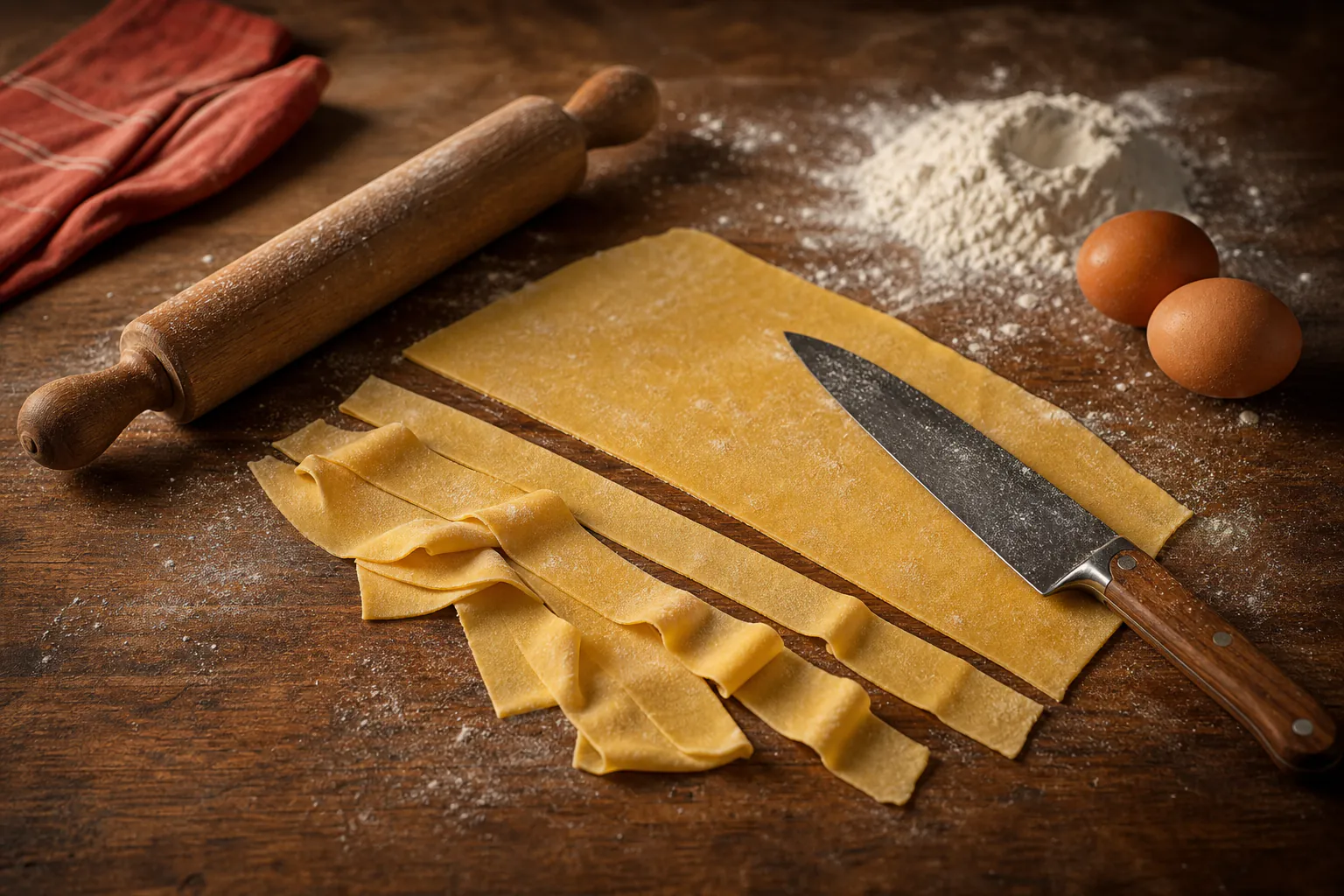
Make a small egg-pasta dough, knead it until smooth and roll it into rustic ribbons with an ordinary rolling pin. A pasta machine makes thin, even sheets easier later; it does not replace rest, flour control or learning when dough is supple enough to roll.
Quick answer
Make a small dough and adjust by feel
Mix roughly 100 g of suitable flour with one medium egg per person, beginning with two portions. Knead until smooth and elastic, wrap and rest for 30 minutes, then divide and roll each piece thin enough to see a hand shadow through it. Dust lightly, fold loosely, cut ribbons and cook immediately in well-salted boiling water until tender with a slight bite.
- 01
Egg and flour vary, so hold back a little flour and add it only when the dough remains genuinely sticky after mixing.
- 02
Resting relaxes the gluten. Dough that springs back aggressively usually needs time more than force or extra flour.
- 03
Keep unrolled pieces covered. A dry skin becomes cracks and ragged edges when the dough is rolled thinner.
- 04
Fresh pasta cooks much faster than dried pasta. Taste early and move it directly into the finished sauce.
What to expect
The dough tells you more than the clock
Room humidity, egg size, flour and rolling thickness change each batch. The useful skill is recognising smooth, extensible dough and making small corrections.
Mixing
The dough begins rough and may look too dry before kneading brings crumbs together. Add moisture by dampening hands rather than pouring water.
Kneading
Ten purposeful minutes is common, but the endpoint is a smoother, firmer ball that springs back slowly.
Resting
Wrapped dough becomes easier to stretch as gluten relaxes and moisture evens out.
Rolling
Uneven pressure creates thick centres or torn edges. Small portions and frequent turning make hand rolling manageable.
Flour
Dust prevents sticking, yet heavy flour makes seams dry and sauces cling less well. Brush away visible excess.
Cooking
Thickness determines time. A thick rustic ribbon may need several minutes; a very thin sheet may be ready almost immediately.
Dough basics
Control moisture, rest and thickness
Mix without committing all the flour
Use a clean work surface or broad bowl. Make a well in most of the flour, beat the eggs inside it and gradually draw flour from the wall. Reserve a small handful. When a shaggy mass forms, press the crumbs together. If dry material still will not join after kneading begins, wet your hands and continue; if the dough smears persistently, use a little reserved flour.
Knead for structure, then rest for extensibility
Push the dough away with the heel of the hand, fold and rotate. Continue until it feels firm, smoother and more uniform. Wrap it immediately so the surface cannot dry, then rest at room temperature for about 30 minutes. Resting is part of the method, not idle time: it reduces spring-back and makes thinner rolling possible.
Roll small pieces evenly
Cut the dough in half and keep one piece covered. Flatten the other, roll from the centre outward and rotate frequently. Aim for a sheet that is evenly thin rather than enormous. For ribbons, dust sparingly, fold the sheet in loose layers and cut with a sharp knife. Shake the strands apart as soon as they are cut.
Match the sauce and cooking pan
Finish the sauce before the pasta goes into water. Use a wide pot of boiling salted water and stir gently after adding the ribbons. Taste early, then transfer the pasta with some cooking water into the sauce. Refrigerate unused egg dough promptly and cook it thoroughly according to safe food-handling guidance.
Useful products
A proven roller, an optional rack and a tradition-led recipe book
The Marcato Ampia 150 is the main later upgrade: it rolls repeatable sheets and cuts two common ribbon widths. The KitchenCraft rack is useful when several portions of long pasta need separation, but a clean floured tray works for a first batch. Pasta Grannies supplies regional recipes and technique context beyond one universal dough.
Marcato Ampia 150 Pasta Machine
The roller makes gradual, repeatable thickness changes and the built-in cutters cover two common ribbon styles.
KitchenCraft Foldable Pasta Drying Rack
Multiple arms keep cut pasta from compressing into a floured pile while the rest is processed.
Vicky Bennison Pasta Grannies: The Official Cookbook
The recipes broaden technique beyond a single dough and connect shapes to the foods they are made to carry.
First batch
Make hand-rolled ribbons for two
Prepare a simple sauce first so the fresh pasta can move from boiling water to the pan without waiting.
- 01
Measure a small batch
Start with about 200 g flour and two medium eggs, holding back some flour for adjustment.
- 02
Bring it together
Beat eggs in a well and draw in flour until a shaggy mass can be pressed into dough.
- 03
Knead deliberately
Push, fold and rotate until the surface is smoother and the dough springs back slowly.
- 04
Wrap and rest
Cover airtight for about 30 minutes so moisture equalises and gluten relaxes.
- 05
Divide and roll
Keep half covered while rolling the other from the centre, turning often for even thickness.
- 06
Cut ribbons
Dust lightly, fold loosely and cut broad pappardelle or narrower tagliatelle with a sharp knife.
- 07
Boil and taste
Cook in salted boiling water, stir gently and taste after roughly two minutes rather than trusting a fixed timer.
- 08
Finish in sauce
Move the pasta directly into the sauce with a splash of cooking water and serve promptly.
What can wait
What can wait until hand rolling shows the need
The first batch needs dough, a rolling pin, knife and pan. Specialist tools mainly add repeatability or volume.
- 01
The checked pasta machine
The Marcato makes thinner, even sheets and consistent ribbons. Hand-roll once first so settings do not hide dough that is too wet, dry or unrested.
- 02
The checked drying rack
It separates long strands when making several portions. For two portions cooked immediately, a floured tray or clean tea towel is enough.
- 03
Specialty cutters
A knife makes useful ribbons. Add ravioli stamps, wheels or extruders only for shapes you genuinely plan to repeat.
- 04
Rare flours
Learn a dependable egg dough with accessible flour before changing grain, protein and hydration together.
- 05
Long storage
Fresh egg pasta is best treated as a perishable food. Freezing portions is simpler and safer for a beginner than improvised room-temperature drying.
Upgrade path
Upgrade consistency, then shape range
A machine improves evenness and speed once the dough itself is predictable.
Hand-rolled ribbons
About £3–£8 ingredientsBowl or board, rolling pin and knife
Learn dough feel, rest and cooking thickness.Manual roller
About £60–£90Marcato Ampia 150 clamped to a stable worktop
Produce even sheets and two ribbon widths repeatably.Filled pasta
About £5–£30 extraRoller + cutter or stamp + controlled filling
Add sealing, portioning and filling-safety skills.Extruded shapes
About £100–£400+Dedicated extruder and suitable low-hydration dough
Make tubular or shaped pasta through a materially different process.Food safety
Treat flour and egg dough as raw ingredients
Raw flour and raw egg can carry harmful organisms. Tasting dough and leaving it warm are not harmless parts of the hobby.
- Do not taste raw pasta dough, and wash hands, tools and surfaces after contact with uncooked flour and egg.
- Use eggs within date, follow current UK guidance for vulnerable people and avoid cross-contamination with ready-to-eat food.
- Keep filled or unused fresh pasta refrigerated and use promptly; meat fillings require separate safe handling and thorough cooking.
- Clamp a pasta machine only to a stable, suitable worktop and keep fingers, loose clothing and children away from rollers and cutters.
- Follow manufacturer cleaning instructions: many manual machines must not be immersed or run through a dishwasher.
Outside help
When a class earns its place
A class is unnecessary for ribbons. It becomes useful for filled pasta, regional hand shapes or diagnosing dough texture in person.
Watch hand position and dough texture, then use a written recipe for quantities and safety.
Look for small groups, dough made from scratch and enough hands-on time to roll and shape.
Representative UK workshop pricing and free learning routes checked 2 August 2026; ingredients, duration and take-home pasta vary.
Sources
Where the guidance came from
UK food-safety guidance sets the raw-flour and egg boundaries; established cooking and manufacturer sources support dough, machine and cleaning technique.
-
01
Food Standards Agency · Using raw flour safely
Do not eat raw flour products; clean hands, utensils and surfaces after preparation.
Open source -
02
Food Standards Agency · Egg safety research
Current UK context for Salmonella risk in raw or lightly cooked shell-egg foods.
Open source -
03
BBC Good Food · Fresh pasta dough
Accessible proportions and method for mixing, kneading, resting and rolling egg pasta.
Open source -
04
Marcato · Ampia
Manufacturer specifications, roller settings, cutters and care for the checked machine.
Open source -
05
Amazon UK · Marcato Ampia 150 pasta machine
Exact product page, model or ISBN, observed price and availability checked for this guide.
Open source -
06
Amazon UK · KitchenCraft pasta drying rack
Exact product page, model or ISBN, observed price and availability checked for this guide.
Open source -
07
Amazon UK · Pasta Grannies official cookbook
Exact product page, model or ISBN, observed price and availability checked for this guide.
Open source
Guide information and links checked 2 August 2026.