Beginner’s guide · Observe & photograph
Borrow a shallow look.
Return the pond life quickly.
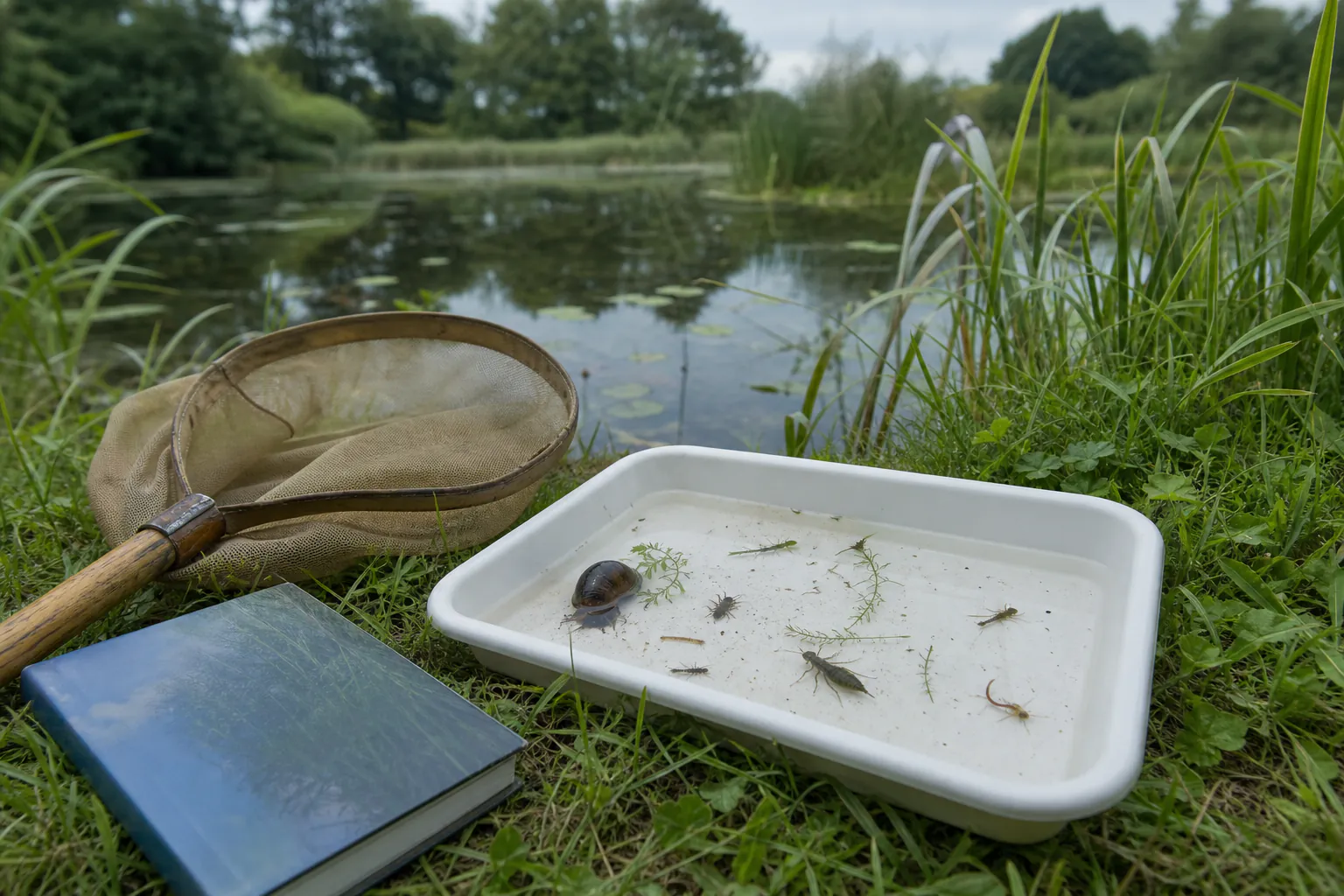
Dip from a stable accessible edge, transfer a small sample into a white tray and identify movement, legs, tails and cases before returning everything to the same pond. You do not need to enter the water or keep animals at home.
Quick answer
Use a tray to slow the observation, not the animal
Ask permission where needed and choose a stable shallow bank away from deep water. Half-fill a clean white tray with pond water, sweep a soft net once through vegetation, turn the sample gently into the tray and observe from above. Return the organisms and water promptly to the same pond and wash hands.
- 01
Work with another person around open water and supervise children continuously from within reach.
- 02
Use a small sample. Crowding, warming water and low oxygen make a tray stressful and harder to identify.
- 03
A spoon, pipette or small clear pot can isolate one animal briefly without squeezing it between fingers.
- 04
Clean, disinfect and dry nets, trays and footwear as appropriate before moving between water bodies to reduce disease and invasive-species transfer.
What to expect
A pond sample is active, mixed and temporary
The tray may contain plants, silt, larvae, snails and tiny fast swimmers at once. Identification begins with body plan and movement, not a perfect photograph.
Visibility
A white shallow tray makes silhouettes and movement easier to see than a deep dark bucket.
Season
Species and life stages change across the year. One quiet dip is not evidence that a pond has little life.
Handling
Soft-bodied larvae and gills are easy to damage. Move water around the animal rather than gripping it.
Temperature
A tray warms quickly in sun. Keep it shaded, observe briefly and renew pond water if necessary.
Identification
Count legs, note tails, shell, case, breathing position and movement before consulting the guide.
Photography
A phone image through a clear pot can document form, but prolonged staging is not worth stressing the animal.
Good observation
Keep the sample small, cool and connected to its pond
Choose a safe observation point
Use a managed pond, garden pond or public dipping platform where access is permitted. Look for a shallow area with plants and a level dry stance. Do not lean over steep banks, enter water, cross fencing or work beneath unstable edges.
Prepare the water before the dip
Add pond water to the tray first and place it in shade. Sweep the net gently through vegetation or just above the bottom without scraping a large area. Turn the net inside out in the water or rinse it carefully so animals are not picked from dry mesh.
Identify from broad features
Allow silt to settle. Use a spoon or pipette to move one animal with plenty of water into a small clear container. Count legs, tails and body segments; note whether it swims, crawls, wriggles or carries a case. Use the guide to reach a group-level identification before attempting a species.
Return and reset
Pour water and animals back gently at the same edge well before the tray warms. Check the corners and net for stranded organisms. Remove litter, wash hands and clean the equipment before another site.
Useful products
A soft net, a white observation tray and a compact guide
The Pisces net is small enough for a controlled vegetation sweep, the shallow Amazon Basics tray gives a white background, and the Bloomsbury guide keeps common pond groups close at hand. The tray is sold as an organiser, so reserve it for field use and inspect it for sharp moulding edges before the first dip.
Pisces Medium 25 cm Pond Net with 91 cm Handle
The modest net size is enough for vegetation sampling at a genuinely accessible edge.
Amazon Basics White Rectangular Accessory Tray
A pale tray makes movement and body outlines easier to observe while keeping the sample in pond water.
Bloomsbury Concise Pond Wildlife Guide
The compact guide supports identification while the temporary sample is still in the tray.
First dip
Complete one shallow-edge pond dip
Choose a mild day and stop if the bank is slippery, the water is high or the agreed observation point cannot be reached safely.
- 01
Check permission and footing
Confirm the site allows dipping and select a flat shallow edge with another person present.
- 02
Fill and shade the tray
Use pond water and keep the tray level out of direct sun before collecting anything.
- 03
Make one gentle sweep
Move the net through submerged plants without digging deeply into sediment.
- 04
Rinse into water
Invert or wash the net in the tray so organisms remain wet and the mesh is checked carefully.
- 05
Watch before sorting
Let silt settle and note the different swimming, crawling and wriggling movements.
- 06
Isolate one animal
Use a spoon or pipette with water and compare broad features with the guide.
- 07
Record briefly
Write group, movement, habitat and date or take one quick image without extended staging.
- 08
Return and clean
Release everything to the same pond, inspect the equipment, wash hands and apply site-to-site biosecurity.
What can wait
What can wait until the observation questions change
Keeping a sample or buying optics creates more responsibility than a first pond dip needs.
- 01
Taking animals home
A jar changes oxygen, temperature and feeding immediately. Observe briefly and return the sample to its pond.
- 02
A compound microscope
It becomes useful for algae and microorganisms in a small water drop. The first session can identify visible invertebrate groups unaided.
- 03
A long heavy pond net
Greater reach also increases leverage and the temptation to lean. Use an accessible edge rather than compensating for unsafe access.
- 04
Species-level certainty
Some larvae need microscopic details or expert keys. A well-supported family or group identification is still useful.
- 05
Moving between several ponds
One site avoids spreading material and gives time to learn the cleaning protocol before another visit.
Upgrade path
Add tools only when they answer a new scale of question
The observation sequence remains the same as magnification and identification become more specialised.
Visible pond animals
About £20–£35Net, white tray, spoon and concise guide
Recognise major invertebrate groups and behaviour at the edge.Close field detail
About £15–£40Clear viewing pot and 10× hand lens
Inspect cases, gills and body form without a full microscope.Microscopic pond life
About £90–£250Compound microscope, slides, pipettes and identification keys
Observe algae, protists and very small organisms in shallow mounts.Repeat survey
VariableStandard method, records, permissions and biosecurity kit
Compare dates and habitat zones without turning casual observations into unsupported population claims.Safety & care
Water safety and biosecurity are part of the kit
The main risks are the pond edge, contaminated water and moving organisms or pathogens between sites.
- Never enter the water, work from an unstable bank or allow a child to dip without close adult supervision.
- Cover cuts, avoid touching the face and wash hands thoroughly after contact with pond water or equipment.
- Return organisms to the same place promptly; never release aquarium plants, animals or purchased cultures into a pond.
- Follow current Check, Clean, Dry or site-specific biosecurity guidance before equipment visits another water body.
- Stop if protected species, nests or unsafe conditions are encountered and follow the site manager’s instructions.
Outside help
When a supervised pond session helps
A first dip can be self-guided at a suitable pond. A wildlife-centre session is useful for better keys, accessible platforms and help separating similar larvae.
Use the step-by-step method and image guides to plan a bounded home or public-platform visit.
Check age limits, accessibility, equipment, handwashing and whether booking is required.
Free guidance and representative UK wildlife-centre pricing checked 31 July 2026; sessions are seasonal and local.
Sources
Where the guidance came from
Museum and freshwater-habitat sources provide the method and safety boundaries; product choices support a small, temporary observation rather than collecting animals.
-
01
Natural History Museum · How to pond dip
Step-by-step tray, net, observation and return method.
Open source -
02
Freshwater Habitats Trust · Frequently asked questions
Pond safety, supervision, handwashing and freshwater habitat guidance.
Open source -
03
The Wildlife Trusts · How to go pond dipping
Accessible pond-dipping equipment, handling and identification overview.
Open source -
04
Amazon UK · Pisces medium pond net
Exact product page, model or ISBN, observed price and availability checked for this guide.
Open source -
05
Amazon UK · Amazon Basics white rectangular accessory tray
Exact product page, model or ISBN, observed price and availability checked for this guide.
Open source -
06
Amazon UK · Bloomsbury Concise Pond Wildlife Guide
Exact product page, model or ISBN, observed price and availability checked for this guide.
Open source
Guide information and links checked 31 July 2026.