Beginner’s guide · Grow & care
Wrap the root ball,
display it on a dish first.
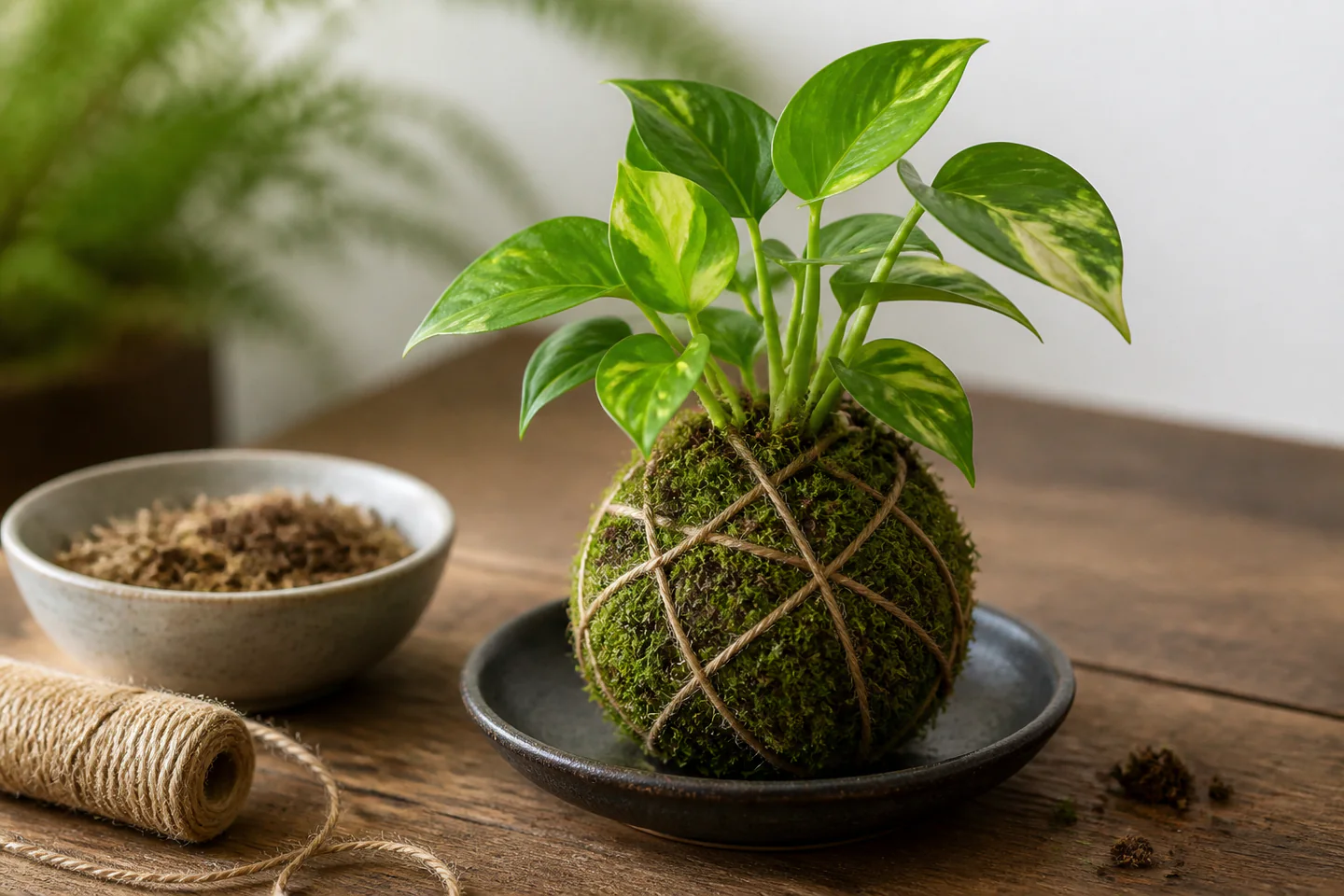
Begin with a small tolerant houseplant and a ball sized to its roots. Build, water and observe it on a saucer before deciding whether hanging is practical.
Quick answer
Make a small kokedama and keep it on a saucer
Choose a compact healthy plant whose light and moisture needs suit the intended room, and work with a root ball no larger than necessary. Use a documented soil blend that holds together when damp without becoming solid mud, shape it around the roots and cover it with legally sourced live or suitable horticultural moss. Bind evenly with natural or plant-safe twine, water by soaking only as the plant requires and let the ball drain completely. Keep it on a dish for several weeks so moisture, stability and plant response are easy to monitor before hanging.
- 01
Kokedama is a Japanese horticultural form; learn and credit the context rather than presenting any twine-wrapped plant as an invented trend.
- 02
Plant choice drives soil, light and watering. A fern, orchid and succulent should not receive the same ball or soaking schedule.
- 03
The ball must hold together while retaining pore space. Pure garden soil or clay packed hard can exclude air and damage roots.
- 04
Weight is a watering clue, not a universal schedule. Lift the dish-supported ball, observe the plant and soak only when its own conditions indicate it.
- 05
Display on a saucer first. Hanging adds load, drip, ceiling-fixing and fall risks that are separate from making a healthy plant.
What to expect
The container is smaller and less forgiving than a pot
A moss ball dries from every side and holds less buffer than a conventional pot. Its beauty comes with more frequent observation, not a mystical maintenance-free system.
Plant
Pothos, small ferns and some tropical foliage tolerate indoor conditions differently. Match the actual room.
Soil
Traditional-style clay and peat blends are not one fixed recipe and may not suit every plant or available material.
Moss
Live moss has its own conditions; preserved decorative moss will not grow and should not be sold as living.
Binding
Twine should hold the surface without sawing into stems or compressing the root zone into a hard ball.
Water
A full soak can rehydrate evenly, but the ball must drain before returning to furniture.
Roots
New roots, rapid drying or decline can signal that the plant needs rebuilding or a conventional pot. The form is not permanent.
Core method
Design for the plant before the hanging display
Choose plant and location together
Measure available light, heat and humidity and select a small healthy plant suited to them. Research its normal substrate and moisture needs. Water the plant beforehand if appropriate, inspect for pests and work with clean tools away from other houseplants.
Build a breathable ball
Remove only loose excess potting mix and avoid tearing fine roots. Prepare a cohesive damp substrate based on a reliable recipe for that plant, squeeze to test structure and form it gently around the roots. The ball should hold when handled without becoming polished dense clay.
Wrap and bind evenly
Use legally sourced horticultural moss or the material specified by a reputable kit. Cover gaps without burying the stem crown. Wind twine in several directions with even moderate tension, knot securely and trim only after the ball can be lifted without shedding.
Water, drain and observe
Set the kokedama on a dish in suitable light. When plant signs and ball weight indicate watering, soak in room-temperature water until evenly hydrated, lift with support and drain fully. Record drying time for that room and rebuild or pot conventionally if roots, smell or persistent decline indicate the form is unsuitable.
Useful products
Products with a clear job in the setup
The SuperMoss orchid kit is a specific kit route, not a universal recommendation: use it only with an orchid whose roots, moisture and display needs match the supplied medium. Moss Ball Bonsai provides broader design references, while the plain tray protects furniture and makes a first dish-supported trial easier to inspect.
SuperMoss Orchid Kokedama Kit
The substrate and presentation are more targeted than a generic bag of decorative moss and string.
Satoshi Sunamori Moss Ball Bonsai: 100 Beautiful Kokedama That Are Fun to Create
A broad range helps the reader see how plant habit and ball proportion affect the finished form.
Amazon Basics White Rectangular Accessory Tray
A washable light tray makes shed material, mould and residual water easy to notice.
First project
Make one dish-supported pothos kokedama
A small trailing foliage plant makes watering and new growth easy to observe without the risk of a suspended heavy ball.
- 01
Match plant to room
Check light, temperature, pet safety and normal moisture needs.
- 02
Prepare a modest root ball
Preserve healthy roots and use a documented breathable blend.
- 03
Test substrate cohesion
The damp ball should hold gently without becoming dense polished mud.
- 04
Wrap the surface
Cover evenly, keep the crown clear and bind with moderate tension.
- 05
Display on a dish
Observe for several weeks before considering suspension.
- 06
Water by evidence
Use plant condition and ball weight, soak evenly and drain completely.
What can wait
What can wait until the first result
Hanging is presentation, not proof of a successful plant. Establish health and watering on a dish first.
- 01
Ceiling suspension
The wet ball is heavier, can drip and needs an independently rated fixing.
- 02
Large mature plants
Their roots, leverage and water demand exceed a forgiving first ball.
- 03
Succulents in water-retentive moss
Plant, moss and substrate moisture needs can conflict.
- 04
Decorative preserved moss sold as live
It may be dyed or treated and cannot provide living moss behaviour.
- 05
A fixed watering calendar
Drying changes with plant, ball size, season and room conditions.
Upgrade path
Upgrade the repeated limitation
Change display or plant complexity only after the first ball has a predictable drying cycle and healthy new growth.
Dish-supported ball
About £20–£60Small plant, substrate, moss and twine
Learn structure and watering.Second plant type
About £25–£75Species-specific mix and care log
Adapt the method horticulturally.Safe suspension
About £35–£100Rated fixing, drip plan and light position
Display a proven healthy ball.Grouped installation
About £100–£400+Multiple plants and maintenance access
Create composition without losing care access.Safety & care
A wet hanging ball is a suspended load
Plant health comes first; secure display comes second. Never hang until the saturated weight, fixing, drip path and access for soaking have all been tested.
- Identify the plant and check toxicity for children and pets before choosing a low dish or hanging position.
- Use legally and responsibly sourced moss and plants and quarantine new material for pests before placing near a collection.
- Wear gloves where soil or plant sap requires it, wash hands and clean tools between plants.
- Test any suspension with more than the saturated ball weight, use a suitable structural fixing and keep it away from beds, seating and walkways.
- Remove standing water, investigate sour smell or mould and move the plant to a conventional pot if the kokedama form is harming it.
Outside help
When outside help earns its place
Kew, RHS and botanical-garden instructions are enough for a first dish-supported plant. A workshop is useful for feeling correct substrate texture and binding tension with a tutor present.
Choose a method that discusses plant care as well as wrapping.
Ask which plant, moss, substrate, hanging hardware and aftercare are included.
Representative UK learning options checked 18 August 2026; local prices, access, materials and tutor support vary.
Sources
Where the guidance came from
Botanical institutions anchor the plant-first method and aftercare. Japanese and specialist references add cultural and design context, while grower communities expose drying and root problems.
-
01
Kew · How to make a kokedama
Botanical-garden construction and care instructions.
Open source -
02
RHS · Kokedama video
UK horticultural demonstration and care context.
Open source -
03
BBC Gardeners’ World · Make a kokedama
Accessible plant selection and construction method.
Open source -
04
Missouri Botanical Garden · Kokedama
Botanical visual guide and horticultural context.
Open source -
05
Reddit · r/kokedama
Community evidence on plants, soil balls, watering and display failures.
Open source -
06
Amazon UK · Orchid Kokedama Kit
Exact product catalogue page or ISBN used for the recommendation; current price, seller, specification and availability should be confirmed.
Open source -
07
Amazon UK · Moss Ball Bonsai: 100 Beautiful Kokedama That Are Fun to Create
Exact product catalogue page or ISBN used for the recommendation; current price, seller, specification and availability should be confirmed.
Open source -
08
Amazon UK · White Rectangular Accessory Tray
Exact product catalogue page or ISBN used for the recommendation; current price, seller, specification and availability should be confirmed.
Open source
Guide information and links checked 18 August 2026.