Beginner’s guide · Grow & care
Read the plant,
then change one condition.
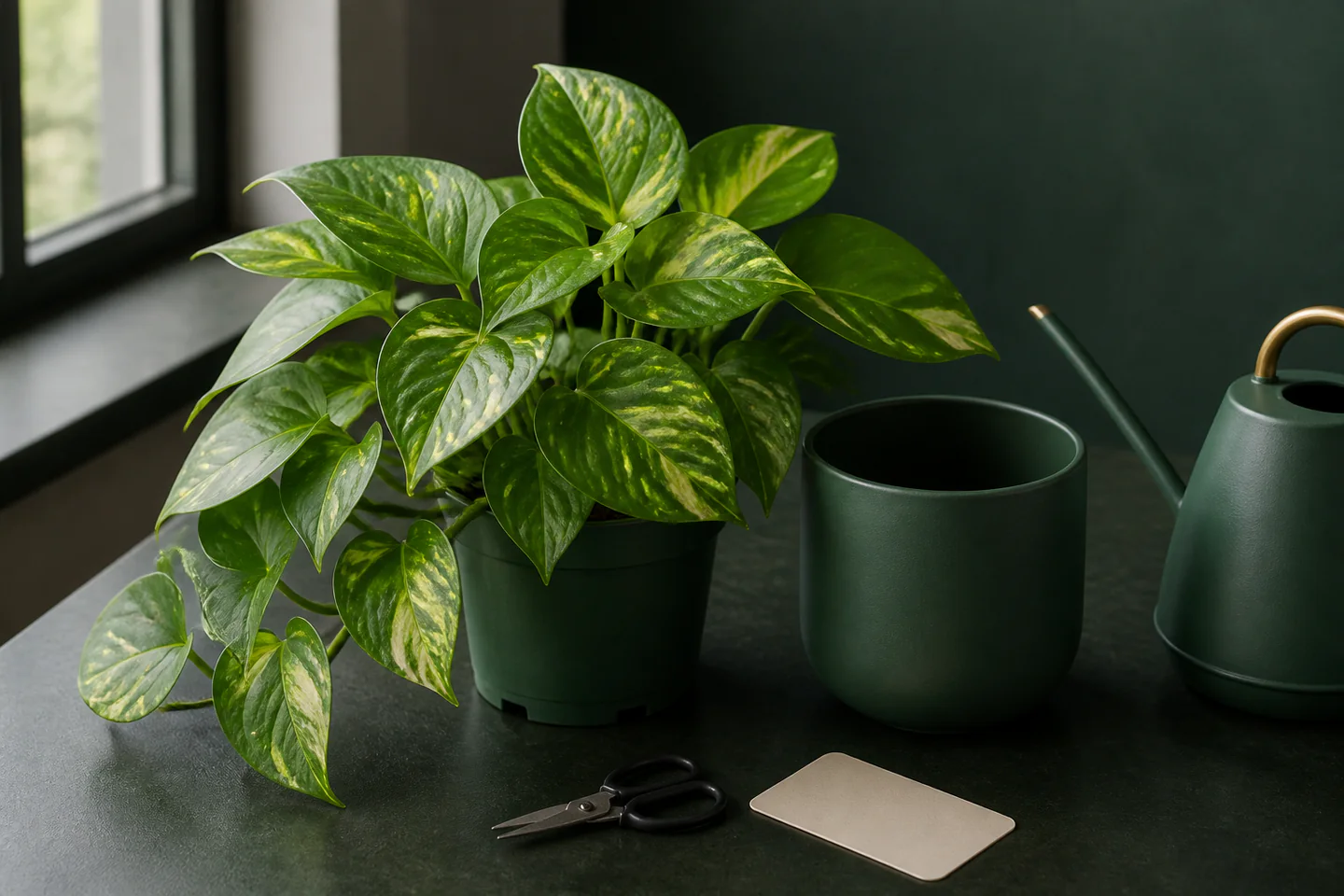
Houseplant care starts with identification, usable window light, drainage and observation. Begin with one healthy common plant rather than a shelf of rescue projects.
Quick answer
Start with one healthy named plant and learn its drying pattern
Buy or obtain one clearly labelled common houseplant in healthy condition, quarantine it from other plants and place it where its species receives suitable indirect or direct light. Check the actual potting mix with a finger or pot weight before watering, saturate evenly when the plant needs it and drain fully. Record the date, room position and change in pot weight rather than watering by the calendar.
- 01
Choose one healthy identified plant in a draining pot for the first result and resist substituting several unfamiliar materials at once. Record what you used on the first attempt so the result can be repeated or changed for a reason.
- 02
Make light assessment and soil-based watering decisions visible with a small test before committing the full project. Record what you used on the first attempt so the result can be repeated or changed for a reason.
- 03
Change one variable between attempts and keep the preparation otherwise consistent. Record what you used on the first attempt so the result can be repeated or changed for a reason.
- 04
Inspect the work at each reversible stage instead of waiting until stable new growth over several weeks. Record what you used on the first attempt so the result can be repeated or changed for a reason.
- 05
Finish one modest result and note the actual time, material use and recurring difficulty. Record what you used on the first attempt so the result can be repeated or changed for a reason.
What to expect
Care is a changing environment, not a fixed timetable
Water use changes with species, root health, pot size, light, temperature and season; a weekly alarm cannot see any of those conditions.
Identity
Common names can hide different plants. Keep the botanical or reliable nursery name. In houseplant care, this is worth checking deliberately rather than trying to correct it after the next stage.
Light
A room can look bright to people while providing little usable light several metres from glass. In houseplant care, this is worth checking deliberately rather than trying to correct it after the next stage.
Water
Wilting and yellow leaves have multiple causes. Check roots and mix before adding more. In houseplant care, this is worth checking deliberately rather than trying to correct it after the next stage.
Drainage
A decorative cover pot must be emptied after watering and should never hold roots in runoff. In houseplant care, this is worth checking deliberately rather than trying to correct it after the next stage.
Pests
Inspect leaf undersides and new growth during quarantine so one purchase does not affect a collection. In houseplant care, this is worth checking deliberately rather than trying to correct it after the next stage.
Core method
Use observation before intervention
Identify and quarantine
Confirm the plant, inspect roots and pests and keep it separate for an appropriate observation period. In houseplant care, this is worth checking deliberately rather than trying to correct it after the next stage.
Map the position
Note window direction, distance, direct sun duration, draughts and radiator heat. In houseplant care, this is worth checking deliberately rather than trying to correct it after the next stage.
Water from evidence
Check mix depth and pot weight, water thoroughly when appropriate and drain completely. In houseplant care, this is worth checking deliberately rather than trying to correct it after the next stage.
Record growth
Photograph monthly, clean leaves gently and change only one major care variable at a time. In houseplant care, this is worth checking deliberately rather than trying to correct it after the next stage.
Useful products
Products with a clear job in the setup
The Fiskars snips support clean pruning and propagation. The XLUX meter is only a secondary moisture clue, while the SANSI light is a later response to proven insufficient daylight.
Fiskars Fiskars SP13 Micro-Tip Snips
A dedicated clean blade reduces crushing compared with tearing stems by hand.
XLUX XLUX Soil Moisture Meter
Trend readings can complement pot weight and physical inspection.
SANSI 10 W Clip-On LED Grow Light
A timer and fixed distance can make light more consistent for one plant.
First project
Run a four-week care baseline
A month of one plant in one position shows drying rate and new growth more clearly than repeated repotting and feeding.
- 01
Record the identity
Keep the nursery label and find species-specific RHS guidance. In houseplant care, this is worth checking deliberately rather than trying to correct it after the next stage.
- 02
Inspect and quarantine
Check both leaf surfaces, stems, mix and drainage holes. In houseplant care, this is worth checking deliberately rather than trying to correct it after the next stage.
- 03
Choose the position
Match the light requirement while avoiding sudden scorching and cold draughts. In houseplant care, this is worth checking deliberately rather than trying to correct it after the next stage.
- 04
Learn pot weight
Lift when recently drained and compare as the mix approaches the species-appropriate dry point. In houseplant care, this is worth checking deliberately rather than trying to correct it after the next stage.
- 05
Water completely when needed
Saturate the mix, let excess escape and empty the cover pot. In houseplant care, this is worth checking deliberately rather than trying to correct it after the next stage.
- 06
Review after four weeks
Compare photographs and notes before moving, feeding or repotting. In houseplant care, this is worth checking deliberately rather than trying to correct it after the next stage.
What can wait
What can wait until the first result
A collection, fertiliser shelf and decorative repotting can wait until one plant’s normal growth is recognisable.
- 01
Immediate repotting
Healthy new arrivals often need environmental stability more than root disturbance. In houseplant care, this is worth checking deliberately rather than trying to correct it after the next stage.
- 02
Routine fertiliser
Feeding a stressed, dormant or poorly lit plant does not correct the primary condition. In houseplant care, this is worth checking deliberately rather than trying to correct it after the next stage.
- 03
Large collection
Pest risk and care variation grow faster than experience. In houseplant care, this is worth checking deliberately rather than trying to correct it after the next stage.
- 04
Rare variegated plant
High cost and slower growth are poor conditions for the first baseline. In houseplant care, this is worth checking deliberately rather than trying to correct it after the next stage.
- 05
Daily misting
It rarely replaces appropriate humidity and can leave foliage wet without helping roots. In houseplant care, this is worth checking deliberately rather than trying to correct it after the next stage.
Upgrade path
Upgrade the repeated limitation
Add equipment only after observation identifies a repeated environmental limit.
One plant baseline
About £15–£35Healthy plant and draining pot
Learn light and water.Small compatible group
About £30–£80Quarantine space and clean snips
Compare growth patterns.Supplemented shelf
About £60–£180Measured grow light and timer
Correct proven weak light.Managed collection
About £150–£600+Pest isolation, shelving and records
Maintain many species responsibly.Safety & care
Plants, potting media and treatments can affect people, pets and ecosystems
Toxicity, allergens, pests and chemical controls depend on the species and exact product.
- Check the plant’s toxicity for children and household animals before choosing its position. Follow the current instructions supplied with the exact material, tool or living specimen.
- Wear gloves where species sap, potting mix or treatments call for them and wash hands afterwards. Follow the current instructions supplied with the exact material, tool or living specimen.
- Use pesticides only as labelled, ventilate and isolate treated plants as directed. Follow the current instructions supplied with the exact material, tool or living specimen.
- Do not release unwanted houseplants, soil or aquarium species into the environment. Follow the current instructions supplied with the exact material, tool or living specimen.
- Keep water away from electrical sockets, grow-light connections and unstable high shelves. Follow the current instructions supplied with the exact material, tool or living specimen.
Outside help
When outside help earns its place
A complete beginner tutorial is enough for the first controlled attempt. A class becomes useful when persistent pests, specialist species or a large collection becomes difficult to diagnose.
Follow one method using one healthy identified plant in a draining pot, including preparation and finishing rather than only the photogenic middle stage.
Check whether materials, troubleshooting, stable new growth over several weeks and a finished take-home result are included.
Representative UK learning options checked 28 August 2026; local prices, access, materials and tutor support vary.
Sources
Where the guidance came from
The method is grounded in specialist and public guidance, then checked against recurring beginner questions and the exact products linked here.
-
01
Royal Horticultural Society · houseplants
UK houseplant care and problem guidance.
Open source -
02
Royal Horticultural Society · containers
Container-growing fundamentals.
Open source -
03
Royal Horticultural Society · greenhouses
Greenhouse siting, growing and care.
Open source -
04
UK Centre for Ecology & Hydrology · invasive species
Environmental context for responsible plant disposal.
Open source -
05
Reddit · r/houseplants
Community evidence on light, watering, pests and beginner errors.
Open source -
06
Amazon UK · Fiskars SP13 Micro-Tip Snips
Exact product catalogue page or ISBN used for the recommendation; current price, seller, specification and availability should be confirmed.
Open source -
07
Amazon UK · XLUX Soil Moisture Meter
Exact product catalogue page or ISBN used for the recommendation; current price, seller, specification and availability should be confirmed.
Open source -
08
Amazon UK · 10 W Clip-On LED Grow Light
Exact product catalogue page or ISBN used for the recommendation; current price, seller, specification and availability should be confirmed.
Open source
Guide information and links checked 28 August 2026.