Beginner’s guide · Reflect & explore
A complete slow game with legal moves and a short review
Finish slow games and review the first mistake.
Start with a clear board, a free legal-move tutorial and slow games against a person or computer. Learn check, mate and simple tactics before memorising openings.
Quick answer
Learn checkmate and piece safety before openings
Use a free interactive lesson or an ordinary regulation-style board. Learn legal movement, check, checkmate, castling, promotion and en passant, then solve basic mate-in-one positions. Play games with at least ten minutes per player and no opening reference during play. Before every move ask what the opponent attacks, whether your king is safe and which pieces are undefended. Review the first major mistake afterward.
- 01
The aim is checkmate, not capturing the king. A player in check must respond immediately with a legal move.
- 02
A stalemate is a draw: the side to move has no legal move but is not in check.
- 03
Piece values are rough decision aids, not rules; king safety, activity and immediate tactics can matter more.
- 04
Opening memorisation does not prevent hanging a piece. Develop pieces, contest the centre, castle and inspect threats first.
What to expect
Improvement is mostly seeing one move earlier
A beginner game often turns on an undefended piece, overlooked check or one-move threat rather than deep strategy.
Board vision
Scan ranks, files and diagonals after every move, especially lines opened by the moved piece.
Checks
List both sides’ checks before calculating quieter plans; forcing moves narrow the legal replies.
Hanging pieces
A piece is unsafe when attacked more effectively than it is defended or when its defender is pinned.
Time
Fast games provide volume but also repeat impulsive errors; slow games create space for a consistent checklist.
Review
Analyse first without an engine, identify what you considered and then use computer feedback to test the explanation.
Ratings
A rating measures results in one pool and time control; normal fluctuation is not a verdict on ability.
Core method
Build a repeatable thinking process
Make every rule physical
Set up the board with a light square at each player’s right and queens on their own colour. Move each piece through an unobstructed and blocked example. Demonstrate check, legal responses, castling restrictions, promotion, en passant and stalemate on the board rather than relying on definitions alone.
Use a three-question move check
After the opponent moves, ask what changed and what is attacked. Generate checks, captures and direct threats for both sides. Before committing, imagine the chosen move on the board and ask whether the moved piece, king or another defender becomes loose. This short blunder check matters more than naming the opening.
Learn tiny tactical patterns
Practise mate in one, forks, pins, skewers, discovered attacks and removing a defender in small positions. State the target and forcing response, not only the correct square. Stop after a handful of accurate puzzles and revisit missed patterns later instead of guessing through a large streak.
Review the first turning point
Replay the game without an engine and mark the first move where your expectation differed from the result. Write one alternative and why it is safer. Then consult an engine or stronger player, using the analysis to check that explanation rather than copying a long computer line.
Useful products
Products with a clear job in the setup
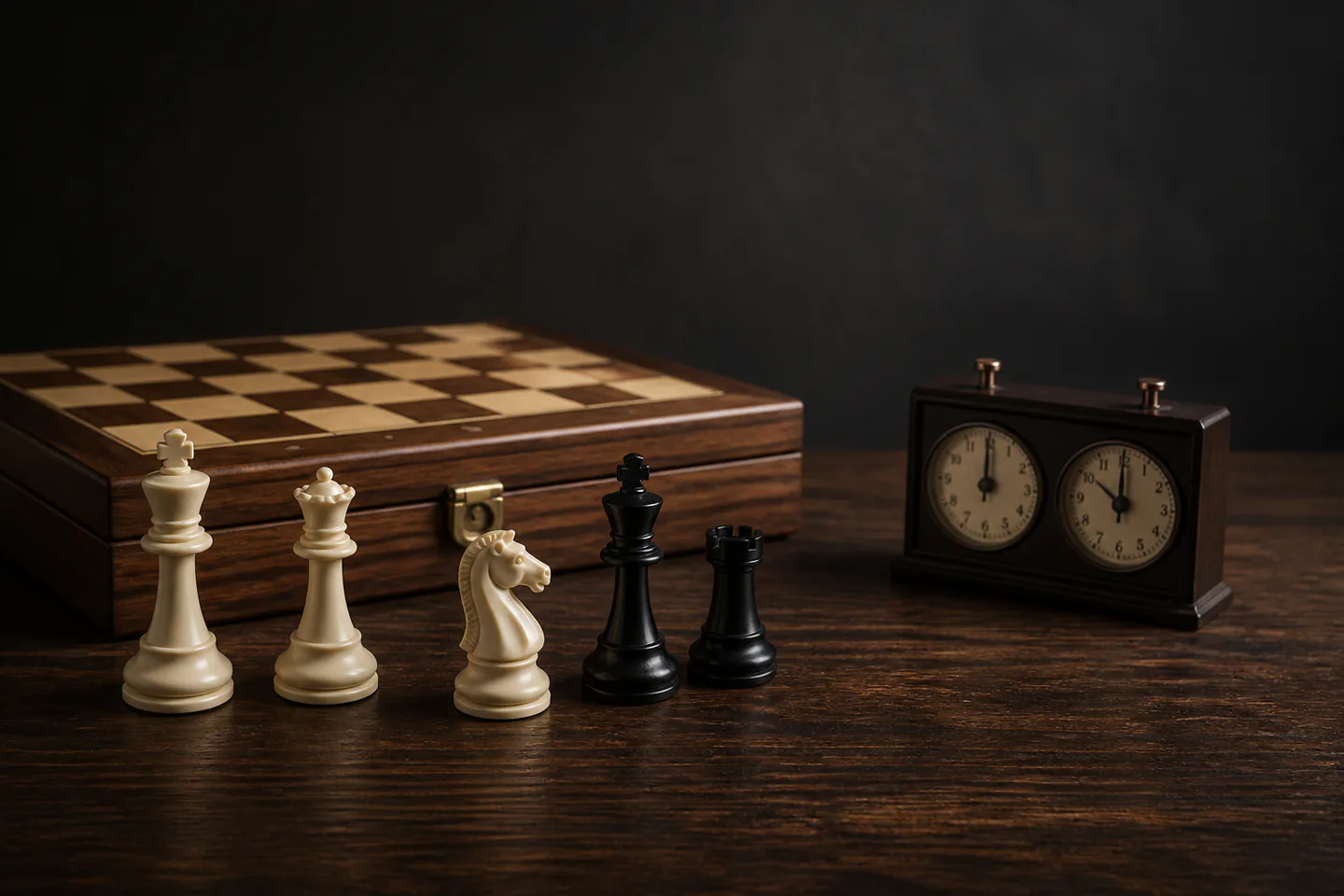
A wooden set is optional but makes shared study pleasant. Bobby Fischer Teaches Chess is a narrow programmed tactics workbook, not a complete strategy course. A DGT timer becomes useful for in-person timed games after slow untimed play is comfortable.
Chess Armory 15-inch Wooden Chess Set with Storage
A portable folding set is sufficient for ordinary study and stores all pieces without specialist furniture.
Bantam Bobby Fischer Teaches Chess
Its mate patterns support the first tactical stage and the programmed format makes brief practice easy.
DGT DGT1002 Bonus Chess Timer
A recognised chess-clock maker and bonus timing support make it suitable for common rapid practice.
First project
Play one 15-minute game and annotate three moments
A slower time control allows the same threat checklist to be practised on every move.
- 01
Review legal moves
Set up examples of check, mate, castling, promotion, en passant and stalemate.
- 02
Choose a slow clock
Use at least ten to fifteen minutes per player and disable hints.
- 03
Apply the checklist
After every opposing move, scan checks, captures, threats and undefended pieces.
- 04
Finish the game
Play through mate, resignation or draw rather than resetting after one mistake.
- 05
Review without an engine
Mark the first surprise, one missed threat and one move you considered.
- 06
Check and repeat
Use a trusted analysis tool or stronger player, write one lesson and play again.
What can wait
What can wait until the first result
Reliable legal and tactical vision matters before specialist equipment or opening libraries.
- 01
Memorising twenty opening moves
Opponents leave theory quickly and a single unprotected piece decides far more beginner games.
- 02
Playing only bullet chess
Very fast games reward immediate pattern recall before a beginner has built those patterns.
- 03
An electronic board
A clear ordinary board or free digital board teaches the same moves and review process.
- 04
Engine lines during play
Hints replace the decision process the practice is meant to build.
- 05
Judging progress by daily rating
Use repeated error types, puzzle accuracy and reviewed slow games as richer evidence.
Upgrade path
Upgrade the repeated limitation
Add puzzles, clock discipline or coaching when the review process identifies a stable need.
Free lessons and games
FreeLichess or Chess.com basic course
Learn rules and complete games.Physical board and workbook
About £25–£55Clear pieces + tactics book
Study without screen hints.Club clock practice
About £25–£45 extraDigital timer + notation
Manage time and formal play.Lessons or tournament play
About £15–£60 per lesson/eventReviewed games + targeted feedback
Correct recurring thought-process errors.Safety & care
Keep competition proportionate and sessions physically comfortable
Chess is safe, but long screen time, repetitive play, rating anxiety and hostile online conduct can make practice unhelpful.
- Keep small pieces, dice, sleeves and batteries away from young children and pets.
- Use a well-lit table, support posture and take movement and visual breaks during long sessions.
- Agree the game, time limit, content boundaries and stopping point before play so social pressure does not override comfort.
- Store components dry and secure and wash hands before handling shared cards, tiles or painted miniatures.
- Treat collecting spend as entertainment, not guaranteed investment, and use a fixed budget that does not depend on resale.
Outside help
When outside help earns its place
Free structured lessons and analysed slow games are enough to begin. A club or coach is worthwhile when regular review reveals the same blind spot and the learner wants external feedback.
Use legal-move, checkmate and tactical modules before competitive speed play.
Ask about beginner pairing, safeguarding, accessibility and whether games are reviewed.
Representative UK product, club, lesson and venue costs checked 9 August 2026; local prices, access, weather, materials and tutor support vary.
Sources
Where the guidance came from
FIDE defines the laws; established chess platforms teach legal moves and provide analysis, while beginner communities surface recurring training traps.
-
01
FIDE · Laws of Chess
Current official over-the-board rules and procedures.
Open source -
02
Lichess · Chess basics
Free interactive legal-move and checkmate lessons.
Open source -
03
Chess.com · How to play
Structured beginner rules and examples.
Open source -
04
DGT · Chess timers
Manufacturer guidance and specifications for chess clocks.
Open source -
05
Reddit · r/chessbeginners
Recurring learner questions about tactics, ratings, openings and review.
Open source -
06
Amazon UK · Chess Armory wooden chess set
Exact product page, model or ISBN, observed price and availability checked for this guide.
Open source -
07
Amazon UK · Bobby Fischer Teaches Chess
Exact product page, model or ISBN, observed price and availability checked for this guide.
Open source -
08
Amazon UK · DGT1002 chess timer
Exact product page, model or ISBN, observed price and availability checked for this guide.
Open source
Guide information and links checked 9 August 2026.