Beginner’s guide · Make & create
Pull one clean colour
before registering an edition.
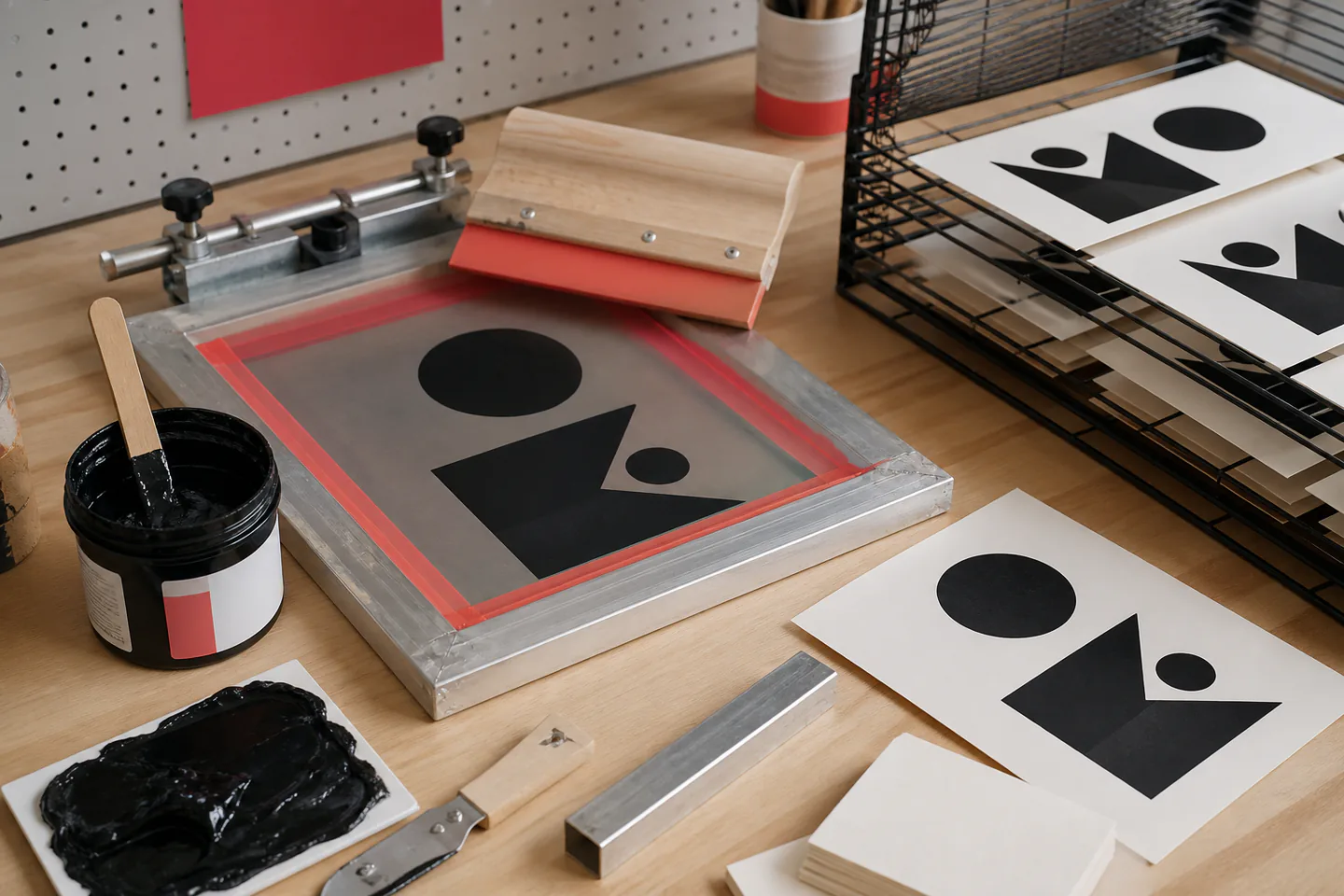
Screen printing begins with a simple stencil, compatible ink, an even squeegee pass and immediate screen cleanup before multi-colour registration.
Quick answer
Build one small, controlled result first
Use a simple cut-paper or manufacturer-supported stencil on a suitable screen, make several paper proofs with one water-based ink and cure only when the print is clean and the product directions can be followed.
- 01
Match screen mesh, stencil method, ink, substrate, curing method and cleaner from one documented system before coating or printing. Keep the first attempt narrow enough that preparation, the main action and the result can all be reviewed together.
- 02
Keep screen off-contact, ink amount, squeegee angle and pressure consistent while separating the flood stroke from the print stroke. Keep the first attempt narrow enough that preparation, the main action and the result can all be reviewed together.
- 03
Inspect pinholes, blurred edges, dry-in, uneven deposit and registration on paper proofs before using a shirt or an edition sheet. Keep the first attempt narrow enough that preparation, the main action and the result can all be reviewed together.
- 04
Return excess ink as directed and clean the screen immediately with compatible products before any material dries in the mesh. Keep the first attempt narrow enough that preparation, the main action and the result can all be reviewed together.
What to expect
Accuracy comes from the sequence, not the size of the toolkit
Preparation, one controlled variable and an honest inspection matter more than collecting specialist equipment.
The first attempt
A one-colour paper poster separates stencil and squeegee learning from fabric stretch, laundering and heat curing. For screen printing, note what actually happened rather than relying on memory; that turns the next attempt into a controlled change instead of another guess.
The control point
Keep screen off-contact, ink amount, squeegee angle and pressure consistent while separating the flood stroke from the print stroke. For screen printing, note what actually happened rather than relying on memory; that turns the next attempt into a controlled change instead of another guess.
The useful signal
Inspect pinholes, blurred edges, dry-in, uneven deposit and registration on paper proofs before using a shirt or an edition sheet. For screen printing, note what actually happened rather than relying on memory; that turns the next attempt into a controlled change instead of another guess.
The common trap
Complex photo emulsion, several colours and improvised curing multiply failure points before one clean pull is understood. For screen printing, note what actually happened rather than relying on memory; that turns the next attempt into a controlled change instead of another guess.
Core method
Prepare, make, inspect and reset
Prepare deliberately
Match screen mesh, stencil method, ink, substrate, curing method and cleaner from one documented system before coating or printing. For screen printing, note what actually happened rather than relying on memory; that turns the next attempt into a controlled change instead of another guess.
Control the central variable
Keep screen off-contact, ink amount, squeegee angle and pressure consistent while separating the flood stroke from the print stroke. For screen printing, note what actually happened rather than relying on memory; that turns the next attempt into a controlled change instead of another guess.
Read the result
Inspect pinholes, blurred edges, dry-in, uneven deposit and registration on paper proofs before using a shirt or an edition sheet. For screen printing, note what actually happened rather than relying on memory; that turns the next attempt into a controlled change instead of another guess.
Reset before repeating
Return excess ink as directed and clean the screen immediately with compatible products before any material dries in the mesh. For screen printing, note what actually happened rather than relying on memory; that turns the next attempt into a controlled change instead of another guess.
Useful products
Products with a clear job in the setup
The relief-printing kit is not a screen kit, but its ink-handling discipline transfers. The known print paper and black ink support paper proofs while a current screen system is selected.
Essdee Essdee Lino Cutting and Printing Kit, 23 Pieces
The same inking discipline transfers to simple woodblock work.
Speedball Water-Soluble Block Printing Ink, Black, 75 ml
Black reveals carving, pressure and registration errors immediately.
Strathmore Strathmore 300 Series Printmaking Pad
Known paper makes pressure and ink-film changes easier to compare.
First project
Print a ten-sheet one-colour paper edition
Number the proofs, record the stroke and keep the cleanest repeat rather than the darkest print.
- 01
Set up
Match screen mesh, stencil method, ink, substrate, curing method and cleaner from one documented system before coating or printing. For screen printing, note what actually happened rather than relying on memory; that turns the next attempt into a controlled change instead of another guess.
- 02
Begin the first attempt
A one-colour paper poster separates stencil and squeegee learning from fabric stretch, laundering and heat curing. For screen printing, note what actually happened rather than relying on memory; that turns the next attempt into a controlled change instead of another guess.
- 03
Hold one variable steady
Keep screen off-contact, ink amount, squeegee angle and pressure consistent while separating the flood stroke from the print stroke. For screen printing, note what actually happened rather than relying on memory; that turns the next attempt into a controlled change instead of another guess.
- 04
Inspect the result
Inspect pinholes, blurred edges, dry-in, uneven deposit and registration on paper proofs before using a shirt or an edition sheet. For screen printing, note what actually happened rather than relying on memory; that turns the next attempt into a controlled change instead of another guess.
- 05
Reset and record
Return excess ink as directed and clean the screen immediately with compatible products before any material dries in the mesh. For screen printing, note what actually happened rather than relying on memory; that turns the next attempt into a controlled change instead of another guess.
What can wait
What can wait until the first result
Delay equipment that solves no repeated problem in the first small project.
- 01
A large first setup
Scale multiplies Complex photo emulsion, several colours and improvised curing multiply failure points before one clean pull is understood. before the basic routine is known. For screen printing, note what actually happened rather than relying on memory; that turns the next attempt into a controlled change instead of another guess.
- 02
Premium specialist equipment
It should solve a limitation you can describe after several screen printing sessions. For screen printing, note what actually happened rather than relying on memory; that turns the next attempt into a controlled change instead of another guess.
- 03
Several methods at once
Changing materials and technique together makes the cause of a result hard to see. For screen printing, note what actually happened rather than relying on memory; that turns the next attempt into a controlled change instead of another guess.
- 04
Buying for a future version
Finish and review the small route before equipping an imagined advanced practice. For screen printing, note what actually happened rather than relying on memory; that turns the next attempt into a controlled change instead of another guess.
Upgrade path
Upgrade the repeated limitation
Add capacity only after the basic process is repeatable.
Try it
About £60–£180Workshop or simple stencil screen
Complete one meaningful result and learn the whole sequence.Repeat it
About £60–£180Dedicated screen, squeegee and paper stock
Reduce setup friction and compare several attempts.Improve the bottleneck
£100–£400Photo emulsion and controlled exposure
Address Complex photo emulsion, several colours and improvised curing multiply failure points before one clean pull is understood. with a targeted change.Go deeper
VariableMulti-colour registration and documented curing
Add scale, precision or public participation with evidence from practice.Safety & care
Ink chemistry and curing control the workspace
Water-based does not mean harmless, sink-safe or fully cured without following the technical sheet.
- Read ink, emulsion, haze remover and cleaner safety data before use. Follow current manufacturer, food-safety, access, wildlife or local guidance wherever it applies.
- Ventilate and wear the specified gloves and eye protection for chemicals and reclaiming. Follow current manufacturer, food-safety, access, wildlife or local guidance wherever it applies.
- Do not pour ink, emulsion solids or prohibited cleaners into household drains. Follow current manufacturer, food-safety, access, wildlife or local guidance wherever it applies.
- Use heat equipment only with manufacturer clearances and never leave curing unattended. Follow current manufacturer, food-safety, access, wildlife or local guidance wherever it applies.
- Keep food preparation, children and pets away from the printing and cleanup area. Follow current manufacturer, food-safety, access, wildlife or local guidance wherever it applies.
Outside help
When outside help earns its place
A community print studio is valuable for exposure, washout and curing equipment and for correcting one squeegee pass in real time.
Use one complete lesson that covers preparation, the central technique, common mistakes and finishing. For a first screen printing attempt, one coherent method is easier to diagnose than fragments collected from several creators.
Outside help earns its place when safe setup, access, identification or live correction removes a real obstacle. Ask what equipment, materials, access and follow-up support are included before booking.
Representative UK learning options checked 31 August 2026; local prices, access, materials and tutor support vary.
Sources
Where the guidance came from
The method is grounded in specialist, manufacturer and public guidance, then checked against recurring beginner problems and the exact products linked here.
-
01
Speedball · Screen printing
Manufacturer screen, ink and beginner process guidance.
Open source -
02
ScreenPrinting.com · Learning center
Mesh, squeegee, ink and reclaiming guidance.
Open source -
03
Print Club London · Workshops
UK studio process and learning route.
Open source -
04
Health and Safety Executive · Printing
UK printing-industry health and safety context.
Open source -
05
Reddit · r/SCREENPRINTING
Community evidence on exposure, ink, pressure and cleanup.
Open source -
06
Amazon UK · Essdee Lino Cutting and Printing Kit, 23 Pieces
Exact Amazon UK product page or ISBN used for the recommendation; current price, seller, specification and availability should be confirmed.
Open source -
07
Amazon UK · Water-Soluble Block Printing Ink, Black, 75 ml
Exact Amazon UK product page or ISBN used for the recommendation; current price, seller, specification and availability should be confirmed.
Open source -
08
Amazon UK · Strathmore 300 Series Printmaking Pad
Exact Amazon UK product page or ISBN used for the recommendation; current price, seller, specification and availability should be confirmed.
Open source
Guide information and links checked 31 August 2026.