Beginner’s guide · Observe & photograph
Compose once,
then let the print develop.
Instant film gives a physical result in minutes, but every print costs money and has strict light, distance and temperature limits. Start with one pack and a simple daylight project.
Quick answer
Use one pack to test distance, light and framing
Load the exact film format named by the camera without opening the cartridge, then photograph ten simple subjects in bright shade or even daylight. Stay within the documented focus range, keep fingers clear of lens, flash and eject slot and centre the first subjects until the finder offset is understood. Shield each ejected print from harsh light without bending, shaking or squeezing it, allow the full development time and write the conditions on a separate note rather than on the image while it is developing.
- 01
Instant formats are not interchangeable. Mini, Square, Wide and Polaroid cartridges must match the exact camera.
- 02
The viewfinder may not show exactly what the lens sees at close distance. Leave margin and learn the offset before tight compositions.
- 03
Do not shake a modern instant print. Keep it flat and follow the film maker’s temperature and light guidance.
- 04
Built-in flash behaviour varies by model and may fire automatically. Read the manual and never cover the flash or exposure sensors.
- 05
Cost per print changes behaviour. A ten-frame learning plan makes that constraint useful instead of frustrating.
What to expect
The print is both photograph and small chemical process
Exposure, rollers, temperature, handling and development light all affect the result. The image continues changing after it leaves the camera.
Distance
Too close can produce softness and framing error. Use the camera’s stated modes rather than guessing.
Flash
Nearby faces may be bright while distant backgrounds disappear; flash range is limited.
Temperature
Cold and heat alter development speed, colour and density. Keep camera and film within documented conditions.
Ejection
Never obstruct the slot or pull the print. Damaged rollers and pressure can create uneven chemistry.
Patience
A pale early image is not a failed print. Let it develop for the stated time before judging.
Storage
Finished prints dislike extreme heat, moisture and prolonged strong light. Scan favourites and store them cleanly.
Core method
Use the first pack as a controlled camera test
Match camera and film exactly
Read the full model name and film format on both camera and cartridge. Check the expiry date and storage guidance. Insert the unopened pack away from strong direct light, align the maker’s marks and close the door without forcing it. Eject the dark slide as the manual describes.
Make a distance ladder
In even daylight, photograph simple objects at several allowed distances using the documented mode for each. Keep the framing loose and note the estimated distance. This reveals focus and viewfinder offset without asking a person to repeat a pose ten times.
Test flash and background deliberately
Make one frame in bright shade and one in an ordinary interior within the flash range. Keep reflective surfaces and mirrors out of the line, do not stare at the flash and compare how subject-to-background distance changes the print. Avoid “wasting” frames by changing one condition at a time.
Develop, label and compare
Let each print eject naturally, shield it as recommended and keep it flat. Use a separate numbered card for time, temperature, distance and mode. When fully developed, scan or photograph the set in neutral light and choose the conditions that deserve the next film pack.
Useful products
Products with a clear job in the setup
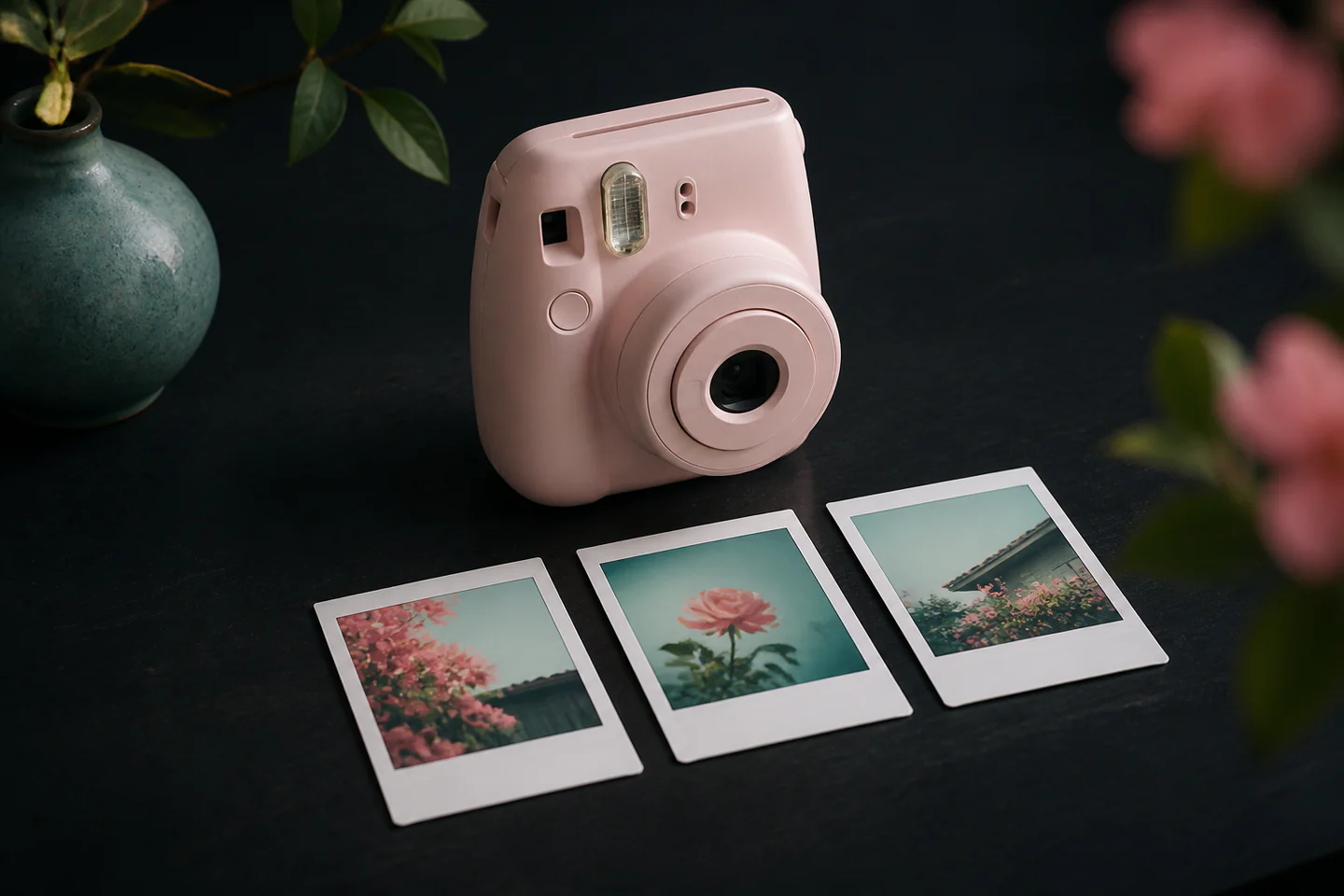
The Instax Mini 12 is a straightforward current camera and the 20-shot Mini film pack supplies two cartridges for structured practice. The Mini Link 3 is an alternative phone-printer route for people who want physical Instax prints without surrendering capture control; it is not needed with the camera-first experiment.
Fujifilm Instax Mini 12 Instant Camera
Automatic operation leaves attention for distance, framing and handling the developing print.
Fujifilm Instax Mini Instant Film, 20 Exposures
Twenty frames are enough to learn without creating a large stock that may be stored poorly.
Fujifilm Instax Mini Link 3 Smartphone Printer
It preserves editing and selection while still producing a real chemical Mini print.
First project
Use ten frames to map the camera
A numbered test pack turns every print into evidence about distance, framing and flash.
- 01
Load by the manual
Match film format, align cartridge marks and eject the dark slide.
- 02
Frame with margin
Photograph a daylight object at a comfortable distance before attempting close-up mode.
- 03
Make the distance ladder
Use three allowed distances and record them separately.
- 04
Test one interior
Stay within flash range and keep the background close enough to register.
- 05
Protect development
Do not shake, bend or squeeze; keep the print flat for the full stated time.
- 06
Review before pack two
Compare framing, focus, light and colour and choose one correction.
What can wait
What can wait until the first result
Special editions, filters and cases cannot reduce the core cost or replace familiarity with distance and light.
- 01
Bulk film
Storage and expiry matter, and the first pack may reveal that a different format is preferable.
- 02
Close-up accessories
Learn the camera’s own minimum distance and parallax before narrowing the margin.
- 03
A vintage instant camera
Battery chemistry, rollers and discontinued film can make the route expensive and uncertain.
- 04
Constant shaking
It is unnecessary and can damage the developing image.
- 05
A camera and phone printer together
They solve different capture problems; begin with the one experience actually wanted.
Upgrade path
Upgrade the repeated limitation
Upgrade format, control or printing route only after the Mini frame’s specific limit is understood.
First Mini pack
About £85–£130Simple camera + 20 shots
Learn distance, flash and development.Print organisation
About £15–£50Archival album + scanner workflow
Protect and share the physical set.Larger instant format
About £130–£250Square or Wide camera + matching film
Gain image area with higher running cost.Manual-control system
About £250–£700+Advanced instant camera or compatible back
Control exposure and lenses deliberately.Safety & care
Handle film as sensitive material and photograph people respectfully
Instant prints feel casual, but the image is permanent, the chemistry is sealed inside the frame and the subject still deserves consent.
- Do not cut, puncture, burn or dismantle film cartridges or developing prints; keep damaged material away from skin and follow manufacturer disposal guidance.
- Keep fingers, straps and clothing away from the eject slot, lens, flash and sensors and supervise children closely.
- Avoid flashing near drivers, animals, people with photosensitive conditions or anyone who has not agreed to the photograph.
- Store film and cameras within stated temperature ranges, protect them from moisture and never force a jammed mechanism without the manual.
- Ask permission before making or sharing identifiable portraits and do not use the physical nature of the print to pressure someone into accepting a photo.
Outside help
When outside help earns its place
The ten-frame test needs only the manual. A photowalk can be useful if it teaches consent, visual sequencing and working within one pack rather than encouraging indiscriminate shooting.
Use the exact manual, loading video and storage instructions.
Ask whether film is included and how portrait consent is handled.
Representative UK learning options checked 17 August 2026; local prices, access, materials and tutor support vary.
Sources
Where the guidance came from
The camera and film maker defines loading, distance, flash and development limits; independent photographers and communities add practical cost, framing and storage experience.
-
01
Fujifilm · Instax Mini 12 support
Current camera features, compatible film and close-up operation.
Open source -
02
Fujifilm · Instax film handling
Manufacturer film formats, storage and handling context.
Open source -
03
Polaroid · How to use instant film
Independent instant-film manufacturer guidance on temperature and development handling.
Open source -
04
Emulsive · Instant photography
Independent long-form instant-camera and film experience.
Open source -
05
Reddit · r/instax
Community evidence on distance, flash, film storage and recurring camera problems.
Open source -
06
Amazon UK · Instax Mini 12 Instant Camera
Exact product catalogue page or ISBN used for the recommendation; current price, seller and availability should be confirmed.
Open source -
07
Amazon UK · Instax Mini Instant Film, 20 Exposures
Exact product catalogue page or ISBN used for the recommendation; current price, seller and availability should be confirmed.
Open source -
08
Amazon UK · Instax Mini Link 3 Smartphone Printer
Exact product catalogue page or ISBN used for the recommendation; current price, seller and availability should be confirmed.
Open source
Guide information and links checked 17 August 2026.