Beginner’s guide · Cook & bake
Keep the fat distinct,
then roll with purpose.
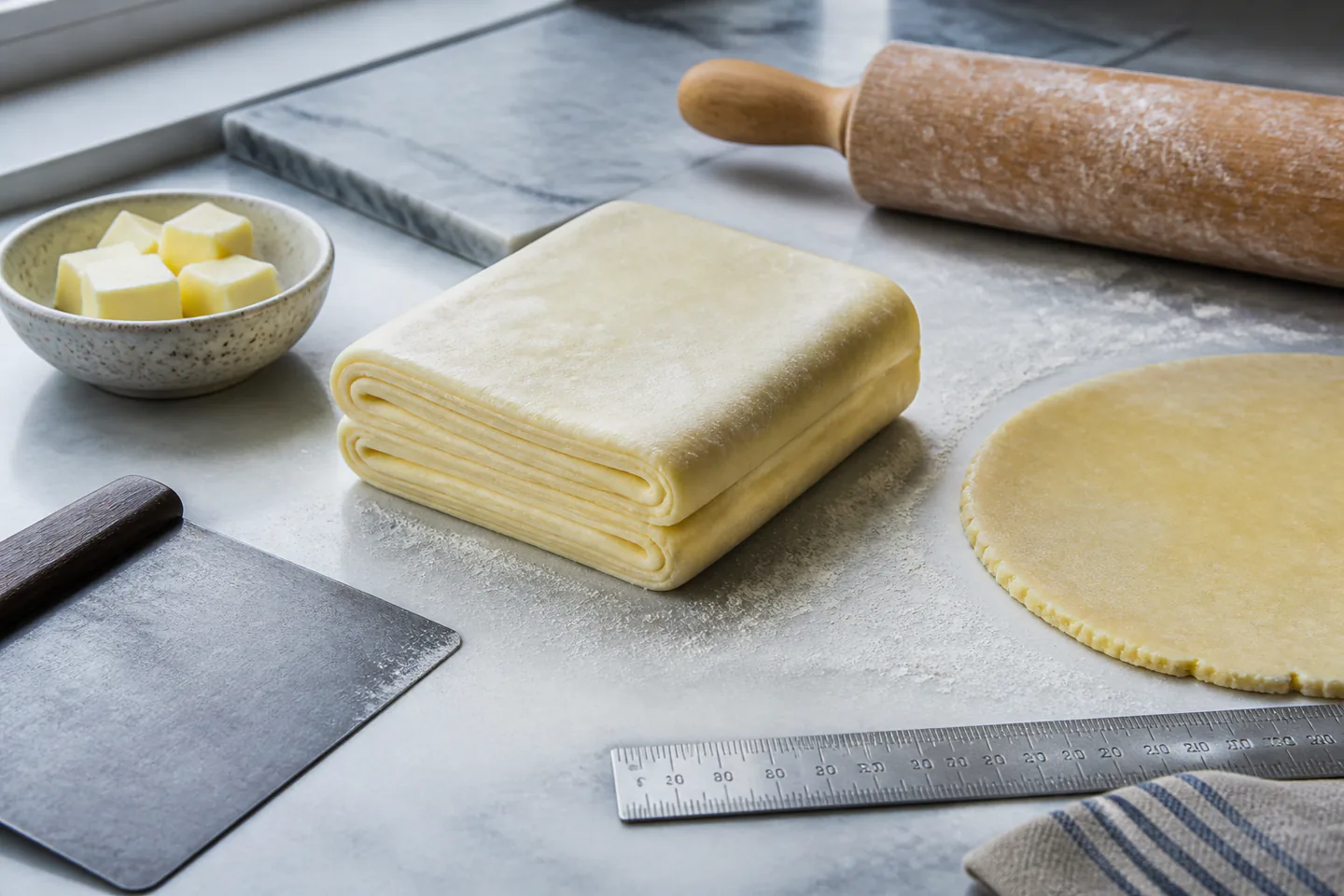
Shortcrust teaches minimal mixing; rough puff adds folds and visible layers. Temperature and resting matter more than fast rolling or extra flour.
Quick answer
Complete one pastry sample before expanding the setup
Begin with a tested shortcrust formula: weigh, rub or cut in cold fat, add only enough cold liquid to bind, flatten and rest. Roll once to even thickness and bake a few docked discs. On the next session make rough puff, keeping butter pieces visible while completing the recipe’s measured fold-and-chill sequence.
- 01
Pastry texture depends on how much fat remains between flour layers rather than fully coating or melting into them. Record what happened during pastry making so the next attempt changes one known variable instead of several guesses.
- 02
Water binds flour but also develops gluten, so add the tested amount gradually. Record what happened during pastry making so the next attempt changes one known variable instead of several guesses.
- 03
Resting cools fat and lets gluten relax; it is part of the method rather than idle time. Record what happened during pastry making so the next attempt changes one known variable instead of several guesses.
- 04
Rolling should lengthen evenly from the centre without crushing edges or forcing chilled dough. Record what happened during pastry making so the next attempt changes one known variable instead of several guesses.
What to expect
What pastry making is really like at the start
The useful beginner controls are preparation, one bounded task and a record of the result; specialist equipment matters only when it solves a repeated limitation.
Temperature
Butter that smears disappears into dough; butter that is rock-hard breaks through layers. Record what happened during pastry making so the next attempt changes one known variable instead of several guesses.
Moisture
Flour absorbs differently, but a sticky dough is not automatically fixed by large flour additions. Record what happened during pastry making so the next attempt changes one known variable instead of several guesses.
Rest
Dough often shrinks because it was stretched or not rested enough before baking. Record what happened during pastry making so the next attempt changes one known variable instead of several guesses.
Bake
Layers need a properly preheated oven and room to expand before fat leaks. Record what happened during pastry making so the next attempt changes one known variable instead of several guesses.
Core method
The core pastry making method
Measure and cool
Weigh ingredients, clear the bench and chill the fat, liquid and dough as the formula directs. Record what happened during pastry making so the next attempt changes one known variable instead of several guesses.
Bring together briefly
Stop mixing when the dough holds under pressure rather than kneading it smooth. Record what happened during pastry making so the next attempt changes one known variable instead of several guesses.
Roll evenly
Dust sparingly, turn the dough, check thickness and lift it rather than stretching it. Record what happened during pastry making so the next attempt changes one known variable instead of several guesses.
Fold and rest
For rough puff, make the stated turns, brush off excess flour, align edges and chill between sets. Record what happened during pastry making so the next attempt changes one known variable instead of several guesses.
Useful products
Products with a clear job in the route
A scale controls the flour-fat-water ratio, the scraper lifts dough without warming it and the silicone mat helps monitor shape and thickness.
Etekcity Digital Kitchen Scale, 0.1 g to 5 kg
The 0.1 g display helps with yeast, salt and small test batches.
Zulay Kitchen Three-Piece Stainless Dough Scraper Set
A scraper keeps high-hydration dough manageable and the bench easier to clean.
Generic Thick Silicone Pastry Mat with Measurements, 40 × 50 cm
The size supports a first pie or folded pastry without occupying the whole kitchen.
First project
Compare shortcrust discs with rough-puff twists
Two small bakes reveal tenderness, shrinkage and lift without a filling masking the pastry.
- 01
Make shortcrust
Use the tested formula, stop mixing early and chill the flattened dough. Record what happened during pastry making so the next attempt changes one known variable instead of several guesses.
- 02
Roll and cut
Create equal discs, dock them and chill again before baking. Record what happened during pastry making so the next attempt changes one known variable instead of several guesses.
- 03
Make rough puff
Keep visible butter pieces while bringing the second dough together. Record what happened during pastry making so the next attempt changes one known variable instead of several guesses.
- 04
Fold and chill
Complete the stated turns with aligned edges and timed rests. Record what happened during pastry making so the next attempt changes one known variable instead of several guesses.
- 05
Bake and compare
Judge shortness, shrinkage, layer definition and butter leakage after cooling. Record what happened during pastry making so the next attempt changes one known variable instead of several guesses.
What can wait
What can wait until the first result
Delay anything that adds cost, risk or another variable before the basic workflow has produced something you can review.
- 01
Classic puff pastry
A locked-in butter block and many turns demand tighter temperature control. Record what happened during pastry making so the next attempt changes one known variable instead of several guesses.
- 02
Croissant dough
Yeast fermentation and lamination introduce two interacting systems. Record what happened during pastry making so the next attempt changes one known variable instead of several guesses.
- 03
Marbled flavour additions
Sugar, cheese or spices can disguise whether the base dough is handled well. Record what happened during pastry making so the next attempt changes one known variable instead of several guesses.
- 04
A marble slab
A cool clean worktop and planned rests are sufficient for the first samples. Record what happened during pastry making so the next attempt changes one known variable instead of several guesses.
Upgrade path
Add the capability you can now name
Each stage should remove a demonstrated constraint rather than make the setup look more advanced.
Use what you own
£0–£20Existing equipment and one written plan
Use a rolling pin, bowl and fridge.Repeat the first route
About £10–£35 plus ingredientsA complete repeatable starter setup
Repeat shortcrust and rough puff until thickness and shrinkage are predictable.Add one capability
Often £50–£250One selected tool, service or learning resource
Add guide bars, a bench thermometer or colder surface only when temperature remains the limit.Build specialist depth
Club, course or specialist dependentA documented specialist workflow
Progress to full puff, choux or enriched laminated dough with form-specific learning.Safety & care
Control cold ingredients and hot fat
Good food hygiene and safe oven handling still apply even when the main lesson is texture.
- Keep dairy and egg chilled until needed and return dough to the fridge during long pauses.
- Clean raw flour and egg from hands, handles and work surfaces.
- Use a scraper for dough, not as an uncontrolled blade, and store sharp tools safely.
- Use dry oven gloves and expect hot fat on trays and parchment.
- Declare gluten, dairy and egg when sharing pastry.
Outside help
When outside help earns its place
A pastry workshop becomes valuable when a tutor can show the narrow workable temperature range for butter and dough.
Look for a class that bakes plain samples and cuts them open to review layers and shrinkage.
Use outside help after the first pastry making attempt can reveal the exact technique, access or safety problem that needs live correction.
Representative UK learning and access routes checked 1 September 2026; local prices, permissions, equipment and tutor support vary.
Sources
Where the guidance came from
Authoritative and specialist guidance supports the method and safety boundaries; community discussion contributes recurring beginner problems rather than unsupported claims.
-
01
Food Standards Agency · Food hygiene at home
Clean handling, cooking, chilling and cross-contamination guidance for domestic kitchens.
Open source -
02
King Arthur Baking · Pastry
Pastry ingredients, temperature, mixing and baking fundamentals.
Open source -
03
King Arthur Baking · Rough puff pastry
Tested rough-puff fold and rest sequence.
Open source -
04
BBC Good Food · Shortcrust pastry
UK shortcrust proportions and method context.
Open source -
05
BBC Good Food · Rough puff pastry
UK rough-puff preparation and folding sequence.
Open source -
06
Reddit · r/AskBaking
Recurring beginner problems involving weighing, chilling, spreading, hydration and pastry temperature.
Open source -
07
Amazon UK · Digital Kitchen Scale, 0.1 g to 5 kg
Exact Amazon UK product page or ISBN used for this recommendation; current price, seller, specification and availability should be confirmed.
Open source -
08
Amazon UK · Three-Piece Stainless Dough Scraper Set
Exact Amazon UK product page or ISBN used for this recommendation; current price, seller, specification and availability should be confirmed.
Open source -
09
Amazon UK · Thick Silicone Pastry Mat with Measurements, 40 × 50 cm
Exact Amazon UK product page or ISBN used for this recommendation; current price, seller, specification and availability should be confirmed.
Open source
Guide information and links checked 1 September 2026.