Beginner’s guide · Make & create
Build a finish
in patient thin layers.
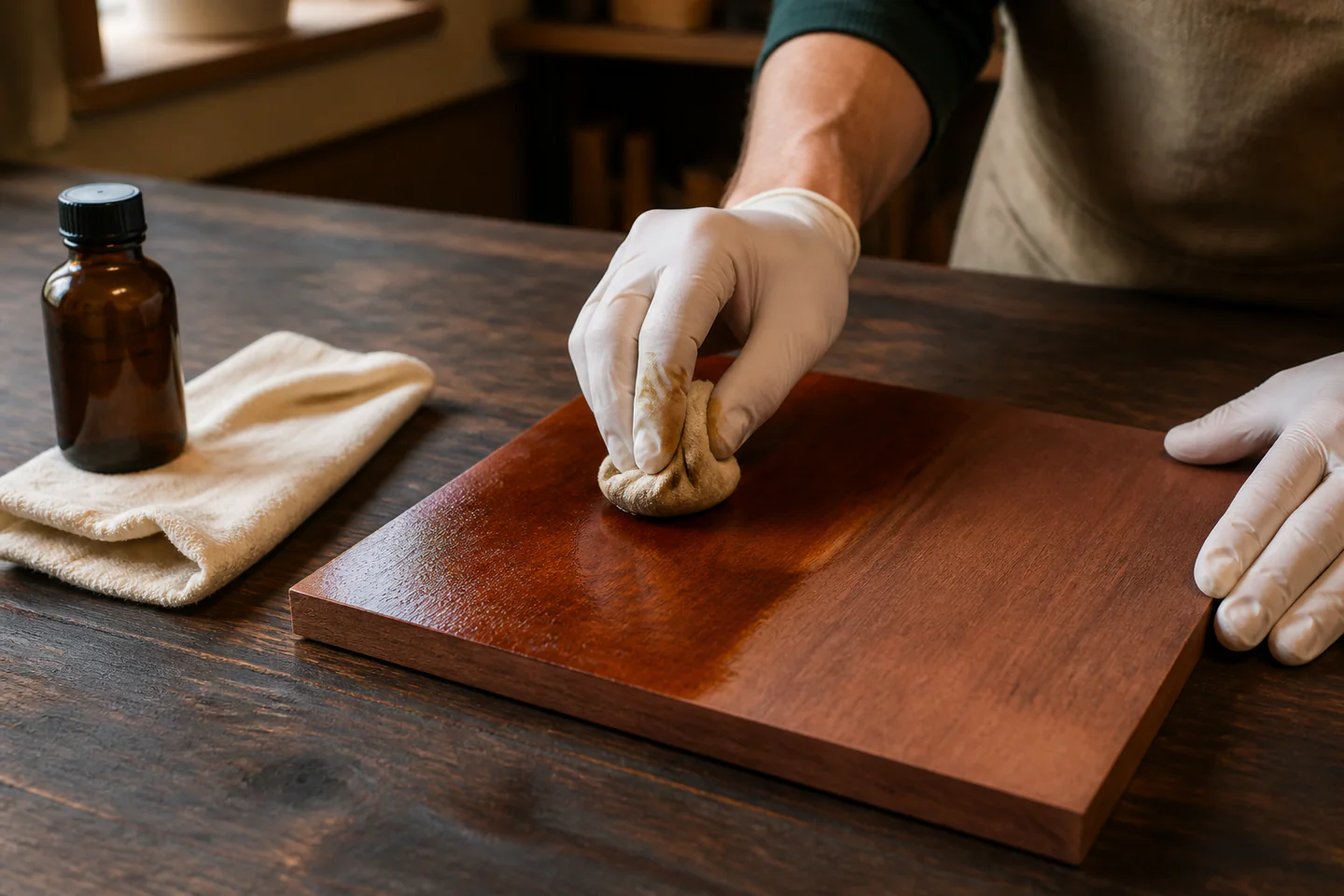
French polishing lays many thin shellac films with a cloth rubber to create depth and clarity on suitable wood. Practise on a flat veneered sample, not valuable furniture, and manage solvent vapour carefully.
Quick answer
Practise prepared polish on a flat sample
Start with a clean flat hardwood or veneered board, ready-made French polish and a cotton-covered rubber. Build very thin sessions over a well-prepared surface rather than trying to flood on gloss.
- 01
Identify the existing finish and wood before applying shellac to furniture. Note the material, setting or measurement used so the result can be repeated or changed for a reason.
- 02
Prepare the surface flat and dust-free because polish amplifies scratches rather than hiding them. Note the material, setting or measurement used so the result can be repeated or changed for a reason.
- 03
Charge the rubber lightly and keep it moving before it begins to drag. Note the material, setting or measurement used so the result can be repeated or changed for a reason.
- 04
Allow sessions to dry and harden instead of repeatedly working a sticky surface. Note the material, setting or measurement used so the result can be repeated or changed for a reason.
- 05
Test colour and compatibility on scrap or a hidden area before committing to an object. Note the material, setting or measurement used so the result can be repeated or changed for a reason.
What to expect
The shine comes from preparation and film control
French polish is not one heavy coat; it is a sequence of filling, bodying and refining that makes contamination and impatience visible.
Surface preparation
Old wax, silicone, grease or coarse sanding scratches can cause fish-eyes and uneven clarity. Diagnosis comes before polishing. For french polishing, check this deliberately while the work is still easy to alter; correcting it after the next stage usually costs more time or materials.
Rubber charge
Too much polish leaves ridges and sticking; too little causes drag. The cloth should lay a whisper-thin track. For french polishing, check this deliberately while the work is still easy to alter; correcting it after the next stage usually costs more time or materials.
Environment
Dust, temperature and humidity affect flow and drying. A clean ventilated room matters more than a giant product collection. For french polishing, check this deliberately while the work is still easy to alter; correcting it after the next stage usually costs more time or materials.
Durability
Shellac is beautiful and repairable but sensitive to heat, alcohol and standing water compared with some modern finishes. For french polishing, check this deliberately while the work is still easy to alter; correcting it after the next stage usually costs more time or materials.
Core method
Make the wood ready before making it glossy
Choose a practice piece
Use a flat stable sample with known timber and no sentimental or monetary value, then inspect it under raking light. For french polishing, check this deliberately while the work is still easy to alter; correcting it after the next stage usually costs more time or materials.
Prepare progressively
Remove contamination appropriately, sand through sensible grades with the grain and clear dust without introducing polish residue. For french polishing, check this deliberately while the work is still easy to alter; correcting it after the next stage usually costs more time or materials.
Build the body
Form a firm cotton-wool core inside clean cotton cloth, charge sparingly and apply overlapping passes without stopping on the surface. For french polishing, check this deliberately while the work is still easy to alter; correcting it after the next stage usually costs more time or materials.
Refine and rest
Let sessions dry, address defects only after hardening and use the maker’s spiriting-off or final rubbing guidance. For french polishing, check this deliberately while the work is still easy to alter; correcting it after the next stage usually costs more time or materials.
Useful products
Products with a clear job in the setup
Prepared polish, clean stockinette and a fine finishing pad make a controlled practice setup without requiring raw shellac mixing immediately.
Liberon French Polish, 250 ml
Ready-made polish removes alcohol-strength and flake-dissolving calculations from the first sample.
Generic Cotton Stockinette Polishing Roll, 400 g
Fresh outer cloth reduces hard dried edges and contamination between sessions.
Faithfull Very Fine Maroon Hand Pads, Pack of 10
A known grade makes test-panel preparation more repeatable.
First project
Polish one flat board and keep a control half
Masking part of the board provides a direct before-and-after reference for preparation, colour and sheen.
- 01
Inspect and test
Confirm the timber and prior treatment, clean a small area with the recommended method and check for compatibility. For french polishing, check this deliberately while the work is still easy to alter; correcting it after the next stage usually costs more time or materials.
- 02
Prepare the surface
Work through appropriate abrasives with the grain, protect thin veneer and remove dust completely. For french polishing, check this deliberately while the work is still easy to alter; correcting it after the next stage usually costs more time or materials.
- 03
Make the rubber
Wrap a clean absorbent core with smooth cotton, twist a comfortable handle and test its face on scrap. For french polishing, check this deliberately while the work is still easy to alter; correcting it after the next stage usually costs more time or materials.
- 04
Apply thin sessions
Charge sparingly, keep the rubber moving in controlled passes and stop before it drags or deposits heavy ridges. For french polishing, check this deliberately while the work is still easy to alter; correcting it after the next stage usually costs more time or materials.
- 05
Let it harden
Allow proper drying, inspect in raking light and follow the product system for final refining rather than chasing gloss while tacky. For french polishing, check this deliberately while the work is still easy to alter; correcting it after the next stage usually costs more time or materials.
What can wait
What can wait until the first result
Valuable antiques, curved carvings and mixing shellac from flakes add identification and technique risks best postponed.
- 01
Antique furniture
Original finishes, veneer and historical value demand conservation judgement before any cleaning or recoating. For french polishing, check this deliberately while the work is still easy to alter; correcting it after the next stage usually costs more time or materials.
- 02
Raw shellac flakes
Mixing gives control later; prepared polish establishes application feel without calculating cut strength. For french polishing, check this deliberately while the work is still easy to alter; correcting it after the next stage usually costs more time or materials.
- 03
Large dining table
Heat, alcohol and water exposure make use requirements important. Prove the finish on a portable sample first. For french polishing, check this deliberately while the work is still easy to alter; correcting it after the next stage usually costs more time or materials.
Upgrade path
Upgrade the repeated limitation
Upgrade after surface diagnosis and rubber control, not as a way to overpower contamination or poor preparation.
Try it
£25–£60Practice board, prepared polish, cotton and abrasives
Preparation, rubber charge and thin film building become visible.Mix deliberately
£25–£70 extraFresh shellac flakes, appropriate solvent and accurate containers
Cut, colour and freshness can suit the timber and working style.Refine surfaces
£30–£120Grain filling, finer abrasives and raking task light
Open pores and minor defects can be handled systematically.Restore responsibly
VariableFinish-identification skill or conservation tuition
Existing furniture can be treated without casually erasing original material.Safety & care
Control solvent vapour and ignition
Traditional French polish is commonly alcohol based and must be treated as a flammable finishing material.
- Work with strong ventilation, keep all flames, heaters, sparks and smoking far from polish and vapour. Follow the current instructions supplied with the exact material or tool.
- Wear protection specified by the safety data and avoid prolonged skin contact. Follow the current instructions supplied with the exact material or tool.
- Store polish in its labelled original container and manage used cloths under current fire and disposal guidance. Follow the current instructions supplied with the exact material or tool.
- Do not sand old unknown coatings without assessing possible hazardous dust and using appropriate extraction and respiratory protection. Follow the current instructions supplied with the exact material or tool.
Outside help
When outside help earns its place
A manufacturer demonstration is enough for a practice board. Hands-on tuition is sensible before valuable furniture, finish removal or traditional grain filling.
Use one complete lesson that includes preparation, the working method, troubleshooting and finishing. Avoid combining measurements from several creators on the first attempt.
Ask whether materials, safe tool use, individual correction and a finished take-home result are included before booking.
Representative UK learning options checked 29 August 2026; local prices, access, materials and tutor support vary.
Sources
Where the guidance came from
The method is grounded in specialist and manufacturer guidance, then checked against recurring beginner problems and the exact products linked here.
-
01
Liberon · French polish
Manufacturer information for traditional French polish.
Open source -
02
HSE · Solvents
UK guidance on solvent exposure and control.
Open source -
03
Furniture Industry Research Association
Furniture material and finishing context.
Open source -
04
Victoria and Albert Museum · Furniture
Museum context for furniture surfaces and conservation value.
Open source -
05
The Furniture History Society
Historical furniture context supporting caution around original finishes.
Open source -
06
Amazon UK · French Polish, 250 ml
Exact product catalogue page or ISBN used for the recommendation; current price, seller, specification and availability should be confirmed.
Open source -
07
Amazon UK · Cotton Stockinette Polishing Roll, 400 g
Exact product catalogue page or ISBN used for the recommendation; current price, seller, specification and availability should be confirmed.
Open source -
08
Amazon UK · Very Fine Maroon Hand Pads, Pack of 10
Exact product catalogue page or ISBN used for the recommendation; current price, seller, specification and availability should be confirmed.
Open source
Guide information and links checked 29 August 2026.