Beginner’s guide · Make & build
Birdhouse building
Start with one useful result.
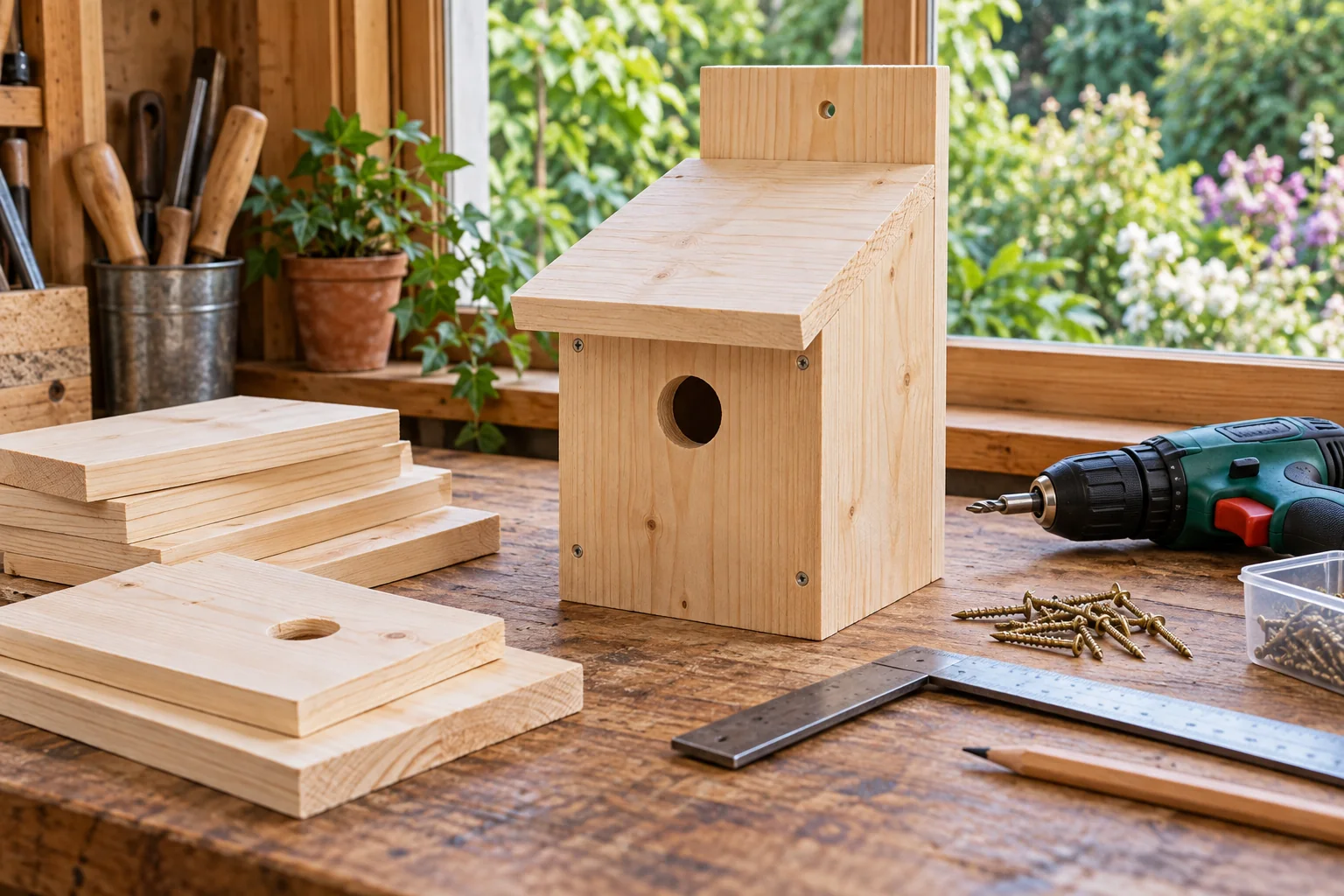
A nest box is a small woodworking project with a real user: the bird. Build to an RSPB plan for one species, using untreated timber of the stated thickness, a correctly sized entrance and an opening for later cleaning. Check the final location before cutting the wood.
Quick answer
Start with an rspb-style house sparrow nest box
A nest box is a small woodworking project with a real user: the bird. Build to an RSPB plan for one species, using untreated timber of the stated thickness, a correctly sized entrance and an opening for later cleaning. Check the final location before cutting the wood.
- 01
RSPB species-specific plan and untreated timber of the specified thickness
- 02
Saw, square, drill, suitable fixings and stable bench
- 03
Safe mounting position with permission from the owner
What to expect
What the first attempt is really like
The useful skill here is building to a bird's needs rather than a decorative shape. These details matter more than a polished first result.
Species
Hole size and internal dimensions vary; one generic box does not serve every bird.
Weather
Roof overhang, drainage and placement matter more than painted decoration.
Occupancy
A correctly made box may stay empty for a season; avoid disturbing nesting birds to check it.
The method
The method worth learning
Choose a bird and a site first
A useful nest box begins with local birds and a suitable mounting place. Use the published RSPB plan for the target species rather than drawing a decorative house. The linked house-sparrow design uses a 32 mm entrance; other species may need a different opening and design. Confirm you have permission to mount the box and a safe way to reach the location before making it. An open-front robin box is a different route, not a hole-size variation of this one.
Copy the complete plan accurately
Use untreated timber of the plan’s specified thickness; RSPB’s plank route specifies 15–18 mm. A supplier can cut the plank or make the entrance hole if you lack suitable equipment. Mark each piece with a square, label its role and put the waste side of each line beyond the saw cut. Support and clamp pieces before sawing. Predrill appropriately sized pilot holes to reduce splitting, especially near edges, and keep screws from projecting into the box.
Build for weather and annual access
Follow the plan’s floor, roof, drainage and joining details. Keep the inside untreated and do not add a perch: birds do not need it and it can assist predators. Fit the specified roof or other access so the empty box can be cleaned later without breaking it. Check joints, sharp edges and fixings before mounting. An attractive exterior does not compensate for a leaking roof, blocked drainage or incorrectly sized chamber.
Put it where it can remain undisturbed
Follow RSPB and BTO siting guidance, typically sheltered from strong sun, prevailing rain and easy predator access. An appropriate height depends on the target species and mounting site; use the actual plan rather than a generic ladder target. Do not interfere with an active nest. Occupancy can take time, and an empty box is not necessarily a construction failure. Watch from a distance. Clean only when unoccupied and during the appropriate autumn period, following current advice and legal requirements for any unhatched eggs.
Useful products
Equipment with a clear job
Start with suitable equipment you already own. These exact UK listings are useful examples when a missing tool limits the first project; prices and availability were checked on 2 October 2026 and delivery may add to the cost.
Magnusson 11 tpi Hardwood Panel Saw, 500 mm
Cut a few straight nest-box parts by hand from the specified untreated plank.
Irwin Quick-Grip Mini Bar Clamp, 150 mm
Hold a small component securely on a suitable bench while marking, drilling or making a controlled cut.
What can wait
What can wait
Keep the first project small and learn what the equipment is doing before adding more.
- 01
A perch
It is unnecessary for the intended birds and can make access easier for predators.
- 02
Interior paint or preservative
Use the untreated interior specified by the wildlife plan. Decorative finishes are not the purpose of a first nesting box.
- 03
A camera immediately
It adds wiring and disturbance considerations. First build, mount and maintain an appropriate box without interference.
First project
First project: An RSPB-style House Sparrow nest box
Start with an rspb-style house sparrow nest box. Use the listed equipment, take notes on the result and repeat the small project before expanding it.
- 01
Choose species and site
Use the RSPB House Sparrow plan and confirm a sheltered mounting position you are allowed to use.
- 02
Cut to plan
Mark each piece from the published dimensions and keep the entrance size and floor area accurate.
- 03
Assemble for access
Fix the walls securely, keep drainage and a roof or side that opens for cleaning; leave the inside untreated.
- 04
Mount responsibly
Follow RSPB orientation and height guidance, secure the box safely and observe from a distance.
Troubleshooting
When the first attempt goes wrong
Timber splits around screws
Check pilot-hole size, screw position and board thickness. Practise on an offcut and avoid driving a large screw near a thin edge. A cracked wall may need replacement before mounting.
The roof cannot be opened
Check the plan’s access detail before fixing it permanently. Cleaning access is part of the design and must not be improvised by opening an occupied box.
Rain enters
Inspect the roof overlap, joints and final orientation. Improve weather protection while empty; do not disturb nesting birds to make a cosmetic repair.
No bird uses it
Review species, entrance, shelter, nearby disturbance and predator access. Community reports show that even sound boxes can remain empty for seasons. Keep observing without repeatedly opening the box or moving it during the breeding period.
Upgrade path
Where to go after the first result
Repeat the simple route first, then choose the next step that solves a problem you have actually met.
Observation
No extra equipment neededKeep a seasonal record
Watch from a distance and note approach, occupancy and weather without opening an active nest.Species
Timber and fixings for the new planA different species-specific design
Match a new box to birds actually using the area rather than duplicating a generic decorative shape.Monitoring
Check installation and equipment quoteA carefully planned camera
Install while empty and keep wildlife welfare, electrical safety and maintenance access in the plan.Safety & care
Safety and practical limits
Use the current instructions for the exact food, material or equipment in front of you.
- Follow the exact RSPB plan and avoid pressure-treated timber or coatings inside the box.
- Use safe ladder practice or competent help for mounting at height; gain permission before fixing to a building or tree.
- Do not disturb occupied nests; follow UK wildlife law and RSPB seasonal cleaning guidance.
Learning & help
Learning at home and optional help
A class is optional for this first route. Use the free guidance before paying for help.
The RSPB build plan and BTO siting guidance provide a free home route. Read the full plan before ordering timber, including cleaning access and mounting details.
A timber supplier can quote for straight cuts and the exact entrance hole. Use competent help for high mounting, unsuitable ladders or difficult fixings. An optional woodworking session can teach sawing, but it should not replace the wildlife dimensions or justify disturbing a nest.
Learning sources checked 2 October 2026. No unverified class fee or booking availability is quoted.
Sources
Where the guidance came from
Food and wildlife authorities, exact maker instructions, specialist guidance, practitioner observations and UK product listings support the route above. Community accounts inform practical expectations; they do not establish food safety, wildlife rules or current prices.
-
01
RSPB · Build a nestbox
Species-specific plans, material and siting
Open source -
02
RSPB Shop · Classic nest box
Reference box details and UK availability
Open source -
03
BTO · Nest boxes for birds
Species and box design guidance
Open source -
04
BTO · Putting up a nest box
Siting, cleaning period and wildlife law
Open source -
05
BTO · Buying a nest box
Construction features and cleaning access
Open source -
06
r/GardeningUK · Bird box success
Several gardeners discuss occupancy and predator access. Observe from a distance and use wildlife authority plans.
Open source -
07
Suffolk Wildlife Trust · Bird nest boxes
Wildlife guidance on appropriate boxes and garden siting.
Open source -
08
Magnusson · 11 tpi Hardwood Panel Saw, 500 mm
Exact selected model, price and availability used for the recommendation; recheck delivery and checkout.
Open source -
09
Irwin Quick-Grip · Mini Bar Clamp, 150 mm
Exact selected model, price and availability used for the recommendation; recheck delivery and checkout.
Open source
Guide information and links checked 2 October 2026.