Beginner’s guide · Make & build
Start puzzle box making with one result,
then improve the control that made it work.
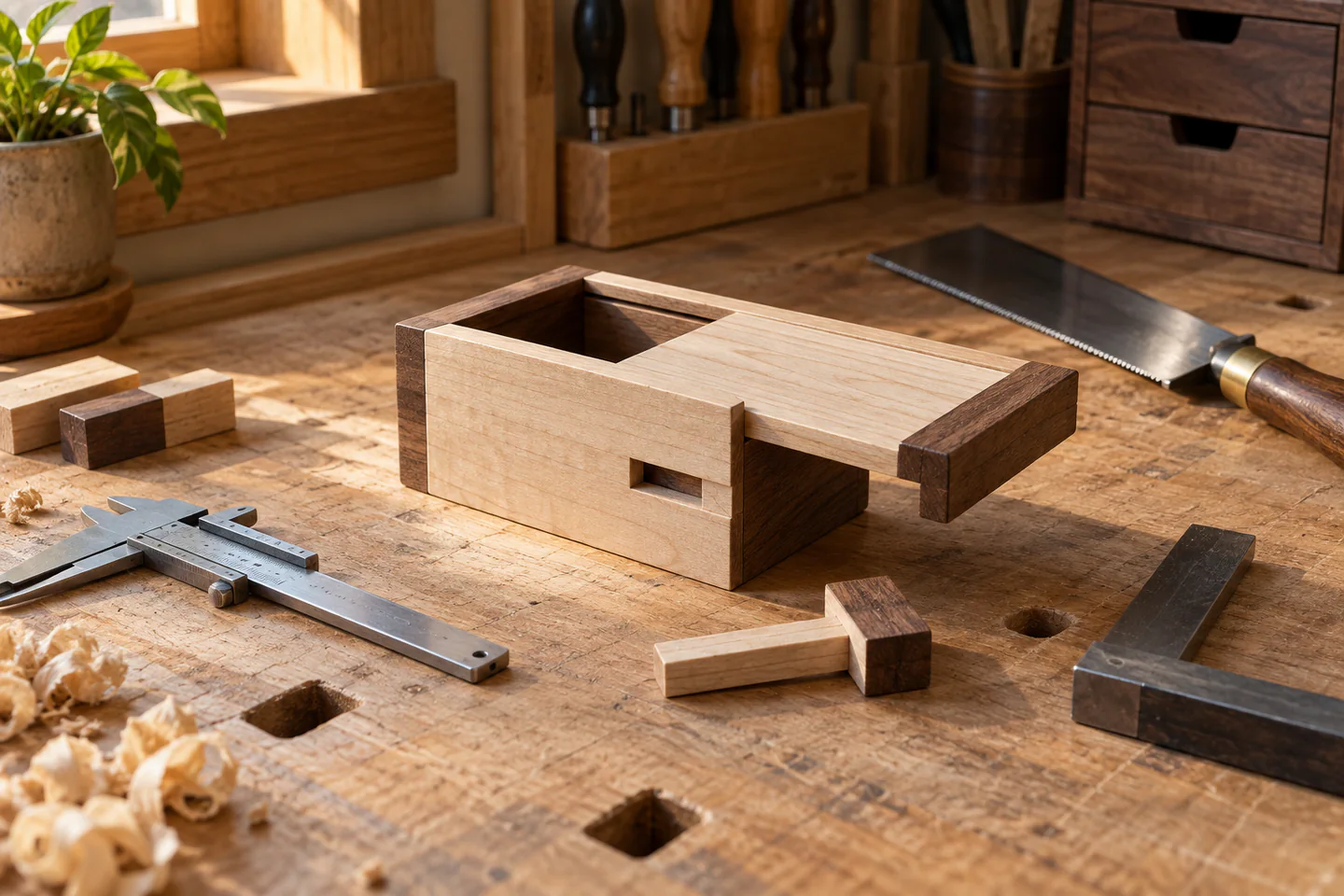
Build a plain square sliding-lid box first, then add one concealed stop or sliding key. Use stable dry stock, machine or saw paired parts together and test clearances throughout rather than disguising a poorly fitted box with a complex mechanism.
Quick answer
Make one single-move sliding puzzle box before expanding the setup
Build a plain square sliding-lid box first, then add one concealed stop or sliding key. Use stable dry stock, machine or saw paired parts together and test clearances throughout rather than disguising a poorly fitted box with a complex mechanism.
- 01
The box must work as a box before it works as a puzzle. For the first puzzle box making session, keep the core material fixed and note the material, measurement and sequence before changing anything. Photograph or measure the result, because a visible record separates a technique problem from a tool or setup problem and makes the next attempt genuinely comparable.
- 02
Paired components stay more consistent when cut from one setup. For the first puzzle box making session, keep the working position fixed and note the material, measurement and sequence before changing anything. Photograph or measure the result, because a visible record separates a technique problem from a tool or setup problem and makes the next attempt genuinely comparable.
- 03
Clearance depends on material, finish and seasonal movement. For the first puzzle box making session, keep one repeatable measurement fixed and note the material, measurement and sequence before changing anything. Photograph or measure the result, because a visible record separates a technique problem from a tool or setup problem and makes the next attempt genuinely comparable.
- 04
A solvable mechanism needs deliberate feedback rather than invisible force. For the first puzzle box making session, keep the finishing sequence fixed and note the material, measurement and sequence before changing anything. Photograph or measure the result, because a visible record separates a technique problem from a tool or setup problem and makes the next attempt genuinely comparable.
What to expect
What puzzle box making is really like at the start
The useful beginner controls are preparation, a repeatable movement and a finished sample. Fitting moving parts with clearance that survives seasonal wood movement is the main skill to observe before adding scale, speed or decoration.
Materials and setup
Tiny errors accumulate around a four-sided carcass. For the first puzzle box making session, keep one material batch fixed and note the material, measurement and sequence before changing anything. Photograph or measure the result, because a visible record separates a technique problem from a tool or setup problem and makes the next attempt genuinely comparable.
Control that matters
A tight dry fit may seize after finish is applied. For the first puzzle box making session, keep one tool setting fixed and note the material, measurement and sequence before changing anything. Photograph or measure the result, because a visible record separates a technique problem from a tool or setup problem and makes the next attempt genuinely comparable.
Common early failure
Magnets and pins can create hidden pinch points. For the first puzzle box making session, keep one small test fixed and note the material, measurement and sequence before changing anything. Photograph or measure the result, because a visible record separates a technique problem from a tool or setup problem and makes the next attempt genuinely comparable.
A useful finish
A mechanism without access for repair may become permanent. For the first puzzle box making session, keep the same inspection method fixed and note the material, measurement and sequence before changing anything. Photograph or measure the result, because a visible record separates a technique problem from a tool or setup problem and makes the next attempt genuinely comparable.
Core method
The core puzzle box making method
Prepare
Draw the closed, open and blocked states at full size. For the first puzzle box making session, keep the preparation checklist fixed and note the material, measurement and sequence before changing anything. Photograph or measure the result, because a visible record separates a technique problem from a tool or setup problem and makes the next attempt genuinely comparable.
Establish the first reference
Prepare square stock and make a plain sliding-lid test box. For the first puzzle box making session, keep the first reference point fixed and note the material, measurement and sequence before changing anything. Photograph or measure the result, because a visible record separates a technique problem from a tool or setup problem and makes the next attempt genuinely comparable.
Build the result
Measure the real clearance after sanding and a finish sample. For the first puzzle box making session, keep the working rhythm fixed and note the material, measurement and sequence before changing anything. Photograph or measure the result, because a visible record separates a technique problem from a tool or setup problem and makes the next attempt genuinely comparable.
Inspect before finishing
Add one sliding stop with an intentional access and repair route. For the first puzzle box making session, keep the inspection light fixed and note the material, measurement and sequence before changing anything. Photograph or measure the result, because a visible record separates a technique problem from a tool or setup problem and makes the next attempt genuinely comparable.
Useful products
Products with a clear job in the route
Each recommendation covers a distinct practical job. Existing equipment is preferable when it meets the same specification; live price, stock, seller and compatibility still need checking before purchase.
Sealey SM1302 Variable Speed Scroll Saw
SM1302 Variable Speed Scroll Saw has a defined job in the puzzle box making route and can be compared with owned equipment against the same specification.
John A. Nelson Scroll Saw Workbook, 3rd Edition
Scroll Saw Workbook, 3rd Edition has a defined job in the puzzle box making route and can be compared with owned equipment against the same specification.
Kynup Digital Caliper, 150 mm
Digital Caliper, 150 mm has a defined job in the puzzle box making route and can be compared with owned equipment against the same specification.
First project
Make a single-move sliding puzzle box
Keep this puzzle box making project small enough to finish, inspect and repeat. The first result is evidence about material compatibility, sequence and control rather than a performance test.
- 01
Set the boundary
Draw the closed, open and blocked states at full size. For the first puzzle box making session, keep the project size fixed and note the material, measurement and sequence before changing anything. Photograph or measure the result, because a visible record separates a technique problem from a tool or setup problem and makes the next attempt genuinely comparable.
- 02
Prepare the setup
Prepare square stock and make a plain sliding-lid test box. For the first puzzle box making session, keep the setup order fixed and note the material, measurement and sequence before changing anything. Photograph or measure the result, because a visible record separates a technique problem from a tool or setup problem and makes the next attempt genuinely comparable.
- 03
Make the controlled pass
Measure the real clearance after sanding and a finish sample. For the first puzzle box making session, keep the central movement fixed and note the material, measurement and sequence before changing anything. Photograph or measure the result, because a visible record separates a technique problem from a tool or setup problem and makes the next attempt genuinely comparable.
- 04
Inspect and correct
Add one sliding stop with an intentional access and repair route. For the first puzzle box making session, keep one correction rule fixed and note the material, measurement and sequence before changing anything. Photograph or measure the result, because a visible record separates a technique problem from a tool or setup problem and makes the next attempt genuinely comparable.
- 05
Finish and record
Cycle the mechanism repeatedly and document the solution separately. For the first puzzle box making session, keep the final measurement fixed and note the material, measurement and sequence before changing anything. Photograph or measure the result, because a visible record separates a technique problem from a tool or setup problem and makes the next attempt genuinely comparable.
What can wait
What can wait until the first result
Delay anything that adds cost, risk or another variable before the basic workflow has produced something you can review.
- 01
Multi-step sequential puzzles
This adds material complexity before the central technique is stable. For the first puzzle box making session, keep the original material fixed and note the material, measurement and sequence before changing anything. Photograph or measure the result, because a visible record separates a technique problem from a tool or setup problem and makes the next attempt genuinely comparable.
- 02
Rare hardwood
This adds extra equipment before the central technique is stable. For the first puzzle box making session, keep the starter tools fixed and note the material, measurement and sequence before changing anything. Photograph or measure the result, because a visible record separates a technique problem from a tool or setup problem and makes the next attempt genuinely comparable.
- 03
Laser-cut mechanisms
This adds a harder judgement before the central technique is stable. For the first puzzle box making session, keep the first quality standard fixed and note the material, measurement and sequence before changing anything. Photograph or measure the result, because a visible record separates a technique problem from a tool or setup problem and makes the next attempt genuinely comparable.
- 04
Magnets where children may access them
This adds more scale or consequence before the central technique is stable. For the first puzzle box making session, keep the same project size fixed and note the material, measurement and sequence before changing anything. Photograph or measure the result, because a visible record separates a technique problem from a tool or setup problem and makes the next attempt genuinely comparable.
Upgrade path
Add only the capability you can now name
Each stage should remove a demonstrated limitation rather than simply make the setup look more advanced.
First controlled sample
Use owned tools where suitableComplete and annotate the single-move sliding puzzle box.
Learn the central movement and material behaviour.Repeatable starter setup
About £20–£80 beyond the startRepeat the complete route with the same materials.
Confirm that the result can be repeated with fewer corrections.One selected capability
About £50–£250 where justifiedChoose one tool, class or material that answers a recorded limitation.
Expand one deliberate dimension: size, finish, speed or design.Independent specialist work
Cost depends on workspace and ambitionDevelop original work with testing, provenance and appropriate safety.
Plan, document and maintain a reliable personal workflow.Safety & care
Safety, care and respectful practice in puzzle box making
The practical risks remain manageable when access, tools, materials and legal boundaries are specific and proportionate.
- Use guards, push devices and dust extraction for powered cutting. For the first puzzle box making session, keep the stated safety control fixed and note the material, measurement and sequence before changing anything. Photograph or measure the result, because a visible record separates a technique problem from a tool or setup problem and makes the next attempt genuinely comparable.
- Clamp small parts and keep fingers away from blades and sanding drums. For the first puzzle box making session, keep the smallest practical setup fixed and note the material, measurement and sequence before changing anything. Photograph or measure the result, because a visible record separates a technique problem from a tool or setup problem and makes the next attempt genuinely comparable.
- Wear eye and hearing protection appropriate to the machine. For the first puzzle box making session, keep the manufacturer or organiser instructions fixed and note the material, measurement and sequence before changing anything. Photograph or measure the result, because a visible record separates a technique problem from a tool or setup problem and makes the next attempt genuinely comparable.
- Treat small magnets as ingestion hazards and secure them mechanically where possible. For the first puzzle box making session, keep a stop condition fixed and note the material, measurement and sequence before changing anything. Photograph or measure the result, because a visible record separates a technique problem from a tool or setup problem and makes the next attempt genuinely comparable.
- Choose a non-toxic finish suitable for the expected handling. For the first puzzle box making session, keep safe storage and cleanup fixed and note the material, measurement and sequence before changing anything. Photograph or measure the result, because a visible record separates a technique problem from a tool or setup problem and makes the next attempt genuinely comparable.
Outside help
When outside help earns its place
A guided session is useful when equipment setup, heat, sharp tools, field access or live correction blocks safe progress. A coherent authoritative source is enough for the smallest puzzle box making sample.
Choose one lesson that covers preparation, the central puzzle box making method, finishing and common mistakes in a single sequence.
Ask what materials and access are included, whether the project can be finished in the session and what safety instruction is provided.
Representative UK learning and access routes checked 2026-09-22; local prices, equipment and tutor support vary.
Sources
Where the guidance came from
Authoritative and specialist guidance supports the method, terminology and safety boundaries. Community discussion contributes recurring beginner problems rather than unsupported factual claims.
-
01
HSE · Woodworking
UK workshop risk, dust and machinery guidance.
Open source -
02
Woodland Trust · Managing woods
Woodland management and material context.
Open source -
03
Forestry Commission · Coppicing
Current UK coppice-management guidance.
Open source -
04
Heritage Crafts · Craft inventory
Traditional craft skills and practitioner context.
Open source -
05
Woodworkers Institute
UK project and technique guidance.
Open source -
06
Men’s Sheds Association
Shared-workshop and local learning routes.
Open source -
07
Reddit · r/woodworking
Recurring beginner evidence on workholding, grain and finishing.
Open source -
08
Amazon UK · SM1302 Variable Speed Scroll Saw
Exact product page used to identify B000RO8JYI; confirm price, stock, seller and specification before ordering.
Open source -
09
Amazon UK · Scroll Saw Workbook, 3rd Edition
Exact product page used to identify 1565238494; confirm price, stock, seller and specification before ordering.
Open source -
10
Amazon UK · Digital Caliper, 150 mm
Exact product page used to identify B09964YBMF; confirm price, stock, seller and specification before ordering.
Open source
Guide information and links checked 22 September 2026.