Beginner’s guide · Cook & bake
Twist gently,
dip safely.
Soft pretzels need a smooth dough, a relaxed rope and an alkaline surface treatment before baking. Begin with the safer bicarbonate route from one tested recipe.
Quick answer
Make six soft pretzels with a tested bicarbonate bath
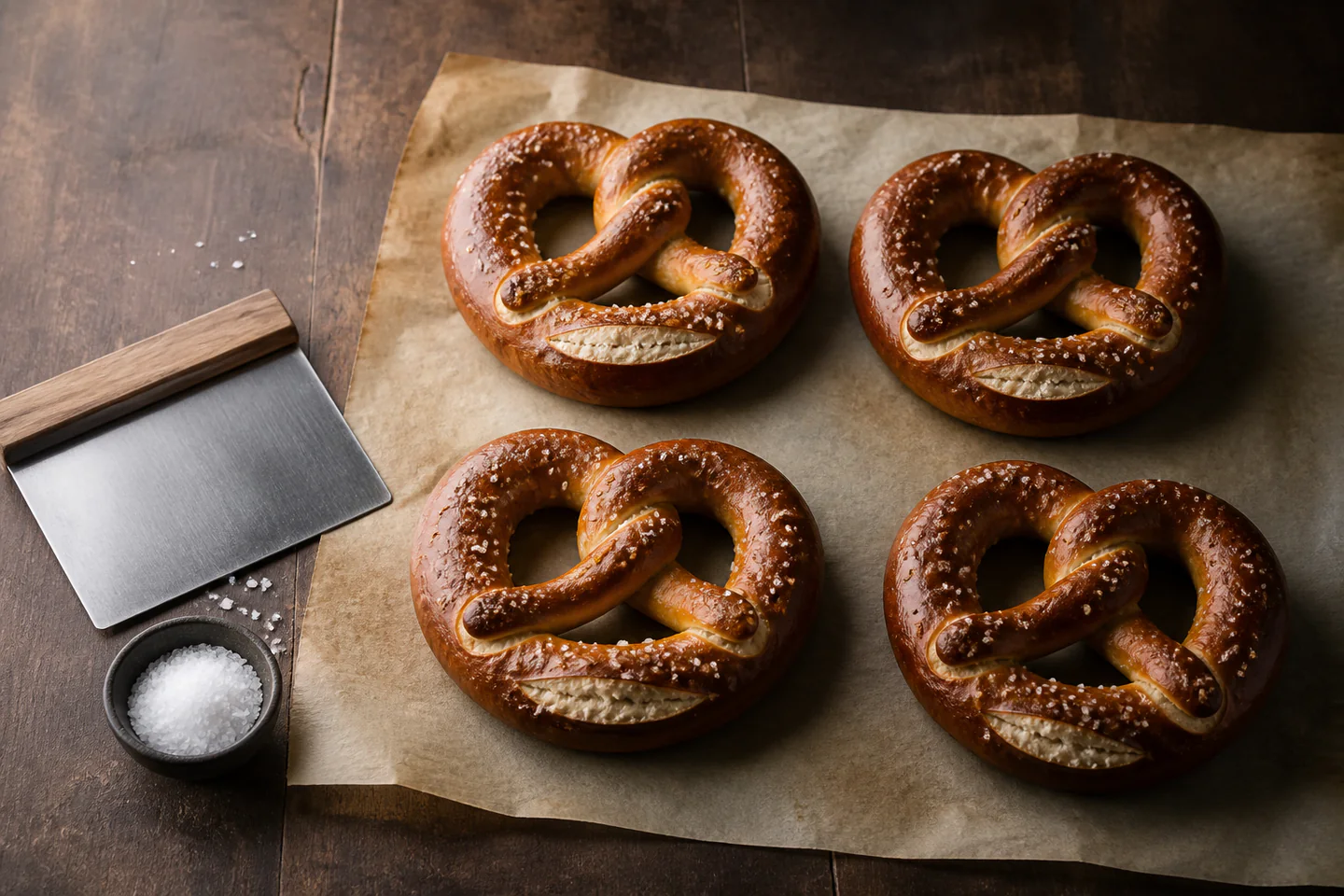
Follow one reputable gram-based soft-pretzel recipe that uses ordinary bicarbonate of soda rather than caustic lye. Mix and knead a smooth dough, divide it evenly and rest the pieces so the gluten relaxes. Roll each from the middle into an even rope, form a U, cross the ends twice and press them onto the lower curve. Prepare the alkaline bath exactly as written, dip with a wide heatproof utensil, drain, salt and bake immediately on the prepared tray.
- 01
Dough that snaps back needs a covered rest, not harder stretching.
- 02
Equal weights and rope lengths produce pretzels that dip and bake at the same rate.
- 03
Bicarbonate solution is still hot and alkaline. Avoid splashes and follow the recipe’s concentration and disposal guidance.
- 04
Food-grade lye creates a traditional crust but can cause severe chemical burns and is not part of this beginner route.
- 05
Salt draws moisture. Apply immediately before baking and store finished pretzels appropriately.
What to expect
The knot is easy once the rope is relaxed
Most shaping frustration comes from gluten tension or uneven thickness. The bath then magnifies thin ends, loose joins and over-proofing.
Dough
Moderately firm smooth dough holds the iconic outline better than a very sticky, highly hydrated mix.
Rest
Covered bench rests let the rope extend with less tearing and prevent a dry skin.
Shape
A long even centre section and slightly tapered ends make the crossing and attachment clean.
Dip
Short controlled treatment colours the crust; prolonged soaking can weaken the shape.
Salt
Coarse pretzel salt is traditional, but an even modest amount gives better eating quality than heavy patches.
Freshness
Soft pretzels are best soon after baking. Reheating restores texture better than leaving them exposed.
Core method
Standardise weight, rope length and bath time
Choose the bicarbonate route
Read the full tested recipe and confirm it uses baking soda at a specified amount, water volume and treatment time. Prepare the lined tray, heatproof slotted utensil, timer and clear transfer path before heating the bath. Keep food-grade lye recipes for formal training and suitable PPE.
Develop and rest the dough
Weigh the ingredients and knead until smooth and elastic. Divide the total dough into six equal pieces, round them and cover. Flatten one piece and begin rolling from the centre. When it resists, stop and rest it while starting the next piece rather than tearing the surface.
Shape consistently
Roll each piece to the recipe’s length with an even middle and modest taper at the ends. Form a U, cross ends twice, bring them down and press firmly onto the lower curve. Place seam-side down, cover and proof only as directed so the loops remain open.
Dip and bake as one planned movement
Wear suitable hand and eye protection for the hot alkaline solution, keep the pan stable and avoid leaning over it. Treat one or two pretzels at a time for the exact period, drain and return to the lined tray. Score if directed, add salt and bake until the brown colour and internal doneness match the recipe.
Useful products
Products with a clear job in the setup
The Etekcity scale keeps dough pieces equal, Zulay’s scrapers divide and lift the dough, and the silicone mat gives repeat rope-length markings. A stable pan and wide heatproof slotted utensil are required but should be selected to suit the existing hob rather than recommended blindly.
Etekcity Digital Kitchen Scale, 0.1 g to 5 kg
Pretzels of the same weight are easier to roll to matching lengths and bake evenly.
Zulay Kitchen Three-Piece Stainless Dough Scraper Set
A scraper preserves gas and surface tension better than pulling pieces apart.
Generic Thick Silicone Pastry Mat with Measurements, 40 × 50 cm
Printed measurements remove guesswork while the shaping rhythm is new.
First project
Shape and bake six classic soft pretzels
One plain batch makes dough relaxation, knot geometry and surface treatment easy to compare.
- 01
Prepare the whole route
Line trays and place the utensil and timer before heating the bath.
- 02
Weigh and knead
Use one formula and develop a smooth elastic dough.
- 03
Divide six equal pieces
Cover them so no dry skin forms during rolling.
- 04
Roll with rests
Alternate pieces whenever the dough springs back.
- 05
Twist and press ends
Keep loops open and joins securely attached.
- 06
Dip, salt and bake
Use exact bath timing, drain safely and bake immediately.
What can wait
What can wait until the first result
Traditional caustic lye and filled shapes increase hazard and failure modes before the bicarbonate batch is understood.
- 01
Food-grade lye
It can cause severe burns and needs chemical controls beyond this beginner route.
- 02
Stuffed pretzels
Fillings create leaks and complicate doneness while shaping is still new.
- 03
A large production batch
Hot bath handling is safer and more consistent with six pieces.
- 04
Many flavoured toppings
Plain salt reveals crust colour and texture without hiding uneven treatment.
- 05
A stand mixer
A small batch is manageable by hand and reveals dough development directly.
Upgrade path
Upgrade the repeated limitation
Upgrade crust method, baking surface or output only after six bicarbonate pretzels are shaped consistently.
Bicarbonate batch
About £15–£45Scale, scraper, pan and tray
Learn rope, twist and dip.Heat consistency
About £35–£120Oven thermometer and baking steel/stone
Improve colour and spring.Traditional lye method
About £50–£180Training, suitable PPE and controlled workspace
Create classic deep crust safely.Larger production
About £300–£1,500+Rated mixer, dipping station and proofing space
Scale a proven process.Safety & care
Hot alkaline liquid needs a clear controlled station
Even baking-soda solution can irritate eyes and skin, and boiling water can burn. Traditional lye belongs to a later trained workflow.
- Use only the exact food-safe alkaline ingredient, amount and procedure in the tested recipe; never substitute drain cleaner or unverified chemicals.
- Wear suitable eye and hand protection, keep the pan stable, avoid splashes and lower pieces away from the body.
- Keep children and pets out of the bath-to-tray route, turn pan handles safely and use dry oven gloves for hot metal.
- Treat flour and raw dough as uncooked food, clean surfaces and manage allergens for shared kitchens and gifts.
- Cool before eating, store promptly and follow the recipe’s guidance for disposing of the bicarbonate solution; seek expert training before considering lye.
Outside help
When outside help earns its place
The bicarbonate method is suitable for a careful home batch. A professional workshop is the right place to learn food-grade lye handling and production shaping.
Keep formula, rest, bath and bake from the same source.
Ask which alkaline method, PPE and take-home products are used.
Representative UK learning options checked 17 August 2026; local prices, access, materials and tutor support vary.
Sources
Where the guidance came from
Test kitchens provide coherent recipes; UK food-safety guidance sets hygiene boundaries and experienced bakers explain dough relaxation and traditional alkaline methods.
-
01
King Arthur Baking · Soft pretzels
Tested dough, shaping and baking-soda treatment.
Open source -
02
BBC Good Food · Soft pretzels
UK ingredient and home-kitchen recipe context.
Open source -
03
Food Standards Agency · Food hygiene
UK raw-flour, kitchen and allergen safety context.
Open source -
04
Serious Eats · Pretzels
Independent technique testing and crust-method discussion.
Open source -
05
Reddit · r/Breadit
Community evidence on dough spring-back, shaping, baths and baking colour.
Open source -
06
Amazon UK · Digital Kitchen Scale, 0.1 g to 5 kg
Exact product catalogue page or ISBN used for the recommendation; current price, seller and availability should be confirmed.
Open source -
07
Amazon UK · Three-Piece Stainless Dough Scraper Set
Exact product catalogue page or ISBN used for the recommendation; current price, seller and availability should be confirmed.
Open source -
08
Amazon UK · Thick Silicone Pastry Mat with Measurements, 40 × 50 cm
Exact product catalogue page or ISBN used for the recommendation; current price, seller and availability should be confirmed.
Open source
Guide information and links checked 17 August 2026.