Beginner’s guide · Grow & care
Plant after frost,
then support before flowers.
One compact dahlia in a generous pot gives months of colour without a full border. Early support, steady water and regular deadheading matter more than buying many tubers.
Quick answer
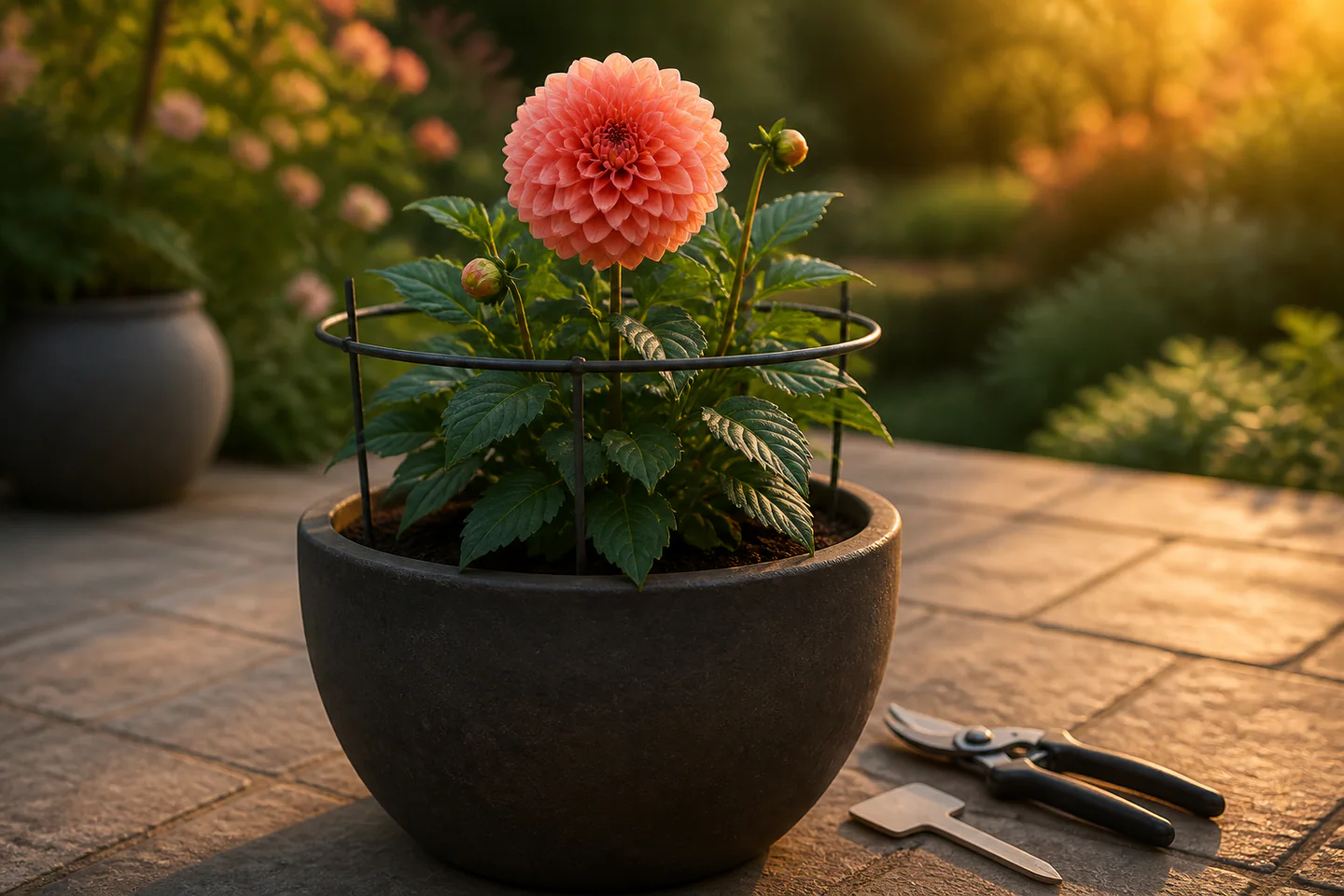
Grow one compact named dahlia in a large sunny pot
Choose a healthy compact or patio cultivar and check its final height. Start a tuber under cover only if frost-free light and space are available, or buy a growing plant after local frost risk. Plant in fresh peat-free compost in a large stable draining pot, install a discreet cane or ring support immediately and move outside gradually. Water as the plant begins active growth, feed during flowering as labelled, deadhead to the correct junction and protect tender shoots from slugs.
- 01
Dahlias are frost tender. Local last-frost dates and hardening off matter more than an arbitrary calendar day.
- 02
A dormant tuber needs less water than a leafy plant. Wet cold compost before roots develop encourages rot.
- 03
Support belongs in the pot at planting time, before roots and stems make insertion damaging.
- 04
Deadheading means following the flower stem to a leaf junction; round buds and pointed spent heads look different.
- 05
Overwintering depends on climate, drainage and space. Lifting tubers is one route, not a universal ritual.
What to expect
The plant changes from fragile shoot to heavy sail
A dahlia that barely needs watering in spring can become tall, thirsty and wind-loaded by late summer. The setup must anticipate that change.
Tuber
A firm crown with visible eyes is more important than the number of dangling tubers. Broken necks do not grow independently.
Shoot
Slugs and snails can remove new growth overnight. Check early rather than discovering only bare stems.
Pinch
Pinching above a leaf pair can encourage branching, but compact varieties may need little intervention.
Water
Water deeply once active growth fills the pot; avoid keeping a dormant or newly planted tuber saturated.
Feed
A balanced establishment phase followed by an appropriate flowering feed is safer than constant high nitrogen.
Cut
Regular cutting and deadheading keep flowers coming, while blunt dirty tools spread damage.
Core method
Plan final height, support and winter before planting
Choose one cultivar for the site
Measure sun and wind and select a named dahlia whose stated height and flower size fit the pot or border. Inspect tubers for firmness, crown and eyes. If buying a growing plant, check undersides and tips for pests and quarantine before placing beside valued plants.
Start only with suitable conditions
Plant a tuber shallowly in fresh compost under frost-free bright conditions, following supplier orientation and depth. Water minimally until growth is active. If no bright frost-free space exists, wait or buy a later plant instead of producing weak shoots indoors.
Plant out with support
Harden the plant gradually over one to two weeks and wait until frost risk has passed. Use a large stable draining pot, position the tuber or root ball correctly and install support at once. Tie stems with soft loose loops and add more points before flower heads become heavy.
Maintain and decide overwintering
Check moisture frequently in warm weather, water the compost deeply and feed only as labelled. Remove spent blooms to the correct junction and cut flowers with clean tools. After frost, follow RHS and supplier advice to lift, dry and store tubers or leave them protected only where drainage and local winter conditions make that credible.
Useful products
Products with a clear job in the setup
GardenMate’s large fabric bags offer a movable container route, Felco 2 secateurs are a durable long-term cutting upgrade and Tildenet labels keep cultivar and overwintering records attached to the right plant. Buy the named tuber or growing plant from a specialist nursery where condition and final size can be assessed.
GardenMate 7-Gallon Fabric Grow Bags, Five Pack
One bag is large enough for a modest cultivar and can be positioned before it becomes heavy.
FELCO FELCO 2 Classic Secateurs
Replaceable parts and a clean bypass action suit repeated flower cutting beyond this one crop.
Tildenet Wooden Plant Labels
Dahlia tubers look similar once dormant, so labels protect the learning and the named cultivar.
First project
Grow one compact dahlia from tuber or plant
One named cultivar makes height, bloom, support and winter decisions easy to compare with its description.
- 01
Match cultivar to pot
Check final height, sun, wind and local frost dates.
- 02
Inspect and label
Record the name before potting and photograph the starting condition.
- 03
Water by growth stage
Keep dormant tubers only lightly moist and increase with active roots and leaves.
- 04
Harden and plant out
Move gradually and wait until frost danger has passed.
- 05
Tie before the storm
Install and adjust support while stems are easy to handle.
- 06
Deadhead and plan winter
Keep flowers coming and choose lift or leave based on drainage and climate.
What can wait
What can wait until the first result
A dozen glamorous cultivars create staking, watering and winter storage before one plant’s annual rhythm is understood.
- 01
A large tuber collection
One named plant reveals whether the site and winter storage suit dahlias.
- 02
Tall dinner-plate cultivars
They bring heavier flowers and more wind support than a patio starter.
- 03
Early heavy watering
Dormant tubers use little water and can rot in cold wet compost.
- 04
High-nitrogen feeding
Excess soft leaf growth can reduce flowers and increase support needs.
- 05
Dividing the tuber immediately
Learn the crown and eyes after a full season before making risky cuts.
Upgrade path
Upgrade the repeated limitation
Upgrade cultivar height, cutting volume or winter storage only after one complete season.
One compact plant
About £25–£65Tuber/plant + large pot + support
Learn the annual cycle.Cut-flower pair
About £50–£130Two complementary cultivars + stronger supports
Harvest repeat stems.Small border
About £100–£350Prepared bed, stakes and slug plan
Grow several without pot drying.Collection and storage
About £250–£1,000+Labelled racks, propagation and winter space
Maintain named cultivars reliably.Safety & care
Protect tender growth without harming wider wildlife
Slug control, supports, fertiliser and winter storage should be planned for the whole garden, not only the flower.
- Use wildlife-aware slug controls and follow every product label; avoid loose netting and pellets where children, pets or non-target animals are at risk.
- Cap tall canes, secure supports and keep pots and guy lines out of routes; account for wet weight and wind.
- Wear gloves for compost, wash hands and store fertilisers and plant treatments securely.
- Use clean sharp tools, cut away from the body and disinfect after suspected disease.
- Do not eat dahlia parts based on casual claims; grow this first plant as ornamental and verify any edible use through authoritative sources.
Outside help
When outside help earns its place
No class is needed. A specialist nursery open day can show plant scale, flower forms and correct lifting/dividing far better than catalogue photographs.
Use cultivar, planting, pinching, support and winter advice.
Ask about local frost, storage, pests and dividing demonstrations.
Representative UK learning options checked 17 August 2026; local prices, access, materials and tutor support vary.
Sources
Where the guidance came from
UK horticultural authorities and specialist growers define cultivar and seasonal practice; gardener communities add pot, slug and overwintering experience.
-
01
RHS · Dahlias
UK planting, feeding, staking, cutting and winter guidance.
Open source -
02
National Dahlia Society
UK specialist cultivar, show and growing context.
Open source -
03
Sarah Raven · How to grow dahlias
Specialist nursery cultivation and cutting guidance.
Open source -
04
Gardeners’ World · Dahlias
Practical UK seasonal care.
Open source -
05
Reddit · r/dahlias
Community evidence on tubers, pots, pinching, pests and storage.
Open source -
06
Amazon UK · 7-Gallon Fabric Grow Bags, Five Pack
Exact product catalogue page or ISBN used for the recommendation; current price, seller and availability should be confirmed.
Open source -
07
Amazon UK · FELCO 2 Classic Secateurs
Exact product catalogue page or ISBN used for the recommendation; current price, seller and availability should be confirmed.
Open source -
08
Amazon UK · Wooden Plant Labels
Exact product catalogue page or ISBN used for the recommendation; current price, seller and availability should be confirmed.
Open source
Guide information and links checked 17 August 2026.