Beginner’s guide · Grow & care
Give the crown light,
and the roots some air.
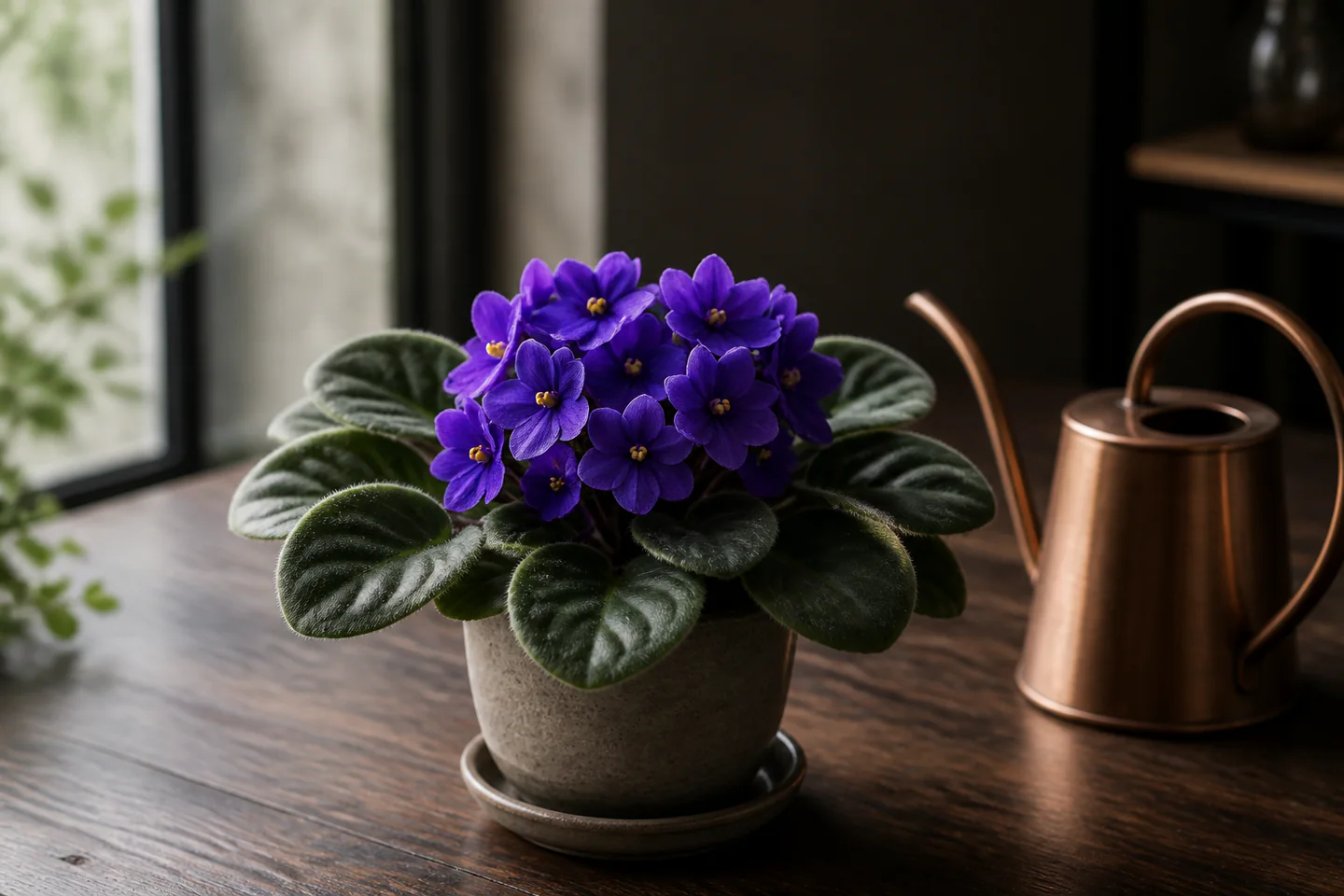
Start with one healthy African violet in a small draining pot near bright indirect light. Care becomes predictable when watering follows the mix rather than a weekly calendar.
Quick answer
Keep one healthy violet stable for eight weeks
Choose a symmetrical plant with firm leaves, clean centre growth and no visible pests. Quarantine it from other houseplants, keep it in a small pot with drainage and place it in bright indirect light where temperatures remain steady. Check the potting mix with a finger or wooden skewer and water when it is approaching dry but before the plant wilts severely. Use room-temperature water, avoid leaving the crown wet and let excess drain completely. Rotate the pot a quarter-turn weekly.
- 01
African violets usually prefer a pot that looks small relative to the leaf span. Oversized wet compost can suffocate fine roots.
- 02
Water the mix, not the calendar. Room temperature, light, pot material and root health change drying speed.
- 03
Cold water on leaves and water trapped in the crown can damage tissue; occasional droplets are not a reason to panic, but blot them and improve technique.
- 04
Bright indirect light supports compact growth and flowers. Deep shade produces long petioles; harsh sun can scorch.
- 05
Inspect the crown and leaf undersides regularly. Isolate new plants and treat confirmed pests with violet-compatible guidance.
What to expect
The leaves report conditions slowly
A damaged outer leaf may remain for months while the centre improves. Judge care by new growth, root condition and drying pattern rather than chasing every old mark.
Light
A flat balanced rosette suggests useful light; leaves reaching upward or bleaching require a measured change.
Water
Chronic saturation and severe repeated drought both damage roots. The interval is discovered, not prescribed.
Pot
Drainage and modest size make moisture easier to read. Decorative cachepots must be emptied after watering.
Mix
Purpose-made airy violet mix may still need adjustment for local conditions and watering style.
Flowers
Bloom cycles need light, mature healthy leaves and suitable nutrition; constant flowers are not a basic survival measure.
Repot
Old mix compacts and necks lengthen. Small regular repotting is often gentler than a dramatic rescue into a huge pot.
Core method
Stabilise light and moisture before encouraging flowers
Inspect and quarantine
Check leaf axils, crown, undersides, pot rim and mix for insects, webbing, distortion and rot. Keep the newcomer separate for several weeks and use dedicated tools. Photograph the rosette from above and note the pot size and condition rather than repotting automatically on arrival.
Choose a steady light position
Place the plant near a bright window with direct sun filtered or limited according to season, or under a documented grow light. Keep leaves away from cold glass and heating vents. Rotate gradually so the crown stays centred and change only one environmental variable at a time.
Read the mix before watering
Lift the pot and test below the surface. Water from above around the edge with room-temperature water or use a correctly set wick system, then drain fully. Do not leave a conventional pot standing in water. Record the interval until a pattern emerges rather than watering every Sunday.
Repot only for a reason
If roots, mix or neck require work, use a clean modest pot with drainage and fresh airy African-violet mix. Remove rotten tissue with sterile tools and keep the crown at the correct height. Resume feeding only after active growth and follow a dilute violet fertiliser label, accounting for water quality and salt buildup.
Useful products
Products with a clear job in the setup
The small self-watering planter is an optional wick/reservoir route, not a cure for poor mix or an excuse to keep roots saturated. The SANSI grow light helps only where window light is genuinely insufficient, and the Haws fine-rose can supports gentle room-temperature watering. A healthy plant and suitable mix should be sourced locally where condition can be inspected.
Mkono Self-Watering African Violet Planter
It can reduce surface disturbance and suit a stable plant whose water use is already known.
SANSI 10 W Clip-On LED Grow Light
A dedicated lamp can stabilise day length and rosette shape in dark rooms or winter.
Haws Bartley Burbler 2-Pint Watering Can with Fine Rose
The compact body and fine rose help avoid blasting airy mix or soaking the crown.
First project
Keep a one-plant eight-week care log
New centre leaves and a repeat drying pattern are better first goals than immediate reblooming.
- 01
Inspect and isolate
Record crown, leaf and pest condition before changing the pot.
- 02
Choose stable light
Keep away from cold glass, draughts and harsh midday exposure.
- 03
Check every few days
Feel below the surface and lift the pot; do not water automatically.
- 04
Water and drain
Use room-temperature water around the mix and empty standing runoff.
- 05
Rotate and photograph
Make a quarter turn weekly and compare centre growth from above.
- 06
Review after eight weeks
Change pot, mix, light or feed only when the log supports a reason.
What can wait
What can wait until the first result
Bloom boosters and elaborate reservoirs cannot compensate for roots that lack air or a crown sitting in weak light.
- 01
A much larger pot
Extra wet mix around a small root ball increases rot risk.
- 02
Constant fertiliser
Feed only active healthy plants by a suitable label and account for salt accumulation.
- 03
Leaf-shine products
They can mark fuzzy leaves and are unnecessary; use gentle dry or specialist cleaning.
- 04
Immediate propagation
Stabilise the parent and rule out pests before taking leaves.
- 05
A collection of cultivars
One plant teaches drying, light and repotting without spreading a hidden pest.
Upgrade path
Upgrade the repeated limitation
Upgrade light, watering system or propagation only when the plant’s stable care pattern makes the need obvious.
One healthy plant
About £15–£45Draining pot + stable shelf + basic tools
Learn moisture and rosette response.Winter light support
About £30–£90Measured grow light + timer
Maintain compact active growth.Wick-watering trial
About £20–£70Suitable pot, wick and airy mix
Extend intervals with monitoring.Small collection
About £100–£500+Shelving, lights, isolation and propagation space
Grow cultivars without losing hygiene.Safety & care
Watering convenience still requires observation
Reservoirs, timers and violet labels do not remove the need to inspect roots, mix, salts, pests and room conditions.
- Keep plants and potting mix away from food preparation, wear gloves if needed and wash hands after handling compost, fertiliser or pest products.
- Quarantine new plants, sterilise tools between suspect specimens and identify pests before applying a treatment.
- Use pesticides and fertilisers only where the current label permits, at the stated dilution, with ventilation and exclusion of children and pets.
- Secure grow lights and cables, keep electrical connections dry and provide a normal dark period.
- African-violet pet toxicity is generally considered low, but do not encourage chewing and verify any household-specific risk with a vet or recognised poison service.
Outside help
When outside help earns its place
No class is needed. A specialist society meeting or show is valuable for seeing healthy plants, learning cultivar names and obtaining locally grown stock with care information.
Use current light, potting, watering and pest resources.
Ask about plant sales, inspection, local water and beginner support.
Representative UK learning options checked 17 August 2026; local prices, access, materials and tutor support vary.
Sources
Where the guidance came from
Specialist plant societies and horticultural authorities define care and pest practice; experienced growers add mix, pot and wick-watering evidence.
-
01
African Violet Society of Great Britain
UK specialist growing, shows and cultivar context.
Open source -
02
African Violet Society of America · Culture
Detailed specialist care and propagation resources.
Open source -
03
RHS · Houseplant advice
UK indoor-plant light, watering and pest context.
Open source -
04
University of Minnesota · African violets
Research-based care, potting and flowering guidance.
Open source -
05
Reddit · r/AfricanViolets
Community evidence on pots, wick systems, mixes and recurring problems.
Open source -
06
Amazon UK · Self-Watering African Violet Planter
Exact product catalogue page or ISBN used for the recommendation; current price, seller and availability should be confirmed.
Open source -
07
Amazon UK · 10 W Clip-On LED Grow Light
Exact product catalogue page or ISBN used for the recommendation; current price, seller and availability should be confirmed.
Open source -
08
Amazon UK · Bartley Burbler 2-Pint Watering Can with Fine Rose
Exact product catalogue page or ISBN used for the recommendation; current price, seller and availability should be confirmed.
Open source
Guide information and links checked 17 August 2026.