Beginner’s guide · Cook & bake
Build one bowl from separate parts.
Broth, seasoning and noodles each have a job.
Start with a clear chicken, vegetable or miso broth, a measured tare, shop-bought noodles and two toppings. Homemade ramen becomes manageable when every component is prepared separately.
Quick answer
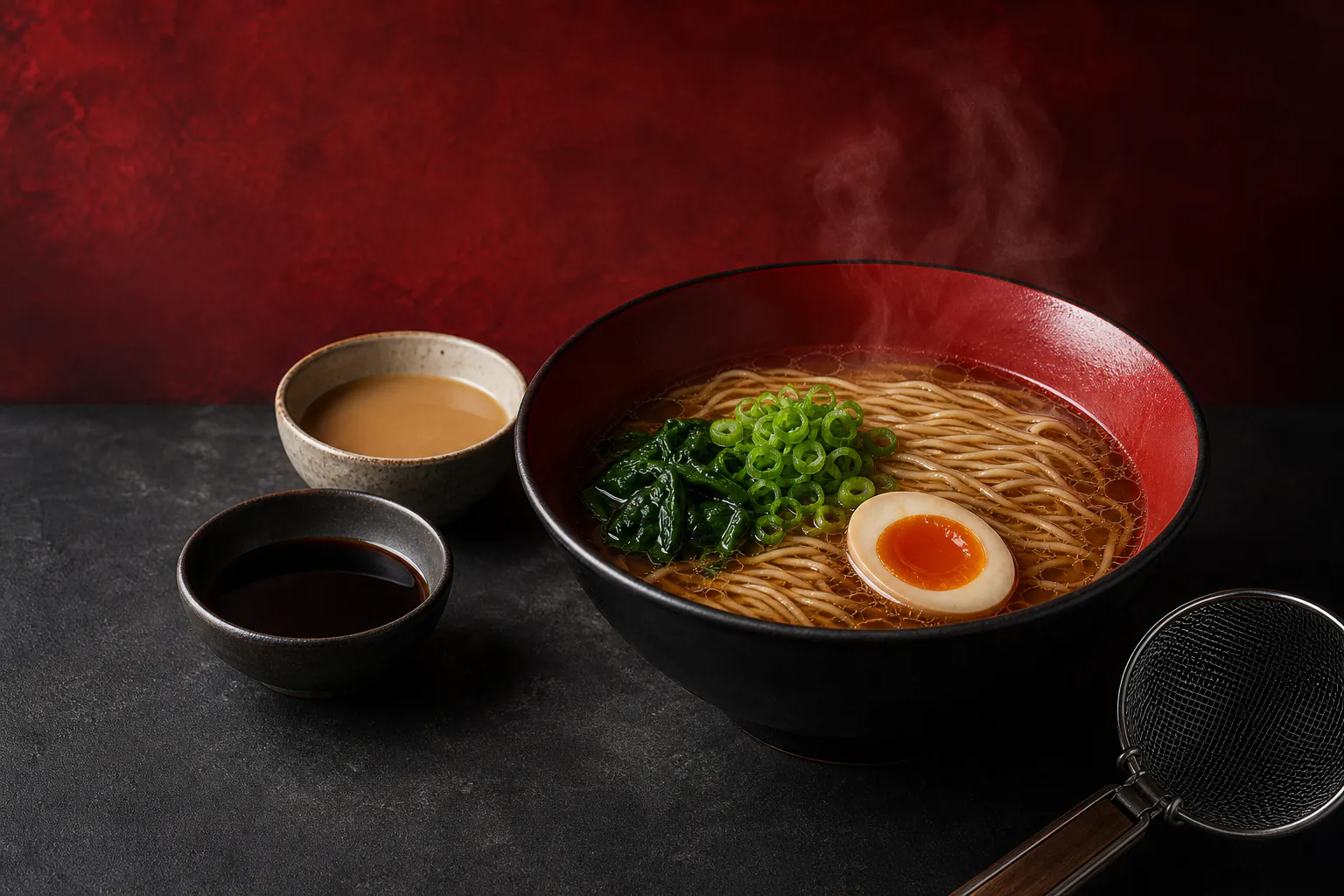
Use bought noodles and make the bowl architecture visible
Prepare a straightforward chicken or vegetable broth, a salty aromatic shoyu or miso tare and two ready toppings such as a jammy egg and blanched greens. Warm the serving bowl, cook fresh or dried ramen noodles separately until just done, add measured tare and hot broth to the bowl, drain noodles thoroughly and assemble immediately.
- 01
Ramen is not one recipe. Broth, tare, aroma oil, noodles and toppings vary across regional and personal styles.
- 02
A long pork-bone broth is a demanding specialist route, not the benchmark for a first enjoyable bowl.
- 03
The tare carries much of the salt. Keep broth relatively restrained and combine by measured ratios.
- 04
Noodles continue softening in hot soup. Diners, toppings and bowl must be ready before noodles enter the water.
What to expect
The final minute depends on earlier organisation
Most components can wait; cooked noodles cannot. The beginner skill is mise en place and tasting the assembled ratio.
Broth
Clarity, body and intensity differ. A lighter broth can still make complete ramen with good tare and aroma.
Tare
It is concentrated seasoning, not a table splash. Measure per bowl and adjust in small increments.
Noodles
Freshness, alkalinity and thickness change cooking time. Follow the packet and test early.
Toppings
Two well-prepared toppings give contrast without creating an exhausting project.
Temperature
Cold bowls and toppings cool soup quickly. Warm bowls safely and keep broth properly hot.
Leftovers
Store broth and toppings separately and cool them promptly; do not leave noodles soaking in soup.
Core method
Prepare every component for the same serving minute
Choose a restrained style
Begin with a tested shoyu, shio or miso recipe whose broth can be completed in one session. Read the entire ingredient list and identify the tare, broth and aroma elements. Use good shop-bought ramen noodles; making alkaline noodles is a separate technical project.
Make and taste components separately
Prepare broth with safe cooking and skimming, then strain it. Mix tare and label its intended amount per bowl. Make a small aromatic oil only if the recipe includes it. Each may taste incomplete alone; the useful test is a spoonful combined in the planned ratio.
Finish toppings before noodle water boils
Cook eggs to a safe tested method, chill and peel them carefully. Prepare greens, spring onions and cooked meat or tofu and hold each safely. Warm bowls with hot water, then empty and dry them. Lay out measured tare and a ladle for broth.
Assemble without delay
Cook noodles in abundant water and stir to separate. Add tare and hot broth to each warm bowl while noodles finish. Drain them vigorously, place into soup, loosen once and arrange toppings. Serve immediately. Write down broth-to-tare ratio and noodle time before memory fades.
Useful products
A technique reference and tools that improve timing, not necessity
The recipe book provides varied attainable bowl structures. Noodle strainers help when cooking portions for several bowls, and deep bowls retain soup and provide assembly space. Existing sieve, saucepan and bowls can make the first serving.
Makiko Sano Ramen: 80 Easy Noodle Bowls and Broths
It keeps broth, seasoning and toppings connected instead of collecting unrelated online fragments.
YUNLON Noodle Strainers, Set of Four
It becomes helpful when two or more bowls must receive noodles within seconds.
Berglander Large Ramen Bowls 1,200 ml, Set of Two
Warm deep bowls make assembly easier and slow heat loss compared with shallow tableware.
First project
Make two shoyu ramen bowls
Use one broth, one measured tare, shop-bought noodles, egg and greens. Two bowls expose timing without catering for a crowd.
- 01
Read and scale
Choose a tested recipe and calculate broth, tare and noodle amount for two.
- 02
Prepare broth and tare
Cook safely, strain and taste the combined ratio in a small cup.
- 03
Finish toppings
Have egg, greens and spring onion cut and ready before noodle cooking.
- 04
Warm the bowls
Use hot water safely, then empty and add measured tare.
- 05
Cook and drain noodles
Test before the packet maximum and remove water thoroughly.
- 06
Assemble and record
Add hot broth, noodles and toppings, serve immediately and note ratio and timing.
What can wait
What can wait until the first result
Depth comes from repeated balanced components before maximal cooking time.
- 01
Tonkotsu as the first broth
Long rolling pork-bone cooking adds time, ventilation, fuel and food-safety complexity.
- 02
Homemade alkaline noodles
Learn soup ratio and timing with a good purchased noodle first.
- 03
Ten toppings
They cool the bowl and turn one meal into several unrelated projects.
- 04
A dedicated bowl set
Any warm deep heat-safe bowl of suitable capacity works initially.
- 05
Unmeasured seasoning
A tare ratio makes the next bowl improvable; random splashes do not.
Upgrade path
Upgrade the repeated limitation
Add one deeper component while keeping assembly calm.
Simple bowl
Existing kitchen + ingredientsQuick broth + tare + bought noodles
Learn the architecture and serving minute.Better stock
About £5–£20Roasted bones or vegetables + careful extraction
Increase body and aroma.Aroma oil and marinated topping
About £5–£15One prepared extra component
Add a clear upper-note or contrast.Specialist broth or noodles
Time and equipment variableLong cook or alkaline dough process
Take responsibility for another technical system.Safety & care
Cool stocks quickly and handle hot liquid deliberately
Large pots, bones, eggs, cooked meat and stored broth create ordinary but significant kitchen risks.
- Cook meat, poultry, eggs and stock to current food-safety guidance and avoid cross-contamination with ready toppings.
- Cool leftover broth rapidly in shallow containers or an ice bath and refrigerate or freeze promptly.
- Lift and strain hot stock in manageable quantities; keep handles inward and do not carry an overfilled pot.
- Check soy, wheat, sesame, egg, fish and other allergens in tare, noodles, stock and toppings.
- Reheat broth thoroughly, store components separately and discard noodles left soaking at unsafe temperatures.
Outside help
When outside help earns its place
A ramen class can demonstrate tasting ratios and noodle timing, but a tested accessible recipe is enough for the first bowls.
Compare styles and make one clearly structured recipe.
Check broth style, allergens, class duration and whether participants complete assembly.
Representative UK prices and free learning routes checked 3 August 2026; local availability, materials and tutor support vary.
Sources
Where the guidance came from
A specialist Japanese cookery source explains bowl architecture and attainable recipes; UK food-safety principles govern stock and toppings.
-
01
Just One Cookbook · Japanese ramen guide
Styles, components, noodles and regional context.
Open source -
02
Just One Cookbook · Shio ramen
A structured home ramen recipe showing broth, tare and assembly.
Open source -
03
Just One Cookbook · Easy tonkotsu ramen
A more involved route and honest comparison with long broth work.
Open source -
04
Food Standards Agency · Chilling food correctly
UK guidance for chilling and refrigerating cooked food.
Open source -
05
Amazon UK · Ramen 80 Easy Noodle Bowls and Broths
Exact product page, model or ISBN, observed price and availability checked for this guide.
Open source -
06
Amazon UK · Set of four ramen noodle strainers
Exact product page, model or ISBN, observed price and availability checked for this guide.
Open source -
07
Amazon UK · Berglander ramen bowl set
Exact product page, model or ISBN, observed price and availability checked for this guide.
Open source
Guide information and links checked 3 August 2026.