Beginner’s guide · Make & create
Make the fizz work,
before adding fragrance.
Begin with a small, plain batch and weigh every ingredient. Moisture control and firm packing matter more than dramatic colours, oils or decorative extras.
Quick answer
Make a small plain batch and test one before adding extras
Use a reputable beginner formula or complete kit and weigh the dry ingredients rather than estimating cups. Break up lumps, combine thoroughly and add the permitted liquid in tiny dispersed amounts while mixing continuously. Stop when a squeezed handful just holds together without swelling or hissing. Overfill both mould halves, compress firmly, release according to the instructions and dry the bombs where humidity is low. Test one in plain bathwater and check the tub for residue or staining before changing colour, fragrance or decoration.
- 01
Use cosmetic-grade ingredients and a formula intended for bath bombs. Food-safe or natural does not automatically mean suitable for skin or bathwater.
- 02
Citric acid and bicarbonate react with moisture. Add liquids gradually and keep the room, tools and storage dry.
- 03
Weighing improves repeatability and makes troubleshooting possible. Record every ingredient, supplier, batch and amount.
- 04
Begin without fragrance, botanicals or strong colour. Each extra can introduce irritation, staining, drainage or preservation problems.
- 05
Making for personal use is different from supplying cosmetics. UK sellers need a safety assessment, responsible person, notification, compliant labelling and records.
What to expect
The mixture tells you about humidity immediately
A recipe that worked online can behave differently in a damp kitchen or with another colourant. The useful skill is recognising the narrow texture between loose powder and premature reaction.
Measurement
Small percentage changes matter. A scale and written batch sheet are more informative than another decorative mould.
Moisture
Too little binder makes a crumbly bomb; too much starts expansion in the bowl or mould. Fine misting distributes liquid more evenly than pouring.
Compression
Loose packing creates weak layers. Over-compression or twisting moulds can also make release difficult.
Drying
High humidity softens surfaces and can trigger warts or expansion. Give samples air and time before wrapping.
Skin
Fragrance, essential oils, dyes and glitter need specific cosmetic suitability and concentration evidence. “Natural” is not a safety assessment.
Bath
Oil, petals and mica can leave a slippery ring, stain porous surfaces or enter drains. Test the simplest version in the actual tub first.
Core method
Separate fizz chemistry from cosmetic decoration
Choose one documented formula
Use a kit or recipe from a reputable source that states weights, permitted ingredient grades and a clear method. Read every supplier document and allergen statement. Do not substitute household cleaners, undiluted essential oils or craft colourants because they look similar.
Prepare a dry controlled batch
Clean and dry the surface, bowl, moulds and scale. Wear eye and skin protection suited to the ingredients and avoid raising powder. Weigh each component into labelled containers, record the figures and mix slowly until colour and texture are uniform.
Add liquid by observation
Disperse only the formula’s stated binder or liquid in very small additions while mixing continuously. Squeeze a handful after each addition. The target holds briefly like damp sand without obvious fizz, warmth or expansion. Stop immediately if reaction begins rather than adding more powder at random.
Mould, dry and test
Pack both halves firmly, press together and release using the mould maker’s method. Dry on a labelled tray away from humidity, children and pets. Test one bomb before wrapping the rest, checking dissolution, residue, staining and comfort. Discard any batch with unknown contamination or an unexpected reaction.
Useful products
Products with a clear job in the setup
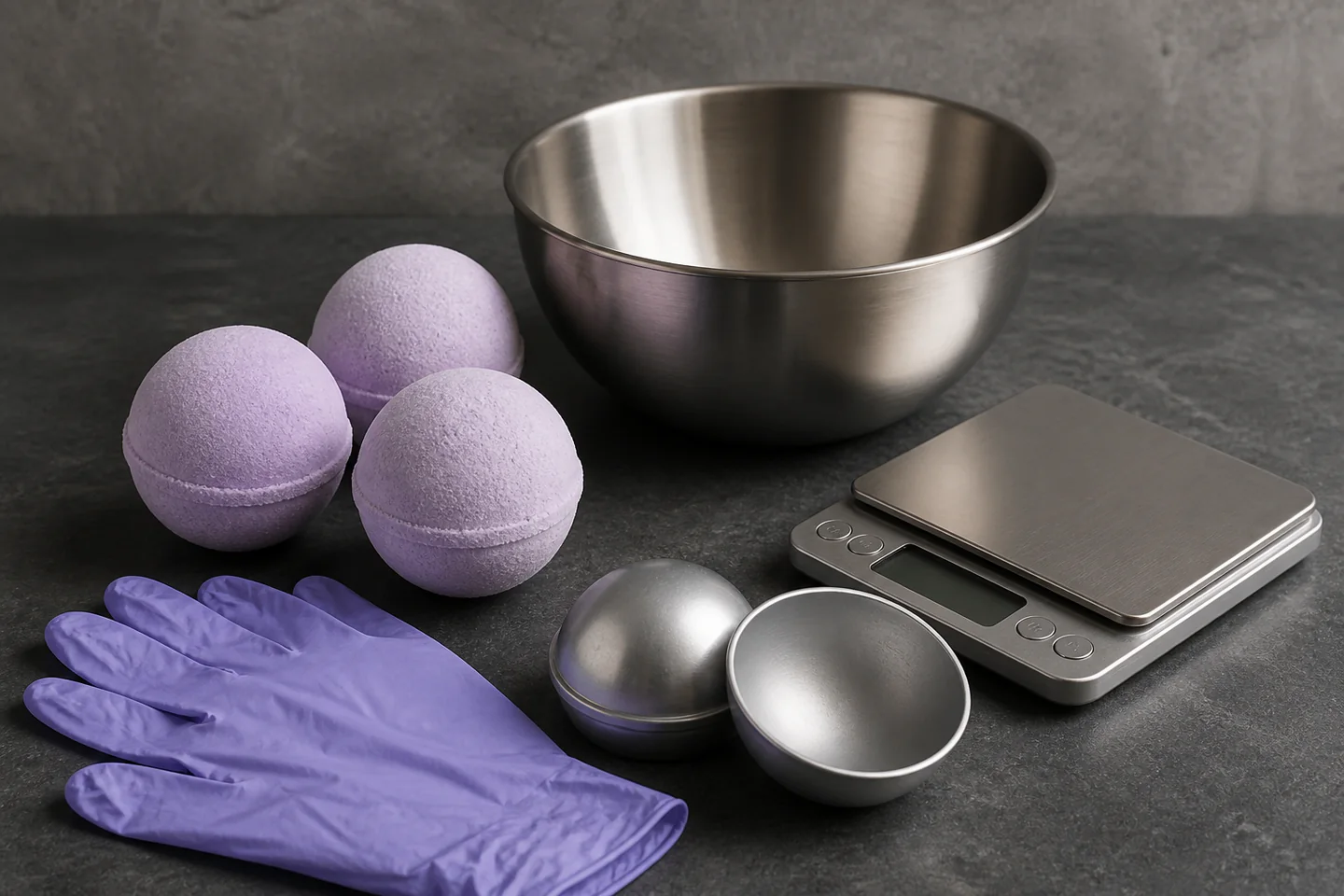
The beginner kit offers one bounded ingredient system, which is preferable to an unverified shopping list. The Salter scale is useful for repeatable batches, while nitrile gloves support cleaner handling. None of these products establishes that a formula is safe to sell or suitable for every bather.
Handmade Beauty Beginner Bath Bomb Making Kit
A complete kit reduces substitutions while a beginner learns moisture and mould pressure.
Salter 1036 Digital Kitchen Scale
Taring separate bowls and recording gram weights makes a soft or crumbly batch diagnosable.
Unigloves Pearl Nitrile Examination Gloves
A fitted glove preserves dexterity while mixing and packing more reliably than a loose kit glove.
First project
Make six plain round bath bombs
One colour at most, no petals and no improvised fragrance: the first batch is a moisture and compression test.
- 01
Read and record
Copy the exact formula, weights, ingredient suppliers and expected drying time.
- 02
Dry the equipment
Check the bowl, moulds, scale and work surface before opening powders.
- 03
Mix the dry phase
Break lumps and distribute ingredients without raising a visible cloud.
- 04
Add liquid gradually
Mist or drizzle only as instructed, mixing continuously and testing a squeezed handful.
- 05
Pack and release
Overfill the mould halves, compress evenly and unmould without twisting the wet shape apart.
- 06
Dry and test one
Wait the full stated time, then inspect the bomb and tub before using or wrapping the rest.
What can wait
What can wait until the first result
Decoration hides the evidence a beginner needs. A plain stable bomb is the foundation for every later colour or scent decision.
- 01
Undiluted essential oils
Skin exposure limits and allergens need formulation evidence; drops guessed from an aromatherapy bottle are not a safe method.
- 02
Dried petals and oats
They can create debris, drainage problems and microbiological questions without improving the fizz.
- 03
Large mica loads
Poorly dispersed pigments can stain tubs or leave rings; use only cosmetic-suitable colourants at supported levels.
- 04
Complex layered moulds
They multiply moisture and timing variables before a basic sphere releases cleanly.
- 05
Selling or gifting widely
Supplying a cosmetic triggers legal duties that a successful home test does not satisfy.
Upgrade path
Upgrade the repeated limitation
Upgrade only after a written formula gives the same dry, stable result across several small batches.
Plain personal batch
About £20–£55Kit, scale and simple mould
Learn moisture, pressure and drying.Repeatable colours
About £40–£100Cosmetic colourants and fine mister
Control shade without staining or activation.Documented fragrance
About £70–£180Supplier documents and formula records
Evaluate supported skin-safe concentrations.Products for supply
£250–£1,000+Safety assessment, compliance and batch system
Meet UK cosmetic obligations before sale or distribution.Safety & care
Personal experimentation does not replace cosmetic safety
A bath bomb contacts skin, changes bathwater and may be used by someone with allergies or a health condition. Keep the formula simple and never make therapeutic claims.
- Avoid breathing powders, protect eyes and skin as specified and work in ventilation; clean settled dust without dry sweeping it into the air.
- Use only cosmetic-suitable ingredients from traceable suppliers and follow their concentration, allergen and storage information.
- Test for tub staining and slippery residue, rinse the bath after use and keep products away from children and pets unless specifically designed and assessed for them.
- People with sensitive skin, allergies, pregnancy concerns or medical conditions should check ingredients and seek appropriate professional advice rather than relying on a hobby guide.
- Before selling or otherwise supplying products in Great Britain, follow current cosmetic safety assessment, responsible-person, notification, labelling and record duties.
Outside help
When outside help earns its place
A reputable kit and chemistry explanation are enough for personal experiments. Formal cosmetic formulation training becomes worthwhile before adding complex ingredients or considering products for anyone beyond the maker.
Prefer exact weights, ingredient grades and explanations of the acid–base reaction.
Ask whether the tutor covers UK safety assessments, allergens, records and selling obligations.
Representative UK learning options checked 18 August 2026; local prices, access, materials and tutor support vary.
Sources
Where the guidance came from
Science educators explain the fizz reaction, while UK government guidance defines the separate responsibilities attached to cosmetic products. Maker recipes are useful only when ingredient grades and weights are explicit.
-
01
Royal Society of Chemistry · Making bath bombs
Accessible explanation of the acid–base reaction and practical activity.
Open source -
02
BBC Good Food · How to make a bath bomb
A measured introductory method and handling context.
Open source -
03
GOV.UK · Cosmetic products for consumers
Current UK consumer and cosmetic-product framework.
Open source -
04
GOV.UK · Making cosmetic products available in Great Britain
Responsible person, assessment, notification and labelling duties.
Open source -
05
Reddit · r/BathBomb
Community evidence on humidity, cracking, expansion, staining and kit results.
Open source -
06
Amazon UK · Beginner Bath Bomb Making Kit
Exact product catalogue page or ISBN used for the recommendation; current price, seller, specification and availability should be confirmed.
Open source -
07
Amazon UK · 1036 Digital Kitchen Scale
Exact product catalogue page or ISBN used for the recommendation; current price, seller, specification and availability should be confirmed.
Open source -
08
Amazon UK · Pearl Nitrile Examination Gloves
Exact product catalogue page or ISBN used for the recommendation; current price, seller, specification and availability should be confirmed.
Open source
Guide information and links checked 18 August 2026.