Beginner’s guide · Make & create
A small still life built from three value groups
Mix values before chasing detail.
Start with six reliable colours, a few synthetic brushes and proper acrylic paper. Paint one simple object in large shapes, then add only the darks and edges it needs.
Quick answer
Paint large light, middle and dark shapes first
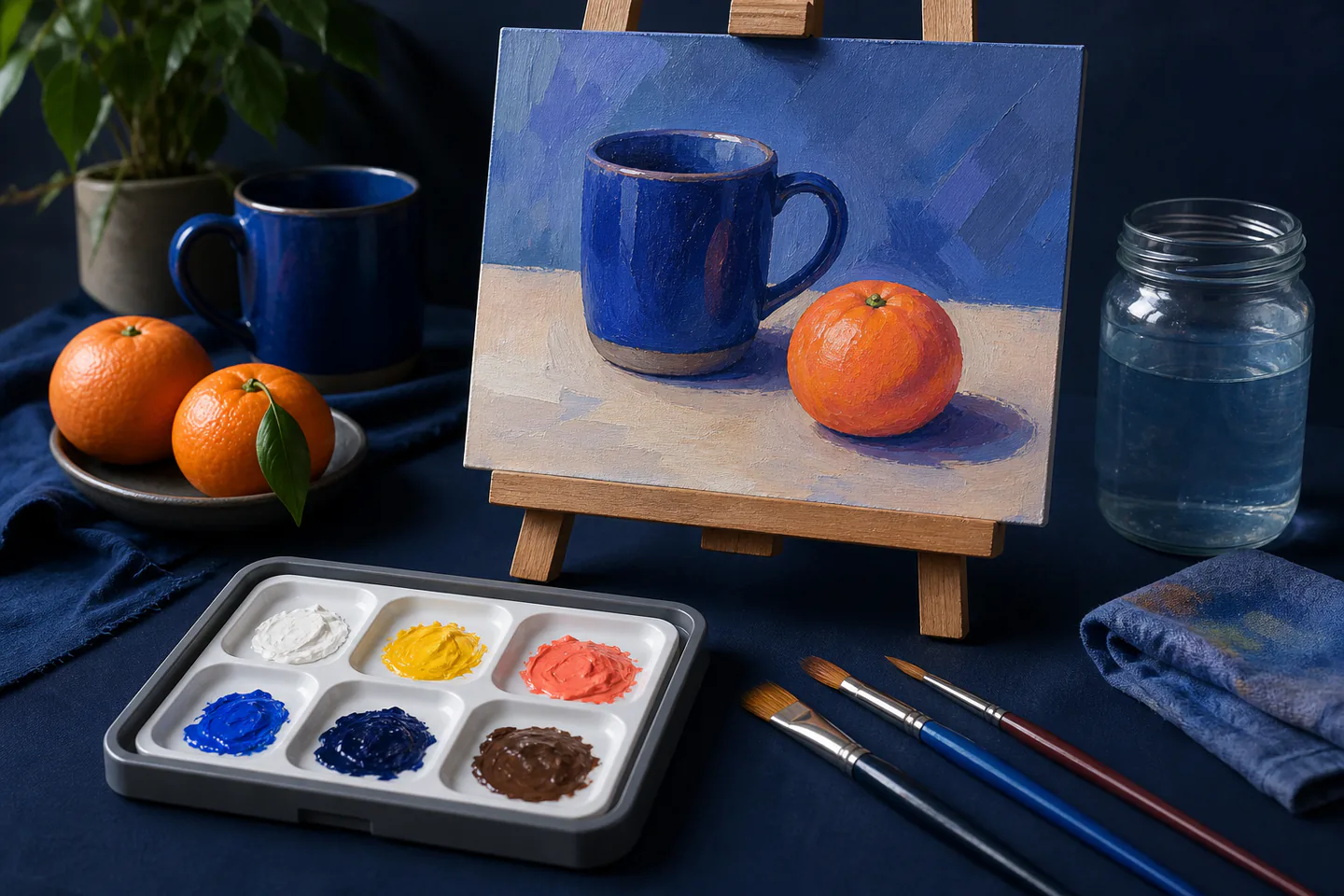
Use a small set of artist or good student acrylics, two synthetic brushes and acrylic paper or a primed panel. Arrange one mug and one piece of fruit under side light. Mix a light, middle and dark version of the dominant colours before painting. Block the background and largest shapes with opaque strokes, let them dry, then add a smaller shadow layer and a few deliberate edges.
- 01
Acrylic is water-soluble while wet and water-resistant when dry, so brushes and palettes must be cleaned before paint hardens.
- 02
Colour often dries slightly darker and flatter than it appears wet; make a small test and mix enough for the area.
- 03
Water changes flow but too much can weaken a paint film on some surfaces; use modest water and an acrylic medium for larger dilution.
- 04
Acrylic can cover an error after drying. Repeatedly scrubbing half-dry paint usually creates rough colour instead of a clean correction.
What to expect
Fast drying is both the convenience and the challenge
Acrylic supports quick layers and correction, but a large blend may set before a beginner has mixed the next colour.
Palette
Thin paint spread over a dry palette skins quickly; arrange small piles and use a mist or stay-wet system only when useful.
Mixing
Black and white alone can make colour chalky or dead. Compare hue, value and temperature separately.
Coverage
Student colours vary in opacity; a second dry layer is often cleaner than one thick overloaded coat.
Edges
Hard edges come from wet paint on dry surface; soften while both colours remain workable or repaint deliberately.
Brushes
Dried acrylic near the ferrule spreads bristles permanently, so rinse during the session and wash immediately afterward.
Surface
Thin paper buckles and absorbs unpredictably; acrylic paper, board or primed canvas gives the paint a stable ground.
Core method
Organise the palette around the picture, not the tube count
Prepare a bounded colour set
Use the six-colour System3 set plus white, or its supplied palette, and identify warm and cool relationships by mixing small tests. Put only modest paint out at first. Keep one water jar for rinsing, a cloth for controlling moisture and a lidded waste container for dried scraps. Protect the table and clothing.
Draw and group values
Crop the still life tightly and draw only the outer shapes, table line and cast shadow. Squint or use a monochrome phone preview to group the scene into light, middle and dark. Mix those values before covering the surface so the composition remains readable even before detail.
Block, dry and layer
Use the largest suitable flat or filbert brush for the background and main shapes. Place paint decisively and avoid tracing every outline. Let the first layer dry, correct proportions with opaque colour, then glaze or scumble selected changes. Keep a spray bottle away from floors and electronics if used.
Choose edges and finish cleanly
Sharpen the focal edge, soften a turning edge and leave unimportant boundaries quiet. Add the smallest dark and highlight last. Stop when the large value design reads from across the room. Wash brushes with soap before paint dries, reshape them and dry flat or bristles-up.
Useful products
Products with a clear job in the setup
System3 supplies a small coherent paint range and matching synthetic brushes. The Canson pad is a repeatable practice surface; small studies on paper are more useful here than buying many stretched canvases.
Daler-Rowney System3 Acrylic Starter Set, 6 × 22 ml
The colours can cover mixing, opaque layers and small studies, and individual colours are replaceable later.
Daler-Rowney System3 Acrylic Brush Wallet, 4 Brushes
The shapes suit the same paint range and let the learner compare broad and controlled marks.
Canson XL Oil and Acrylic Pad, 9 × 12 inches
It handles acrylic more predictably than printer or sketch paper and makes a series of small studies affordable.
First project
Paint a mug and fruit in three passes
The two simple forms provide straight, curved, light and shadow edges without demanding fine drawing.
- 01
Set one side light
Arrange the objects so the cast shadow and light side are easy to distinguish.
- 02
Mix value families
Prepare light, middle and dark piles for the main colours before applying paint.
- 03
Block the surface
Use a larger brush for background, table, mug and fruit without small details.
- 04
Dry and correct
Let the layer set, then repaint proportion and negative-space errors opaquely.
- 05
Add shadows and edges
Use the mid and dark mixes to turn forms and identify the focal boundary.
- 06
Place final accents
Add one small highlight, clean brushes fully and date the study on the reverse.
What can wait
What can wait until the first result
The first painting needs repeatable colour and a stable surface, not specialist effects.
- 01
A huge craft-paint bundle
Many weak or duplicate colours make mixing harder and often dry inconsistently.
- 02
Pouring medium and silicone
Acrylic pouring is a separate process with its own ratios, waste and ventilation considerations.
- 03
An easel
A protected table or inexpensive board supports a small first study adequately.
- 04
Retarder and many mediums
Learn the normal drying behaviour before changing it with additives.
- 05
Large gallery canvases
Paper studies reduce cost, storage and fear while value and brush control develop.
Upgrade path
Upgrade the repeated limitation
Upgrade the colour, surface or working time that repeatedly restricts a chosen style.
Small paper study
About £30–£45Six colours + brushes + acrylic pad
Learn value, coverage and layering.Selected larger tubes
About £20–£55Replace most-used pigments + larger white
Mix enough paint for broader shapes.Panels or stretched canvas
About £10–£40 eachPrimed rigid or fabric surface
Change texture, scale and presentation.Artist acrylic and mediums
About £50+Chosen pigments + specific gel or fluid medium
Control pigment strength, body and transparency.Safety & care
Keep wet paint out of bodies and dry paint out of drains
Acrylic products vary by pigment and additive; ordinary studio hygiene protects people, pets and plumbing.
- Read paint and medium labels, avoid mouth-pointing brushes and wash hands before eating or touching the face.
- Ventilate varnish, spray, sanding or specialist-medium use and follow each product’s protective-equipment instructions.
- Keep rinse water stable and separate from drinks; allow solids to settle and follow local disposal guidance rather than pouring concentrated paint outdoors.
- Protect skin and clothing, clean spills before they dry and keep paints away from children and pets.
- Support posture, use good light and stop before repetitive grip or close visual work causes pain.
Outside help
When outside help earns its place
A limited-palette still life can be repeated alone. A workshop earns its place when live feedback on colour mixing and edge control would shorten persistent trial and error.
Use the maker’s material and technique pages to understand paint body, paper and compatibility.
Check that learners mix colour and complete a small painting rather than copy pre-mixed steps only.
Representative UK product, club, lesson and venue costs checked 9 August 2026; local prices, access, weather, materials and tutor support vary.
Sources
Where the guidance came from
Paint and surface makers explain material behaviour; established art educators and artist communities add practical mixing and brush-care experience.
-
01
Daler-Rowney · System3
Manufacturer properties, compatible surfaces, colour and medium information.
Open source -
02
Golden Artist Colors · Acrylic information
Technical articles on acrylic films, water, mediums and studio practice.
Open source -
03
Tate · Acrylic paint
Museum definition and material context.
Open source -
04
Jackson’s Art · Acrylic painting
Specialist articles on paint, surfaces, brushes and techniques.
Open source -
05
Reddit · r/acrylicpainting
Community examples and recurring beginner questions.
Open source -
06
Amazon UK · Daler-Rowney System3 starter set
Exact product page, model or ISBN, observed price and availability checked for this guide.
Open source -
07
Amazon UK · Daler-Rowney System3 brush wallet
Exact product page, model or ISBN, observed price and availability checked for this guide.
Open source -
08
Amazon UK · Canson XL Oil and Acrylic Pad
Exact product page, model or ISBN, observed price and availability checked for this guide.
Open source
Guide information and links checked 9 August 2026.