Beginner’s guide · Make & create
Seal thin layers,
not trapped bubbles.
Start with a small wooden box or coaster, thin paper and one compatible decoupage medium. Surface preparation and patient drying matter more than an elaborate motif.
Quick answer
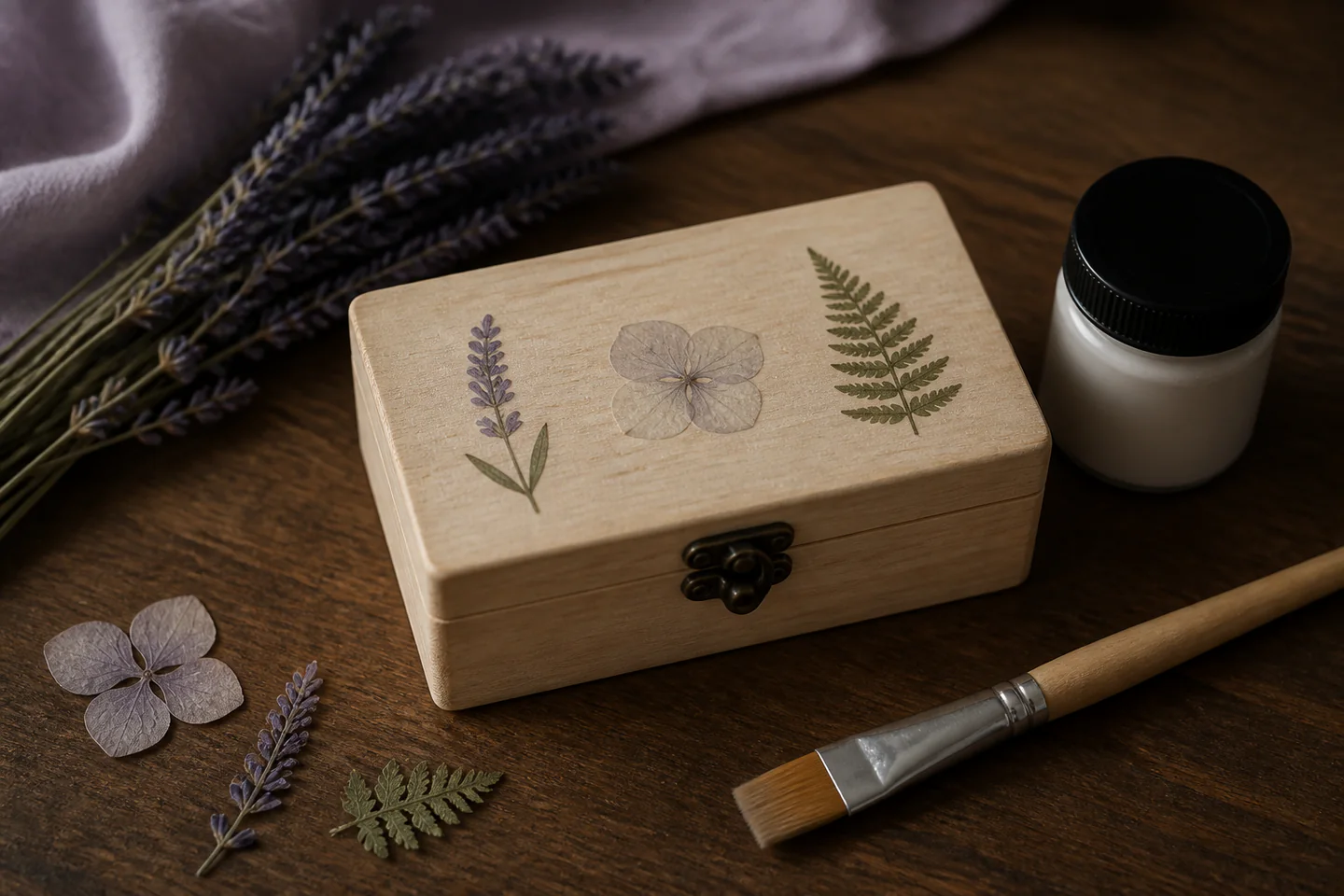
Cover one flat wooden lid with three simple paper motifs
Choose a clean unfinished wooden box or flat coaster and a decoupage medium documented for wood and paper. Sand only as needed in a controlled dust area, wipe clean and test the medium on the back or a spare piece. Tear or cut three thin motifs, arrange them dry, then apply a modest even coat beneath the first piece. Lower it from one edge, smooth gently through clean release material and let it dry before adding protective coats according to the maker.
- 01
The surface, paper and medium must be compatible. A general “craft glue” may dry cloudy, remain tacky or stain printed ink.
- 02
Thin paper conforms easily but tears when saturated. Handle with a soft brush and minimal repeated rubbing.
- 03
Air bubbles are prevented through flat preparation and controlled placement, not crushed after the piece has begun setting.
- 04
Multiple thin topcoats cure more reliably than one flooded coat. Respect recoat and full-cure times.
- 05
A sealed decorative surface is not automatically food-safe, heat-safe, washable or suitable for children’s objects. Use only documented applications.
What to expect
The wet stage looks worse before it looks better
Paper darkens, fibres expand and brush marks show while the medium is wet. Good results come from resisting unnecessary correction until the documented dry time passes.
Surface
Dust, grease, wax and loose finish prevent adhesion. Preparation depends on the object, not one universal sanding rule.
Paper
Napkins and tissue become transparent and fragile; heavier paper creates firmer edges. Test before choosing the visual effect.
Ink
Home prints can bleed under water-based medium. A scrap test with the exact printer and paper is essential.
Placement
Large sheets trap more air and stretch more than small motifs. Start small and flat.
Edges
Torn fibres blend softly; scissor cuts create a deliberate boundary that may need more topcoats to level.
Cure
Touch-dry is not full cure. Keep the object unused, unstacked and away from moisture for the complete stated period.
Core method
Test the full material sandwich before decorating
Define the object’s real use
A decorative box lid or display tile is a safe first target because it avoids food, heat and prolonged water. Identify the substrate and any existing coating. Read the medium label for compatible surfaces, cleaning, ventilation, recoat, cure and service limitations before sanding or opening the jar.
Prepare and run a back test
Protect the table and lightly prepare the surface only as instructed. Remove dust completely. Apply a sample of the planned paper and medium to the underside or a scrap of matching wood. Let it dry fully, then inspect for bleed, clouding, tack, wrinkles and adhesion.
Arrange, photograph and place
Cut or tear three motifs and arrange them dry with clear spacing. Photograph the layout. Brush a thin even bed slightly larger than the first piece, lower the paper from one side and smooth outward with a soft clean tool through release material if recommended. Stop before the wet fibres abrade.
Dry between protective coats
Allow the piece to dry flat and dust-free for the stated interval. Apply thin topcoats beyond the paper edge with fewer confident strokes, changing direction only if the product directs. Let the final coat cure completely before closing a box, stacking pieces or judging clarity.
Useful products
Products with a clear job in the setup
Mod Podge Matte is a recognised combined decoupage adhesive and finish, while Canson mixed-media paper can be painted to create original rights-clear motifs. Fiskars’ trimmer is a later convenience for geometric paper. A soft flat brush and small unfinished object can come from existing supplies if compatible.
Mod Podge Matte Waterbase Sealer, Glue and Finish, 32 oz
The manufacturer publishes application guidance and the same system handles bonding and sealing.
Canson XL Mix Media Pad, 11 × 14 inches
The sheets can be painted, stamped or drawn and then cut after drying.
Fiskars SureCut A4 Paper Cutter, Narrow Base
It speeds consistent straight pieces once design moves beyond hand-torn motifs.
First project
Découpage three botanical shapes onto a box lid
A flat removable lid keeps placement visible and avoids complex curves, hinges and functional surfaces.
- 01
Read the use limits
Keep the first object decorative and confirm surface compatibility.
- 02
Run a hidden test
Apply exact paper and medium to the underside and let it cure.
- 03
Prepare three motifs
Cut or tear, arrange dry and photograph the selected spacing.
- 04
Bond one at a time
Use a thin even bed and smooth gently from the first contact edge.
- 05
Dry before sealing
Leave the lid flat for the full recoat interval.
- 06
Build thin topcoats
Extend past edges and allow full cure before handling normally.
What can wait
What can wait until the first result
Large furniture and functional kitchenware multiply surface, durability and safety questions before a flat paper bond is understood.
- 01
A whole tabletop
Large wet sheets stretch and trap bubbles; the first project should be small and replaceable.
- 02
Food-contact trays
A glossy sealed finish is not evidence of food-contact approval or heat resistance.
- 03
Home-printed photos
Printer ink may bleed; use a tested copy only after the simple paper route.
- 04
Thick glitter topcoats
Texture and suspended particles can hide wrinkles rather than solve them.
- 05
Power sanding
Small hand preparation and dust control are sufficient for a box lid.
Upgrade path
Upgrade the repeated limitation
Upgrade surface size, paper delicacy or finish only after small flat motifs bond and cure consistently.
Small flat object
About £20–£50Compatible medium, paper and brush
Learn bonding and cure.Curved forms
About £30–£90Thin tissue, detail brushes and templates
Conform paper without tearing.Furniture accents
About £60–£250Surface prep, larger prints and durable system
Work at scale after compatibility tests.Archival or sale work
About £100–£500+Documented materials, rights records and finish testing
Improve longevity and claims.Safety & care
A decorative coating has documented limits
Never infer food, heat, child, outdoor or wash safety from the word “sealer”. Follow the exact product label and keep the first object purely decorative.
- Follow current medium, paint, primer and finish labels for ventilation, skin contact, cleanup, cure and disposal.
- Control sanding dust, identify old coatings before disturbing them and do not sand mystery or potentially lead-containing finishes.
- Keep all craft tools and containers separate from food preparation and never use an oven or dishwasher to accelerate cure unless explicitly authorised.
- Use only images and printed materials you have permission to reproduce, especially for work that will be published or sold.
- Supervise children, secure blades and small motifs and keep wet projects away from pets until fully cured.
Outside help
When outside help earns its place
A label-led small box is enough to begin. A workshop is useful for napkin handling, curved objects, furniture preparation and honest durability testing.
Use instructions for the exact medium, surface and curing conditions.
Ask which surface, medium, paper, safety and take-home object are included.
Representative UK learning options checked 17 August 2026; local prices, access, materials and tutor support vary.
Sources
Where the guidance came from
Medium and paper manufacturers define compatibility and cure; conservation and craft communities add surface preparation, paper behaviour and image-rights context.
-
01
Plaid · Mod Podge
Manufacturer formulas, project use and application guidance.
Open source -
02
Canson · XL Mixed Media
Paper surface, weight and media suitability.
Open source -
03
V&A · Caring for paper
Museum paper handling and preservation context.
Open source -
04
DACS · Copyright knowledge base
UK artist copyright and reproduction guidance.
Open source -
05
Reddit · r/decoupage
Community experience of media, wrinkles, paper choice and curing.
Open source -
06
Amazon UK · Matte Waterbase Sealer, Glue and Finish, 32 oz
Exact product catalogue page or ISBN used for the recommendation; current price, seller and availability should be confirmed.
Open source -
07
Amazon UK · XL Mix Media Pad, 11 × 14 inches
Exact product catalogue page or ISBN used for the recommendation; current price, seller and availability should be confirmed.
Open source -
08
Amazon UK · SureCut A4 Paper Cutter, Narrow Base
Exact product catalogue page or ISBN used for the recommendation; current price, seller and availability should be confirmed.
Open source
Guide information and links checked 17 August 2026.