Beginner’s guide · Play & perform
A steady one-minute two-chord song
Tune first, then make one clean change.
Start with a playable soprano or concert ukulele, a clip-on tuner and two simple chords. Short daily practice on clean fretted notes and steady rhythm produces a recognisable song faster than memorising a chord dictionary.
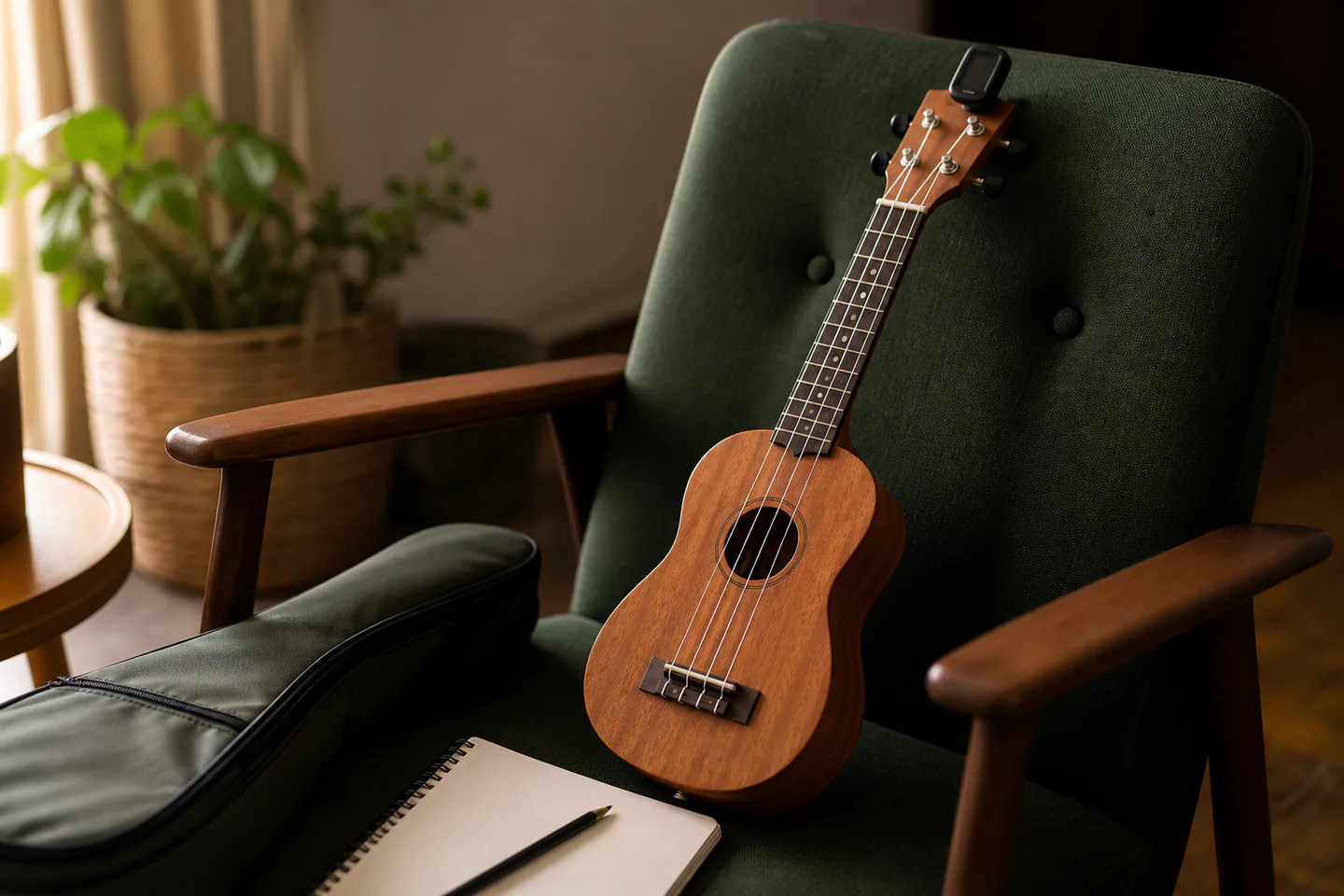
Quick answer
Tune every session and learn C to F before adding more chords
Use a set-up soprano or concert ukulele that holds tuning and has comfortable string height. Clip on a chromatic tuner and tune standard re-entrant G–C–E–A, checking the octave and direction rather than tightening blindly. Fret C with the ring finger, F with two fingers and practise silent changes, then strum four even downstrokes per chord with the index finger. Switch once per bar and keep the pulse slow enough to stay relaxed.
- 01
New nylon strings stretch and need frequent retuning for days; this is normal if the instrument otherwise holds pitch.
- 02
Soprano is compact and bright; concert offers a little more finger space. Neither size is automatically more “beginner”.
- 03
Cheap instruments can have high action, sharp fret ends or unstable tuners. Playability matters more than a decorative bundle.
- 04
A phone tuner can start, but a clip-on tuner hears vibration and works more reliably around background sound.
What to expect
The left hand and right hand learn at different speeds
A chord can sound clean while the change still interrupts the beat. Practise shape, change and rhythm separately before combining them.
Tuning
Name the string before turning a peg, make small adjustments and approach pitch slowly to reduce snapped strings and wrong octaves.
Fretting
Place fingertips just behind the fret with only enough pressure for a clear note; squeezing harder creates fatigue.
Thumb
Let the thumb support the neck without clamping it in the palm so fingers can arch over adjacent strings.
Strum
Use a loose wrist and the side of the index nail or fingertip; movement can be small and even.
Change
Prepare the next shape during the final beat, accept a slow tempo and keep the rhythm more important than speed.
Practice
Five focused minutes most days develops callus and coordination better than one painful hour followed by a week away.
Core method
Build tuning, sound and rhythm as separate habits
Check setup and posture
Sit upright with shoulders relaxed, support the body against the torso and angle the neck slightly upward. Check for sharp frets, excessive string height, buzzing hardware and slipping tuners. A shop setup is worthwhile if the instrument fights basic fretting.
Tune with deliberate small movements
Attach the tuner where it can sense the headstock, pluck one string gently and confirm G, C, E or A before turning. Mute other strings, let the display settle and stop at pitch. Repeat after several minutes because changing one string can slightly move the others.
Make each chord clean
Fret C, pluck all four strings separately and adjust only the muted note. Repeat with F. Release pressure without removing the fingers far from the fretboard and make ten slow changes without strumming, keeping the hand loose.
Add a steady song pulse
Set a comfortable count such as 60 beats per minute. Strum four downstrokes on C, change, then four on F. Hum or sing only after the change can continue without stopping. Record one minute and listen for pulse, buzz and unnecessary tension.
Useful products
A playable instrument, a visible tuning reference and an optional method book
The Kala KA-15S is the complete instrument route, the D’Addario tuner solves the repeated tuning task and the method book gives a structured song sequence. A phone tuner and free lessons can replace the last two at first.
Kala KA-15S Mahogany Soprano Ukulele
It is widely supported, uses standard tuning and can remain useful after the first songs.
D’Addario NS Micro Headstock Tuner PW-CT-12
Its discreet clip and vibration sensing make tuning quick enough to become a session habit.
Alistair Wood Ukulele For Dummies, 2nd Edition
It offers broader progression than disconnected song tutorials and remains searchable later.
First project
Record a clean two-chord minute
A simple recording reveals timing and buzz more honestly than adding a third chord.
- 01
Tune G–C–E–A
Name each string, adjust slowly and recheck all four.
- 02
Check C note by note
Move the fingertip close to the fret until all strings ring.
- 03
Check F note by note
Arch both fingers and keep the unused strings clear.
- 04
Make ten silent changes
Keep fingers close and release excess pressure.
- 05
Strum four beats each
Use a loose wrist and slow uninterrupted count.
- 06
Record and review
Choose either tuning, buzz, change or pulse for the next session.
What can wait
What can wait until the first result
Electronics, effects and a large chord vocabulary can wait until tuning and pulse are reliable.
- 01
An electric pickup
Amplification makes existing sound louder but does not improve fretting or rhythm.
- 02
Many accessories
A strap, capo and picks are preference tools, not requirements for the first two chords.
- 03
Alternate tunings
Standard G–C–E–A keeps beginner lessons and chord diagrams consistent.
- 04
Fast elaborate strums
Even downstrokes create a musical foundation before syncopation.
- 05
A second ukulele
Size and tone preferences become clearer after regular practice on one playable instrument.
Upgrade path
Upgrade the repeated limitation
Upgrade only when setup, neck space, tone or performance needs are repeated and specific.
Playable start
About £70–£130Ukulele + tuner + free lessons/book
Learn tuning, chords and pulse.Professional setup
About £30–£70Nut/saddle/action check + fresh strings
Improve comfort and intonation.Different size or tone
About £120–£350Concert/tenor or solid-top instrument
Add space, sustain or projection.Performance route
About £250–£800+Pickup instrument + amp/DI
Connect to venues after playing skill exists.Safety & care
Protect hearing, hands and the instrument
Ukulele is low risk, but excessive pressure, repetitive practice, unstable stands and careless tuning cause avoidable problems.
- Tune by string name and make small peg movements; stop if a string, bridge or tuner appears damaged.
- Use relaxed posture, take breaks and stop for sharp pain, numbness or persistent tingling.
- Keep the instrument away from radiators, hot cars, severe humidity changes and unstable leaning positions.
- Use a secure strap or stand if standing and keep cables out of walkways when amplified.
- Keep listening volume moderate and use appropriate hearing protection around amplified rehearsals.
Outside help
When outside help earns its place
Free video lessons and a structured book are enough for the first song. A teacher earns the cost when setup, pain, rhythm or a specific style remains stuck.
Use manufacturer beginner tuning, chord and song material.
Check instrument loan, style, group size and whether setup is assessed.
Representative UK product, club, lesson and venue costs checked 9 August 2026; local prices, access, weather, materials and tutor support vary.
Sources
Where the guidance came from
Manufacturer and music-education sources define setup and technique; long-running player communities add model, string and practice experience.
-
01
Kala · Learn to play ukulele
Manufacturer beginner tuning and playing resources.
Open source -
02
D’Addario · Tuning support
Tuner use and instrument-care guidance.
Open source -
03
Ukulele Underground · Beginner lessons
Established specialist lessons and song practice.
Open source -
04
Ukulele Underground Forum
Player reports on models, setup, strings and learning.
Open source -
05
Reddit · r/ukulele
Recurring beginner questions on size, tuning and practice.
Open source -
06
Amazon UK · Kala KA-15S soprano ukulele
Exact product page, model or ISBN, observed price and availability checked for this guide.
Open source -
07
Amazon UK · D’Addario NS Micro tuner
Exact product page, model or ISBN, observed price and availability checked for this guide.
Open source -
08
Amazon UK · Ukulele For Dummies
Exact product page, model or ISBN, observed price and availability checked for this guide.
Open source
Guide information and links checked 9 August 2026.