Beginner’s guide · Make & create
Match the seat construction
before ordering the cane.
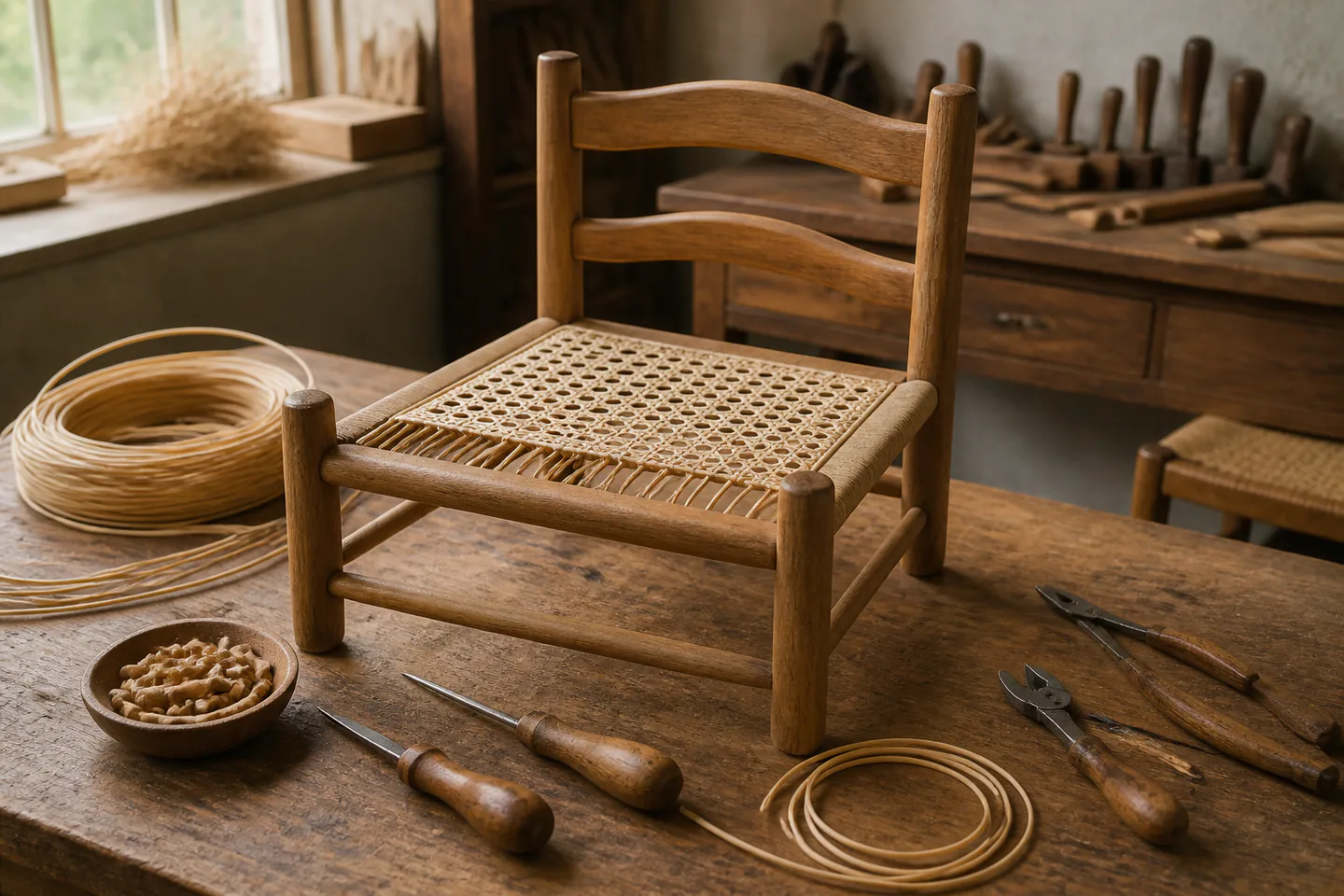
Chair caning starts by identifying drilled-hole cane, pressed cane, rush or another seat system, then practising the matching tension and edge treatment.
Quick answer
Build one small, controlled result first
Inspect the chair frame before removing anything. Match holes, groove or rails to the correct caning system, photograph the old pattern, repair the frame first and practise tension on a small sample before weaving the seat.
- 01
Confirm that the frame is structurally sound and identify whether the seat uses hand cane through holes, pressed webbing in a groove, rush, splint or another method. Keep the first attempt narrow enough that preparation, the main action and the result can all be reviewed together.
- 02
Keep material moisture and tension even without using the weave to pull a weak or distorted frame back into shape. Keep the first attempt narrow enough that preparation, the main action and the result can all be reviewed together.
- 03
Inspect spacing, diagonals, edge abrasion and frame movement at every stage rather than discovering accumulated tension at the final row. Keep the first attempt narrow enough that preparation, the main action and the result can all be reviewed together.
- 04
Let natural material dry gradually, trim only after the structure is secure and store spare cane labelled by type and size. Keep the first attempt narrow enough that preparation, the main action and the result can all be reviewed together.
What to expect
Accuracy comes from the sequence, not the size of the toolkit
Preparation, one controlled variable and an honest inspection matter more than collecting specialist equipment.
The first attempt
A framed sampler or straightforward pressed-cane seat teaches material behaviour with less risk than an important antique. For chair caning, note what actually happened rather than relying on memory; that turns the next attempt into a controlled change instead of another guess.
The control point
Keep material moisture and tension even without using the weave to pull a weak or distorted frame back into shape. For chair caning, note what actually happened rather than relying on memory; that turns the next attempt into a controlled change instead of another guess.
The useful signal
Inspect spacing, diagonals, edge abrasion and frame movement at every stage rather than discovering accumulated tension at the final row. For chair caning, note what actually happened rather than relying on memory; that turns the next attempt into a controlled change instead of another guess.
The common trap
Ordering by the word cane alone can produce the wrong strand, spline, webbing width or weaving method. For chair caning, note what actually happened rather than relying on memory; that turns the next attempt into a controlled change instead of another guess.
Core method
Prepare, make, inspect and reset
Prepare deliberately
Confirm that the frame is structurally sound and identify whether the seat uses hand cane through holes, pressed webbing in a groove, rush, splint or another method. For chair caning, note what actually happened rather than relying on memory; that turns the next attempt into a controlled change instead of another guess.
Control the central variable
Keep material moisture and tension even without using the weave to pull a weak or distorted frame back into shape. For chair caning, note what actually happened rather than relying on memory; that turns the next attempt into a controlled change instead of another guess.
Read the result
Inspect spacing, diagonals, edge abrasion and frame movement at every stage rather than discovering accumulated tension at the final row. For chair caning, note what actually happened rather than relying on memory; that turns the next attempt into a controlled change instead of another guess.
Reset before repeating
Let natural material dry gradually, trim only after the structure is secure and store spare cane labelled by type and size. For chair caning, note what actually happened rather than relying on memory; that turns the next attempt into a controlled change instead of another guess.
Useful products
Products with a clear job in the setup
A basketry tool kit provides useful awls and packing tools, while a webbing stretcher and precision knife apply only to compatible restoration jobs.
WISEPRO Basket Weaving Tool Kit
Several tools transfer from basketry to seat weaving without forcing one caning system.
Faithfull Upholstery Webbing Stretcher, 50 mm
It is useful for upholstery webbing but not a universal chair-caning tool.
Olfa AK-1 Art and Model Knife
A sharp controllable blade makes repeated light passes cleaner than force.
First project
Weave a sampler or restore a simple sound seat
Use the seat construction—not appearance alone—to choose the method and material.
- 01
Set up
Confirm that the frame is structurally sound and identify whether the seat uses hand cane through holes, pressed webbing in a groove, rush, splint or another method. For chair caning, note what actually happened rather than relying on memory; that turns the next attempt into a controlled change instead of another guess.
- 02
Begin the first attempt
A framed sampler or straightforward pressed-cane seat teaches material behaviour with less risk than an important antique. For chair caning, note what actually happened rather than relying on memory; that turns the next attempt into a controlled change instead of another guess.
- 03
Hold one variable steady
Keep material moisture and tension even without using the weave to pull a weak or distorted frame back into shape. For chair caning, note what actually happened rather than relying on memory; that turns the next attempt into a controlled change instead of another guess.
- 04
Inspect the result
Inspect spacing, diagonals, edge abrasion and frame movement at every stage rather than discovering accumulated tension at the final row. For chair caning, note what actually happened rather than relying on memory; that turns the next attempt into a controlled change instead of another guess.
- 05
Reset and record
Let natural material dry gradually, trim only after the structure is secure and store spare cane labelled by type and size. For chair caning, note what actually happened rather than relying on memory; that turns the next attempt into a controlled change instead of another guess.
What can wait
What can wait until the first result
Delay equipment that solves no repeated problem in the first small project.
- 01
A large first setup
Scale multiplies Ordering by the word cane alone can produce the wrong strand, spline, webbing width or weaving method. before the basic routine is known. For chair caning, note what actually happened rather than relying on memory; that turns the next attempt into a controlled change instead of another guess.
- 02
Premium specialist equipment
It should solve a limitation you can describe after several chair caning sessions. For chair caning, note what actually happened rather than relying on memory; that turns the next attempt into a controlled change instead of another guess.
- 03
Several methods at once
Changing materials and technique together makes the cause of a result hard to see. For chair caning, note what actually happened rather than relying on memory; that turns the next attempt into a controlled change instead of another guess.
- 04
Buying for a future version
Finish and review the small route before equipping an imagined advanced practice. For chair caning, note what actually happened rather than relying on memory; that turns the next attempt into a controlled change instead of another guess.
Upgrade path
Upgrade the repeated limitation
Add capacity only after the basic process is repeatable.
Try it
About £35–£100 plus the chairIdentified chair or sampler and matched cane
Complete one meaningful result and learn the whole sequence.Repeat it
About £35–£100 plus the chairPegs, awl, soaking tray and pattern notes
Reduce setup friction and compare several attempts.Improve the bottleneck
£100–£400Method-specific spline or tensioning tools
Address Ordering by the word cane alone can produce the wrong strand, spline, webbing width or weaving method. with a targeted change.Go deeper
VariableAntique assessment and several seat-weaving systems
Add scale, precision or public participation with evidence from practice.Safety & care
The weave cannot rescue a weak frame
Structural repair and conservation judgement come before tensioning a seat.
- Do not sit on or tension a frame with loose joints, splits, rot or unknown structural repairs. Follow current manufacturer, food-safety, access, wildlife or local guidance wherever it applies.
- Soak natural material only as instructed and wipe water from finished timber promptly. Follow current manufacturer, food-safety, access, wildlife or local guidance wherever it applies.
- Use knives and awls away from the holding hand and store points securely. Follow current manufacturer, food-safety, access, wildlife or local guidance wherever it applies.
- Treat valuable, signed or historically important chairs as conservation objects and seek specialist advice. Follow current manufacturer, food-safety, access, wildlife or local guidance wherever it applies.
- Dispose of mouldy or contaminated old fibre carefully and ventilate dusty removal work. Follow current manufacturer, food-safety, access, wildlife or local guidance wherever it applies.
Outside help
When outside help earns its place
A seat-weaving class is especially valuable for identifying the construction and correcting tension before a full seat is committed.
Use one complete lesson that covers preparation, the central technique, common mistakes and finishing. For a first chair caning attempt, one coherent method is easier to diagnose than fragments collected from several creators.
Outside help earns its place when safe setup, access, identification or live correction removes a real obstacle. Ask what equipment, materials, access and follow-up support are included before booking.
Representative UK learning options checked 31 August 2026; local prices, access, materials and tutor support vary.
Sources
Where the guidance came from
The method is grounded in specialist, manufacturer and public guidance, then checked against recurring beginner problems and the exact products linked here.
-
01
The SeatWeavers Guild
Seat-weaving methods, education and practitioner context.
Open source -
02
Seatweaving.org · How to cane chairs
Construction identification and material matching.
Open source -
03
Van Dyke’s Restorers · Chair caning guide
Seven-step cane and sizing overview.
Open source -
04
Heritage Crafts · Furniture crafts
UK heritage-craft and training context.
Open source -
05
Reddit · r/furniturerestoration
Community evidence on frame repair, materials and conservation limits.
Open source -
06
Amazon UK · Basket Weaving Tool Kit
Exact Amazon UK product page or ISBN used for the recommendation; current price, seller, specification and availability should be confirmed.
Open source -
07
Amazon UK · Upholstery Webbing Stretcher, 50 mm
Exact Amazon UK product page or ISBN used for the recommendation; current price, seller, specification and availability should be confirmed.
Open source -
08
Amazon UK · AK-1 Art and Model Knife
Exact Amazon UK product page or ISBN used for the recommendation; current price, seller, specification and availability should be confirmed.
Open source
Guide information and links checked 31 August 2026.