Beginner’s guide · Grow & care
Grow flowers in sequence,
and leave some stems standing.
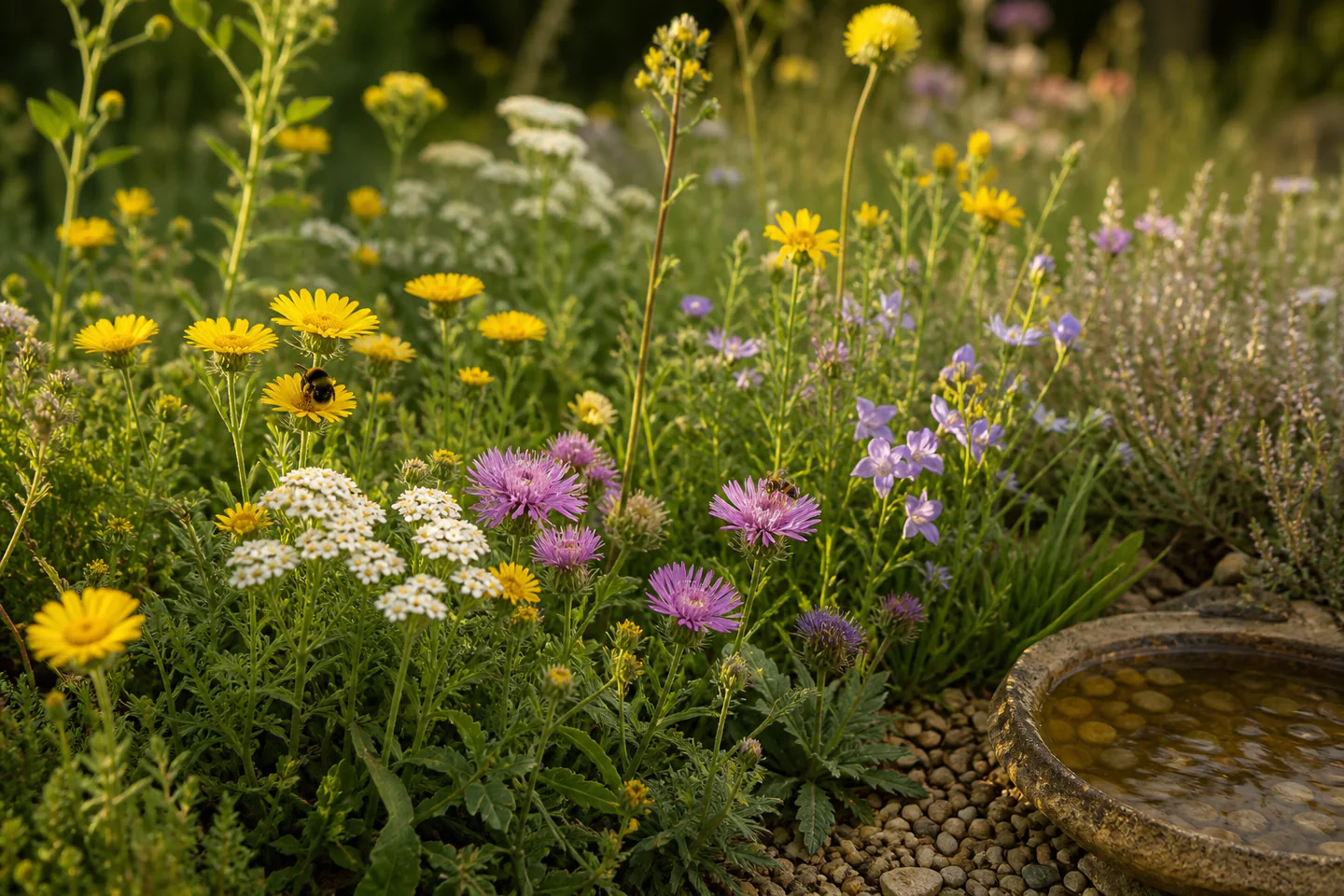
Pollinator gardening is less about one “bee plant” and more about pesticide-aware flowers, nesting places and water across the year. Start with one sunny container or square metre.
Quick answer
Plant one small patch for three seasons of bloom
Measure sun and inspect soil before choosing seed or plants. Select a reputable UK mix or several pesticide-free plants suited to the exact soil and container, aiming for spring, summer and autumn flowers rather than one short display. Prepare a weed-free low-fertility seedbed according to supplier guidance, sow at the stated rate and keep it evenly moist while establishing. Avoid pesticide use, leave some hollow stems and seed heads through winter and record which insects visit each flower.
- 01
“Wildflower” is not one universal seed mix. Soil, moisture, shade, region and annual versus perennial content determine success.
- 02
Native plants support many specialist relationships, while some non-invasive garden flowers also provide useful nectar and pollen. Structure and season matter.
- 03
Double or highly modified flowers may be hard for insects to access. Choose open shapes and documented value.
- 04
Pesticides, including “organic” products, can harm non-target insects. Avoid routine use and never treat open flowers outside the label.
- 05
Bee hotels can concentrate parasites when poorly designed or maintained. Existing bare ground, stems, hedges and undisturbed corners often matter more.
What to expect
A useful patch changes through the whole year
Bare soil, chewed leaves, standing stems and fading seed heads may be habitat, not neglect. The gardener learns which tidying helps and which removes shelter or food.
Soil
Rich soil favours grass and vigorous weeds over many meadow flowers. Container mixes and border plants need a different approach.
Timing
Some perennial mixes establish leaves in year one and flower later. Annual colour is faster but needs repeat management.
Weeds
Seedlings are difficult to identify. Sow in marked blocks or use plug plants when confident recognition matters.
Water
Establishment needs attention; mature drought-tolerant plants may need less, but containers remain dependent.
Insects
Bees are only part of the audience. Hoverflies, moths, beetles and wasps also use flowers and habitat.
Winter
Standing stems, leaf litter and undisturbed soil support overwintering stages. Delay clearance and remove it in sections.
Core method
Design a calendar and habitat, not a single shopping list
Audit the patch
Record direct sun, soil moisture, drainage, existing plants, nearby pesticide use and how often water can be provided. Photograph the patch monthly before changing it. A container needs plants with similar water needs; ground sowing needs correct soil preparation and usually reduced grass competition.
Choose overlapping flower windows
Use RHS Plants for Pollinators and specialist nursery information to select at least one spring, one summer and one autumn resource. Include several flower shapes and avoid invasive species. For a seed mix, read the actual species list, percentage of grass and soil suitability rather than buying only by a bee image on the packet.
Establish at the correct density
Prepare according to the plant or seed supplier. Scatter seed at the measured rate—too much increases competition—and firm it without burying light-germinating seed too deeply. Mark the area, water gently through establishment and distinguish intended seedlings before weeding.
Maintain in sections
Deadhead selected plants for continued bloom but leave some seed. Avoid pesticides and solve plant stress through site fit, hand removal and tolerance where practical. Add a very shallow refreshed water dish with stones only if it can be cleaned. Leave stems and leaf litter through winter, clearing small sections in spring after checking for wildlife.
Useful products
Products with a clear job in the setup
Boston Seeds’ native mix provides a general starting option, yellow rattle can reduce vigorous grass in established meadow situations, and the heavy-clay mix is a site-specific alternative. These should not all be sown together: choose the mix for the soil, and use yellow rattle only where its establishment requirements are understood.
Boston Seeds Restore & Enrich UK Native Wildflower Seed Mix
A named supplier and listed mix are more credible than an anonymous “bee bomb”.
Boston Seeds Yellow Rattle Seed, Approximately 1,200 Seeds
Yellow rattle is widely used in meadow creation where existing grass dominates.
Boston Seeds Perennial Wildflower Seed Mix for Heavy Clay
Matching species to drainage and soil texture improves establishment and reduces corrective watering.
First project
Create a one-square-metre pollinator patch
A measured small area makes seed rate, weeding, water and insect records manageable.
- 01
Audit sun and soil
Identify shade, drainage, clay or sand and existing grass competition.
- 02
Choose a three-season list
Use one suitable mix or several plug plants with overlapping bloom.
- 03
Prepare one square metre
Remove weeds as directed and avoid adding rich fertiliser to meadow seed.
- 04
Sow or plant at measured density
Label the patch and water gently during establishment.
- 05
Record visitors
Photograph flowers and insects without handling or disturbing nests.
- 06
Leave winter structure
Retain some stems and seed heads and clear in sections later.
What can wait
What can wait until the first result
Hotels, seed bombs and exotic annual displays are visible products, but site-fit flowers and undisturbed habitat do more of the work.
- 01
A decorative bee hotel
Poor holes and no cleaning can concentrate parasites; learn local nesting habitat first.
- 02
Seed bombs on public land
They bypass landowner permission, site preparation and invasive-species responsibility.
- 03
A universal meadow mix
Read actual species and soil requirements instead of buying by the packet illustration.
- 04
Routine insecticide
Identify the organism, tolerate cosmetic damage and use label-led targeted controls only if essential.
- 05
Clearing every stem in autumn
Standing hollow stems and seed heads provide winter structure and food.
Upgrade path
Upgrade the repeated limitation
Upgrade bloom continuity, nesting structure or area only after the first patch shows what establishes locally.
One small patch
About £20–£70Suitable seed/plants + preparation
Learn site fit and visitors.Three-season border
About £60–£220Complementary perennials and bulbs
Close flower gaps.Habitat garden
About £150–£700Hedge, bare ground, logs, water and reduced mowing
Support feeding and nesting.Neighbourhood connection
About £300–£2,000+Linked front gardens and shared records
Create larger continuous habitat.Safety & care
Protect the insects the garden is meant to support
Avoid pesticides, invasive plants, trapping structures and unsafe water. A slightly untidy thriving patch is a better result than a sterile branded display.
- Avoid routine pesticide use; if a product is essential, follow the exact label, never exceed dose and protect open flowers, water and non-target species.
- Verify plant identity and invasive status, buy from responsible suppliers and never scatter seed on land without permission.
- Use only very shallow water with rough stones and frequent cleaning; deep containers need wildlife escape and child-safety controls.
- Account for allergies and stings, wear gloves for compost and do not handle insects or block nest entrances.
- Keep paths accessible, remove genuinely hazardous thorns or trip edges and explain delayed winter cutting where neighbours share the space.
Outside help
When outside help earns its place
No class is needed. A conservation-group walk or nursery event can help identify local pollinators and plants without turning the garden into a captive display.
Build the flower calendar from current evidence and local soil.
Ask about identification, pesticides, nesting and local native plants.
Representative UK learning options checked 17 August 2026; local prices, access, materials and tutor support vary.
Sources
Where the guidance came from
UK conservation organisations and horticultural authorities define plant value, pesticide awareness and habitat; gardening communities add establishment and maintenance evidence.
-
01
RHS · Plants for Pollinators
Evidence-led UK plant lists and scheme criteria.
Open source -
02
Bumblebee Conservation Trust · Gardening
Flower continuity, nesting and pesticide-aware guidance.
Open source -
03
Plantlife · Meadows
UK meadow creation and management context.
Open source -
04
Butterfly Conservation · Gardening
Butterfly and moth plant and habitat guidance.
Open source -
05
Reddit · r/GardeningUK
Community evidence on UK seed mixes, soils, mowing and pollinator plants.
Open source -
06
Amazon UK · Restore & Enrich UK Native Wildflower Seed Mix
Exact product catalogue page or ISBN used for the recommendation; current price, seller and availability should be confirmed.
Open source -
07
Amazon UK · Yellow Rattle Seed, Approximately 1,200 Seeds
Exact product catalogue page or ISBN used for the recommendation; current price, seller and availability should be confirmed.
Open source -
08
Amazon UK · Perennial Wildflower Seed Mix for Heavy Clay
Exact product catalogue page or ISBN used for the recommendation; current price, seller and availability should be confirmed.
Open source
Guide information and links checked 17 August 2026.