Beginner’s guide · Make & create
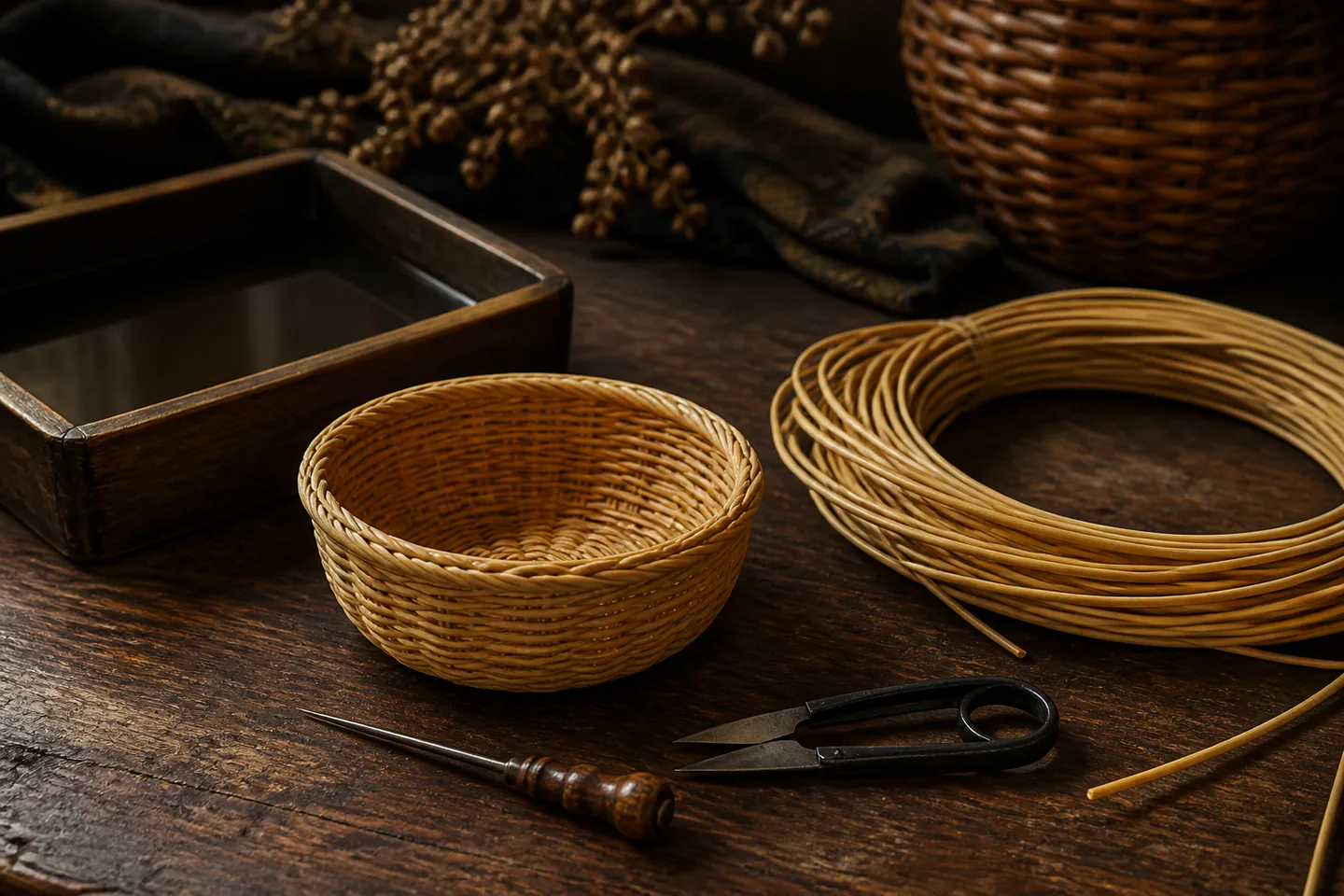
A small round basket with an even wall and finished rim
Learn tension on a small round base.
Begin with a matched natural-material kit or simple paper-and-raffia form. A small round basket teaches spokes, pairing, packing and a secure rim without buying bulk cane or specialist tools.
Quick answer
Use a complete wicker kit and weave one low round basket
Choose a beginner kit whose stakes, weavers and instructions are matched. Sort every length before soaking only the material and time stated by the maker; over-soaked or repeatedly dried cane can become weak. Build the base on a flat table, mark one spoke as the start and check spacing after every few rounds. Keep the wall low, pack rows evenly with a bodkin and complete the simplest instructed border before adding a handle.
- 01
Willow, rattan cane, reed, raffia and paper cord behave differently; soaking advice cannot be transferred automatically.
- 02
Even tension matters more than pulling tightly. Excess force can bend spokes inward and snap dry material.
- 03
Natural material can have sharp ends and spring back. Eye protection and controlled trimming are sensible.
- 04
A first basket may be uneven but functional. Its spoke spacing is more useful evidence than decorative dye or a handle.
What to expect
What the first basket weaving result really teaches
The weave is repetitive, but the structure changes as the base turns into walls. Small corrections every round prevent a large lean later.
Material
Sort by diameter and length, keep pieces covered or damp only as instructed and reject mouldy stock.
Base
Check flatness and spoke spacing from above before turning stakes upward.
Tension
Pull enough to seat the weaver, not enough to distort the previous row.
Corners
A round basket removes corners and lets the beginner focus on spacing and packing.
Joining
Start and finish new weavers in the method shown so cut ends stay secure and unobtrusive.
Border
Leave enough flexible stake length for the chosen rim and practise the sequence with cord before committing.
Core method
Build one repeatable basket weaving workflow
Inventory and condition the material
Lay out every stake, weaver and tool against the kit list. Identify the material and follow its own soaking or dampening times. Use a long tray rather than forcing coils into a sink, change dirty water and keep wet natural material off unprotected floors.
Build a flat measured base
Cross or arrange the central stakes as instructed, mark the first spoke and weave the opening rounds slowly. Measure the diameter in several directions and spread spokes like equal clock intervals. Pack rows with a bodkin while protecting fingers from pointed ends.
Turn up and control the wall
Raise stakes gradually without creasing them and use a temporary tie or template only if the kit recommends one. Weave two rounds, rotate the work and view the silhouette. Correct a narrow gap by adjusting several neighbouring spokes rather than yanking one.
Finish cleanly and dry fully
Stop at the planned low height, trim or tuck joins with the correct tool and complete the simplest border sequence. Clip only after checking the rim from every side. Let the basket dry with air circulation, reshape gently while damp if advised and store away from persistent moisture.
Useful products
Products with a clear job in the setup
The Traditional Craft Kits wicker basket is the coherent adult starter route; Baker Ross provides a simpler card-and-raffia alternative; the WISEPRO tool set is a later convenience without materials. Choose one material route first.
Traditional Craft Kits Wicker Basket Making Kit
It removes the early task of selecting cane diameter and quantity and leads to a complete structural form.
Baker Ross Card and Raffia Basket Weaving Pack
It is useful when hand strength, water space or sharp natural stakes make wicker a poor first test.
WISEPRO Basket Weaving Tool Kit
The set can reduce improvisation when repeating different weaves and borders.
First project
Weave one low round basket
A shallow wall keeps every spoke visible and gives enough repetitions to understand tension.
- 01
Sort the kit
Match stakes, weavers and tools to the exact instructions.
- 02
Condition one bundle
Soak or mist only for the specified material and time.
- 03
Weave a flat base
Mark the start and measure spacing around every few rounds.
- 04
Turn up gradually
Avoid creasing stakes and keep the wall low.
- 05
Join and pack rows
Hide ends as instructed and use even rather than maximum tension.
- 06
Finish the rim
Complete the simplest border, trim safely and dry with airflow.
What can wait
What can wait until the first result
Bulk material, handles and complex shaped bases make small errors expensive before even tension is repeatable.
- 01
A large coil of cane
A matched kit avoids guessing diameter, quantity and soaking compatibility.
- 02
A tall handled basket
Height magnifies lean and a handle adds structural attachment.
- 03
Dyes and varnishes
Learn material preparation and dry shape before adding chemical finishing and colourfastness questions.
- 04
Every specialist tool
A bodkin, snips and simple packing tool cover the first form.
- 05
Outdoor storage use
Beginner decorative baskets are not automatically load-rated or weather-resistant.
Upgrade path
Upgrade the repeated limitation
Add bulk material, shaping blocks or advanced borders when the repeated structural limitation is clear.
Matched starter
About £25–£55One complete small-basket kit
Learn base, wall and rim.Repeat materials
About £30–£100Known cane/willow + bodkin + quality snips
Repeat dimensions and tension.Form and border work
About £80–£250Moulds, gauges and specialist tools
Control shapes and complex rims.Green-willow studio
About £150–£800+Large soaking, storage and bench systems
Prepare local material and larger baskets.Safety & care
Control sharp ends, water and natural-material storage
Basketry is approachable, but pointed stakes, spring-back, cutters, wet floors and mouldy stored material cause preventable problems.
- Wear suitable eye protection where stiff stakes may spring and keep faces and bystanders out of the line of pointed ends.
- Use sharp cutters away from hands, close or sheath them immediately and trim over a container so offcuts do not scatter.
- Prevent soaking spills, route long materials away from walkways and dry the floor and basket fully after work.
- Discard mouldy or pest-damaged natural material and ventilate the work area; do not use unknown treated plant material.
- Do not claim a beginner basket is safe for babies, animals, food, hot objects or heavy loads unless every material and construction is documented for it.
Outside help
When outside help earns its place
A matched kit can teach the first low form. A willow workshop is valuable for material preparation, border sequences and hand corrections that are hard to decode from diagrams.
Confirm the exact material, soaking time and rim sequence.
Ask whether soaked material, tools and a completed project are included.
Representative UK product, workshop, lesson and club costs checked 13 August 2026; local prices, access, materials and tutor support vary.
Sources
Where the guidance came from
Material suppliers and guilds establish preparation and structure; experienced basketry communities add kit, tension and drying evidence.
-
01
Basketmakers’ Association
UK basketry education, makers and material traditions.
Open source -
02
English Basketry Willows
Specialist willow varieties, preparation and tools.
Open source -
03
Traditional Craft Kits
Beginner kit scope and material context.
Open source -
04
Basketry & Beyond
UK basketry learning and community practice.
Open source -
05
Reddit · r/Basketry
Community discussion of first kits, materials and tension.
Open source -
06
Amazon UK · Traditional Craft Kits wicker basket kit
Exact product page, model or ISBN, observed price and availability checked for this guide.
Open source -
07
Amazon UK · Baker Ross raffia basket pack
Exact product page, model or ISBN, observed price and availability checked for this guide.
Open source -
08
Amazon UK · WISEPRO basket tool kit
Exact product page, model or ISBN, observed price and availability checked for this guide.
Open source
Guide information and links checked 13 August 2026.